Basilar migraine, now officially called migraine with brainstem aura, is a neurological condition where the brainstem triggers severe aura symptoms before or during a headache. Symptoms include vertigo, slurred speech, double vision, and temporary loss of coordination. All symptoms are reversible, but they mimic stroke closely enough to require emergency evaluation on first occurrence.
This condition gets misdiagnosed constantly. Doctors mistake it for TIA, inner ear disorders, or anxiety. That misdiagnosis delays the right treatment significantly.
Basilar Migraine Symptoms
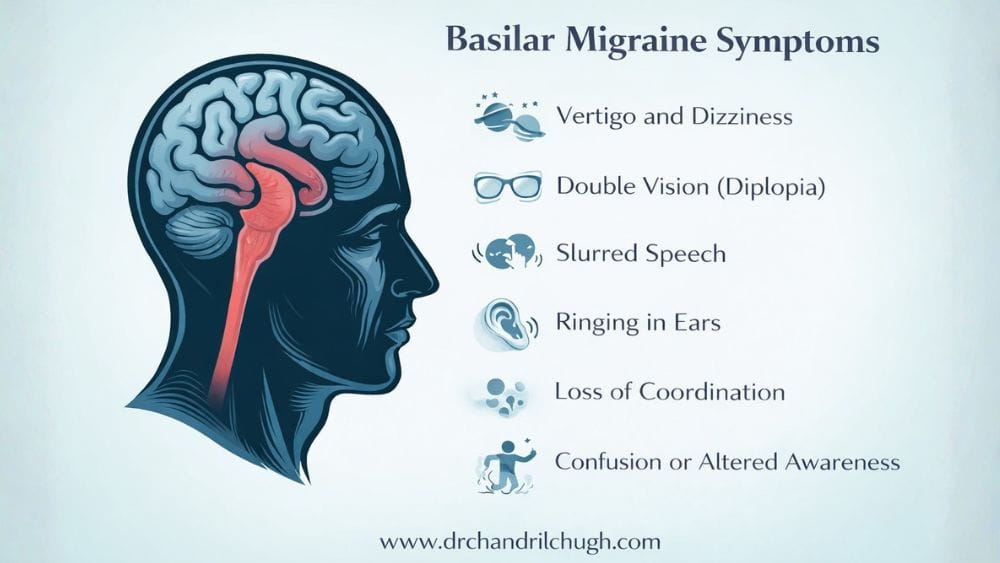
Basilar migraine symptoms come from the brainstem, not the outer brain cortex. The brainstem controls balance, coordination, speech, and vision processing. When it gets disrupted during a migraine, the symptoms look far more alarming than a typical headache.
All symptoms are reversible. They stop within 60 minutes in most cases. But they return with every episode.
Vertigo and Dizziness
The room spins. Balance feels completely off. This vertigo comes from the brainstem disrupting signals to the inner ear. It is one of the most reported and most misdiagnosed symptoms of basilar migraine, often confused with benign positional vertigo or Meniere’s disease.
Double Vision (Diplopia)
Two overlapping images appear instead of one. This happens because the brainstem controls the muscles that align both eyes. When the brainstem misfires, eye alignment breaks down temporarily.
Slurred Speech
Words come out garbled or slowed. The person knows what they want to say but the mouth does not cooperate. This symptom triggers the most emergency room visits because it mirrors stroke presentation exactly.
Ringing in Ears
A persistent ringing, buzzing, or whooshing sound appears in one or both ears. This happens because the brainstem processes auditory signals, and disruption causes abnormal sound perception. The ringing stops when the episode ends.
Loss of Coordination
Limbs feel unsteady. Walking becomes difficult. Fine motor tasks like writing or typing fail temporarily. This is called ataxia. It comes from brainstem signals to the cerebellum being disrupted.
Temporary Vision Disturbance
Vision blurs, darkens, or shows zigzag patterns in both eyes simultaneously. Unlike ocular migraine, which affects one eye, basilar migraine affects both eyes because the visual cortex and brainstem are both involved.
Confusion or Altered Awareness
Thinking slows down noticeably. Some people feel detached from their surroundings. A small number lose consciousness briefly. This altered awareness resolves fully with the episode but is deeply frightening while it lasts.
Causes of Basilar Migraine
Causes of basilar migraine are neurological and partially genetic. The brainstem becomes hyperexcitable, meaning it overreacts to normal inputs like stress, hormonal changes, or missed meals.
Brainstem Neural Dysfunction
The brainstem acts as the control center for most automatic body functions. In basilar migraine, this area experiences abnormal electrical and chemical activity. It sends faulty signals to balance centers, vision pathways, and speech mechanisms simultaneously.
Cortical Spreading Depression
A slow wave of electrical silence moves across the brain. This is called cortical spreading depression. It disrupts normal brain activity as it spreads and is the same mechanism behind most migraine auras. In basilar migraine, this wave involves the brainstem specifically.
Genetic Susceptibility
Basilar migraine runs in families. Children with a parent who has this condition face a significantly higher risk of developing it. Mutations in the CACNA1A gene, which controls calcium channels in nerve cells, appear in some cases and directly increase brainstem excitability.
Hormonal Triggers
Estrogen fluctuations destabilize serotonin regulation. Girls and women experience basilar migraines at higher rates than men, especially during puberty, menstruation, and perimenopause. Hormone-linked attacks typically cluster in the 2 days before a period begins.
Stress and Sleep Disruption
Cortisol from stress and sleep deprivation both raise the brainstem’s excitability threshold. Missing even one night of quality sleep raises CGRP blood levels and increases attack frequency in people already prone to basilar migraines.
Complications of Basilar Migraine
Complications of basilar migraine are rare but serious enough to take the condition beyond a simple headache diagnosis.
Stroke Mimic Presentation
Every episode of basilar migraine looks like a stroke or TIA in the emergency room. Slurred speech, double vision, and loss of coordination match stroke symptoms exactly. This creates real problems because some stroke treatments are harmful if given to migraine patients. Doctors need imaging before making this call.
Rare Risk of Ischemic Stroke
The ICHD-3 acknowledges a small but real risk of migrainous infarction, where a prolonged aura leads to actual loss of blood flow in the brain. This is rare, affecting fewer than 1 in 200 people with basilar migraine, but the risk increases in women who smoke and use estrogen-containing contraceptives.
Prolonged Aura
Standard basilar migraine aura lasts under 60 minutes. In some people, symptoms last 2 to 3 hours. Any aura exceeding 60 minutes needs emergency evaluation because the brain may be experiencing reduced blood flow rather than standard migraine activity.
Fainting (Syncope)
Around 10% of basilar migraine episodes include a brief loss of consciousness. This happens when brainstem disruption affects the systems that maintain blood pressure and heart rate. It is brief and self-resolving but increases injury risk from falls.
Severe Neurological Deficits
In rare cases, repeated basilar migraine episodes leave behind subtle permanent changes in coordination or balance. These are documented in people with very frequent, poorly controlled attacks over many years.
How Basilar Migraine Is Diagnosed
Clinical History
Diagnosis rests almost entirely on symptom history. The ICHD-3 requires at least two episodes with two or more brainstem aura symptoms (vertigo, diplopia, slurred speech, tinnitus, ataxia, or altered consciousness) combined with a migraine headache. A personal or family history of migraine strongly supports the diagnosis.
Neurological Examination
A neurologist tests reflexes, balance, eye movement, and coordination during or shortly after an episode. Between attacks, the exam is usually normal. Abnormal findings between attacks point toward another condition.
MRI or Imaging
MRI of the brain rules out structural problems, stroke, multiple sclerosis, or tumors before confirming basilar migraine. DWI (diffusion-weighted imaging) sequences specifically detect ischemic stroke within hours of onset. This scan is mandatory for first-time episodes.
Exclusion of TIA
TIA (transient ischemic attack) produces nearly identical symptoms. The key difference is that TIA symptoms appear suddenly without the gradual 20 to 30 minute building aura typical of basilar migraine. TIA also does not cause the spreading visual zigzag pattern.
Treatment Options for Basilar Migraine
Treatment options for basilar migraine require more caution than standard migraine treatment. The brainstem involvement changes which medications are safe to use.
Acute Migraine Medications
- NSAIDs (ibuprofen, naproxen) taken at the first warning sign reduce both aura duration and headache severity.
- Antiemetics like ondansetron manage nausea and vomiting during attacks.
- Rest in a dark, quiet room during the aura phase is consistently effective for reducing severity.
Triptans: Caution Considerations
Triptans were historically avoided in basilar migraine because of theoretical concerns about brainstem blood vessel constriction. Current neurological guidelines (American Headache Society, 2019) do not categorically prohibit triptans. They are used with caution, under neurologist supervision, when standard NSAIDs fail. Triptans with shorter action, like sumatriptan, are preferred over longer-acting options.
Preventive Medications
For people with 2 or more monthly attacks, daily preventive medication reduces frequency significantly:
- Propranolol (beta blocker) reduces attack frequency by 40 to 50% in clinical use.
- Valproate (anti-seizure) stabilizes brainstem electrical activity directly.
- Verapamil (calcium channel blocker) is particularly useful when the CACNA1A gene variant is suspected.
- Amitriptyline (low-dose) stabilizes serotonin and reduces brainstem excitability.
Magnesium and Supplements
Magnesium glycinate at 400 to 600mg daily reduces cortical spreading depression frequency. Riboflavin (vitamin B2) at 400mg daily improves mitochondrial function in nerve cells and cuts attack frequency by 50% in trials published in the journal Neurology. These are safe, low-risk additions to any treatment plan for basilar migraine.
Lifestyle Modification
- Fix sleep to 8 to 9 hours at consistent times daily.
- Eliminate caffeine above 1 cup per day.
- Avoid alcohol entirely. Alcohol is a direct brainstem irritant.
- Eat regular meals. Blood sugar drops trigger attacks within 2 to 3 hours.
Prevention of Basilar Migraine
Prevention of basilar migraine is the most important part of long-term management. Treating attacks after they start is harder and riskier with this condition than with standard migraine.
Trigger Avoidance
The most common confirmed triggers are alcohol, sleep deprivation, estrogen fluctuations, and emotional stress. Bright or flickering lights also trigger attacks in a significant number of patients. Keeping a daily trigger log for 6 weeks identifies personal patterns quickly.
Sleep Regularity
Sleep at the same time every night. Even 30 minutes of variation in wake time measurably raises attack frequency in people with basilar migraine. Sleep deprivation is the most consistent and most controllable trigger across all age groups.
Stress Management
CBT (cognitive behavioral therapy) reduces migraine frequency by 30 to 40% in stress-triggered cases. Biofeedback training, which teaches control of physical stress responses, cuts attack frequency comparably. Both are non-medication options with strong evidence for basilar migraine prevention.
Hormonal Tracking
Women with hormone-linked attacks track menstrual cycles alongside episode dates. When attacks cluster predictably before periods, a neurologist can time low-dose preventive medication around the hormonal drop to reduce frequency.
Preventive Medication Use
Daily preventive medication is the standard of care for anyone with more than 2 monthly attacks. Propranolol and valproate are first-line choices. Medication review every 6 months checks whether the dose or drug needs adjusting.
When Basilar Migraine Requires Emergency Care
First-Ever Episode
A first episode of basilar migraine symptoms needs emergency evaluation every time. Stroke and TIA cannot be excluded without imaging. Never wait at home during the first episode.
Persistent Weakness
Arm or leg weakness during a basilar migraine episode adds the possibility of hemiplegic migraine or stroke. Go to emergency immediately.
Symptoms Lasting More Than 1 Hour
Aura symptoms lasting beyond 60 minutes qualify as prolonged aura. Blood flow may be compromised. This needs same-day emergency imaging.
Loss of Consciousness
Fainting during a basilar migraine episode needs evaluation every time. Even brief unconsciousness during a neurological event warrants a full workup to rule out cardiac arrhythmia or seizure.
Sudden Severe Headache
The worst headache of your life, starting instantly alongside neurological symptoms can signal a subarachnoid hemorrhage. This is a life-threatening emergency.
Frequently Asked Questions
What are basilar migraine symptoms?
Basilar migraine symptoms include vertigo, slurred speech, double vision, ringing in the ears, loss of coordination, and temporary confusion. All symptoms come from brainstem disruption. They fully resolve within 60 minutes in most episodes. They mimic stroke closely enough that every first episode requires emergency evaluation.
What causes basilar migraine?
Basilar migraine starts when the brainstem becomes hyperexcitable and triggers cortical spreading depression. Genetic mutations in the CACNA1A gene increase this excitability. Estrogen drops, stress, alcohol, and sleep deprivation are the most common environmental triggers that set off an attack in genetically susceptible people.
Is basilar migraine dangerous?
Rarely, yes. Most basilar migraine episodes are painful and frightening but self-resolving. The real danger is migrainous infarction, which affects fewer than 1 in 200 patients. Risk rises sharply in women who smoke and use estrogen-based contraceptives simultaneously. Those two factors together should be discussed with a neurologist immediately.
Can basilar migraine cause stroke?
Yes, in rare cases. Prolonged aura lasting more than 60 minutes can reduce actual blood flow to the brainstem, causing migrainous infarction. This is a real stroke triggered by the migraine event. It is uncommon but documented. Women over 35 who smoke face the highest risk.
How is basilar migraine diagnosed?
Neurologists diagnose basilar migraine using ICHD-3 criteria: at least 2 episodes with 2 or more brainstem aura symptoms plus a migraine headache. MRI rules out stroke, MS, and tumors. Between attacks, the neurological exam is typically normal. Imaging during or within hours of an attack gives the most information.
What are the treatment options for basilar migraine?
Treatment options for basilar migraine include NSAIDs and rest for mild acute attacks, and carefully supervised triptans for severe headache under neurologist guidance. Daily preventive medications, propranolol, valproate, and verapamil, reduce attack frequency. Magnesium glycinate at 400 to 600mg daily and riboflavin at 400mg daily add measurable benefit.
Are triptans safe for basilar migraine?
Cautiously, yes. Earlier guidelines avoided triptans completely due to theoretical risks. American Headache Society guidelines updated in 2019 allow triptan use under neurologist supervision when NSAIDs fail. Sumatriptan is the preferred choice. They should never be self-prescribed for basilar migraine without medical oversight.
What is the difference between basilar migraine and migraine with aura?
Standard migraine with aura produces visual symptoms like zigzag lines from the brain’s visual cortex. Basilar migraine specifically involves the brainstem, producing vertigo, slurred speech, double vision, and coordination loss alongside or instead of visual symptoms. Both are reversible, but basilar migraine symptoms are more alarming and carry a slightly higher complication risk.
Can basilar migraine happen without headache?
Yes. Around 20% of basilar migraine episodes occur without significant headache. The brainstem aura symptoms appear and resolve without a head pain phase. These cases are harder to diagnose because they lack the classic migraine headache, leading to confusion with TIA, inner ear disorders, or anxiety attacks.
Who is at risk for basilar migraine?
Adolescent girls and young women have the highest risk. A family history of migraine, specifically migraine with aura, increases personal risk by 70%. Carriers of CACNA1A gene variants face a higher biological risk. Women who use estrogen-containing contraceptives and smoke carry the highest risk of serious complications from basilar migraine.
How long does a basilar migraine last?
The brainstem aura phase lasts 20 to 60 minutes in most cases. The headache phase that follows lasts 4 to 72 hours. Between attacks, people return to completely normal neurological function. Episodes longer than 60 minutes for the aura phase are considered prolonged and require same-day medical evaluation.
What preventive strategies work for basilar migraine?
Daily propranolol or valproate reduces attack frequency by 40 to 50%. Consistent sleep at fixed times, CBT for stress management, and avoiding alcohol cut triggers significantly. For hormone-linked attacks, timing low-dose preventive medication around the menstrual cycle reduces episodes. Prevention of basilar migraine works best when medication and lifestyle changes run together.
About The Author

Medically reviewed by Dr. Chandril Chugh, MD, DM (Neurology)
Dr. Chandril Chugh is a U.S.-trained, board-certified neurologist with expertise in diagnosing and managing neurological disorders, including migraines, epilepsy, Parkinson’s disease, and movement disorders. His clinical focus includes evidence-based neurological care and patient education.
All content is reviewed for medical accuracy and aligned with current neurological guidelines.