Neuroinflammation & brain fog occur when the brain’s immune cells, called microglia, become chronically overactivated and release chemicals that disrupt normal thinking. In the United States, post-COVID alone has left an estimated 1.6 million working-age adults with persistent cognitive impairment, most of it driven by this exact mechanism.
The condition affects millions more through chronic migraines, poor sleep, and inflammatory diets. This article covers causes of brain fog and inflammation, key symptoms, dietary strategies, and evidence-based approaches to reverse it.
Causes of Brain Fog and Inflammation
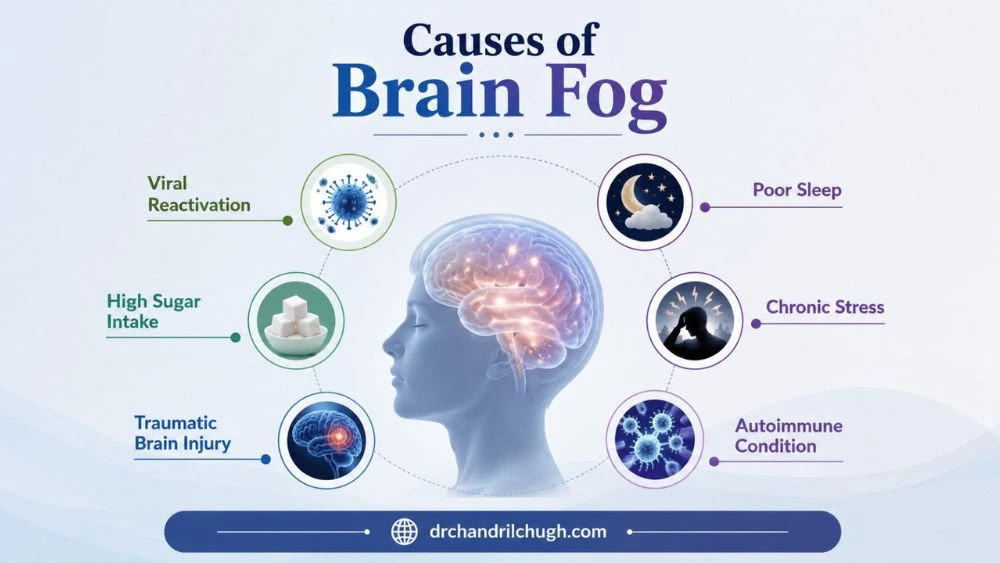
Causes of brain fog and inflammation range from chronic viral infections to daily lifestyle habits that most people do not connect to brain function.
Microglia are the brain’s immune cells. When they detect a threat, they activate and release pro-inflammatory chemicals called cytokines. Short-term activation is protective. Chronic activation is the problem. Those same cytokines disrupt neurotransmitter production, damage the blood-brain barrier, and reduce cerebral blood flow. That is the biological origin of brain fog.
Common triggers:
- Long COVID and viral reactivation : Epstein-Barr virus reactivation, COVID-19, and Lyme disease are among the most documented causes of sustained neuroinflammation in US patients.
- Poor sleep : The glymphatic system clears inflammatory waste from the brain during deep sleep. A 2019 study in Science found that sleeping less than 6 hours per night reduces glymphatic clearance by up to 40%.
- High sugar intake : Excess glucose produces advanced glycation end-products (AGEs), which directly trigger microglial activation.
- Chronic stress : Elevated cortisol increases gut permeability. Bacterial lipopolysaccharides (LPS) then cross into the bloodstream and reach the brain, activating microglia.
- Traumatic brain injury : Even mild concussions produce microglial activation that persists for months in some patients.
- Autoimmune conditions : Multiple sclerosis, Hashimoto’s thyroiditis, and lupus all involve immune responses that extend into the central nervous system.
Causes of brain fog and inflammation often stack. A person managing chronic stress alongside poor sleep and a processed-food diet faces compounding inflammatory load, which is why one lifestyle change alone rarely resolves the problem.
Symptoms of Neuroinflammation in Brain
Symptoms of neuroinflammation in brain are subtle at first. They are consistently misdiagnosed as depression, burnout, or aging.
The most common presentations:
- Cognitive slowing : Tasks that previously took 10 minutes now take 30. Processing speed drops measurably.
- Word retrieval failure : The word exists but accessing it feels like pulling through resistance.
- Short-term memory gaps : Names, appointments, and instructions slip away within minutes.
- Post-exertional mental fatigue : Reading a single article or attending a meeting feels disproportionately exhausting.
- Emotional blunting : Reduced motivation, flat affect, and difficulty experiencing pleasure, a state clinicians call anhedonia.
- Sensory sensitivity : Increased reactivity to light, loud sounds, or strong smells.
Symptoms of neuroinflammation in brain overlap significantly with thyroid dysfunction, vitamin B12 deficiency, and anemia. A doctor should rule these out with blood work before attributing everything to neuroinflammation. The clinical sequence matters.
If symptoms appeared after a viral illness or a sustained period of extreme psychological stress, neuroinflammation becomes a much stronger diagnostic candidate than a primary mood disorder.
Headache and Brain Fog Connection
The headache and brain fog connection is more mechanistically direct than most content acknowledges.
Neuroinflammation increases production of inflammatory prostaglandins. These chemicals sensitize the trigeminal nerve, the primary pain pathway for headaches. This is the same mechanism that worsens migraines during infections or chronic stress states.
A 2021 study published in Cephalalgia found elevated interleukin-6 (IL-6) levels in the cerebrospinal fluid of patients with chronic daily headaches. IL-6 simultaneously disrupts dopamine and serotonin metabolism, which is the same pathway that produces cognitive impairment. One cytokine, two symptoms.
The cluster headache and brain fog connection also runs through sleep disruption. Chronic headaches fragment sleep architecture. Fragmented sleep impairs glymphatic waste clearance. Accumulated brain waste, including amyloid-beta proteins, then further activates microglia. This loop reinforces itself without external intervention.
Migraine patients report cognitive symptoms in the prodromal phase (days before the attack), during the attack, and in the post-drome (up to 48 hours after). Research now confirms this entire cycle reflects the same neuroinflammatory process driving the pain.
Anti-Inflammatory Diet for Brain Fog
The Mediterranean and MIND diets have the strongest clinical evidence. A 2015 study published in Alzheimer’s & Dementia found that strict adherence to the MIND diet reduced the rate of cognitive decline by 53% over a multi-year follow-up period.
Foods that actively suppress neuroinflammation:
- Fatty fish (salmon, sardines, mackerel) : Omega-3 fatty acids, specific
- ally EPA and DHA, suppress the NF-kB inflammatory signaling pathway in brain tissue.
- Blueberries : Anthocyanins cross the blood-brain barrier and measurably reduce IL-6 and TNF-alpha levels.
- Extra virgin olive oil : Oleocanthal produces an anti-inflammatory effect comparable to low-dose ibuprofen, according to research from the Monell Chemical Senses Center in Philadelphia.
- Leafy greens (spinach, kale, arugula) : Rich in folate and vitamin K, which support myelin integrity and lower homocysteine, a compound directly linked to brain inflammation.
- Fermented foods (kefir, kimchi, miso) : Strengthen the gut microbiome and reduce systemic LPS levels, decreasing neuroinflammatory load from the gut-brain axis.
An anti-inflammatory diet for brain fog also requires removal. Ultra-processed foods, refined seed oils (soybean, corn, canola), and added sugars are the primary dietary drivers of microglial activation in Western populations.
The anti-inflammatory diet for brain fog produces measurable cognitive improvement in 8-12 weeks of consistent adherence, based on clinical trial data. It does not work in days.
How to Reduce Neuroinflammation Naturally
Reducing neuroinflammation naturally starts with sleep. The brain’s glymphatic cleanup system only operates fully during deep sleep. No supplement replaces this.
Evidence-backed natural approaches:
- Consistent sleep schedule : 7-9 hours at a fixed bedtime regulates cortisol rhythms and reduces baseline inflammatory tone. Sleeping before midnight appears more effective than equivalent hours shifted later, based on chronobiology research.
- Cold exposure : 30-60 seconds of cold water at the end of daily showers reduces CRP and IL-6. A 2022 study in PLOS ONE found regular cold exposure reduced cognitive fatigue by 29% in participants.
- Aerobic exercise : 30 minutes of moderate-intensity aerobic activity increases BDNF and reduces TNF-alpha. Consistency over 8 weeks produces the strongest results.
- Mindfulness practice : An 8-week UCLA study found that daily mindfulness reduced IL-6 levels in chronically stressed participants.
- Intermittent fasting (16:8) : Activates autophagy, the brain’s cellular cleanup process, which removes damaged proteins that trigger microglial activation.
Reducing neuroinflammation naturally also requires removing active inflammatory inputs. Regular alcohol use is directly neurotoxic. Smoking raises IL-6 systemically. Both block recovery regardless of other interventions.
Reducing neuroinflammation naturally works faster when 3-4 strategies run simultaneously. Most patients see measurable cognitive improvement within 6-8 weeks of consistent combined intervention.
When Brain Fog Indicates a Deeper Problem
Neuroinflammation & brain fog sometimes signal pathology that lifestyle changes alone cannot address.
Red flags requiring immediate medical evaluation:
- Brain fog appearing suddenly after a viral illness, especially COVID-19 or Epstein-Barr
- Memory loss that disrupts daily function (forgetting the names of close family members, not recall difficulty)
- Personality changes or behavioral shifts alongside cognitive decline
- Brain fog combined with vision changes, limb weakness, or loss of coordination
- Symptoms worsening consistently over 4 or more weeks
Conditions driving severe neuroinflammation include autoimmune encephalitis, multiple sclerosis, lupus cerebritis, and early neurodegenerative disease. These require MRI with contrast, cerebrospinal fluid analysis, and autoimmune blood panels.
If neuroinflammation & brain fog do not improve after 8 weeks of consistent dietary and sleep changes, investigate inflammatory markers, including CRP, IL-6, homocysteine, full thyroid panel, fasting insulin, and vitamin D.
Long-Term Brain Health and Prevention Strategy
Neuroinflammation & brain fog are largely preventable with consistent, measurable habits.
Most protective long-term behaviors:
- Sleep consistency : Fixed bed and wake times regulate cortisol and lower baseline neuroinflammatory tone over months.
- Social engagement : Research from Brigham Young University links chronic loneliness to IL-6 and CRP levels comparable to smoking 15 cigarettes daily.
- Continuous skill acquisition : Building cognitive reserve through learning new skills reduces the functional impact of neuroinflammation even when it is present.
- Routine blood monitoring : Annual checks of CRP, homocysteine, fasting insulin, and vitamin D allow early intervention before symptoms become disabling.
The brain reflects chronic inputs. Baseline inflammatory status is determined mostly by what happens on ordinary days, not extraordinary ones.
FAQs
What is neuroinflammation and how does it cause brain fog?
Neuroinflammation & brain fog occur when microglia release IL-6 and TNF-alpha chronically. These cytokines disrupt dopamine and serotonin production, reduce cerebral blood flow, and impair synaptic communication. The result is measurable cognitive slowing, memory gaps, and mental fatigue that define brain fog.
Can brain fog be reversed naturally?
Yes. Patients who consistently combine aerobic exercise, 7-9 hours of sleep, and an anti-inflammatory diet show measurable cognitive improvement in 6-8 weeks. Neuroplasticity supports recovery at any age. Addressing all three inputs simultaneously produces significantly faster results than any single change.
Does inflammation in the brain cause headaches?
Yes. Neuroinflammation drives prostaglandin production, which sensitizes the trigeminal nerve and triggers headache pain. A 2021 study in Cephalalgia confirmed elevated IL-6 in the cerebrospinal fluid of chronic headache patients, the same cytokine producing concurrent cognitive impairment.
Which diet is best for reducing brain fog?
The MIND diet has the strongest evidence. It reduced cognitive decline by 53% in a multi-year clinical study. Prioritize fatty fish (3x weekly), blueberries daily, leafy greens, extra virgin olive oil, and fermented foods. Remove ultra-processed foods and refined seed oils first before adding supplements.
How long does neuroinflammation last?
Post-COVID neuroinflammation persists 3-24 months depending on severity and intervention. Lifestyle-driven cases resolve in 6-12 weeks with consistent dietary and sleep changes. Autoimmune-driven neuroinflammation requires medical management and does not resolve independently without treating the underlying condition.
Can stress alone cause brain fog?
Yes. Chronic cortisol elevation increases intestinal permeability, allowing LPS to enter the bloodstream and cross the blood-brain barrier. This directly activates microglia. The gut-to-brain inflammatory pathway is measurable in blood and confirmed in peer-reviewed research, not a vague theoretical link.
What supplements help reduce brain inflammation?
Omega-3 fatty acids (2-4g EPA+DHA daily), curcumin with piperine (500mg twice daily), magnesium glycinate (400mg nightly), and lion’s mane mushroom extract (500-1000mg daily) have the strongest human trial evidence for reducing neuroinflammation markers.
Is brain fog a sign of a serious neurological condition?
Sometimes. Lifestyle-driven fog is not immediately serious. Brain fog arriving suddenly after viral illness, worsening progressively over weeks, or accompanied by coordination problems, vision changes, or personality shifts requires urgent neurological evaluation, not lifestyle intervention alone.
When should I see a doctor for brain fog symptoms?
See a doctor if neuroinflammation & brain fog persist beyond 8 weeks despite dietary and sleep changes, if symptoms worsen progressively, or if memory loss begins disrupting daily function. Request CRP, IL-6, homocysteine, full thyroid panel, B12, and fasting insulin as baseline bloodwork.
About The Author

Medically reviewed by Dr. Chandril Chugh, MD, DM (Neurology)
Dr. Chandril Chugh is a U.S.-trained, board-certified neurologist with expertise in diagnosing and managing neurological disorders, including migraines, epilepsy, Parkinson’s disease, and movement disorders. His clinical focus includes evidence-based neurological care and patient education.
All content is reviewed for medical accuracy and aligned with current neurological guidelines.