Abdominal migraine is a neurological condition that causes recurring stomach pain attacks, mostly in children aged 5 to 9. It is not a stomach problem. It is a brain-driven condition tied to the same biology that causes headaches. Most episodes last 1 to 72 hours and fully resolve between attacks.
This condition gets misdiagnosed constantly, often confused with IBS, appendicitis, or anxiety. That misdiagnosis delays real treatment by months or even years.
Key Takeaways
- Abdominal migraine is a neurological condition, not a digestive disorder.
- Abdominal migraine symptoms include central stomach pain, nausea, vomiting, and pale skin.
- Abdominal migraine causes involve gut-brain axis dysfunction and neurochemical imbalances.
- Hormonal changes and abdominal migraine episodes are more common during puberty and menstruation.
- Food triggers for abdominal migraine overlap with classic migraine triggers like chocolate and MSG.
- Treatment options for abdominal migraine include acute medications, preventive drugs, and lifestyle changes.
How Abdominal Migraine Affects the Gut-Brain Axis
In abdominal migraine, the gut-brain communication breaks down and sends faulty pain signals to the stomach.
Trigeminal and Enteric Nervous System Connection
The trigeminal nerve is the main pain nerve in the head. It connects to the enteric nervous system, which controls the gut. When this pathway gets overactivated, pain shows up in the abdomen instead of the head. Children with abdominal migraine show measurable changes in this nerve pathway.
Serotonin and CGRP Role
Serotonin drops sharply before an attack, disrupting gut movement and pain perception. CGRP (calcitonin gene-related peptide) spikes and triggers inflammation in blood vessels around the gut. These same chemicals cause classic head migraines.
Central Sensitization Mechanism
With repeated attacks, the brain starts interpreting normal gut signals as painful. This is called central sensitization. The threshold for pain keeps dropping. Small things like mild hunger or emotional stress start triggering full episodes.
Visceral Hypersensitivity
The gut lining in children with abdominal migraine becomes hypersensitive to internal pressure and movement. Normal digestion feels painful. This is measurable with specialized gut sensitivity tests and separates it from psychological pain.
Abdominal Migraine Symptoms
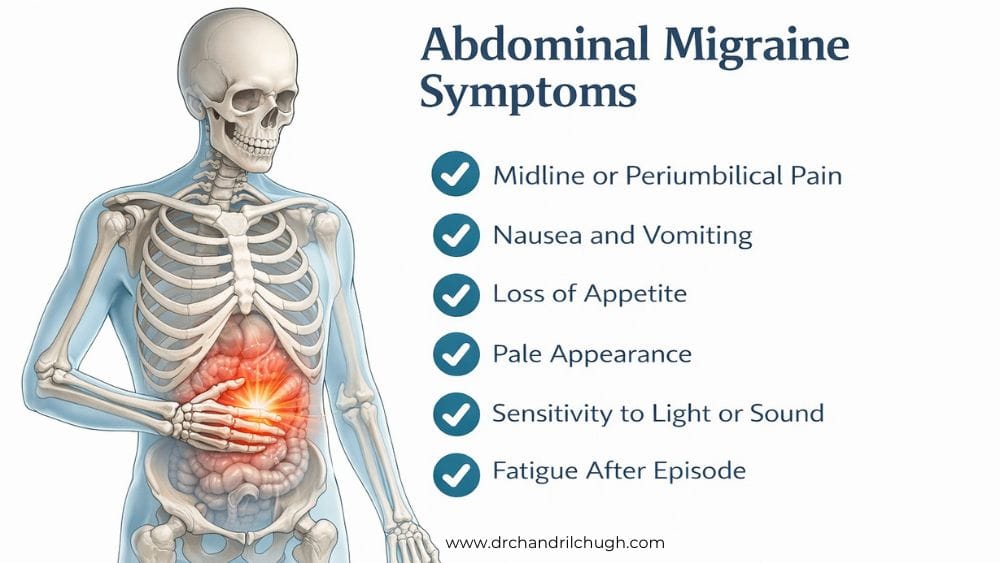
Abdominal migraine symptoms follow a predictable pattern. Episodes start suddenly and stop completely between attacks, with no lingering symptoms in between.
Midline or Periumbilical Pain
Pain centers around the belly button or the middle of the abdomen. It does not move to the lower right side (which points to appendicitis). It is dull or moderate in intensity, not sharp or stabbing.
Nausea and Vomiting
Most children vomit during an attack. Nausea starts early and gets worse as the episode progresses. Vomiting does not relieve the pain.
Loss of Appetite
Food becomes unappealing during an attack. Children refuse meals entirely. Forcing food often worsens nausea.
Pale Appearance
Skin turns pale or slightly grey during attacks. This happens because blood vessels near the skin narrow as part of the migraine response.
Sensitivity to Light or Sound
Around 60% of children with abdominal migraine also show light or sound sensitivity during attacks. This directly mirrors classic migraine behavior.
Fatigue After Episode
After the pain stops, children feel exhausted for hours. This post-episode fatigue is a strong diagnostic clue that separates abdominal migraine from IBS or food poisoning.
Duration: Episodes last between 1 and 72 hours. They resolve completely, and the child returns to normal health between attacks.
Abdominal Migraine Causes
Abdominal migraine causes are neurological, genetic, and environmental. No single cause triggers it alone.
Genetic Predisposition
Children with a parent or sibling who has migraines face a 70% higher risk of developing abdominal migraines. The condition follows the same genetic lines as classical migraines.
Neurochemical Imbalance
Low serotonin and elevated CGRP levels directly cause attacks. These chemicals control pain sensitivity, gut movement, and blood vessel tone.
Stress and Emotional Triggers
School pressure, social anxiety, and family conflict trigger episodes in children. Cortisol, the stress hormone, disrupts serotonin balance and sets off an attack within hours.
Sleep Disruption
Poor sleep raises CGRP levels measurably. Children who sleep fewer than 8 hours per night have more frequent attacks. Even one night of disrupted sleep can trigger an episode within 24 hours.
Hormonal Changes and Abdominal Migraine
Hormonal changes and abdominal migraines are tightly connected. Estrogen fluctuations during puberty destabilize the serotonin system. Girls entering puberty experience a spike in attack frequency, often shifting from abdominal migraine to classical migraine as hormone patterns mature.
Food Triggers for Abdominal Migraine
Food triggers for abdominal migraine are nearly identical to head migraine triggers. Keeping a food diary is the mosmigrainestool for identifying personal triggers.
Chocolate
Chocolate contains phenylethylamine, which causes blood vessel changes linked to migraine attacks. Even small amounts trigger episodes in sensitive children.
Aged Cheese
Aged cheeses like cheddar, parmesan, and brie contain tyramine. Tyramine interferes with serotonin metabolism and narrows blood vessels.
Processed Foods
Hot dogs, deli meats, and packaged snacks contain nitrates and preservatives. These chemicals act as direct migraine triggers.
MSG
Monosodium glutamate, found in fast food and packaged soups, overstimulates nerve cells. In children with abdominal migraine, MSG can trigger an episode within 20 minutes.
Skipped Meals
Going more than 4 hours without food drops blood sugar rapidly. That blood sugar drop is a consistent attack trigger.
Dehydration
Even mild dehydration raises blood CGRP levels and reduces pain tolerance. Children need 6 to 8 glasses of water daily to reduce attack frequency.
Abdominal Migraine in Children vs Adults
Pediatric Presentation
Most diagnoses happen between ages 5 and 9. Boys and girls are equally affected before puberty. After puberty, girls have significantly more frequent attacks.
Transition to Classic Migraine
Around 70% of children with abdominal migraine develop classical head migraines by adulthood. The gut pain decreases as head pain increases. This transition typically happens between ages 12 and 18.
Adult-Onset Abdominal Migraine
Adults do get abdominal migraine, though rarely. In adults, episodes tend to last longer and are more frequently linked to hormonal cycles or anxiety disorders.
Misdiagnosis as IBS or Anxiety
IBS and abdominal migraine share recurring stomach pain, but IBS is linked to bowel habit changes (constipation or diarrhea). Abdominal migraine does not change bowel habits. Anxiety-related pain also lacks pale skin, light sensitivity, and completely pain-free periods between attacks.
How Abdominal Migraine Is Diagnosed
Clinical Criteria (ICHD-3)
The International Classification of Headache Disorders (ICHD-3) requires all of the following for diagnosis:
- At least 5 attacks
- Belly button area pain lasting 2 to 72 hours
- At least 2 of: nausea, vomiting, pale skin, or loss of appetite
- No other medical condition explains the episodes
Excluding Gastrointestinal Disorders
Doctors rule out celiac disease, Crohn’s disease, gallstones, and urinary tract infections before diagnosing abdominal migraine .
When Imaging or Endoscopy Is Needed
Imaging is needed when pain is localized (not central), continuous, or accompanied by fever or blood in stool. Most abdominal migraine cases do not require imaging.
Red Flag Symptoms
Seek emergency care for: fever above 101°F, blood in stool, pain localized to the lower right abdomen, or vomiting lasting more than 12 hours.
| Feature | Abdominal Migraine | IBS | Appendicitis |
| Pain location | Central/belly button | Lower abdomen | Lower right side |
| Duration | 1-72 hours, then gone | Chronic, ongoing | Worsens over hours |
| Bowel changes | No | Yes | No |
| Fever | No | No | Yes |
| Skin pallor | Yes | No | No |
| Family migraine history | Yes (70%) | Rare | No |
Treatment Options for Abdominal Migraine
Treatment options for abdominal migraine are stopping attacks when they happen and preventing them from starting.
Acute Treatment During Attacks
- Ibuprofen or naproxen taken at the first sign of pain reduces episode severity.
- Triptans (sumatriptan nasal spray) work well for children who also show light sensitivity.
- Ondansetron controls vomiting and prevents dehydration during attacks.
- Rest in a dark, quiet room shortens episode duration.
Preventive Medications
For children with 3 or more episodes per month, doctors prescribe:
- Propranolol (beta blocker) taken daily
- Amitriptyline (low-dose antidepressant that stabilizes serotonin)
- Topiramate (anti-seizure medication approved for migraine prevention)
Lifestyle and Trigger Avoidance
- Keep a trigger diary tracking food, sleep, stress, and cycle patterns.
- Maintain consistent meal times. Never skip meals.
- Drink water consistently across the day, not just when thirsty.
Stress Management
Cognitive behavioral therapy (CBT) reduces attack frequency by 40% in children with stress-triggered abdominal migraine. Biofeedback training also shows consistent results.
Sleep Regulation
A fixed sleep schedule, 9 to 11 hours for children, reduces attack frequency significantly. Blue light exposure from screens disrupts melatonin and raises CGRP. Stop screens 1 hour before bed.
Hormonal Changes and Abdominal Migraine
Puberty and Hormonal Fluctuations
Puberty brings sharp estrogen fluctuations. These shifts destabilize serotonin regulation directly. Girls between 10 and 14 experience the highest spike in abdominal migraine attack frequency.
Estrogen Influence
Estrogen drops sharply just before menstruation. That drop triggers serotonin instability. This is the same mechanism that causes menstrual migraines in adult women.
Menstrual Patterns
Girls with abdominal migraine frequently report attacks in the 2 to 3 days before their period begins. Tracking menstrual cycles alongside attacks clarifies the hormonal connection quickly.
Endocrine Evaluation When Needed
A pediatric endocrinologist evaluation is useful when attacks cluster exclusively around hormonal shifts and do not respond to standard migraine treatments.
When Abdominal Pain May Signal Something Serious
Persistent Localized Pain
Pain that stays fixed in the lower right side requires immediate evaluation. This is the classic warning sign for appendicitis.
Fever
Any abdominal pain with fever above 101°F is not abdominal migraine. Migraine does not cause fever.
Blood in Stool
Blood in stool alongside stomach pain points to inflammatory bowel disease or intestinal bleeding. This needs urgent attention.
Unexplained Weight Loss
Losing weight without trying alongside recurring stomach pain signals conditions like Crohn’s disease or celiac disease, not abdominal migraine.
Severe Dehydration
If vomiting is so severe the child cannot keep fluids down for more than 6 hours, they need IV fluids in an emergency setting.
FAQs
Can adults have abdominal migraine?
Yes. Adults get abdominal migraine, though it is far less common. Adult cases typically involve episodes lasting 2 to 5 days, strong nausea, and a clear personal or family history of migraines. Misdiagnosis as gastroparesis or IBS is common in adults without a pediatric migraine history.
Are hormonal changes linked to abdominal migraine?
Yes, directly. Estrogen drops before menstruation reduce serotonin stability. This triggers abdominal migraine attacks in girls and women. Attacks cluster in the 2 to 3 days before a period begins. Hormonal tracking alongside a migraine diary confirms the link quickly.
How long do abdominal migraine episodes last?
Episodes last between 1 and 72 hours per the ICHD-3 diagnostic criteria. Most childhood episodes resolve in 2 to 6 hours. Adult episodes last longer, often 24 to 48 hours. Between attacks, the child or adult returns to completely normal health with zero lingering symptoms.
Can abdominal migraine turn into regular migraine?
Yes. Around 70% of children diagnosed with abdominal migraine develop classical head migraines by their mid-teens. The stomach pain decreases as head pain increases. Both conditions share the same neurochemical cause, so the shift is a progression of the same underlying condition.
What is the best treatment for abdominal migraine?
Ibuprofen at the first sign of an attack works for mild to moderate episodes. For children with 3 or more monthly attacks, daily propranolol or amitriptyline reduces frequency significantly. Trigger control through diet, sleep, and stress management reduces attacks without medication in many cases.
Is abdominal migraine dangerous?
No. Abdominal migraine does not cause organ damage. It does not turn into any life-threatening condition. However, severe dehydration from repeated vomiting during an attack needs immediate medical attention. The condition itself is painful and disruptive but not dangerous.
How do I differentiate abdominal migraine from IBS?
Abdominal migraine attacks fully resolve within 72 hours with zero symptoms in between. IBS is chronic with no pain-free periods. Second, abdominal migraine causes pale skin during attacks. IBS does not. Third, IBS always involves bowel habit changes. Abdominal migraine does not affect bowel movements at all.
About The Author

Medically reviewed by Dr. Chandril Chugh, MD, DM (Neurology)
Dr. Chandril Chugh is a U.S.-trained, board-certified neurologist with expertise in diagnosing and managing neurological disorders, including migraines, epilepsy, Parkinson’s disease, and movement disorders. His clinical focus includes evidence-based neurological care and patient education.
All content is reviewed for medical accuracy and aligned with current neurological guidelines.