Vestibular migraine is a neurological condition where the brain sends faulty signals to the inner ear, triggering dizziness, vertigo, and balance problems, sometimes with no headache at all. It is the most common cause of spontaneous vertigo in adults and affects roughly 1% to 3% of the general population.
Managing it takes consistent tracking of triggers, taking prescribed medications, doing vestibular rehab exercises, and controlling stress together to produce the best results.
Key Takeaways
- Vestibular migraine is a neurological condition causing vertigo with or without headache
- Vestibular migraine symptoms include dizziness, imbalance, motion sensitivity, and nausea
- Causes of vestibular migraine attacks involve abnormal brain-inner ear signaling
- Stress-triggered episodes are common due to cortisol fluctuations
- Food triggers for vestibular migraine include caffeine, aged cheese, and processed foods
- Treatment options for vestibular migraine combine medication, trigger control, and vestibular therapy
How Vestibular Migraine Affects the Brain and Inner Ear
Understanding what goes wrong inside your brain explains why vestibular migraine causes such strange and scary symptoms.
Brainstem and Vestibular Nuclei Dysfunction
Your brainstem has clusters of nerve cells called vestibular nuclei. These cells process balance signals from your inner ear. During a vestibular migraine, these nuclei become overactive. They fire signals that do not match what your eyes and body are actually doing. Your brain gets confused. You feel like you are spinning or falling, even when you are standing still.
Trigeminal-Vestibular Interaction
The trigeminal nerve is the biggest nerve in your head. It controls sensation across your face and skull. In vestibular migraine, this nerve gets hyperactivated and releases inflammatory chemicals near the blood vessels of the inner ear. Those chemicals irritate the vestibular nerve directly. That is why dizziness and head pain often hit together.
Cortical Spreading Depression
Cortical spreading depression is a slow wave of electrical silence that moves across the brain’s outer layer during a migraine. This wave disrupts how your brain processes sensory signals from the ears and eyes at the same time. It is one reason why vestibular migraine episodes cause both visual disturbances and vertigo in the same attack.
Sensory Processing Hypersensitivity
If you have a vestibular migraine, normal sensory input, like a moving car or a busy grocery store, gets processed as threatening or overwhelming. This is why even mild motion triggers intense dizziness. The brain is hypersensitive.
Vestibular Migraine Symptoms
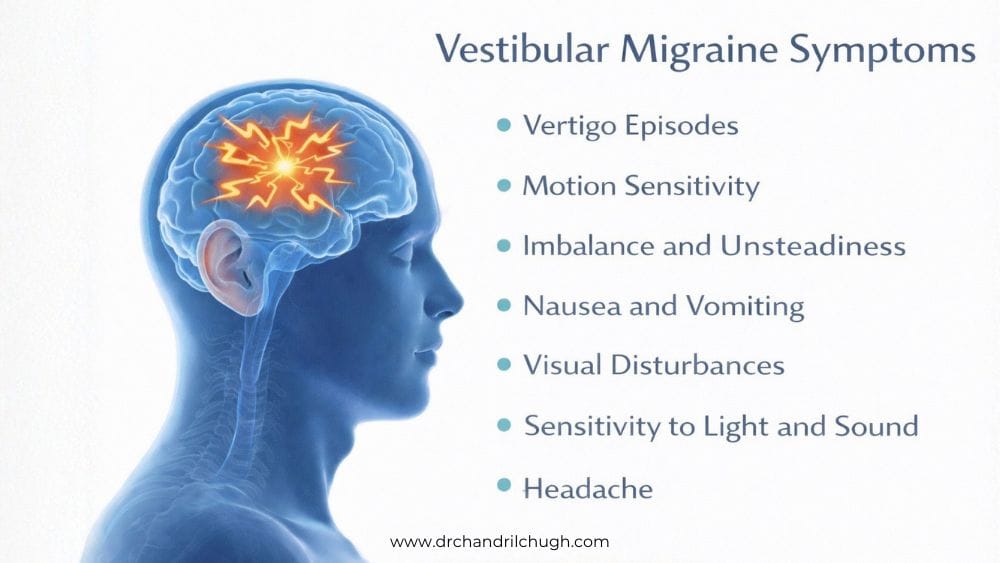
Vestibular migraine symptoms vary from person to person. Some attacks last 5 minutes. Others last 72 hours.
Vertigo Episodes
The room spins. You spin. Sometimes both. Vertigo is the most reported symptom and can be severe enough to make walking impossible.
Motion Sensitivity
Riding in a car, scrolling on a phone, or watching fast-moving video triggers dizziness. This happens because the brain is already overloaded with faulty balance signals.
Imbalance and Unsteadiness
You may feel “drunk” without drinking. Walking in a straight line becomes difficult. Some people bump into walls or door frames during an episode.
Nausea and Vomiting
The same brain-ear miscommunication that causes vertigo also triggers nausea. Vomiting occurs in severe episodes, especially when the attack lasts more than a few hours.
Visual Disturbances
Blurry vision, flickering lights, zigzag lines, or temporary blind spots on one side of your vision. These are called visual auras. Not everyone with vestibular migraine gets them, but they occur in about 30% of cases.
Sensitivity to Light and Sound
Bright lights and loud sounds feel physically painful. This is called photophobia and phonophobia. Many patients retreat to a dark, quiet room during episodes.
Headache (May or May Not Occur)
Up to 30% of vestibular migraine episodes happen with no headache. That is why so many cases get misdiagnosed as anxiety, inner ear disorders, or panic attacks.
Causes of Vestibular Migraine Attacks
Causes of vestibular migraine attacks are triggered by a combination of internal and external factors.
Genetic Predisposition
Vestibular migraine runs in families. If your parent or sibling has migraines with dizziness, your risk is significantly higher. Several genes affecting serotonin transport and calcium channels in the brain are linked to migraine susceptibility.
Hormonal Fluctuations
Estrogen drops sharply before menstruation. That drop is one of the most reliable triggers for vestibular migraine in women. Perimenopause, pregnancy, and hormonal contraceptives also shift estrogen levels enough to spark attacks.
Stress-Induced Vestibular Migraine
Stress-induced vestibular migraine is one of the most common patterns seen in clinical practice. When cortisol spikes during stress, it lowers the brain’s threshold for triggering migraine activity. You may experience attacks appearing not during stress but the day after, when cortisol suddenly drops. This is called the “let-down migraine” effect.
Sleep Disruption
Poor sleep raises cortisol and disrupts serotonin regulation. Both of these shift the brain into migraine-prone territory. Even one bad night of sleep can trigger an attack in sensitive individuals.
Sensory Overload
Crowded malls, flashing lights, and loud environments are genuine triggers because the hypersensitive brain processes them as extreme input, pushing the vestibular system past its tolerance threshold.
Food Triggers for Vestibular Migraine
Food triggers for vestibular migraine work through specific chemical pathways, mainly involving tyramine, histamine, and glutamate. Here is what to watch:
Caffeine
Caffeine constricts blood vessels. When it wears off, vessels rapidly dilate, which can trigger migraine activity. Regular caffeine drinkers who skip their morning coffee are at higher risk for an attack.
Alcohol (Especially Red Wine)
Red wine contains tyramine and histamine, both of which trigger inflammatory activity in the trigeminal nerve pathway. Even one glass is enough for some patients.
Aged Cheese and Fermented Foods
Aged cheddar, blue cheese, soy sauce, kombucha, and kimchi are high in tyramine. Tyramine causes blood vessel activity changes in the brain that set off migraine and vestibular symptoms.
MSG and Processed Foods
Monosodium glutamate (MSG), found in chips, instant noodles, and fast food, triggers excitatory nerve activity. In migraine-prone brains, this excitation is enough to start an attack.
Artificial Sweeteners
Aspartame, found in diet sodas and sugar-free gums, affects serotonin levels in the brain. Low serotonin is directly linked to migraine onset.
Skipped Meals
Blood sugar drops when you skip meals. That drop stresses the brain and lowers its migraine threshold fast. Eating on a regular schedule reduces attack frequency in many patients.
How Vestibular Migraine Is Diagnosed
Diagnosis is clinical, based entirely on your history.
Clinical Criteria (ICHD-3)
The International Headache Society (ICHD-3) requires at least 5 episodes of vestibular symptoms lasting 5 minutes to 72 hours, with a history of migraine, and at least 50% of episodes linked to migraine features like head pain, light sensitivity, or aura.
Symptom History
Your doctor will ask about the length of attacks, what triggers them, whether headache accompanies them, and your family history of migraines.
Ruling Out Inner Ear Disorders
Conditions like BPPV (benign paroxysmal positional vertigo), Meniere’s disease, and labyrinthitis can look similar. Specific tests like the Dix-Hallpike maneuver help rule these out.
When Brain Imaging Is Needed
An MRI is ordered if symptoms include sudden onset, neurological signs like weakness or speech problems, or if the diagnosis remains unclear after clinical evaluation.
Treatment Options for Vestibular Migraine
Treatment options for vestibular migraine work best when combined. No single treatment handles everything.
Acute Migraine Medications
Triptans (sumatriptan, rizatriptan) taken at the start of an episode can stop or reduce attack severity. Anti-nausea medications like ondansetron help when vomiting is severe.
Preventive Medications
For patients with frequent attacks (more than 2 per month), doctors prescribe daily preventive medications:
- Beta-blockers: Propranolol
- Antidepressants: Amitriptyline or nortriptyline
- Anticonvulsants: Topiramate or valproate
- Calcium channel blockers: Verapamil
- CGRP inhibitors: Aimovig, Ajovy (newer class, highly effective for chronic migraine)
Vestibular Rehabilitation Therapy
Vestibular rehabilitation is a specialized physical therapy program that trains your brain to recalibrate balance signals. A vestibular therapist guides you through specific gaze stabilization and balance exercises over 6 to 12 weeks. Studies show it significantly reduces dizziness between attacks and improves daily function.
Stress Management Techniques
Since stress-induced vestibular migraine is common, stress reduction directly reduces attack frequency. Cognitive behavioral therapy (CBT), biofeedback, and regular aerobic exercise all have evidence supporting their use.
Sleep Regulation
Consistent sleep and wake times stabilize cortisol and serotonin. Even 30-minute shifts in sleep schedule can be enough to trigger an attack in susceptible people.
Magnesium and Supplement Considerations
Magnesium deficiency is linked to increased migraine frequency. 400-600 mg of magnesium glycinate daily is used as a preventive supplement. Riboflavin (Vitamin B2) at 400 mg per day also has clinical evidence for reducing migraine frequency.
Stress-Induced Vestibular Migraine
Stress-induced vestibular migraine deserves its own section because it is the most misunderstood trigger pattern.
Cortisol and Vestibular Sensitivity
High cortisol sensitizes the vestibular nuclei in the brainstem. It lowers the activation threshold, meaning less provocation is needed to trigger an attack. Chronic stress keeps cortisol elevated long-term, which is why people under sustained pressure get attacks more often.
Anxiety and Balance Perception
Anxiety disorders are found in a high percentage of vestibular migraine patients. Anxiety itself creates body hyperawareness, where patients start monitoring every slight dizziness sensation. This hypervigilance worsens the perceived severity of attacks.
Hypervigilance and Dizziness
When someone fears dizziness, they pay extreme attention to any inner ear sensation. That constant monitoring keeps the nervous system in a state of alarm, which feeds back into the vestibular system and perpetuates the cycle.
Breathing Techniques for Acute Episodes
Slow diaphragmatic breathing at 4 seconds in and 6 seconds out activates the parasympathetic nervous system. This directly lowers cortisol and reduces the intensity of an acute vestibular migraine episode. Box breathing and extended exhale techniques work well.
When Vestibular Migraine Requires Emergency Care
Most vestibular migraine episodes are not emergencies. But some symptoms indicate something more serious.
Sudden Severe Vertigo With Weakness
If vertigo starts suddenly and one side of the body feels weak, call emergency services. This is a red flag for stroke, not migraine.
Slurred Speech
Slurred speech during a dizziness episode is a stroke warning. Do not wait it out.
One-Sided Numbness
Sudden numbness on one side of the face or body, alongside vertigo, needs immediate evaluation.
Persistent Double Vision
Double vision that does not clear within minutes, especially with dizziness and headache, requires urgent neurological assessment.
FAQs
What are the symptoms of vestibular migraine?
Vestibular migraine symptoms include spinning vertigo, balance loss, motion sensitivity, nausea, visual disturbances, and sensitivity to light and sound. Headache is absent in up to 30% of attacks. Episodes last anywhere from 5 minutes to 72 hours and vary in severity.
Can vestibular migraine occur without headache?
Yes. About 30% of vestibular migraine attacks happen with zero head pain. This is called a “silent migraine.” The dizziness, vertigo, and nausea occur alone, which is why many patients get misdiagnosed with anxiety or inner ear disorders for years.
What causes vestibular migraine attacks?
Causes of vestibular migraine attacks include genetic predisposition, estrogen drops, cortisol spikes from stress, poor sleep, and sensory overload. Most attacks are triggered by more than one factor at the same time, not a single isolated cause.
Are food triggers common in vestibular migraine?
Yes. Food triggers for vestibular migraine are reported by roughly 50% of patients. The top offenders are red wine, aged cheese, caffeine withdrawal, MSG, and skipped meals. Keeping a food diary for 4 weeks helps identify personal triggers.
How long do vestibular migraine episodes last?
Episodes last between 5 minutes and 72 hours. The average attack lasts 2 to 4 hours. Episodes shorter than 5 minutes are usually not vestibular migraines. Attacks lasting beyond 72 hours require medical evaluation.
Is vestibular migraine the same as vertigo?
No. Vertigo is a symptom. Vestibular migraine is the diagnosis. Vertigo can be caused by BPPV, Meniere’s disease, or labyrinthitis, too. What separates vestibular migraine is its link to migraine history and its pattern of recurring episodes.
Can stress cause vestibular migraine?
Yes. Stress-induced vestibular migraine happens because cortisol sensitizes the brainstem’s balance centers. Attacks often hit the day after a stressful event, not during it, due to the post-stress cortisol drop. This is called the let-down migraine pattern.
What is the best treatment for vestibular migraine?
The strongest combination is triptans for acute attacks, a daily preventive medication (propranolol or amitriptyline), and vestibular rehabilitation therapy. Magnesium supplementation at 400 mg daily and a consistent sleep schedule add a measurable reduction in attack frequency.
Does vestibular migraine cause hearing loss?
No. Vestibular migraine does not cause hearing loss. If hearing loss accompanies vertigo episodes, Meniere’s disease is the more likely diagnosis. That distinction is medically important and changes the entire treatment approach.
Can vestibular migraine become chronic?
Yes. Vestibular migraine becomes chronic when attacks occur on 15 or more days per month for 3 consecutive months. Chronic cases require daily preventive medication plus vestibular rehabilitation. Without proper management, the condition worsens over time for a significant number of patients.
About The Author

Medically reviewed by Dr. Chandril Chugh, MD, DM (Neurology)
Dr. Chandril Chugh is a U.S.-trained, board-certified neurologist with expertise in diagnosing and managing neurological disorders, including migraines, epilepsy, Parkinson’s disease, and movement disorders. His clinical focus includes evidence-based neurological care and patient education.
All content is reviewed for medical accuracy and aligned with current neurological guidelines.