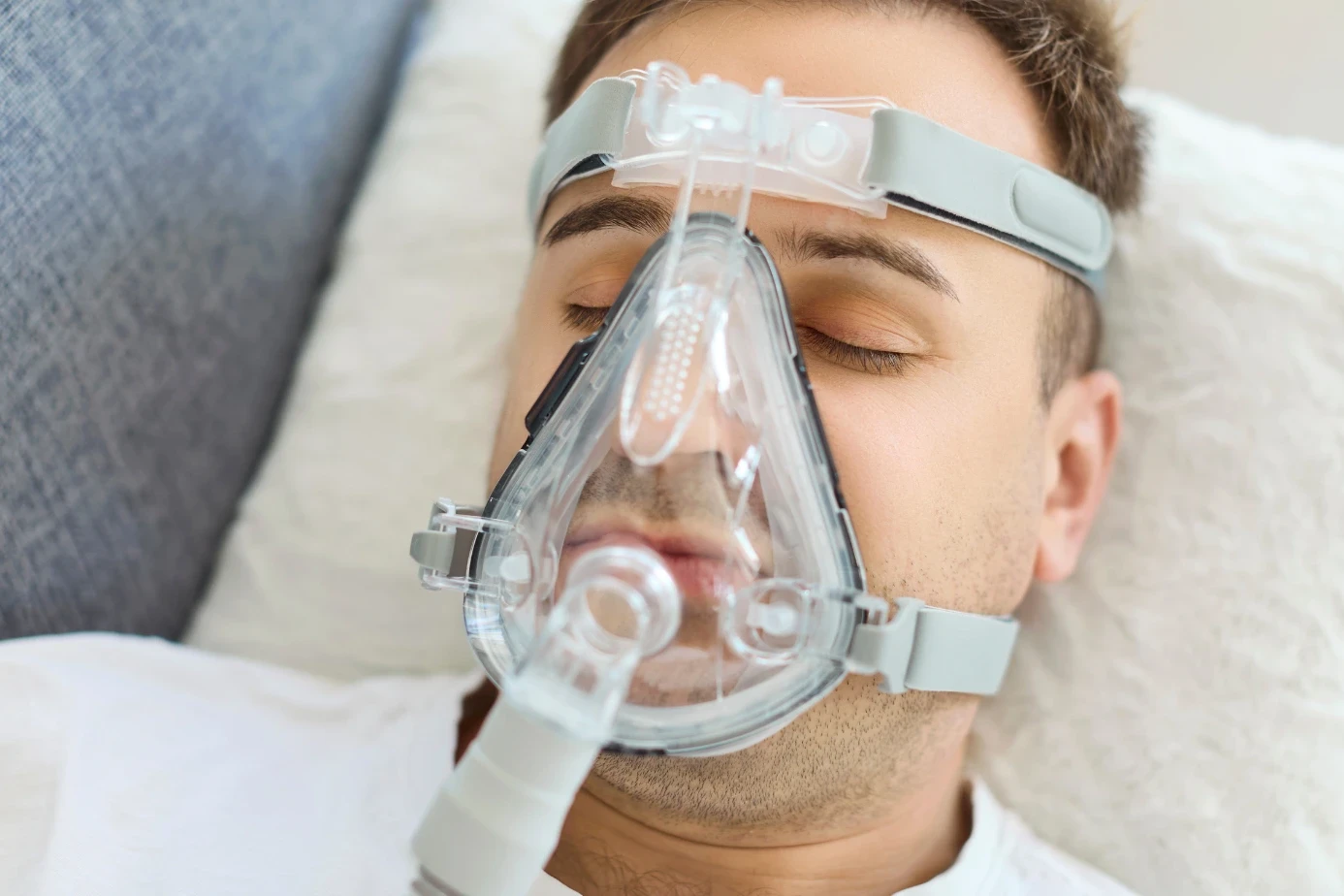
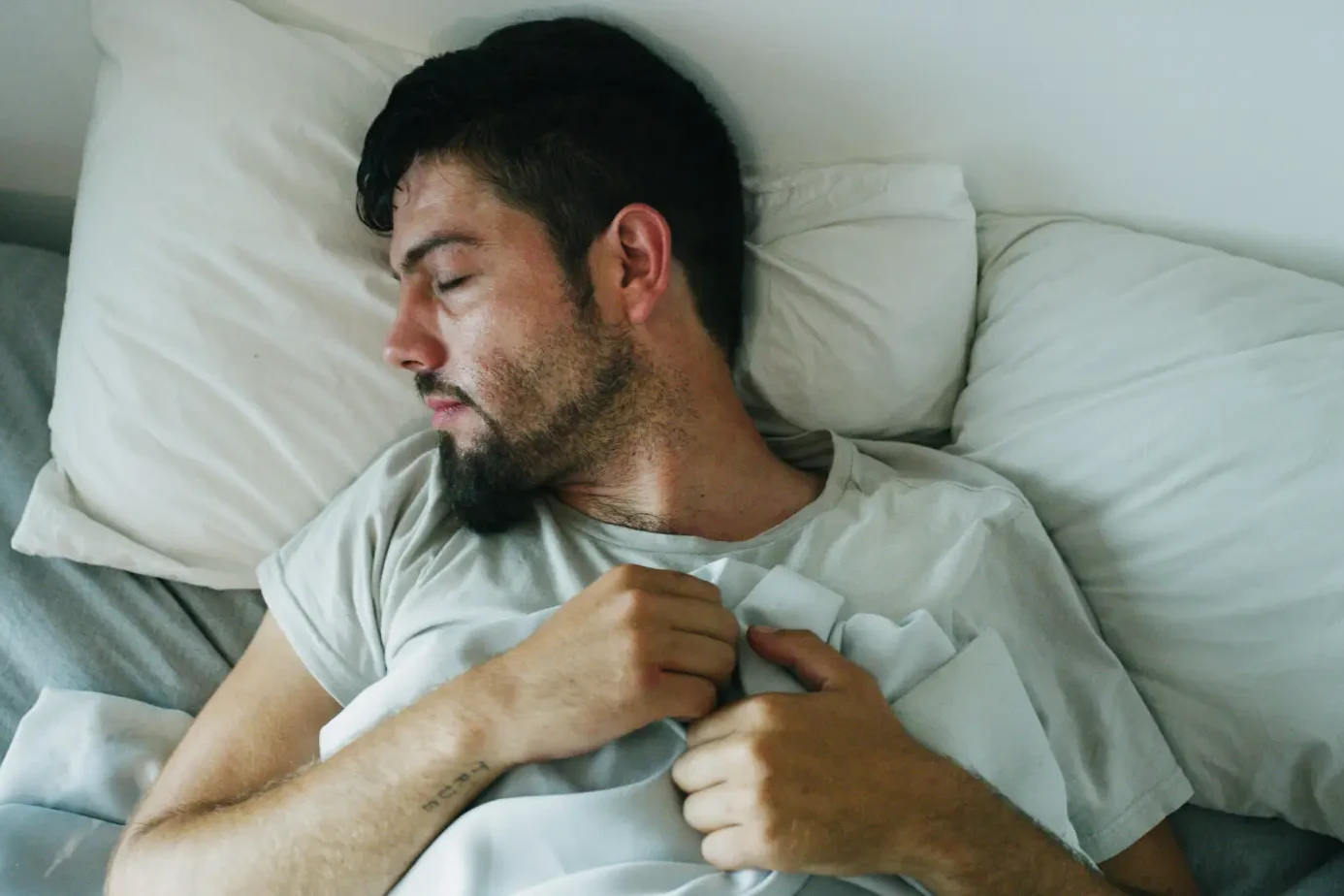
The best sleep position for lower back pain is back sleeping with a pillow under your knees or side sleeping with a pillow between your knees. Both positions keep your spine in a neutral line, which means your back is neither arching too much nor rounding too far.
Lower back pain affects millions of people, and sleep is when your body repairs damaged tissue. But the wrong position during those 7 to 8 hours can add more stress to already irritated joints, discs, and muscles. How you sleep is not a small detail. It directly changes how much pain you feel the next morning.
Key Takeaways
- The best sleep position for lower back pain is one that keeps your spine in a neutral position from your neck to your tailbone.
- Sleeping on the back with knee support and side sleeping with a pillow between the knees both reduce lumbar (lower back) strain.
- Stomach sleeping makes lower back pain worse in most cases.
- Proper sleeping posture for lumbar pain depends on your injury type and your mattress firmness.
- Acute lower back strain (sudden, short-term injury) needs specific position adjustments.
- Mattress firmness directly changes how your spine sits during sleep.
How Sleeping Positions for Lower Back Pain Help
Sleeping positions for lower back pain help come down to pressure management. When you lie down in the wrong position, your lumbar spine (the curve in your lower back) either flattens too much or arches too far. Both cause pain.
The right position does five things:
- Reduces lumbar disc pressure: Discs are the cushions between your spine bones. Wrong positions compress them.
- Maintains neutral spine: Your lower back has a natural inward curve. Good positions preserve it.
- Minimizes muscle tension: Twisted or unsupported positions force muscles to stay contracted overnight.
- Prevents nerve compression: Misalignment pinches nerves, which causes sharp or radiating pain.
- Improves overnight recovery: Proper alignment lets blood flow freely to inflamed tissues, speeding healing.
Understanding Lumbar Spine Alignment During Sleep
Neutral Spine Concept
A neutral spine means your vertebrae (spine bones) sit in their natural S-shaped curve. Your neck curves slightly inward, your mid-back curves outward, and your lower back curves inward again. Sleep positions that maintain this S-curve reduce pain significantly.
Lumbar Lordosis and Pressure Distribution
Lumbar lordosis is the inward curve of your lower back. Every person has it. When you sleep on a surface that is too soft, this curve collapses. When you sleep on a surface that is too hard, it over-arches. Both states put uneven pressure on your lumbar discs and joints.
How Misalignment Worsens Back Pain
Misalignment during sleep does more than cause morning stiffness. It keeps the muscles around your spine in a constant low-level contraction. After 7 hours, those muscles wake up fatigued and inflamed. This compounds any existing injury.
Role of Core Muscles During Sleep
Your core muscles (the deep abdominal and back muscles that wrap around your spine) do not fully switch off during sleep. They stay slightly active to protect the spine. Bad positions force these muscles to work harder than they should, leaving you more sore in the morning, not less.
Best Sleep Position for Lower Back Pain
Sleeping on Your Back with Knee Support
Sleeping on the back is widely considered the best sleep position for lower back pain caused by disc issues, spinal stenosis (narrowing of the spinal canal), or general lumbar strain.
- Place a firm pillow under both knees.
- This lifts the knees slightly, which flattens the lower back against the mattress.
- It reduces the pressure on lumbar discs by roughly 25% compared to lying flat with legs straight.
- A small rolled towel under the lower back adds extra support for people with a pronounced lumbar curve.
Side Sleeping with Pillow Between Knees
Side sleeping is the best sleep position for lower back pain linked to sciatica (pain that runs from the lower back down the leg through the sciatic nerve) or hip-related strain.
- Lie on your side with knees slightly bent.
- Place a firm pillow between your knees and ankles.
- This keeps your hips, pelvis, and spine stacked in a straight line.
- Without the pillow, the top knee drops forward, pulling the pelvis into a twist, which stresses the lumbar joints all night.
- Sleeping on the side opposite your pain usually reduces nerve irritation faster.
Proper Sleeping Posture for Lumbar Pain
Proper sleeping posture for lumbar pain is about every body part, not just your back. Each area connects to the next.
Head and Neck Alignment
Use a pillow that fills the gap between your head and the mattress. Your neck should not tilt up or drop down. A pillow that is too thick or too flat starts a chain reaction that pulls your upper spine out of alignment and eventually stresses your lower back.
Shoulder Positioning
In back sleeping, your shoulders should lie flat without rolling inward. In side sleeping, your bottom shoulder should not be compressed under your body weight. Slide it slightly forward so you are resting on the back of the shoulder, not the joint itself.
Hip and Pelvic Support
Your pelvis is the base of your lumbar spine. If it rotates forward or backward during sleep, your lower back follows. Side sleepers need a pillow between the knees to stop pelvic rotation. Back sleepers need a pillow under the knees to reduce anterior pelvic tilt (when the pelvis tips forward and increases lumbar arch).
Knee Elevation Adjustments
The knee pillow should be thick enough to keep the knees at roughly the same height as the hips. Too high and the lumbar spine rounds. Too low and there is no benefit.
Avoiding Spinal Twisting
Never sleep with your upper body facing one direction and your hips twisted the other way. This happens a lot in side sleeping without proper pillow support. It compresses the facet joints (small joints at the back of each vertebra) on one side throughout the night.
How to Align Spine While Sleeping with Back Pain
Aligning spine while sleeping with back pain is a step-by-step process. Get into position intentionally, not just by falling into whatever feels comfortable.
Step 1: Maintain Neutral Neck Curve
Choose a pillow that supports your neck in line with your spine. For back sleepers, a medium-loft pillow works. For side sleepers, a firmer, thicker pillow fills the larger gap between the shoulder and the head.
Step 2: Support Natural Lumbar Curve
Back sleepers: place a pillow under the knees. Side sleepers: place a pillow between the knees. Both methods stop the lumbar curve from flattening or over-arching.
Step 3: Prevent Pelvic Rotation
Make sure your knees, hips, and shoulders are aligned in the same vertical plane when side sleeping. Think of your body as a straight plank from head to foot.
Step 4: Adjust Pillow Height
If you wake up with increased stiffness or a new pain location, the pillow height is likely off. Adjust by 1 to 2 centimeters at a time and reassess over 3 nights.
Step 5: Test Morning Stiffness Indicators
Morning stiffness that fades within 30 minutes usually means position-related inflammation. Stiffness that lasts longer than 30 to 45 minutes suggests the position needs changing or an underlying condition needs medical review.
Ideal Mattress Position for Back Pain Relief
The ideal mattress position for back pain relief is about how the mattress interacts with your body weight and spine curve.
Firm vs Medium-Firm Mattress
Research consistently shows medium-firm mattresses reduce chronic lower back pain better than firm mattresses. A firm surface does not let the hips and shoulders sink in enough, which forces the lower back to arch away from the surface.
Memory Foam vs Hybrid Support
Memory foam contours to body shape and distributes pressure evenly. Hybrid mattresses combine foam layers with coil springs, giving both contouring and responsive support. Both are suitable for back pain, but hybrids work better for heavier body weights where pure foam can sag.
Mattress Sagging and Lumbar Collapse
A mattress with a visible sag of more than 2.5 centimetres in the centre destroys spinal alignment regardless of sleep position. If your mattress is older than 7 to 8 years, sagging is likely contributing to your pain even if you cannot see it clearly.
Bed Surface and Pressure Distribution
A mattress topper (an extra layer placed on top of the mattress) can add pressure relief without replacing the whole mattress. A 5 to 7 centimetre memory foam topper on a firm mattress mimics medium-firm support effectively.
| Mattress Type | Support Level | Best For | Risk Level |
| Firm Innerspring | High | Stomach sleepers (not recommended for back pain) | High for most back pain types |
| Medium-Firm Foam | Moderate-High | Back and side sleepers with disc pain | Low |
| Memory Foam | Moderate | Pressure point pain, hip and shoulder issues | Low to Moderate |
| Hybrid (Foam + Coil) | Moderate-High | Most back pain types, heavier body weights | Low |
| Soft Pillow-Top | Low | Not recommended for lower back pain | High |
How to Sleep with Acute Lower Back Strain
Sleeping with acute lower back strain is different from managing chronic pain. Acute strain means a sudden injury, like from heavy lifting or a wrong movement, that causes sharp, immediate lower back pain.
Immediate Pain-Relief Position
The best immediate position is lying on your back with your hips and knees bent at 90 degrees, resting on a chair or a stack of firm pillows. This is called the 90-90 position. It completely removes lumbar disc pressure and relaxes the spasming muscles.
Pillow Placement for Muscle Relaxation
Place a pillow under the knees and a thin pillow under the lower back. This supports the natural curve without pressing into the inflamed area.
When to Use Heat Before Bed
Apply a heating pad (set to low or medium) to the lower back for 15 to 20 minutes before sleeping. Heat increases blood flow to the muscles and reduces spasm. Do not sleep with a heating pad on. Remove it before lying down.
When to Avoid Side Sleeping
In the first 48 to 72 hours of an acute strain, side sleeping can pull the injured muscles further out of alignment. Back sleeping with knee support is safer during this window.
When to Seek Medical Evaluation
Seek medical help if the pain includes any of the following: numbness or tingling down the leg, weakness in one leg, loss of bladder or bowel control, or pain that does not reduce at all after 48 hours of rest positioning.
Sleep Positions to Avoid with Lower Back Pain
Stomach Sleeping
Stomach sleeping forces your neck to rotate to one side and pushes your lower back into an exaggerated arch. This position increases pressure on the facet joints and compresses the lumbar discs. It is the most biomechanically harmful position for lower back pain.
Unsupported Reclined Position
Sleeping in a recliner chair or on a sofa without lumbar support lets the lower back round into a C-shape. This stretches the posterior ligaments of the spine repeatedly through the night.
Excessive Fetal Curl
Curling tightly in a fetal position (knees pulled close to the chest) rounds the lumbar spine significantly. A mild side-lying position with slightly bent knees is fine. A tight curl is not.
Twisted Side Posture
Sleeping with the top half of the body rotated away from the bottom half, arms stretched to one side while legs face the other, compresses one side of the lumbar spine all night. It often causes one-sided lower back pain that people wrongly blame on their mattress.
Nighttime Habits That Improve Back Pain Recovery
Pre-Sleep Stretching
Spend 5 to 10 minutes stretching before bed. The knee-to-chest stretch, cat-cow stretch, and child’s pose all decompress the lumbar joints and relax tight muscles before you lie down.
Core Activation
A quick 2-minute core activation routine before bed, like dead bugs or pelvic tilts, primes your deep spinal muscles to hold a better position during sleep.
Heat Therapy
15 to 20 minutes of heat on the lower back before sleep reduces muscle tension and improves tissue flexibility. This makes it easier to maintain a good sleeping position without muscle resistance.
Avoiding Prolonged Static Position
Even in the correct position, staying completely still for too long slows circulation to spinal discs. Discs get their nutrients from movement. Changing position 1 to 2 times per night is normal and beneficial.
Sleep Duration and Inflammation
Sleeping fewer than 6 hours increases inflammatory markers in the body. Inflammation worsens back pain. Getting 7 to 9 hours of sleep consistently is part of the recovery plan, not just a nice extra.
FAQs
What is the best sleep position for lower back pain?
The best sleep position for lower back pain is back sleeping with a pillow under the knees. It reduces lumbar disc pressure and keeps the spine neutral. For sciatica, side sleeping with a pillow between the knees works better. Both outperform stomach sleeping for pain relief.
Is sleeping on your side good for lower back pain?
Yes, side sleeping is good for lower back pain when you place a firm pillow between your knees. Without that pillow, the top knee drops and twists the pelvis, which adds stress to the lumbar joints. With the pillow, side sleeping relieves pressure on spinal discs effectively.
Is it better to sleep on a firm or soft mattress for back pain?
Medium-firm is best. Firm mattresses do not let the hips sink enough, which forces the lower back to arch. Soft mattresses let the hips sink too far, rounding the lumbar spine. Medium-firm keeps both in balance and consistently shows better pain outcomes than either extreme.
How do I align my spine while sleeping with back pain?
Use the pillow method: pillow under the knees for back sleeping, pillow between the knees for side sleeping. Keep the neck supported in line with the spine. Check your position by asking if your spine feels like a straight line from your head to your hips. That is how to align spine while sleeping with back pain.
Can stomach sleeping cause lower back pain?
Yes. Stomach sleeping forces the lower back into a prolonged arch and rotates the neck to one side. Both create joint compression and muscle fatigue. If your lower back pain started without an obvious injury, stomach sleeping is often the cause.
How should I sleep with acute lower back strain?
The 90-90 position works best: lie on your back with your hips and knees bent at 90 degrees, feet resting on a chair or stack of pillows. Understanding how to sleep with acute lower back strain is important because side sleeping in the first 48 hours can worsen the muscle spasm.
Does putting a pillow under your knees help back pain?
Yes. A pillow under the knees reduces lumbar disc pressure by flattening the excessive arch in the lower back. The effect is measurable and immediate. Use a firm pillow, not a soft one, because it needs to maintain height throughout the night.
What mattress is ideal for back pain relief?
The ideal mattress position for back pain relief uses a medium-firm mattress, specifically a hybrid or memory foam type. A mattress with more than 2.5 centimetres of visible sagging no longer provides adequate spinal support regardless of its original firmness rating.
Why does my lower back hurt more at night?
Night pain often spikes because lying down changes the pressure distribution on spinal discs and joints. Discs slightly rehydrate when you lie down, which can increase pressure around inflamed nerves. A wrong sleep position compounds this. If pain wakes you from sleep regularly, get a medical evaluation to rule out non-mechanical causes.
Should I avoid moving during sleep if I have back pain?
No. Moving during sleep is normal and healthy. Staying in one position too long reduces circulation to the spinal discs. Changing position 1 to 2 times per night helps. What matters is that each position you move into still maintains spinal alignment, not that you stay perfectly still.
About The Author

Medically reviewed by Dr. Chandril Chugh, MD, DM (Neurology)
Dr. Chandril Chugh is a U.S.-trained, board-certified neurologist with expertise in diagnosing and managing neurological disorders, including migraines, epilepsy, Parkinson’s disease, and movement disorders. His clinical focus includes evidence-based neurological care and patient education.
All content is reviewed for medical accuracy and aligned with current neurological guidelines.