Key Takeaways
- Acute migraine means fewer than 15 headache days per month.
- Chronic migraine means 15 or more headache days per month for at least 3 months.
- Acute migraine with severe throbbing pain comes with one-sided head pain, nausea, and light sensitivity.
- Chronic migraine symptoms include daily head pressure, brain fog, sleep loss, and mood changes.
- The duration of an acute migraine attack falls between 4 and 72 hours.
- Acute migraine treatment focuses on stopping the attack fast.
- Preventive therapy for chronic migraine reduces the total number of migraine days each month.
- Overusing pain medication is the top cause of acute pain turning into chronic migraine.
Acute Migraine With Severe Throbbing Pain
Acute migraine with severe throbbing pain is one of the top reasons you struggle with your day-to-day activities. The pain arrives fast, peaks in under an hour, and makes normal tasks nearly impossible. Unlike a tension headache, acute migraine with severe throbbing pain is disabling. Learn more about migraine vs headache
Pulsating Quality
The pain pulses in sync with your heartbeat. Doctors call this “pulsating quality.” It is not a dull ache. It is an intense, rhythmic pounding that gets worse with each beat.
One-Sided Head Pain
Most acute migraine attacks hit one side of the head, not both. Some people switch sides between separate attacks. This is a key sign that separates migraines from regular tension headaches.
Activity Worsening Pain
Climbing stairs, bending forward, or walking fast makes the throbbing sharper. Even mild physical activity increases pain intensity. The International Headache Society lists this as a diagnostic criterion for migraine.
Aura vs No Aura
About 25% of people with acute migraines get an aura before the headache starts. Aura means temporary visual changes like flashing lights, blind spots, or zigzag lines. It lasts 20 to 60 minutes. The remaining 75% experience no aura at all.
Chronic Migraine Symptoms
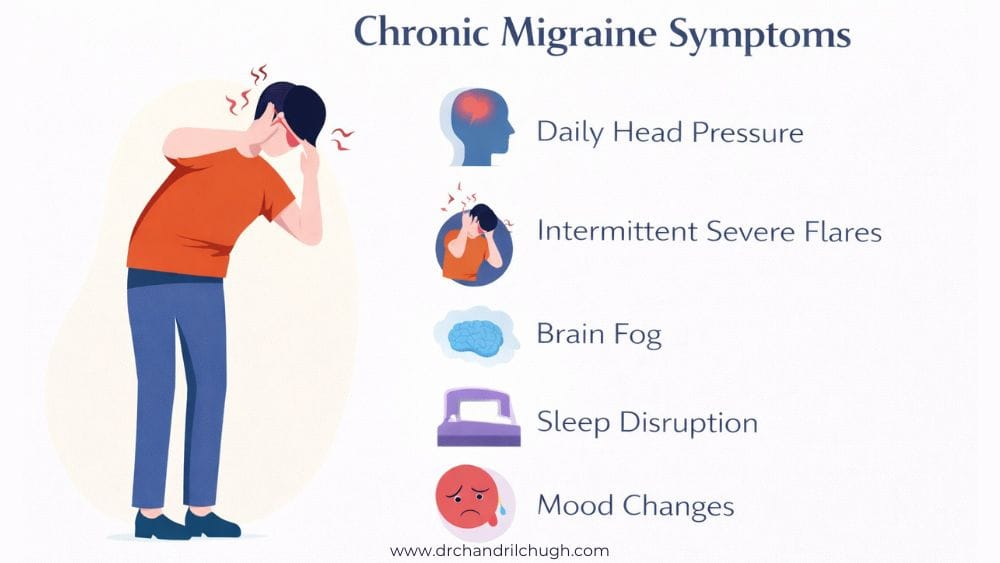
Chronic migraine symptoms are harder to spot because the pain never fully stops. The brain stays in a constant state of sensitivity, which turns every day into a management task.
Daily Head Pressure
Most days bring a dull, heavy pressure across the head. It is not always severe, but it stays. You may feel like wearing a tight helmet all day. This background pain separates chronic migraine from episodic attacks.
Intermittent Severe Flares
On top of daily pressure, chronic migraine brings sudden, severe attacks. These flares hit 8 to 10 days per month with full-force pain, nausea, and light sensitivity.
Brain Fog
Brain fog is a real neurological symptom, not just tiredness. Thinking slows down, words feel hard to find, and concentration drops even on low-pain days. Repeated migraine episodes disrupt neural pathways and cause this directly.
Sleep Disruption
Pain wakes people up at night. Falling back to sleep is hard. Poor sleep then triggers more migraine attacks the next day. This cycle is one of the most damaging parts of living with chronic migraine.
Mood Changes
Irritability, anxiety, and depression are confirmed chronic migraine symptoms. Serotonin drops during migraine episodes. The CGRP protein tied to migraine also regulates mood, making people with this condition three times more likely to develop depression.
Duration of Acute Migraine Attack
Typical 4-72 Hour Window
The duration of an acute migraine attack falls between 4 and 72 hours. Most attacks peak between 12 and 24 hours. Without treatment, pain rarely clears before the 4-hour mark.
Prolonged Attacks
Some attacks go past 72 hours. This signals treatment failure or a delayed response. Prolonged attacks increase brain sensitivity, which speeds up the shift from acute migraine to chronic migraine.
Status Migrainosus Risk
When the duration of acute migraine attack crosses 72 hours without relief, doctors call it “status migrainosus.” This is a medical emergency. Treatment requires IV fluids, IV corticosteroids, and stronger IV medications at a hospital.
Acute Migraine Treatment
The goal of acute migraine treatment is to stop the attack as early as possible. The sooner you act, the better the result.
NSAIDs
Ibuprofen (400 to 800 mg) and naproxen sodium are first-line options for mild to moderate attacks. They work best at the very first sign of pain. Waiting 30 minutes or more reduces their effectiveness noticeably.
Triptans
Triptans like sumatriptan and rizatriptan are the most effective option for moderate to severe attacks. They narrow blood vessels and block pain signals in the brain. Relief comes within 30 to 60 minutes for most people. Triptans are the most widely used acute migraine treatment today.
Gepants
Gepants like ubrogepant (Ubrelvy) and rimegepant (Nurtec) block CGRP receptors directly. They work well if you cannot tolerate triptans or have cardiovascular conditions that make triptans unsafe.
Anti-Nausea Medications
Metoclopramide and ondansetron stop nausea and vomiting during attacks. They also speed up stomach absorption, so NSAIDs and triptans kick in faster.
Rest in Dark Environment
Lying flat in a quiet, dark room reduces sensory input and cuts pain intensity. It does not replace medication but shortens how long the attack lasts. Learn more Home Remedies for Migraine.
Preventive Therapy for Chronic Migraine
Preventive therapy for chronic migraine reduces how many migraine days you get per month over time.
CGRP Monoclonal Antibodies
Erenumab (Aimovig), fremanezumab (Ajovy), and galcanezumab (Emgality) are monthly injectable drugs. They block the CGRP protein that drives attacks. You will notice a 50% reduction in migraine days within 3 months. This is the most targeted preventive therapy for chronic migraine available today.
Botox Injections
OnabotulinumtoxinA (Botox) is FDA-approved for chronic migraines. Neurologists inject it into 31 fixed points on the head and neck every 12 weeks. After two treatment cycles, it cuts monthly migraine days by about 50%.
Beta-Blockers
Propranolol and metoprolol lower nerve excitability and reduce migraine frequency by 40 to 50%. They are commonly used when CGRP antibodies are not accessible or not covered by insurance.
Anti-Seizure Medications
Topiramate and valproate calm overactive nerve firing in the brain. Clinical trials show topiramate cuts migraine days by nearly 50% with consistent use.
Lifestyle Stabilization
Fixed sleep times, regular meals every 4 to 5 hours, and drinking 2 liters of water daily reduce trigger exposure. Skipping meals and irregular sleep are two of the biggest controllable triggers.
Can Acute Migraine Become Chronic?
Yes. Acute migraine can transform into chronic migraine over months or years. Doctors call this process “chronification.”
Migraine Transformation
The brain becomes more sensitive with each repeated attack. Pain signals fire more easily. The threshold for triggering an attack drops lower over time. Eventually, headaches occur almost daily without any clear external cause.
Risk Factors
Key risk factors include obesity, untreated anxiety, depression, snoring, and prior head or neck injuries. If you already get 4 or more acute migraine days per month, you have the highest risk of progression.
Medication Overuse
Using triptans more than 10 days per month or NSAIDs more than 15 days per month causes medication overuse headache (MOH). MOH resets the brain’s pain threshold to a permanently lower level. It is the single fastest way to turn an acute migraine into a chronic daily condition.
Stress and Sleep Disruption
Chronic stress keeps cortisol elevated. High cortisol makes the nervous system more reactive to pain. Combined with poor sleep, the brain eventually fires migraine signals with almost no external trigger. Learn more Foods That Trigger Migraines
Long-Term Effects of Chronic Migraine
Central Sensitization
In chronic migraine, the brain’s pain-processing system stays permanently on. Even light touch, sound, or smell triggers pain. This is central sensitization. It makes treatment harder the longer it goes unaddressed.
Increased Disability
People with chronic migraine miss an average of 4 work days per month. The WHO ranks chronic migraine among the top 10 most disabling conditions globally. About 25% of sufferers cannot maintain full-time employment.
Anxiety and Depression
50% of people with chronic migraine develop clinical anxiety or depression. CGRP, the protein that drives migraine, also regulates mood. This biological connection directly links migraine frequency to mental health decline.
Reduced Quality of Life
Relationships, career, and social activity all deteriorate. Chronic pain rewires how the brain processes reward and motivation, creating long-term changes in daily function and emotional stability.
FAQs
What is the difference between acute vs chronic migraine?
Acute migraine means fewer than 15 headache days per month, with full recovery between episodes. Chronic migraine means 15 or more headache days per month for at least 3 consecutive months, with at least 8 days showing full migraine features like throbbing pain, nausea, or light sensitivity. learn more types of migraines.
How long does an acute migraine attack last?
The duration of an acute migraine attack is 4 to 72 hours. Most resolve within 12 to 24 hours with medication. Any attack crossing 72 hours becomes Status Migrainosus, a neurological emergency requiring IV treatment at a hospital, not home rest.
What is preventive therapy for chronic migraine?
Preventive therapy for chronic migraine includes CGRP monoclonal antibodies (Aimovig, Ajovy, Emgality), Botox at 31 head and neck sites every 12 weeks, beta-blockers like propranolol, and anti-seizure drugs like topiramate. These cut monthly migraine days by 40 to 50% on average.
Can acute migraine turn into chronic migraine?
Yes. Acute migraine becomes chronic when attacks reach 15 or more days per month. Medication overuse (pain drugs taken 10+ days per month), obesity, anxiety, and disrupted sleep are the four fastest-confirmed drivers of this transformation.
How many migraine days qualify as chronic?
15 or more headache days per month for at least 3 consecutive months qualifies as chronic. At least 8 of those days must include full migraine features such as pulsating pain, nausea, or sensitivity to light and sound.
Is chronic migraine more severe than acute migraine?
Not always in single-attack intensity. But chronic migraine causes far greater total disability. It adds daily head pressure, brain fog, sleep disruption, and mood disorders that episodic migraines do not consistently produce daily.
Can chronic migraine be cured?
No complete cure exists today. But chronic migraine can reach remission. CGRP antibody therapy cuts migraine days by 50% or more in most patients. Stopping medication overuse alone returns 45% of chronic migraine patients to episodic levels within 2 months.
Does medication overuse cause chronic migraine?
Yes. Using triptans more than 10 days per month or NSAIDs more than 15 days per month triggers medication-overuse headache. It permanently lowers the brain’s pain threshold and is the most common cause of progression from episodic to daily migraine.
What triggers chronic migraine attacks?
The top confirmed triggers are estrogen drops during the menstrual cycle, skipped meals, irregular sleep, red wine, bright or flickering lights, and psychological stress. Caffeine withdrawal triggers attacks even in people who drink just one cup of coffee per day.
When should I see a neurologist for migraine?
See a neurologist when attacks happen more than 4 days a month, last longer than 24 hours, stop responding to ibuprofen or triptans, or come with new symptoms like vision loss or speech changes. Early care stops episodic migraines from becoming a chronic daily condition.
About The Author

Medically reviewed by Dr. Chandril Chugh, MD, DM (Neurology)
Dr. Chandril Chugh is a U.S.-trained, board-certified neurologist with expertise in diagnosing and managing neurological disorders, including migraines, epilepsy, Parkinson’s disease, and movement disorders. His clinical focus includes evidence-based neurological care and patient education.
All content is reviewed for medical accuracy and aligned with current neurological guidelines.