Living with chronic migraines means dealing with 15 or more headache days per month, with at least 8 of those meeting full migraine criteria. It is a neurological condition that affects work, sleep, mood, relationships, and long-term brain health. Over 3.2 million Americans live with chronic migraine, and fewer than half receive proper treatment.
Key Takeaways
- Living with chronic migraines means 15 or more headache days monthly for 3 or more consecutive months.
- Chronic migraine vs episodic migraine : episodic means fewer than 15 headache days per month. Chronic means 15 or more.
- Triggers for chronic migraine attacks include sleep irregularity, hormonal shifts, dehydration, stress, and food sensitivities.
- Best medications for chronic migraine include CGRP inhibitors, beta-blockers, topiramate, and Botox injections every 12 weeks.
- Manage chronic migraines daily through structured sleep, trigger journaling, consistent meals, hydration, and stress regulation.
How Chronic Migraine Affects Daily Life
Living with chronic migraines affects nearly every part of a person’s day. On high-frequency attack days, functioning at even a basic level becomes difficult. On pain-free days, the fear of the next attack changes behavior and limits choices.
Work and Productivity Impact
People with chronic migraine miss an average of 4.4 workdays per month and underperform for an additional 5.8 days monthly due to reduced function during attacks. This is called presenteeism. The total economic impact per person reaches $5,000 to $20,000 annually in lost productivity and medical costs.
Cognitive Fog
Between and during attacks, many people experience brain fog. Thinking slows, memory gaps appear, and concentration becomes difficult. Neuroimaging studies show measurable changes in white matter in people with long-term chronic migraine, affecting the areas responsible for processing and memory speed.
Sleep Disruption
Chronic migraine and poor sleep feed each other directly. Attacks wake people at night. Sleep deprivation lowers the migraine threshold the next day. This creates a loop that, without intervention, deepens both conditions simultaneously.
Emotional Burden
Depression and anxiety affect 40 to 50% of people living with chronic migraines. The unpredictability of attacks creates constant anticipatory anxiety. Pain that keeps returning despite treatment produces hopelessness. These emotional responses are neurological, not character weaknesses.
Social Withdrawal
Canceling plans, avoiding social commitments, and isolating during attacks reduces social contact significantly over time. Studies show that chronic migraine patients report lower relationship satisfaction and higher rates of social isolation compared to people with episodic migraine or no headache disorder.
How to Manage Chronic Migraines Daily
Manage chronic migraines daily with a structured framework that covers morning, daytime, and evening behaviors. Consistency is the single most effective non-medication tool available.
Structured Sleep Routine
Wake up at the same time every single day, including weekends. Sleep irregularity is the most consistent trigger across all chronic migraine populations. Even 30 minutes of variation in wake time raises attack risk measurably. Target 8 hours of uninterrupted sleep in a dark, cool room.
Hydration Monitoring
Drink 2 to 2.5 liters of water daily. Spread intake evenly across the day. Do not rely on thirst as a signal. By the time thirst appears, mild dehydration has already begun. Dehydration raises CGRP blood levels and lowers pain tolerance within 2 to 3 hours.
Trigger Tracking Journal
Keep a daily log noting sleep hours, food consumed, stress level (1 to 10 scale), water intake, menstrual cycle phase, and any migraine activity. Patterns appear within 4 to 6 weeks. The Migraine Buddy app and N1-Headache app both generate reports that a neurologist can use directly in treatment planning.
Controlled Caffeine Intake
Cap caffeine at one serving per day, taken at the same time daily. Caffeine withdrawal, not caffeine itself, triggers most caffeine-related migraines. The withdrawal headache starts 12 to 24 hours after skipping a regular dose.
Consistent Meal Timing
Eat every 4 to 5 hours without exception. Blood sugar drops below 70 mg/dL trigger cortical excitability and migraine onset within 60 to 90 minutes. Keep a small protein snack available at all times to prevent gaps.
Stress Regulation Practice
Ten minutes of diaphragmatic breathing (4 counts in, 6 counts out) daily lowers cortisol by a measurable amount over 4 weeks. This is a physiological intervention that directly reduces the stress hormone responsible for triggering attacks.
Movement and Low-Impact Exercise
Aerobic exercise 3 times per week at moderate intensity reduces migraine frequency by 30 to 50% in clinical studies. Walking, swimming, and cycling work well. High-intensity exercise can trigger attacks during the activity itself, so keep intensity controlled.
Daily Framework:
|
Triggers for Chronic Migraine Attacks
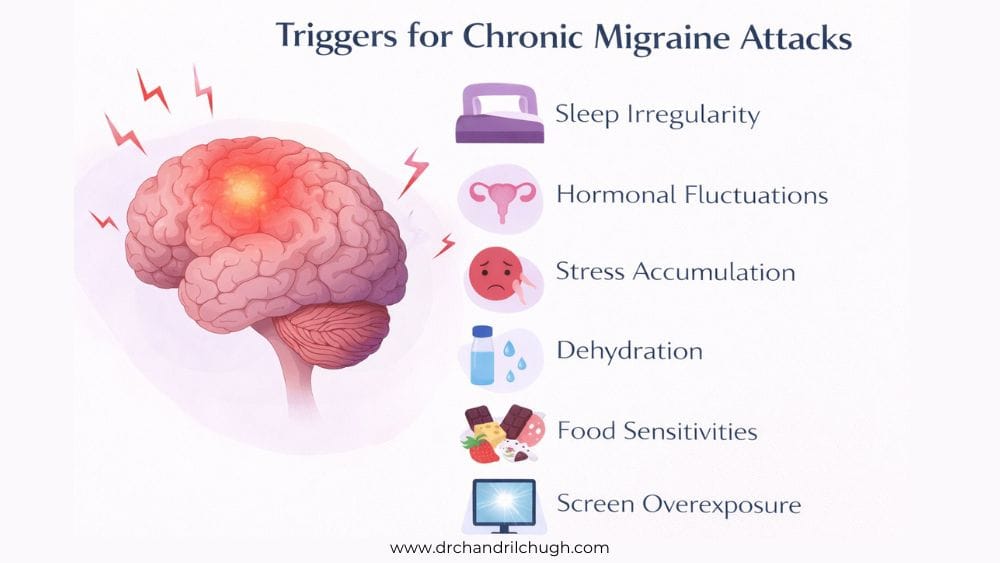
Triggers for chronic migraine attacks have a consistent personal trigger profile. Identifying yours cuts attack frequency significantly.
Sleep Irregularity
Changing sleep or wake times by more than 30 minutes disrupts cortisol and melatonin patterns. Both chemicals directly influence migraine threshold. This is the most commonly missed trigger because people underestimate how much variation they actually have in their sleep schedule.
Hormonal Fluctuations
Estrogen drops in the 2 days before menstruation trigger attacks in 60% of women living with chronic migraines. Perimenopause and pregnancy also produce significant hormonal shifts that change attack frequency dramatically.
Stress Accumulation
Stress does not always trigger a migraine during the stressful event. The letdown after stress ends is when many attacks occur. This is called the weekend migraine or letdown migraine phenomenon. The cortisol drop after sustained stress causes vascular rebound in the brain.
Dehydration
Even 1 to 2% body weight lost through dehydration measurably raises migraine risk. That is approximately 500ml to 1 liter of fluid for an average adult. Most people do not notice this level of dehydration until it is already affecting their nervous system.
Food Sensitivities
Tyramine (aged cheese, red wine, cured meats), phenylethylamine (chocolate), nitrates (processed meats), MSG, and artificial sweeteners are the most confirmed dietary triggers. Individual sensitivity varies. The trigger journal reveals which ones apply to each person.
Screen Overexposure
Blue light from screens stimulates retinal photoreceptors intensely. Prolonged screen use reduces blink rate from 15 to 5 times per minute, causing dry eye and eye muscle fatigue. Both effects lower the migraine threshold in screen-sensitive individuals.
Best Medications for Chronic Migraine
Best medications for chronic migraine depend on attack frequency, severity, and comorbidities like depression, anxiety, or high blood pressure.
Preventive Medications
Preventive medications are taken daily, whether or not a headache is present. They do not cure migraine. They reduce attack frequency by 30 to 50% over 3 to 6 months of consistent use.
CGRP Inhibitors
CGRP monoclonal antibodies are the most targeted preventive medications available. Options include:
- Erenumab (Aimovig): Monthly self-injection reduces migraine days by 50% in clinical trials
- Fremanezumab (Ajovy): Monthly or quarterly injection option
- Galcanezumab (Emgality): Monthly injection, also effective for cluster headache
These medications specifically block or neutralize CGRP, the neurochemical at the core of chronic migraine biology. They work within 4 to 12 weeks.
Beta-Blockers
Propranolol and metoprolol reduce migraine frequency by 40 to 50% in clinical use. They also lower blood pressure and reduce physical anxiety symptoms. They are first-line preventive options for people living with chronic migraines who also have high blood pressure or anxiety.
Anti-Seizure Medications
Topiramate and valproate stabilize electrical activity in the brain and reduce cortical spreading depression. Topiramate reduces migraine frequency by 47% at 100mg daily. Weight loss is a common side effect. Valproate carries teratogenic risk and is avoided in women of childbearing age.
Botox for Chronic Migraine
Botox (onabotulinumtoxin A) is FDA-approved specifically for chronic migraine. It involves 31 injections across the head, neck, and shoulder areas every 12 weeks. Clinical trials show 50% of patients achieve at least a 50% reduction in monthly headache days after 2 treatment cycles. It takes 2 to 3 rounds to see full benefit.
Acute Medications
Acute medications stop an attack in progress. They work best when taken within 60 minutes of onset:
- Triptans (sumatriptan, rizatriptan, eletriptan) for moderate to severe attacks
- NSAIDs (naproxen sodium 550mg) for mild to moderate attacks
- Gepants (ubrogepant, rimegepant) for people who cannot tolerate triptans
- Limit acute medications to 10 days per month maximum to prevent medication overuse headache
Non-Drug Strategies for Long-Term Control
Cognitive Behavioral Therapy
CBT adapted for chronic pain teaches people to change how the brain processes and responds to pain signals. For people living with chronic migraines, CBT reduces attack frequency by 30 to 40% within 12 sessions. It also treats the anxiety and depression that frequently accompany chronic migraine.
Biofeedback
Biofeedback trains people to control physical stress responses like muscle tension and blood vessel dilation using real-time feedback from sensors. Thermal biofeedback (controlling hand temperature) reduces migraine frequency by 45% in studies and has no side effects.
Magnesium Supplementation
Magnesium glycinate at 400 to 600mg daily reduces cortical spreading depression frequency. Magnesium deficiency is measurably more common in chronic migraine patients than in the general population. The American Headache Society lists magnesium as a Level B evidence recommendation for migraine prevention.
Neuromodulation Devices
FDA-cleared devices offer non-medication options:
- Cefaly: Transcutaneous electrical nerve stimulation device worn on the forehead, reduces attack frequency by 38% with daily 20-minute use
- gammaCore: Vagus nerve stimulator used at attack onset and daily for prevention
- SpringTMS: Transcranial magnetic stimulation device for migraine with aura
Long-Term Effects of Chronic Migraines
Long-term effects of chronic migraines go beyond pain. Without proper management, the condition causes measurable, lasting changes in the nervous system and quality of life.
Central Sensitization
Repeated migraine attacks permanently lower the brain’s pain threshold through a process called central sensitization. The brain starts amplifying pain signals from all sources, not just migraine-specific ones. Back pain, joint pain, and sensitivity to light and sound all intensify. This process is reversible in its early stages with correct treatment.
Medication Overuse Headache
Using acute pain medications more than 10 to 15 days per month causes the brain to adapt to the drug and produce rebound headaches when the medication wears off. This affects 30% of people living with chronic migraines who self-manage with over-the-counter medications. Breaking this cycle requires medical supervision and a structured withdrawal plan.
Anxiety and Depression Risk
Long-term chronic migraine doubles the lifetime risk of major depression and triples the risk of generalized anxiety disorder. The relationship runs both ways. Depression and anxiety also worsen migraine frequency. Treating both conditions simultaneously produces better outcomes than treating either alone.
Sleep Disorders
Chronic migraine damages sleep architecture over time. REM sleep decreases. Slow-wave sleep, the most restorative stage, becomes fragmented. People with untreated long-term effects of chronic migraines develop insomnia, sleep apnea, and restless leg syndrome at significantly higher rates than the general population.
Reduced Quality of Life
The Migraine Disability Assessment Scale (MIDAS) scores people with chronic migraine in the severely disabled range. This classification affects employment decisions, insurance coverage, relationship functioning, and mental health outcomes across the long term.
Preventing Progression of Chronic Migraine
Early Preventive Therapy
Starting preventive medication when migraine frequency reaches 4 or more days per month prevents progression to chronic. Most people wait until they have 12 to 14 headache days per month before seeking preventive treatment. By then, central sensitization is already developing.
Avoiding Analgesic Overuse
Set a firm rule of no more than 10 days per month for any acute pain medication, including over-the-counter options. Track this in the trigger journal. Crossing this threshold consistently is the single most predictable pathway from episodic to chronic migraine.
Consistent Follow-Up
See a neurologist or headache specialist every 3 months during active treatment. Medication response changes over time. CGRP inhibitors that worked for 2 years sometimes require dosage adjustment or rotation to a different agent. Consistent monitoring prevents silent treatment failure.
Hormonal Monitoring
Women approaching perimenopause or starting or stopping hormonal contraceptives need migraine-pattern reassessment. Estrogen changes in these periods can convert well-controlled episodic migraines to chronic within months if preventive plans do not adjust.
Lifestyle Stabilization
The most protective factor against chronification is routine. Sleep, meals, hydration, exercise, and stress management done consistently create a stable neurological baseline. Variation, not just individual triggers, is what drives the nervous system into chronic sensitization.
FAQs
What is the difference between chronic migraine vs episodic migraine?
Episodic means fewer than 15 headache days per month. Chronic means 15 or more headache days monthly for at least 3 consecutive months, with at least 8 of those days meeting full migraine criteria, including throbbing pain, nausea, and light sensitivity.
What are common triggers for chronic migraine attacks?
The most confirmed triggers for chronic migraine attacks are sleep schedule variation of more than 30 minutes, estrogen drops before menstruation, dehydration above 1% body weight loss, skipped meals causing blood sugar drops below 70 mg/dL, tyramine-rich foods like aged cheese and red wine, and sustained emotional stress followed by sudden letdown.
What are the best medications for chronic migraine?
The best medications for chronic migraine for prevention are CGRP monoclonal antibodies (erenumab, fremanezumab, galcanezumab), propranolol, topiramate, and Botox every 12 weeks. For acute attacks, triptans taken within 60 minutes of onset work best. Gepants (ubrogepant, rimegepant) work for people who cannot tolerate triptans.
Can chronic migraine be cured?
No. Living with chronic migraines does not have a permanent cure currently. However, 50 to 70% of patients achieve significant reduction in attack frequency, down to fewer than 8 migraine days per month, with the right preventive medication and lifestyle management. Some transition back to episodic migraine with sustained treatment.
Does chronic migraine worsen with age?
It depends on hormonal status. Women in perimenopause often see attacks peak and then decrease significantly after menopause when estrogen stabilizes at a low level. Men show more gradual improvement with age. Untreated chronic migraine with medication overuse continues to worsen regardless of age.
How do you prevent episodic migraine from becoming chronic?
Start preventive medication when migraine frequency reaches 4 or more days per month. Strictly limit acute medication to 10 days per month or fewer. Fix sleep timing, meal timing, and hydration daily. Address comorbid anxiety or depression early.
Is Botox effective for chronic migraine?
Yes. Botox is FDA-approved specifically for chronic migraine and delivers 31 injections across the scalp, forehead, temples, neck, and shoulders every 12 weeks. After 2 treatment cycles, 50% of patients reduce monthly migraine days by 50% or more. Full benefit often appears after the third cycle at week 24.
Can stress make chronic migraine worse?
Yes. Stress raises cortisol, which inflames cranial blood vessels and raises CGRP levels. Sustained stress from work, relationships, or trauma keeps the nervous system in a sensitized state. More importantly, the letdown after stress ends is when most attacks actually occur in people living with chronic migraines.
How many migraine days qualify as chronic?
15 or more headache days per month for 3 consecutive months qualifies as chronic, with at least 8 of those days meeting migraine criteria. Tracking is essential because most people underestimate their actual headache days when relying on memory alone. A daily journal gives the accurate number a neurologist needs.
Can lifestyle changes reduce chronic migraine frequency?
Yes. Aerobic exercise 3 times weekly reduces attack frequency by 30 to 50%. Consistent sleep and meal timing, daily hydration of 2 to 2.5 liters, and 10 minutes of diaphragmatic breathing daily each contribute independent reductions. Combined with preventive medication, lifestyle changes cut frequency further than medication alone in most patients living with chronic migraines.
About The Author

Medically reviewed by Dr. Chandril Chugh, MD, DM (Neurology)
Dr. Chandril Chugh is a U.S.-trained, board-certified neurologist with expertise in diagnosing and managing neurological disorders, including migraines, epilepsy, Parkinson’s disease, and movement disorders. His clinical focus includes evidence-based neurological care and patient education.
All content is reviewed for medical accuracy and aligned with current neurological guidelines.