Types of music therapy are structured clinical approaches where sound, rhythm, and melody support health goals that words alone often cannot reach. A trained therapist selects and uses music based on brain function, emotional response, and physical ability.
Music can influence stress hormones, motor control, memory, and emotional regulation when applied with clinical intent. The effectiveness of types of music therapy depends on the method used, the condition treated, and the skill of the therapist.
Some approaches focus on active participation, while others rely on guided listening or structured creation. Used correctly, music therapy supports treatment plans without replacing medical or psychological care.
What Is Music Therapy And How Does It Work?
Types of music therapy are evidence-informed practices delivered by certified music therapists. You do not just listen to random songs. The therapist selects music based on your condition, brain response, and therapy goals. Sessions follow a treatment plan, not preference alone.
Music affects the brain through rhythm, pitch, and tempo. Rhythm supports timing and movement. Melody supports memory and speech. Rhythmic cues activate motor areas even when damage exists. This explains why patients with stroke or Parkinson’s disease can move better with music than without it.
Music therapy works through repetition and feedback. Your therapist observes responses like breathing rate, muscle tension, eye contact, and emotional regulation. The therapist then adjusts music elements to guide improvement. This feedback loop separates therapy from casual music listening.
Different Types Of Music Therapy Explained
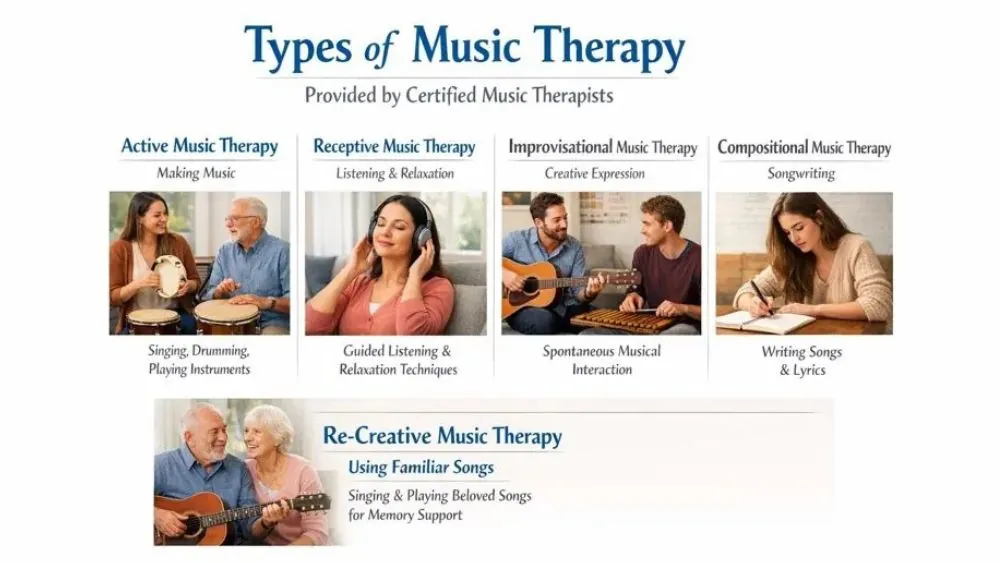
Clinicians classify different types of music therapy based on how you interact with music. Some methods require active participation. Others focus on listening and a guided response. Each method serves a different clinical purpose.
Active Music Therapy (Participatory Techniques)
Active music therapy requires you to make music. You may sing, drum, clap, or play simple instruments. Skill level does not matter; participation matters. This method stimulates multiple brain regions at once, including motor, emotional, and language areas.
Active participation improves attention span and emotional expression. In pediatric therapy, active methods support speech development and social interaction. In adults, this method supports motivation and mood regulation. Evidence supports its use in depression and neurological rehabilitation, but it does not cure these conditions.
Receptive (Passive) Music Therapy
Receptive therapy focuses on structured listening. The therapist chooses music based on tempo, frequency, and emotional tone. You may practice breathing, imagery, or body awareness while listening.
This approach suits people with chronic pain, anxiety, or fatigue. Music can reduce perceived pain intensity by altering attention pathways. Evidence remains moderate, not absolute. Results depend on therapist training and patient sensitivity to sound.
Improvisational Music Therapy
Improvisational music therapy involves creating music in the moment. You and the therapist respond to each other’s sounds. This method helps express emotions when words fail. Improvisation supports emotional regulation and trust building. It is widely used in autism and trauma care. Evidence supports emotional engagement benefits, but outcomes differ across individuals.
Compositional Music Therapy
In this method, you write lyrics or melodies. The therapist guides structure and reflection. Writing supports cognitive organization and emotional insight.
This approach helps adolescents and adults cope with grief, identity stress, or chronic illness. Songwriting improves emotional processing, though it does not replace psychotherapy.
Re-Creative Music Therapy
Re-creative therapy uses familiar songs. You sing or play known music. This activates memory and motor planning. Familiar melodies can activate preserved brain pathways. This explains its use in dementia and stroke care. Benefits include engagement and mood stabilization, not disease reversal.
Music Therapy Methods Used In Clinical Practice
Therapists apply methods of music therapy based on assessment findings. No single method fits all cases. Selection depends on neurological status, emotional tolerance, and treatment goals.
Guided Listening Techniques
The therapist plays carefully selected music while guiding focus or breathing. This method supports stress reduction (reduced cortisol levels) and pain coping during guided listening sessions. Evidence supports short-term relief, not long-term cure.
Instrument-Based Therapy
Simple instruments like drums or keyboards support coordination and strength. Rhythm guides timing. This method supports motor recovery in neurological rehabilitation. Research supports rhythm-based movement training, though outcomes vary.
Vocal And Singing-Based Therapy
Singing supports breath control and speech rhythm. This method helps people with speech disorders or neurological damage. Studies in speech rehabilitation show singing can activate language pathways when speech fails.
Rhythm And Movement-Based Therapy
Movement follows rhythmic cues. This improves gait and balance. Parkinson’s disease research supports rhythmic auditory stimulation for walking speed improvement. Results depend on disease stage and consistency.
Music Therapy For Mental Health Conditions
Music therapy for mental health is used when emotional symptoms affect daily life, sleep, focus, or relationships. You do not rely on music alone. A therapist uses structured sessions to support emotional regulation and coping skills. Music can influence stress hormones and emotional processing areas in the brain, but results depend on condition severity and consistency.
Music Therapy For Anxiety Disorders
When anxiety stays high, your nervous system remains alert. Slow rhythm and predictable melody help calm this response. In therapy, you may practice breathing while listening to or gently playing music. This reduces heart rate and muscle tension after repeated sessions. Types of music therapy for anxiety focus on control and safety, not emotional flooding.
Music Therapy For Depression
Depression affects motivation and emotional expression. Passive listening may not help at first. Therapists often use active music therapy to support engagement. Playing or singing encourages small actions when energy feels low.
Songwriting helps organize thoughts. Research shows mood improvement over time, but therapy does not replace medication or counseling.
Music Therapy For PTSD And Trauma
Trauma changes how the brain reacts to sound and memory. Sudden noise may trigger distress. Therapists choose sound carefully. Improvisational music therapy allows emotional release without forcing verbal recall. This method supports emotional regulation, though evidence remains limited and individual response varies.
Music Therapy For Autism Spectrum Disorder
Autism affects communication and sensory processing. Music offers structure without pressure. Rhythm supports turn-taking and attention. Many types of music therapy help build social interaction in children and adolescents. Evidence supports improved engagement, but therapy goals remain individualized.
Improvisational Music Therapy
This approach centers on emotional expression through spontaneous sound. Improvisational music therapy works when verbal communication feels unsafe or limited. The therapist responds musically rather than verbally, creating a connection without pressure. It is widely used but not suitable for everyone.
Free Improvisation
You create sound freely. No rules guide tempo or pitch. The therapist mirrors or supports your sound patterns. This helps you feel heard without words. Clinical use shows benefit in trauma care and emotional expression.
Structured Improvisation
The therapist sets limits, such as tempo or instrument choice. Structure creates safety. This method suits people who feel overwhelmed by freedom. It supports focus and emotional balance.
Clinical Settings Where Improvisation Is Used
Hospitals, mental health clinics, and special education settings use this approach. It supports people with speech loss, trauma history, or developmental conditions.
Music Therapy Methods For Children And Adults
Age and cognitive ability strongly influence therapy choice. Methods of music therapy differ between children, adults, and older patients. Therapists adapt structure, pace, and goals to match developmental needs.
Pediatric Music Therapy Approaches
Children learn through play. Therapists use songs for routines, language, and emotional skills. Simple repetition supports learning. Research shows improved attention and social response, but outcomes differ by child.
Music Therapy For Adults And Elderly Patients
Adults often seek stress relief or recovery support. Older adults benefit from familiar music that supports memory. Dementia research shows music may improve mood and engagement, though it does not stop disease progression.
Benefits Of Different Types Of Music Therapy
Benefits depend on method, condition, and consistency. Types of music therapy overlap in effect but differ in emphasis. Gains usually appear gradually, not instantly.
Emotional And Psychological Benefits
Music supports emotional release and stress control. Structured sessions help you name feelings and regulate responses. Natural supports reduced anxiety and improved mood with consistent care.
Cognitive And Neurological Benefits
Rhythm improves timing and attention. Melody supports memory recall. Neurological studies show music activates multiple brain areas at once, which supports rehabilitation.
Physical And Pain-Management Benefits
Music distracts from pain signals and supports movement pacing. Pain research shows modest relief, not elimination. Benefits depend on the therapist’s guidance.
Conditions Treated Using Music Therapy
Clinicians apply types of music therapy across medical, neurological, and developmental fields. Therapy supports function, not cure. Selection depends on diagnosis and tolerance.
Neurological Disorders
Stroke, Parkinson’s disease, and brain injury patients benefit from rhythm-based methods. Walking and speech may improve with practice.
Chronic Pain And Rehabilitation
Music supports endurance during therapy sessions. Patients report better tolerance and emotional comfort.
Developmental And Learning Disorders
Music supports focus and routine. Children show better engagement during learning tasks.
How Music Therapists Choose The Right Therapy Type
Therapy selection follows clinical assessment. Different types of music therapy serve different goals. Therapists adjust methods as progress or tolerance changes.
Patient Assessment Factors
Therapists review age, diagnosis, sensory tolerance, and goals. They observe reactions to sound and structure.
Therapy Goals And Treatment Duration
Short goals use focused methods. Long-term care uses combined approaches. Different types of music therapy may change as progress occurs.
Is Music Therapy Evidence-Based?
Research supports many uses, but not all claims. Evidence strength varies by condition. Music therapy remains a supportive treatment, not a standalone cure.
Research-Backed Outcomes
Studies show benefits for anxiety, pain, and motor recovery. Results vary by condition and therapist training.
Limitations And Misconceptions
Music therapy does not cure disease. It supports coping and function. Evidence remains limited for some conditions.
Risks And Limitations Of Music Therapy
Music can overstimulate some people. Emotional reactions may surface unexpectedly. Proper screening reduces risk.
When Music Therapy May Not Be Suitable
People with sound sensitivity or trauma linked to music may struggle. Therapists screen carefully and adjust plans.
How To Get Started With Music Therapy
Starting therapy requires professional guidance. Casual music listening does not equal therapy. Certified training matters.
Finding A Certified Music Therapist
Look for formal certification and clinical training. This ensures ethical and safe care.
What To Expect In A Music Therapy Session
Sessions follow clear goals. Progress is reviewed often. Music choice is clinical, not casual.
FAQs
What Are The Main Types Of Music Therapy?
The main types of music therapy include active participation, receptive listening, composition, and improvisation. Each method fits different emotional, physical, or neurological needs based on assessment and therapy goals.
Is Active Music Therapy Better Than Passive Therapy?
Active music therapy works better when movement or expression is needed. Passive methods suit relaxation or pain support. Effectiveness depends on condition, tolerance, and therapist guidance.
Can Music Therapy Help Mental Health Conditions?
Yes, music therapy for mental health supports depression, anxiety, trauma, and emotional regulation. It works best alongside counseling or medical treatment, not as a replacement.
How Long Does Music Therapy Take To Work?
Some people notice short-term relief after a few sessions. Long-term benefits require weeks or months. Progress depends on goals, consistency, and condition severity.
Is Improvisational Music Therapy Effective?
Improvisational music therapy supports emotional expression without words. Research supports benefits for trauma and autism, though outcomes vary and evidence remains moderate.
About The Author

Medically reviewed by Dr. Chandril Chugh, MD, DM (Neurology)
Dr. Chandril Chugh is a U.S.-trained, board-certified neurologist with expertise in diagnosing and managing neurological disorders, including migraines, epilepsy, Parkinson’s disease, and movement disorders. His clinical focus includes evidence-based neurological care and patient education.
All content is reviewed for medical accuracy and aligned with current neurological guidelines.