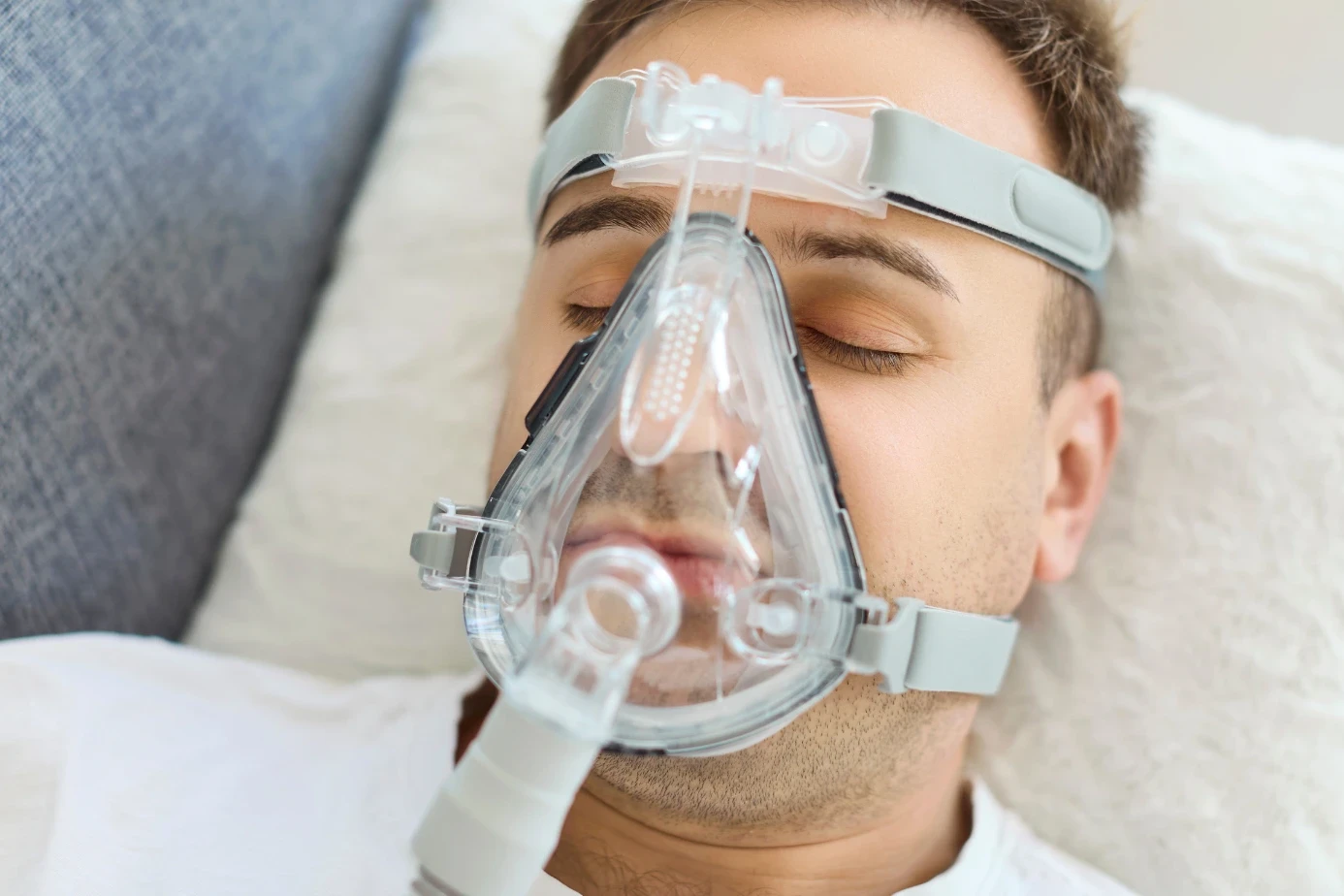
Sleep maintenance insomnia is when you fall asleep fine, but you wake up around midnight or 3 AM. It is not about taking too long to fall asleep. It is about your brain kicking you out mid-sleep and refusing to let you back in. Around 35% of adults deal with this regularly, and most of them have no idea what is actually causing it.
Cortisol, hormones, alcohol, anxiety, and specific nutrient gaps all explain why your brain pulls you out of sleep at 3 AM. The cause determines the fix. Testing for magnesium and Vitamin D deficiency takes one blood draw. CBT-I takes 6 to 8 weeks. Cutting alcohol before bed takes one decision.
What Is Sleep Maintenance Insomnia?
Sleep maintenance insomnia means waking in the middle of the night and struggling to return to sleep. It differs from difficulty falling asleep at bedtime. The problem is in the second half of sleep, where your brain shifts into lighter stages and fails to cycle back into deep rest.
What Is the Root Cause of Insomnia?
The root cause of sleep maintenance insomnia is a hyperactive stress system. Your body stays in alert mode when it should be in recovery mode. Cortisol stays elevated through the night when it should drop sharply after midnight. This pulls you out of deep sleep stages earlier than your body needs.
Is Sleep Maintenance Insomnia Different from Regular Insomnia?
Yes. Sleep-onset insomnia is about not falling asleep at bedtime, mostly anxiety-driven. Sleep maintenance insomnia is about staying asleep, more linked to cortisol, hormonal changes, or alcohol metabolism. Same word, different mechanism. Treating them the same way usually fails.
What Are the Symptoms of Sleep Maintenance Insomnia?
- Waking between 2 AM and 4 AM with no clear reason
- Mind racing immediately after waking
- Feeling exhausted even after spending 7 or 8 hours in bed
- Lying awake for 30 minutes or longer before falling back asleep
- Waking up feeling unrefreshed, not rested
That in-between state, not quite asleep, not fully awake, is the defining experience. It stretches minutes into what feels like hours. In some cases, this confused, disoriented waking overlaps with episodes similar to confusional arousal , especially when the brain is stuck between sleep stages.
Why Won’t My Body Let Me Sleep?
Your nervous system won’t switch off. Elevated cortisol in the night’s second half is the main driver. Alcohol is another direct cause, as your liver metabolizes it and triggers a brain rebound into lighter sleep. Hormonal shifts during perimenopause also cause this exact pattern of early waking.
Can Anxiety Cause Sleep Maintenance Insomnia?
Yes. Anxiety keeps your baseline arousal higher than it should be at night. Your brain stays lightly alert throughout sleep. Small sounds or brief transitions between sleep phases become full wake-ups. This is especially common in people dealing with complex PTSD and sleep disruption, where hypervigilance carries into the night.
Does Alcohol Cause Sleep Maintenance Insomnia?
Directly, yes. Alcohol sedates you in the first few hours. As your liver processes it, usually 3 to 4 hours after drinking, your brain rebounds into fragmented, lighter sleep. This is the biological reason a drink helps you fall asleep but wakes you at 3 AM.
What Is the 20-Minute Rule for Insomnia?
If you are awake in bed for more than 20 minutes, get up. Go to a calm, dimly lit space. Do something non-stimulating. Return to bed only when you feel sleepy again. This prevents your brain from learning that bed is a place to lie awake.
What Is the 1/4 Hour Rule for Insomnia?
The quarter-hour rule is the same principle, a stricter version. After 15 minutes of lying awake, leave the bedroom. The goal is to rebuild a strong mental link between your bed and actual sleep. Staying in bed while awake reinforces the wakefulness pattern over time.
How Is Sleep Maintenance Insomnia Treated?
The most effective treatment is Cognitive Behavioral Therapy for Insomnia, called CBT-I. It outperforms sleep medication in long-term outcomes. CBT-I covers sleep restriction, stimulus control, and thought restructuring. Low-dose doxepin or suvorexant is used short-term for some people, but CBT-I targets the actual cause rather than masking symptoms.
What Is CBT-I and Does It Actually Work?
CBT-I is a structured program that changes habits and thoughts keeping you awake. Research in the Annals of Internal Medicine found it outperforms sleeping pills for long-term insomnia. It works for 70 to 80% of people with chronic insomnia, including the sleep maintenance type specifically.
How to Beat Insomnia Naturally?
Keep a fixed wake time every day, including weekends. Avoid alcohol within 3 hours of sleep. Dim screens after 9 PM. Cool your bedroom to around 65 to 67 degrees Fahrenheit. Try 4-7-8 breathing after a nighttime wake-up. These consistently lower cortisol and improve sleep architecture without any medication.
Physical factors also matter. Choosing the best sleep position for lower back pain can reduce micro-awakenings caused by discomfort. Similarly, if you have inflammatory conditions, investing in the best mattress for ankylosing spondylitis can significantly improve sleep continuity by reducing nighttime pain triggers.
What Vitamin Is Lacking in Insomnia?
Magnesium and Vitamin D are the most common deficiencies linked to disrupted sleep. Low magnesium raises cortisol and shortens time in deep sleep. Low Vitamin D disturbs the circadian system. Studies estimate that around half of people with chronic sleep problems are deficient in at least one of these.
Which Vitamin Gives Deep Sleep?
Magnesium glycinate is the most researched for promoting deep, slow-wave sleep. It activates GABA receptors, which calm the brain and nervous system. Vitamin B6 also matters, as it converts tryptophan into serotonin, which the body then converts into melatonin. Most adults consume far less B6 than they need.
Does B12 Help With Sleep?
B12 deficiency does cause sleep disruption, but supplementing without testing first has no strong evidence behind it. B12 affects melatonin production. If your levels are low, correcting them helps noticeably. If your levels are normal, adding more B12 does not improve sleep.
What Is the Best Natural Sleep Supplement?
Magnesium glycinate has the strongest evidence. Ashwagandha at 300 to 600 mg reduces cortisol and improved sleep quality in multiple clinical trials. L-theanine at 200 mg calms mental activity without sedation. These work across different mechanisms, so combining them covers more ground than any single supplement alone.
What Is the Most Powerful Herb for Sleep?
Valerian root has the most clinical backing. It raises GABA activity similarly to how benzodiazepines work, without the dependency risk. Ashwagandha is stronger specifically for cortisol-related waking. Passionflower is underused and works better than valerian for anxiety-driven sleep maintenance insomnia, particularly for the racing-mind wakeup pattern.
What Is the Miracle Drug for Insomnia?
No drug fixes insomnia permanently. Suvorexant, sold as Belsomra, is the most targeted option available. It blocks orexin, the brain chemical that drives wakefulness, and helps with both falling and staying asleep. Dependency risk is lower than older sleep drugs, but it is expensive and not effective for everyone.
How to Turn Your Brain Off When You Have Insomnia?
Write down what is bothering you before bed. Research from Baylor University showed 15 minutes of expressive writing before sleep reduced cognitive arousal overnight. After waking at 3 AM, box breathing works: 4 counts in, hold 4, out 4, hold 4. This activates the parasympathetic system within minutes.
This is also where people ask whether meditation can replace sleep . It cannot. Meditation can reduce arousal and help you fall back asleep faster, but it does not replicate the physiological restoration of deep and REM sleep.
What Disease Starts With Insomnia?
Fatal Familial Insomnia is a rare prion disease where insomnia is the first symptom, followed by neurological decline. More commonly, persistent insomnia is an early sign of depression, Parkinson’s disease, anxiety disorders, and bipolar disorder. Early-morning waking in particular is strongly associated with clinical depression, often appearing before other symptoms do.
Can Sleep Maintenance Insomnia Be Cured Permanently?
For most people, yes. When the underlying cause, whether cortisol dysregulation, anxiety, hormones, or alcohol, is addressed, sleep normalizes. CBT-I shows a 75% success rate at 6 months with minimal relapse. Some people fix it through lifestyle changes alone. Others need a combined approach, but a full resolution is realistic.
What Happens If Sleep Maintenance Insomnia Goes Untreated?
Chronic nighttime waking raises cortisol chronically. That accelerates cardiovascular risk, weakens immune response, and impairs memory consolidation. Research from UC Berkeley showed that even one night of fragmented sleep reduces the brain’s ability to form new memories by up to 40%. Years of it cause compounding damage that poor sleep alone rarely explains.
About The Author

Medically reviewed by Dr. Chandril Chugh, MD, DM (Neurology)
Dr. Chandril Chugh is a U.S.-trained, board-certified neurologist with expertise in diagnosing and managing neurological disorders, including migraines, epilepsy, Parkinson’s disease, and movement disorders. His clinical focus includes evidence-based neurological care and patient education.
All content is reviewed for medical accuracy and aligned with current neurological guidelines.