The best temperature for sleep lies within a narrow range where your body can lower its core temperature without stress. For most people, that range stays between 60°F and 67°F. When your bedroom stays inside this window, sleep becomes deeper, more stable, and less interrupted. When it does not, your body struggles to enter and stay in restorative sleep stages.
Your brain uses temperature as a sleep signal. As night approaches, blood vessels near the skin widen to release heat. This drop in body temperature supports melatonin release, which is the hormone that controls sleep timing. A room that is too warm blocks this heat loss. A room that is too cold triggers alert responses. Both reduce sleep quality.
Best Temperature To Sleep At Night
Your body does not fall asleep because you feel tired alone. It falls asleep when internal signals align. Temperature is one of the strongest of these signals. The best temperature to sleep at night supports your body’s natural cooling cycle without forcing it to work harder.
Ideal Sleep Temperature Range For Adults
For healthy adults, the most stable sleep occurs when bedroom temperature stays between 60°F and 67°F. This range allows your core temperature to drop gradually, which supports deeper non-REM sleep and longer REM periods. REM sleep is the stage linked to memory, mood, and learning.
When the room stays warmer than this range, heat loss slows. When the room drops far below it, muscle tension increases. Both situations interfere with sleep structure. For this reason, sleep clinics consistently align adult sleep recommendations with the best temperature for sleep within this narrow band.
Why 60–67°F (15–19°C) Is Recommended
This range is not based on comfort trends. It reflects how the human nervous system responds to heat during sleep. Cooling within this zone reduces nighttime awakenings and shortens the time it takes you to fall asleep.
Your brain tracks temperature closely during sleep. If heat rises, it increases alertness to protect the body. If the cold becomes excessive, it triggers stress hormones to preserve heat. Staying near the best temperature for sleep avoids both responses.
People often assume warmer rooms feel relaxing. In reality, warmth delays the drop in core temperature that sleep requires. That delay fragments sleep even if you do not fully wake.
Individual Variations In Sleep Temperature Needs
Not everyone sleeps best at the same point within the range. Body size, hormone levels, bedding, and metabolic rate all affect heat loss. Some people feel comfortable closer to 60°F. Others sleep better near 67°F.
These differences do not change the biological principle. They simply adjust where you sit inside the best temperature for sleep range. Large deviations outside this range reduce sleep quality for almost everyone, regardless of preference.
Best AC Temperature For Sleep
Air conditioning gives you direct control over bedroom temperature, but improper use often creates sleep problems instead of solving them. Rapid cooling, uneven airflow, and extreme settings disturb sleep cycles.
The goal is not maximum cooling. The goal is stability that supports the best temperature for sleep throughout the night.
Ideal AC Settings For Uninterrupted Sleep
For most bedrooms, the best AC temperature for sleep falls between 60°F and 67°F. The key factor is consistency. Sudden drops in temperature during the night can wake your nervous system even if the final temperature remains ideal.
AC units should maintain a steady output rather than short, intense cooling bursts. This allows your body to stay in deeper sleep stages without repeated thermal disruptions.
Energy-Efficient AC Temperature For Sleeping
From a practical standpoint, many people balance comfort and energy use by setting the AC between 64°F and 67°F. This range still supports the best temperature for sleep while reducing excessive power use.
Using a programmable thermostat helps. As morning approaches, your body naturally warms. Allowing a slight temperature increase near waking hours often improves comfort without harming sleep.
Fan Vs AC: Which Supports Better Sleep
Fans move air across the skin but do not lower room temperature. This airflow helps sweat evaporate and can reduce surface heat. Air conditioning lowers the actual air temperature.
In hot or humid climates, AC is more effective for maintaining the best temperature for sleep . In mild climates, fans combined with ventilation may be enough. The better option depends on whether heat or airflow is the main issue in your bedroom.
Signs Your Bedroom Is Too Cold For Sleep
Cold rooms create sleep problems that often go unnoticed. The body responds to cold by increasing muscle tone and releasing alert hormones. These reactions work against deep sleep.
Recognizing signs your bedroom is too cold for sleep helps you correct the problem before it becomes chronic.
Frequent Night Awakenings
Cold activates the sympathetic nervous system, which is the body’s alert system. This causes repeated micro-awakenings, even if you do not remember them clearly in the morning. Over time, these interruptions reduce sleep depth and leave you feeling unrefreshed.
Muscle Stiffness Or Shivering At Night
Muscle stiffness during sleep often signals cold stress. Shivering is a stronger sign. It means your body is actively generating heat instead of resting. This response prevents entry into deep sleep stages and is one of the clearest signs your bedroom is too cold for sleep .
Dry Air And Nasal Discomfort
Cold air holds less moisture. Low moisture dries nasal passages and throat tissue. This leads to congestion, mouth breathing, and increased snoring. These effects disrupt breathing patterns and reduce oxygen delivery during sleep.
Difficulty Falling Back Asleep
If cold wakes you fully, your brain struggles to re-enter sleep stages. You may feel alert despite fatigue. This pattern strongly suggests that your bedroom is too cold for sleep , especially if it improves when the room warms slightly.
Best Humidity Level For Sleep
Temperature alone does not decide sleep quality. Humidity controls how heat leaves your body and how well you breathe at night. Even when your room stays within the best temperature for sleep, wrong humidity can still break sleep cycles, irritate airways, and increase awakenings.
When humidity stays balanced, your body cools efficiently through the skin, and your nasal passages remain open and moist. When it does not, sleep becomes lighter and more fragmented.
Ideal Indoor Humidity Range For Sleep
The best humidity level for sleep stays between 40 percent and 60 percent. This range protects the lining of your nose and throat while allowing sweat to evaporate normally. Evaporation is essential for cooling, especially during REM sleep when temperature control weakens.
Below 40 percent, the air becomes too dry. Above 60 percent, air traps heat. Both extremes interfere with how temperature affects sleep at a biological level.
How Low Humidity Disrupts Breathing
Low humidity dries the nasal lining and thickens mucus. This narrows airways and increases mouth breathing during sleep. Mouth breathing reduces oxygen efficiency and raises the risk of snoring and repeated micro-awakenings.
Dry air also irritates throat tissue, which can trigger coughing or throat tightness at night. These effects explain why low humidity worsens sleep even when the best temperature for sleep is maintained.
How High Humidity Affects Body Cooling
High humidity prevents sweat from evaporating. When sweat stays on the skin, heat remains trapped inside the body. This raises core temperature and increases nighttime sweating.
As body temperature rises, the brain shifts toward lighter sleep stages. This shortens REM sleep and increases early morning awakenings, showing clearly how temperature affects sleep when humidity is uncontrolled.
Using Humidifiers Or Dehumidifiers Correctly
Humidifiers help in dry climates or winter months, while dehumidifiers help in damp environments. Devices should be cleaned often to avoid mold and bacteria buildup. Settings should stay within the best humidity level for sleep rather than pushing extremes.
How To Maintain The Ideal Sleep Temperature
Maintaining the best temperature for sleep requires more than adjusting a thermostat. Bedding, airflow, clothing, and seasonal changes all influence how heat builds or escapes during the night.
Small adjustments across these areas create stable sleep conditions without relying on extreme cooling or heating.
Choosing Breathable Bedding And Mattresses
Bedding materials control heat retention. Cotton, linen, and moisture-wicking fabrics release heat and moisture efficiently. Foam-heavy mattresses without airflow channels trap body heat and raise skin temperature overnight.
Breathable bedding helps maintain the best temperature for sleep by supporting natural heat loss instead of blocking it.
Adjusting Clothing For Sleep Temperature
Sleepwear should allow airflow and moisture evaporation. Tight or synthetic fabrics trap heat close to the skin. Loose cotton sleepwear allows body temperature to drop naturally as sleep deepens.
This simple change often improves sleep quality without changing room temperature.
Ventilation And Airflow Strategies
Proper airflow removes trapped heat and balances humidity. Ceiling fans, open windows when safe, or cross-ventilation help maintain stable conditions. Airflow also prevents warm pockets from forming around the bed.
These strategies support the best temperature for sleep even in rooms without air conditioning.
Seasonal Temperature Adjustments
In summer, external heat buildup requires active cooling and airflow control. In winter, excessive cooling increases muscle tension and dryness. Seasonal adjustments should be gradual, keeping the room close to the best temperature for sleep year-round.
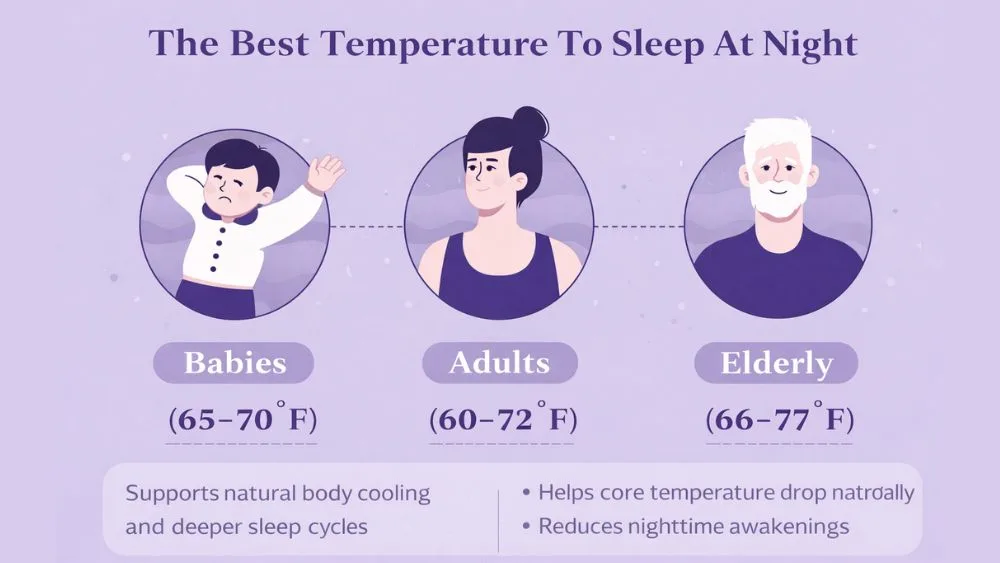
Best Sleep Temperature For Different Age Groups
Age changes how the body controls heat. Sleep temperature must reflect these changes to avoid discomfort or risk.
Adults
Healthy adults regulate temperature efficiently. Most adults sleep best between 60°F and 67°F, which remains the best temperature for sleep for this group. Stable temperatures support deep sleep and consistent REM cycles.
Older Adults
Older adults lose heat faster due to reduced circulation and muscle mass. They often sleep better closer to 65°F to 68°F. Extra blankets work better than overheating the room, which can still disrupt sleep.
Babies And Infants
Infants cannot regulate body temperature well. Their sleep environment should stay warmer, typically between 68°F and 72°F. Overheating should still be avoided, as infants release heat less effectively during sleep.
When Temperature Is Not The Only Sleep Problem
Fixing room conditions improves sleep for many people, but not all sleep problems start with temperature. Persistent sleep issues may signal underlying conditions.
Sleep Disorders Linked To Temperature Sensitivity
Insomnia increases sensitivity to discomfort, making small temperature changes feel disruptive. Sleep apnea worsens with poor airflow and humidity imbalance. Hormonal conditions can alter heat regulation, affecting sleep stability.
These patterns show how temperature affects sleep while also pointing to deeper causes.
When To Consult A Doctor For Sleep Issues
If sleep remains poor after correcting temperature, humidity, bedding, and airflow, medical evaluation becomes important. Chronic fatigue, loud snoring, or daytime sleepiness suggest causes beyond environment alone.
FAQs
What Is The Best Temperature For Sleep?
The best temperature for sleep is 60°F to 67°F for most adults. This range supports natural body cooling, improves sleep depth, and reduces nighttime awakenings caused by heat stress or cold-triggered alert responses.
What Is The Best AC Temperature For Sleep At Night?
The best AC temperature for sleep at night is usually between 60°F and 67°F with steady cooling. Sudden temperature drops or strong airflow can disrupt sleep even if the final temperature is correct.
Can Sleeping In A Cold Room Improve Sleep Quality?
Yes. Mild cooling improves sleep quality by supporting melatonin release and deeper sleep stages. Excessive cold does the opposite by increasing muscle tension and stress hormones that fragment sleep.
What Happens If Your Bedroom Is Too Hot For Sleep?
A hot bedroom prevents heat loss, raises core temperature, shortens REM sleep, and increases sweating. These changes lead to lighter sleep, early awakenings, and poor next-day alertness.
What Are Signs Your Bedroom Is Too Cold For Sleep?
Signs your bedroom is too cold for sleep include shivering, muscle stiffness, dry nasal passages, and repeated awakenings. These symptoms show the body is under cold stress instead of resting.
What Is The Best Humidity Level For Sleep?
The best humidity level for sleep is 40 percent to 60 percent. This range protects breathing, prevents airway dryness, and allows sweat to evaporate for proper nighttime cooling.
Does Sleep Temperature Change With Age?
Yes. Older adults often need slightly warmer rooms due to faster heat loss. Infants need warmer environments because their temperature control systems are not fully developed.
Is Fan Or AC Better For Sleeping?
AC is better for controlling temperature, while fans improve airflow. In hot or humid climates, AC is more effective for maintaining the best temperature for sleep consistently.
Can Temperature Affect REM Sleep?
Yes. High temperatures reduce REM sleep duration by keeping the brain in lighter sleep stages. Cooler, stable rooms support longer REM periods linked to memory and emotional health.
How Can I Control Bedroom Temperature Without AC?
You can control bedroom temperature without AC by improving airflow, using breathable bedding, blocking daytime heat, and managing humidity. These steps help maintain the best temperature for sleep naturally.
About The Author

Medically reviewed by Dr. Chandril Chugh, MD, DM (Neurology)
Dr. Chandril Chugh is a U.S.-trained, board-certified neurologist with expertise in diagnosing and managing neurological disorders, including migraines, epilepsy, Parkinson’s disease, and movement disorders. His clinical focus includes evidence-based neurological care and patient education.
All content is reviewed for medical accuracy and aligned with current neurological guidelines.