Types of seizures describe how and where abnormal electrical activity disrupts normal brain function. These events differ in onset, spread, awareness level, and physical effect, which is why seizures can look completely different from one person to another. Some begin in a single brain region and cause subtle sensory or emotional changes, while others engage the entire brain and lead to full loss of consciousness with strong muscle movements.
Understanding types of seizures means recognizing whether the disturbance is focal or generalized, motor or non-motor, brief or prolonged, and how the brain recovers afterward.
10 Main Types of Seizures
Doctors group seizures by how they begin and how they affect you. These groups help explain symptoms and guide care. The 10 main types of seizures cover most cases seen in clinics.
1. Focal Aware Seizures
These seizures start in one specific part of your brain. You stay fully awake and aware during the episode. You may feel strange sensations like tingling, sudden fear, nausea, or unusual smells. Memory usually stays clear after it ends.
2. Focal Impaired Awareness Seizures
These also begin in one brain area but affect your awareness. You may stare blankly or repeat simple movements like chewing or picking at clothes. You often feel confused afterward and may not remember what happened.
3. Focal to Bilateral Tonic-Clonic Seizures
This seizure starts in one brain area and then spreads to both sides. It often begins with warning signs before strong body stiffening and shaking occur. You lose awareness once the seizure spreads across the brain.
4. Absence Seizures
Absence seizures cause brief staring spells that last only a few seconds. You stop responding and then return to normal quickly. These seizures happen most often in children and may occur many times a day.
5. Tonic-Clonic Seizures
These seizures cause sudden muscle stiffening followed by rhythmic shaking. You lose consciousness during the event. Afterward, you may feel very tired, confused, or have muscle soreness for hours.
6. Myoclonic Seizures
Myoclonic seizures cause quick, sudden muscle jerks. They often affect the arms, shoulders, or legs. Awareness usually stays normal, but the movements can cause you to drop objects or lose balance.
7. Tonic Seizures
Tonic seizures cause your muscles to stiffen without shaking. Your body may become rigid for several seconds. These seizures often happen during sleep and can cause falls if you are standing.
8. Atonic Seizures
Atonic seizures cause sudden loss of muscle strength. Your head may drop, or you may collapse without warning. These seizures carry a high risk of injury, especially to the face and head.
9. Infantile Spasms
Infantile spasms occur in babies, usually under one year old. The baby’s body may bend forward, or arms may jerk in clusters. Early treatment matters because these seizures affect brain development.
10. Unknown Onset Seizures
Doctors label these seizures when they cannot see where they start. This often happens when no one witnesses the beginning. Further testing may later reclassify the seizure type.
Focal Seizures Explained
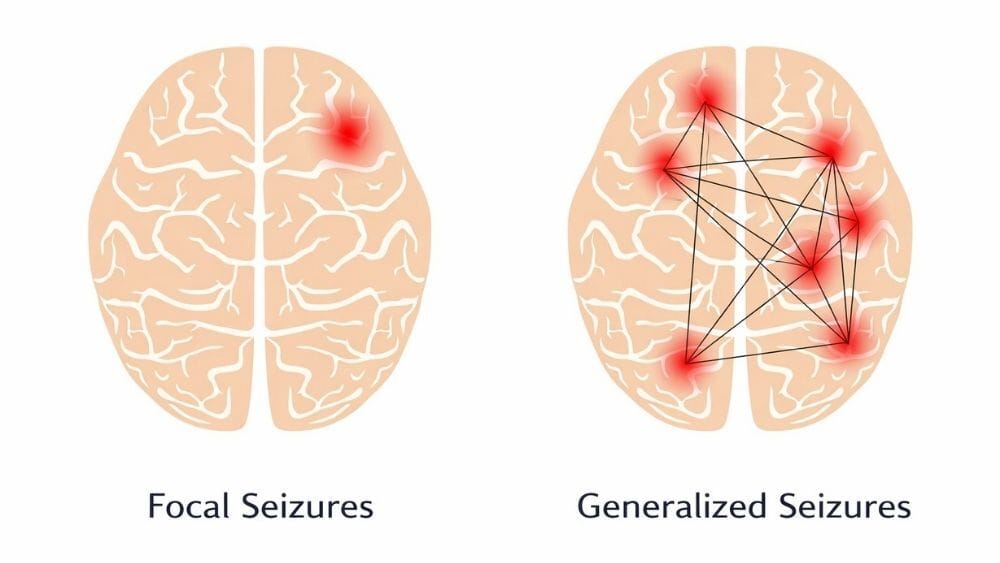
Focal events begin in one brain region. The area involved shapes what you feel or do. Many people live with focal seizures for years without knowing the cause.
Symptoms Of Focal Seizures
Symptoms depend on the brain area affected. You may notice twitching on one side of the face or body. Sensory changes are common. These include tingling, flashing lights, or ringing sounds.
Emotional shifts can happen fast. Fear or calm may appear without reason. Some people feel stomach rising. Speech may pause or sound slurred. Awareness may stay normal or drop. After the event, you may feel tired or confused.
These details help doctors classify types of seizures accurately.
Common Causes Of Focal Seizures
Common causes include head injury, stroke scars, or brain infection. Tumors can irritate nearby tissue. Birth injuries may leave small scars. Sleep loss raises risk by stressing brain signals. Heavy alcohol use also increases risk.
In some people, stress alone can trigger events. Rarely, events that look focal relate to causes of psychogenic non-epileptic seizures , where emotional stress drives physical symptoms without abnormal brain firing.
Generalized Seizures Explained
Generalized events involve both brain sides from the start. Awareness usually stops. These events often look dramatic. Many people fear them most. Doctors classify them as generalized seizures because the whole brain joins in at once.
Symptoms Of Generalized Seizures
Symptoms vary by subtype. Tonic-clonic events cause stiffening and shaking. Absence events cause brief staring with no response. Myoclonic events cause sudden jerks. Atonic events cause sudden falls.
Breathing may pause briefly during some events. Afterward, headache, sore muscles, and deep sleep are common. Recovery time varies by event length and body stress.
These signs help separate types of seizures that need different care plans.
Common Causes Of Generalized Seizures
Genetics play a strong role. Some brains react easily to light flashes or sleep loss. Fever can trigger events in young children. Low blood sugar can provoke seizures in people with diabetes.
Certain infections affect brain signaling. Hormone changes can also influence risk. Some episodes that look generalized may relate to causes of psychogenic non-epileptic seizures , especially when tests show normal brain activity.
Understanding these causes helps sort kinds of seizures and avoid wrong treatment.
Kinds Of Seizures Based On Brain Activity
Beyond onset location, seizures are classified by whether abnormal activity produces movement. This distinction affects safety planning, driving restrictions, and injury prevention strategies.
Motor Seizures
Motor seizures cause visible movement. This includes stiffening, jerking, shaking, or sudden falls. Injury risk rises when muscle control fails. Helmet use and home safety changes reduce harm in people with frequent motor events.
Non-Motor Seizures
Non-motor seizures affect awareness, senses, or emotions. Staring spells, sudden fear, or confusion are common.
These seizures often go unnoticed for years. Accurate classification improves long-term control of types of seizures .
How To Identify Seizure Type
Seizure identification depends on pattern recognition, not single events. Clinicians look at warning signs, behavior during the episode, and recovery features to classify seizures accurately.
Eyewitness descriptions and video recordings often provide more diagnostic value than memory alone. Small details like eye deviation, speech arrest, or post-event confusion strongly indicate specific seizure types.
Warning Signs Before A Seizure
Some people feel an aura. This may include headache, nausea, flashing lights, fear, or unusual smells. These warnings reflect early brain signal changes. Recognizing these signs allows you to sit down or alert others, reducing injury risk.
What Happens During The Seizure
Details matter. Note body movement, eye direction, breathing changes, and awareness. Time the seizure with a clock. Phone videos often help doctors differentiate types of seizures during diagnosis.
Symptoms After The Seizure (Postictal Phase)
After a seizure, confusion, fatigue, and headache are common. Speech may be slow. Memory gaps often occur.
Longer recovery suggests more widespread brain involvement.
When To Seek Medical Help
Repeated seizures without recovery, first-time seizures, or seizures following injury or infection require urgent evaluation. Delay increases complication risk and can mask serious underlying causes.
Red-Flag Seizure Symptoms
Seek emergency help if a seizure lasts over five minutes, repeats without recovery, causes breathing problems, or follows head injury. First-time seizures always need medical evaluation to rule out serious causes.
Diagnosis Of Seizure Types
Diagnosis relies on combining electrical data with clinical history. EEG captures abnormal brain firing, while imaging identifies structural causes such as scars or tumors.
A normal EEG does not exclude epilepsy. Seizure activity may occur outside the recording window. Long-term monitoring and symptom tracking often provide decisive diagnostic clarity.
EEG And Brain Imaging
EEG records brain electrical patterns. MRI shows scars, tumors, or malformations. CT helps in emergency settings. Normal tests do not rule out epilepsy. Timing matters.
Medical History And Symptom Tracking
Doctors ask about sleep, stress, infections, and medications. Seizure diaries reveal triggers and frequency.
This process helps identify seizure type with greater precision.
Treatment Options Based On Seizure Type
Treatment is seizure-type specific. Medications effective for focal seizures may worsen generalized seizures and vice versa. This is why precise classification matters more than seizure frequency alone.
When medications fail, advanced therapies such as surgery, nerve stimulation, or dietary intervention become options. Treatment plans evolve as seizure patterns change over time.
Medications
Doctors usually prescribe anti-seizure drugs based on seizure type and age. Dosage varies by body weight and response. Side effects require monitoring and dose adjustment over time.
Lifestyle And Trigger Management
Consistent sleep lowers seizure risk. Skipping meals raises risk. Alcohol misuse worsens control. Stress management reduces seizure frequency in many people.
Surgical And Advanced Therapies
Surgery may help when seizures arise from one damaged area. Nerve stimulation devices reduce seizure frequency. Diet therapy helps some children with drug-resistant seizures.
Living With Different Types Of Seizures
Long-term outlook depends on seizure type, cause, and treatment response. Early diagnosis and consistent follow-up significantly improve seizure control and quality of life.
Safety Tips
Shower instead of bathing. Use helmets for drop attacks. Avoid heights alone. Teach family seizure first aid to prevent panic and injury.
Long-Term Outlook
Many people achieve good control with treatment. Early diagnosis improves outcomes. Regular follow-up allows adjustments as seizure patterns change.
FAQs
Are focal seizures dangerous?
Yes. Focal seizures can cause injury, driving accidents, or spread into tonic-clonic seizures. Risk increases when awareness is impaired or seizures occur near hazards like water or stairs.
Can seizure types change over time?
Yes. Types of seizures can change due to brain aging, injury, medication response, or hormonal shifts. Childhood absence seizures may evolve into tonic-clonic seizures in adolescence.
How long do seizures usually last?
Most seizures last 30 seconds to 2 minutes. Events lasting over 5 minutes increase brain stress and require emergency treatment due to risk of prolonged oxygen disruption.
Can stress trigger certain seizure types?
Yes. Stress alters sleep, hormones, and brain excitability. It commonly triggers focal and generalized seizures, especially in people with irregular sleep or unmanaged anxiety.
Are all seizures a sign of epilepsy?
No. Fever, low blood sugar, infection, or causes of psychogenic non-epileptic seizures can cause seizures without epilepsy. Epilepsy requires repeated unprovoked seizures.
Which seizure types are most common in children?
Absence seizures and febrile seizures are most common in children. Infantile spasms occur under one year and require urgent treatment due to effects on brain development.
How are seizure types diagnosed?
Doctors identify seizure type using EEG patterns, brain scans, medical history, and eyewitness descriptions. Video recordings often improve diagnostic accuracy.
Can seizures be prevented?
Some seizures can be reduced by managing sleep, stress, and triggers. Medication lowers frequency but does not guarantee prevention for all types of seizures .
When should I see a neurologist?
See a neurologist after a first seizure, repeated events, medication failure, or changes in seizure pattern. Specialist care improves diagnosis accuracy and long-term control.
About The Author

Medically reviewed by Dr. Chandril Chugh, MD, DM (Neurology)
Dr. Chandril Chugh is a U.S.-trained, board-certified neurologist with expertise in diagnosing and managing neurological disorders, including migraines, epilepsy, Parkinson’s disease, and movement disorders. His clinical focus includes evidence-based neurological care and patient education.
All content is reviewed for medical accuracy and aligned with current neurological guidelines.