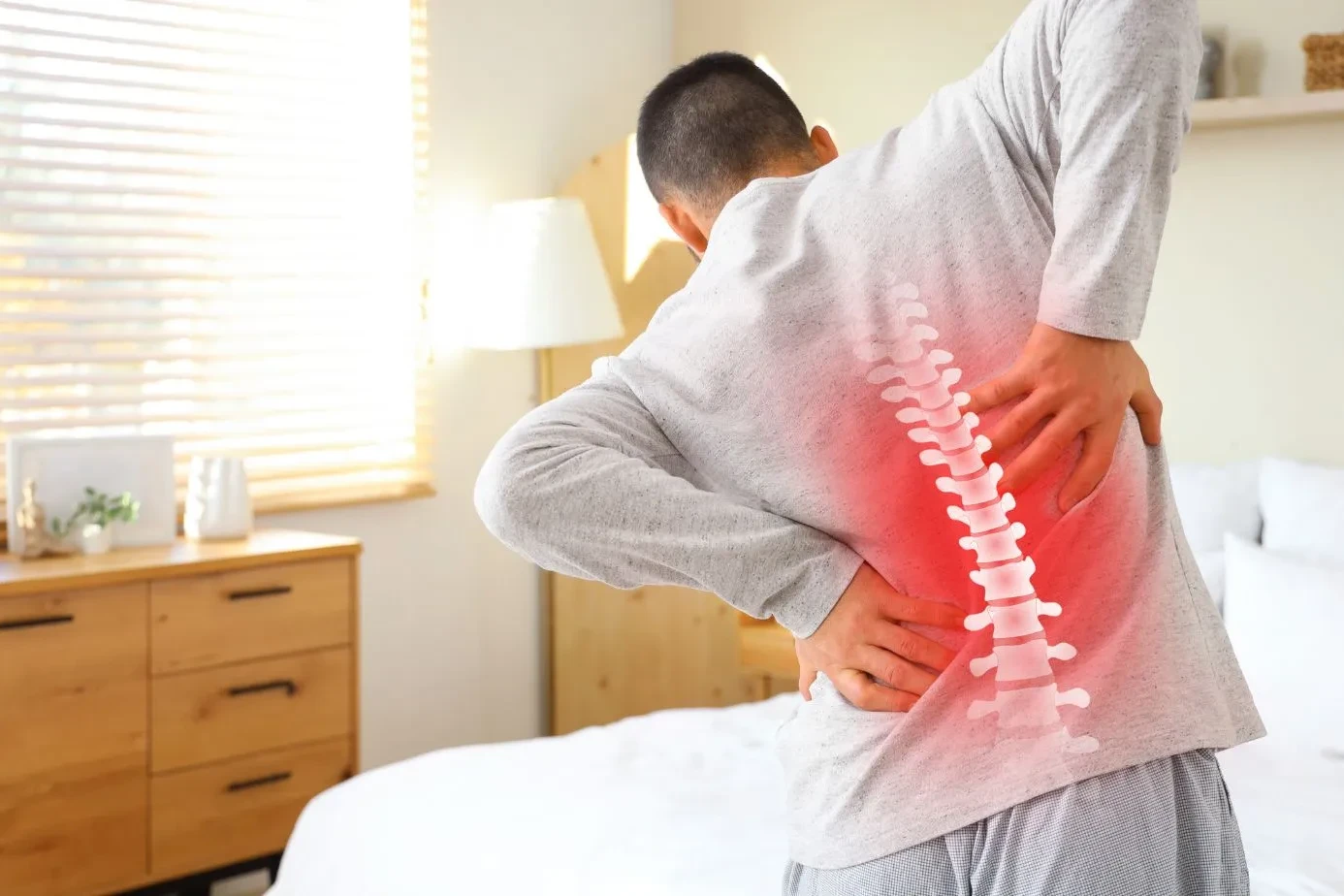
Middle back pain relief requires reducing the acute inflammation, restoring thoracic mobility, and fixing the posture or movement pattern that caused the problem.
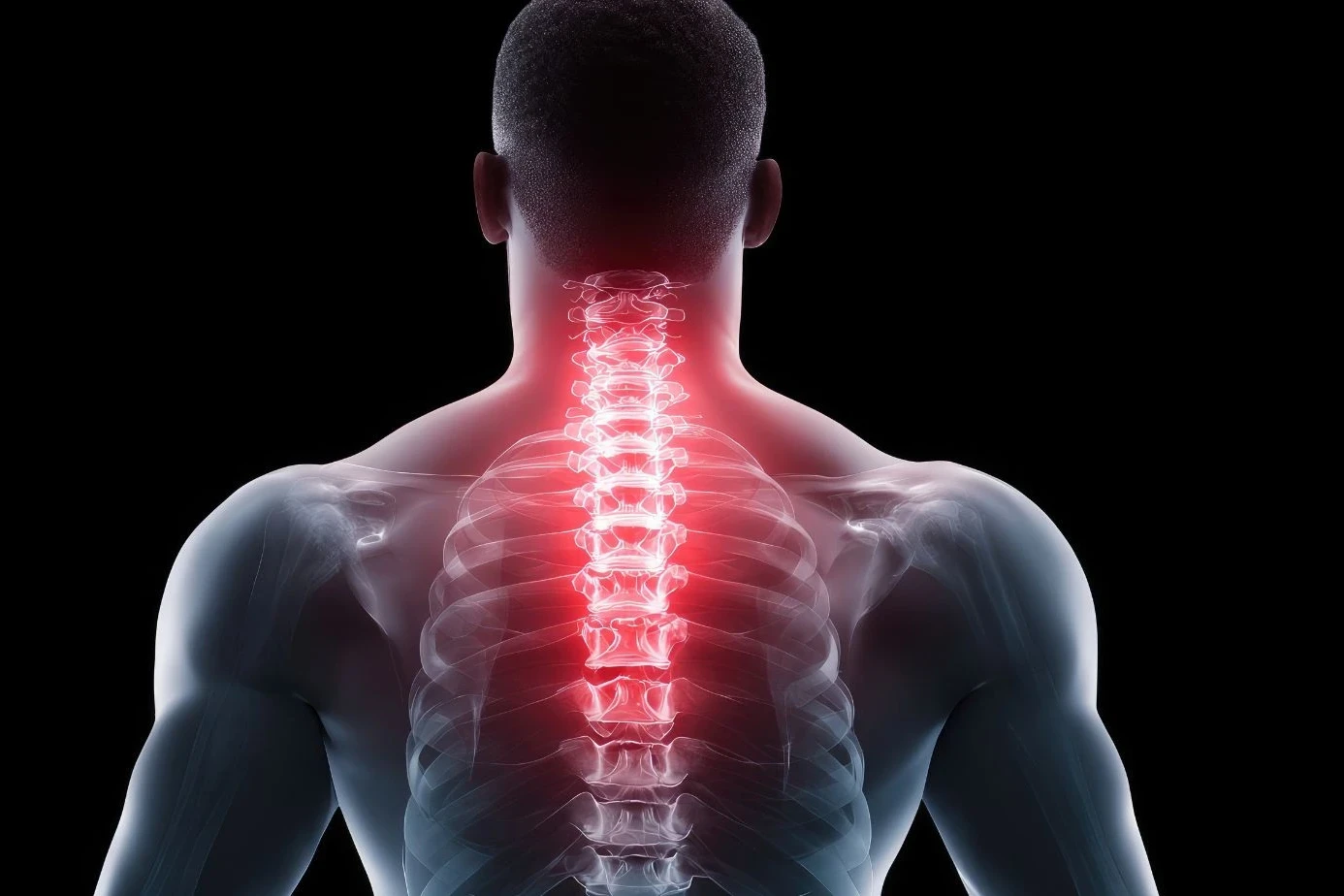
The middle back, called the thoracic spine, runs from the base of your neck to the bottom of your rib cage. Pain here differs from lower back pain because the thoracic spine is less flexible and more connected to your ribs and breathing mechanics.
Heat, ibuprofen, and targeted stretches handle the first two within days. Fixing the root cause, whether that is a screen too low, weak rhomboids, or chronic stress, takes 4 to 8 weeks of consistent effort.
Causes of Middle Back Pain
The causes of middle back pain are different from lower back pain causes, and most generic back pain content misses this entirely.
Muscle Strain or Overuse
The erector spinae, rhomboids, and middle trapezius muscles run through the thoracic region. Sudden heavy lifting, prolonged overhead work, or repetitive twisting strains these muscles. The pain sits as a tight, aching band across the mid-back and worsens with movement.
Poor Posture and Sedentary Lifestyle
Sitting for more than 6 hours a day with a rounded upper back is the most common driver of thoracic pain in office workers. The thoracic spine naturally curves outward (kyphosis). Sustained slouching increases this curve, compresses the front of the thoracic discs, and overloads the posterior muscles that work to hold you upright.
Spinal Joint Dysfunction
The thoracic spine has 12 vertebrae, each with two facet joints connecting it to the vertebra above and below. These joints can stiffen or become mildly inflamed, producing sharp, localized pain when rotating or extending the back. Physiotherapists call this thoracic facet syndrome.
Herniated Disc (Thoracic)
Thoracic disc herniation accounts for less than 1% of all disc herniations. When it does occur, it produces pain that wraps around the ribcage like a belt. It sometimes comes with weakness or numbness in the legs because the herniated disc can press on the spinal cord at this level.
Rib Joint Dysfunction
Each rib connects to the thoracic vertebrae at two small joints. These costovertebral joints can lock or become inflamed, producing sharp pain that is very specific to one spot on the mid-back. The pain often worsens with deep breathing, twisting, or reaching forward.
Stress and Muscle Tightness
Chronic stress raises muscle tone throughout the back. The rhomboids and mid-trapezius are primary stress-holding muscles. People under sustained work pressure or anxiety carry visible tightness between their shoulder blades. This is not just anecdotal; sustained cortisol elevation measurably increases resting muscle tension.
Injury or Trauma
A fall onto the back, a car accident, or a sports collision can fracture a thoracic vertebra or tear a thoracic muscle. Osteoporosis increases fracture risk significantly; even minor compression forces can cause a vertebral fracture in someone with bone density loss.
Middle Back Pain When Breathing Relief
Pain that worsens with breathing is one of the most searched, least well-answered questions about the mid-back. Middle back pain when breathing relief requires understanding what is actually happening anatomically.
Why Pain Increases During Breathing
Every breath expands the rib cage. Each rib moves at its attachment to the thoracic vertebra. If that joint is inflamed or the surrounding muscles are tight, every breath mechanically stresses the painful structure. This is why rib joint dysfunction and thoracic muscle strains hurt more when breathing deeply.
Rib Cage and Thoracic Spine Connection
The ribs attach to the sides of thoracic vertebrae T1 through T12. They also attach to the sternum (breastbone) at the front. This structure means the thoracic spine and rib cage move together. A strain in one affects the other. Most people and many general health articles treat these as separate, which is why generic advice fails for breathing-related mid-back pain.
Muscle Strain vs Lung Causes
Muscle and rib joint pain from the mid-back worsens with specific movements: bending, twisting, pressing on the painful spot. Lung-related pain (pleuritis, pneumonia, pulmonary embolism) does not change with position or touch. It stays constant and comes with other symptoms like fever, cough, or shortness of breath. This distinction tells you whether you need stretching or a doctor.
When Breathing Pain Is Serious
Get medical evaluation immediately if breathing pain: appeared suddenly without a clear physical cause, comes with fever above 38°C, produces bloody coughing, causes shortness of breath at rest, or follows a chest injury. These signs point away from musculoskeletal causes and toward respiratory or cardiac problems.
Best Exercises for Middle Back Pain
The best exercises for middle back pain target thoracic mobility and scapular stability. Generic core exercises do not address the thoracic spine specifically.
Cat-Cow Stretch
Start on hands and knees. Arch your back up toward the ceiling (cat), then drop your belly toward the floor (cow). Move slowly and focus on moving through the thoracic spine, not just the lower back. Do 10 repetitions, twice daily. This is the most effective exercise for restoring thoracic mobility after sustained sitting.
Wall Angels
Stand with your back flat against a wall. Raise your arms to shoulder height with elbows bent at 90 degrees. Slowly slide arms upward along the wall as high as possible without your lower back pulling away. Hold at the top for 2 seconds. Return slowly. Do 10 repetitions. This strengthens the lower trapezius and retrains scapular positioning.
Thoracic Extension Exercise
Roll up a towel into a cylinder. Lie on your back with the towel placed horizontally under your thoracic spine at the level of pain. Let your head and tailbone relax toward the floor. Hold 30 to 60 seconds. Move the towel one vertebra higher and repeat. This is a passive mobilization that works for facet stiffness when active movement is too painful.
Resistance Band Rows
Anchor a resistance band at waist height. Hold both ends with arms extended forward. Pull your elbows back until your hands reach your sides, squeezing your shoulder blades together. Hold 1 second. Return slowly. Do 3 sets of 15 repetitions. Weak rhomboids and mid-trapezius muscles are a primary driver of mid-back pain in desk workers, and rows directly target them.
Bird Dog Exercise
Start on hands and knees. Extend your right arm forward and left leg back simultaneously. Hold 3 seconds. Return and switch sides. Do 10 repetitions each side. This builds deep spinal stability without loading the thoracic joints directly.
Scapular Retraction
Sit or stand upright. Squeeze both shoulder blades together toward your spine. Hold 5 seconds. Release. Repeat 15 times. Do this every hour during desk work. It counteracts the forward shoulder position that overloads mid-back muscles through prolonged sitting.
Stretches for Middle Back Pain Relief
Stretches for middle back pain relief address the thoracic muscles and joints that tighten with poor posture and overuse.
Child’s Pose
Kneel and reach your arms forward on the floor with your hips pushed back toward your heels. Focus on letting the thoracic spine lengthen and round gently. Hold 45 to 60 seconds. This decompresses the posterior thoracic joints and stretches the erector spinae through the mid-back.
Seated Twist Stretch
Sit upright in a chair. Cross your right arm over your chest and place your hand on the left armrest. Slowly rotate your torso to the left. Hold 20 to 30 seconds each side. The thoracic spine is designed to rotate, and rotation stretches restore joint mobility faster than flexion stretches alone.
Cobra Stretch
Lie face down with hands under your shoulders. Press up gently, lifting your chest off the floor while keeping your hips down. Hold 20 seconds. Repeat 5 times. This extends the thoracic spine in the opposite direction to the forward rounding that causes pain.
Doorway Chest Stretch
Place both forearms on a door frame with elbows at shoulder height. Step one foot forward and lean through the doorway. Hold 30 seconds. Tight chest muscles pull the shoulder blades forward and load the mid-back. Releasing them directly reduces mid-back tension.
Thread-the-Needle Stretch
Start on hands and knees. Slide your right arm under your body to the left, rotating your upper back until your shoulder touches the floor. Hold 20 to 30 seconds each side. This targets thoracic rotation, the most restricted movement in people with mid-back pain from desk work.
Muscle Spasm Mid-Back Home Remedy
Muscle spasm mid-back home remedy works best when you combine approaches rather than relying on one method alone.
Heat Therapy for Muscle Relaxation
Apply a heating pad at 40 to 45°C to the spasm area for 15 to 20 minutes. Heat increases blood flow to the muscle and reduces the spasm reflex. Do not use heat on a fresh injury within the first 48 hours; use ice for the first two days, then switch to heat.
Gentle Stretching Routine
After heat, do slow cat-cow stretches and gentle seated twists. Stretching after heat is more effective because the muscle is already relaxed. Stretching a cold, spasming muscle increases pain and can worsen the spasm.
Over-the-Counter Pain Relief
Ibuprofen 400 mg every 8 hours with food reduces both pain and the inflammation driving the spasm. Acetaminophen (paracetamol) reduces pain but does not address inflammation. For muscle spasm specifically, ibuprofen works better. Take it consistently for 3 to 5 days, not just when pain peaks.
Hydration and Electrolyte Balance
Muscle spasms worsen significantly with dehydration. Drink 2 to 2.5 liters of water daily during a spasm episode. Low magnesium also increases spasm frequency. Foods high in magnesium, including almonds, spinach, and dark chocolate, support muscle relaxation. Magnesium glycinate supplements (200 to 400 mg daily) work for people with recurrent spasm.
Rest vs Movement Balance
Complete rest makes mid-back spasm worse after 24 hours. Muscles stiffen with immobility, and the spasm tightens further. Gentle movement, like slow walking for 10 minutes every 2 hours, keeps blood flowing to the muscles and reduces recovery time.
When Middle Back Pain Is Serious
Most mid-back pain is mechanical. These specific patterns are not.
Pain with Fever or Weight Loss
Fever combined with mid-back pain suggests spinal infection (osteomyelitis or discitis) or kidney infection. Unexplained weight loss alongside mid-back pain warrants cancer screening. Both require urgent medical evaluation.
Numbness or Tingling
Numbness in the legs, feet, or around the groin signals possible spinal cord compression in the thoracic spine. This is a medical emergency. Thoracic spinal cord compression from a herniated disc or fracture can cause permanent paralysis if untreated.
Pain After Injury
Thoracic vertebral fractures after a fall or collision need imaging immediately. Older adults with osteoporosis fracture their thoracic vertebrae from forces as minor as coughing. Pain that started directly after a physical impact needs an X-ray before starting any home treatment.
Difficulty Breathing
If mid-back pain significantly limits your ability to take a full breath at rest, not just during exercise, see a doctor the same day. This pattern accompanies rib fractures, pleuritis, and occasionally cardiac conditions that refer pain to the mid-back.
Medical Treatment Options
Physical Therapy
A physiotherapist uses manual therapy (joint mobilization), soft tissue release, and specific exercises to address the underlying structural cause. Research from the British Journal of Sports Medicine confirms that thoracic manual therapy combined with exercise reduces mid-back pain faster than exercise alone.
Pain Medications
NSAIDs (ibuprofen, naproxen) are first-line for inflammatory and muscle-related mid-back pain. Topical diclofenac gel applied to the painful area reduces local inflammation without significant systemic effects. Nerve pain from thoracic disc herniation responds to gabapentin or pregabalin.
Muscle Relaxants
Cyclobenzaprine reduces acute muscle spasm over 5 to 7 days. It causes drowsiness, so nighttime use is preferred. Methocarbamol is a less sedating alternative for daytime use during a spasm episode.
Interventional Pain Management
Thoracic facet joint injections deliver steroid directly into inflamed facet joints for persistent facet-related pain. Intercostal nerve blocks treat rib joint dysfunction pain. Both procedures provide relief lasting weeks to months and allow physical therapy to proceed without pain interference.
Preventing Middle Back Pain
Consistent prevention beats repeated treatment.
- Set your chair height so your feet rest flat and your knees are at 90 degrees
- Position your screen at eye level so your head does not drop forward
- Do scapular retractions for 30 seconds every hour during desk work
- Sleep on your side with a pillow between your knees to reduce thoracic rotation stress overnight
- Strengthen the mid-trapezius and rhomboids with resistance band rows three times per week
- Keep magnesium intake adequate through diet or supplementation if you experience recurrent spasm
- Take a 5-minute walking break every 45 minutes of continuous sitting
Frequently Asked Questions
What is the fastest way for middle back pain relief?
Apply heat for 15 minutes, take 400 mg ibuprofen with food, then do 10 cat-cow stretches slowly. This combination reduces middle back pain relief time significantly faster than rest alone. Most muscle-related mid-back spasm improves within 30 to 60 minutes using this exact sequence.
Why does my middle back hurt when I breathe?
The ribs attach directly to the thoracic vertebrae. When these rib joints get inflamed or the surrounding muscles strain, each breath mechanically stresses the painful spot. Pain that changes with breath depth and worsens when you press the specific spot confirms a musculoskeletal cause, not a lung problem.
How to treat muscle spasm in mid back at home?
The best muscle spasm mid-back home remedy are ice for the first 48 hours, then switch to heat. Take ibuprofen 400 mg every 8 hours for 3 to 5 days. Drink 2.5 liters of water daily. Walk gently every 2 hours. Avoid bed rest beyond the first day.
Can poor posture cause middle back pain?
Yes. Sitting with a rounded upper back for more than 6 hours daily increases thoracic kyphosis, overloads the posterior muscles, and compresses the front of thoracic discs. The rhomboids fatigue first. Once they stop working, the thoracic joints absorb the load directly and produce pain.
When should I see a doctor for middle back pain?
See a doctor if mid-back pain comes with leg numbness, fever, unexplained weight loss, or started after a fall or collision. Also seek care if pain does not improve after 2 weeks of home treatment. These patterns suggest causes that home remedies do not fix.
Is middle back pain related to lung problems?
Sometimes. Pleuritis (inflamed lung lining), pneumonia, and pulmonary embolism all refer pain to the mid-back. The distinguishing feature: lung pain does not change when you press on the painful spot or change body position. Musculoskeletal pain does. Fever or cough alongside mid-back pain warrants a chest X-ray.
How long does middle back pain last?
Acute muscle strain resolves in 1 to 2 weeks with proper home treatment. Rib joint dysfunction takes 3 to 6 weeks. Thoracic facet syndrome, without manual therapy, lasts 6 to 12 weeks. Ignoring the cause and only managing pain extends recovery by weeks. Middle back pain relief depends on treating the source, not just the symptom.
About The Author

Medically reviewed by Dr. Chandril Chugh, MD, DM (Neurology)
Dr. Chandril Chugh is a U.S.-trained, board-certified neurologist with expertise in diagnosing and managing neurological disorders, including migraines, epilepsy, Parkinson’s disease, and movement disorders. His clinical focus includes evidence-based neurological care and patient education.
All content is reviewed for medical accuracy and aligned with current neurological guidelines.