A silent migraine (also called an acephalgic migraine) is a type of migraine where you get the usual migraine symptoms but without the head pain. You may see flashing lights, feel tingling, struggle to speak, or feel dizzy, yet your head may barely hurt or not hurt at all.
This still counts as a migraine problem. The same brain pathways that act in a painful migraine can act in a silent migraine . The difference is that the pain system does not switch on in the same way. A silent migraine headache is a recognized medical condition, and it deserves the same care and respect as a painful attack. learn more regular headache vs migraine
What Is A Silent Migraine?
A silent migraine headache is a migraine where you have aura and other migraine features, but little or no head pain follows. “Aura” means short-term brain symptoms such as visual changes, numbness, or speech trouble that usually last from 5 to 60 minutes. learn more migraine with aura
In general, a silent migraine headache is a “warning phase without the storm”. You still feel the warning, but the full headache either does not show up or stays very mild. Doctors group this under migraine with aura in the official ICHD-3 classification.
How Silent Migraines Occur Without Head Pain
During a migraine, the brain becomes more sensitive than usual. In migraine with aura, there is a slow wave of nerve activity that moves across the outer layer of the brain. Doctors call this “cortical spreading depression” [a wave of strong activity followed by a quiet phase].
This wave can pass through the vision area, the feeling area, and the speech area. That is why a silent migraine headache can give you zigzag lines, blind spots, tingling, or speech problems.
In a classic painful attack, this brain wave also leads to strong activation of pain pathways in the coverings of the brain, called the meninges. In a silent migraine headache , these pain fibers stay quieter. You still get aura, but the pain phase is missing or very light.
So the symptoms of silent migraine come from real electrical and blood flow changes in your brain, not from stress alone or from your “imagination.” learn more migraine brain
Silent Migraine Vs Regular Migraine: Key Differences
In a regular migraine with aura, visual or sensory changes appear first, then a moderate to severe headache follows, often with nausea and light sensitivity. The headache can last from 4 to 72 hours in adults.
In a silent migraine headache , you get the aura phase, but the big headache does not come. You might feel a light pressure or mild ache, or you might feel no pain at all. The aura and the tired feeling afterward can still be disabling, so silent migraine vs regular migraine is not “real” vs “fake.” It is “with pain” vs “without strong pain.”
Doctors use the same core migraine science for both. They look at timing, pattern, and triggers to differentiate silent migraine vs regular migraine , then plan treatment around your main symptoms.
Who Is More Likely To Develop Silent Migraines?
Anyone with a migraine-type brain can have a silent migraine headache , including children and older adults. Still, some groups show higher odds.
You are more likely to have silent migraine if you already have migraine with aura, or if you have a strong family history of migraine. Large studies show that migraine has a strong genetic background, which means your genes make your brain more sensitive to changes in hormones, sleep, light, and stress.
Women get migraine, including silent migraine headache , more often than men. Hormone shifts linked to monthly periods, pregnancy, and perimenopause seem to raise this risk.
Older adults can also develop a silent migraine headache , sometimes after years of painful attacks. Aura without headache may appear more often in people over 50, which can be quite confusing because stroke risk also rises in this age group.
Silent Migraine Symptoms
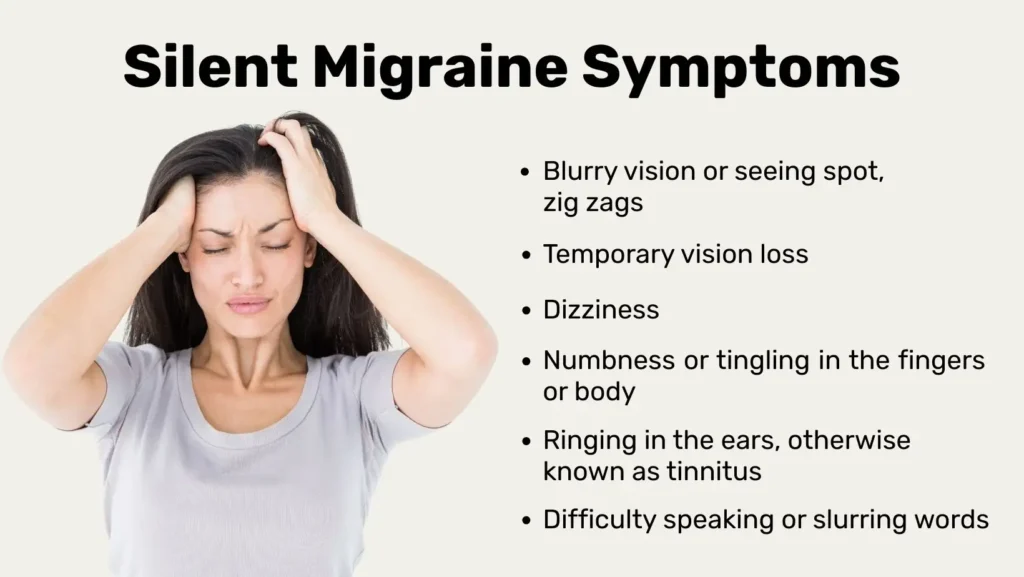
The symptoms of silent migraine usually build up over a few minutes, spread slowly, then fade within about one hour. You may feel washed out or drained for a while after the main spell ends.
Even without strong head pain, a silent migraine headache can make reading, driving, or working unsafe during the attack.
Visual Aura (Flashes, Zigzags, Blind Spots)
Vision changes are the most common symptoms of silent migraine . Visual aura appears in most people who have aura, often as the first sign.
You may see bright flashing dots, shining zigzag lines, or shapes that grow and move across your sight. Some people see a bright, curved line with a darker patch in the middle. Doctors call this a “scintillating scotoma” [a moving bright blind spot].
You might lose part of your sight so that letters on a page vanish or part of a face looks missing. These effects usually involve both eyes, even if they seem stronger on one side.
In a silent migraine headache , these visual changes often last 15 to 30 minutes, then fade. They do not mean your eyes are failing. They come from the vision part of your brain reacting to the migraine wave.
Sensory Disturbances (Tingling, Numbness, Sensitivity To Light Or Sound)
Another group of symptoms of silent migraine involves sensation. You might feel tingling in your fingers that slowly climbs up your arm, then reaches your face or tongue. You may feel numb, heavy, or strange on one side. Doctors call this “sensory aura”.
During a silent migraine headache , you can also become very sensitive to light or sound. Normal room light may feel harsh. Everyday noises may seem too loud. These signs again show that your brain is in a highly sensitive state.
Speech And Cognitive Symptoms (“Fog,” Difficulty Speaking)
Some people notice trouble finding words or speaking clear sentences. You know what you want to say, but the words come out wrong or feel stuck. This is called “aphasic aura” [speech aura]. Others feel brain “fog,” slow thinking, or trouble focusing.
These signs can be very scary in a silent migraine headache because they can imitate stroke. The big clue is that migraine aura symptoms usually spread slowly and improve within an hour, while stroke often hits suddenly and stays. Still, because there is some overlap and because stroke is serious, experts at NIH and major stroke groups advise getting urgent care for any new, sudden speech or weakness episode, even if you have had migraines before.
Digestive Symptoms (Nausea, Dizziness, Imbalance)
A silent migraine headache does not focus only on your head and eyes. Your inner balance system and gut can react as well. You may feel sick to your stomach, light-headed, or as if the room is spinning. In some people, vertigo [a spinning sensation] is the main problem during silent migraine , and it can lead to unsteady walking.
Causes Of Silent Migraines
Doctors still do not know all the causes of silent migraines , but research from Mayo Clinic, NIH, and major headache societies points to a mix of brain changes, genes, and hormones.
Your brain in a silent migraine headache is more sensitive than average. It reacts strongly to light, stress, sleep changes, and hormone shifts. This is similar to other migraines, but in your case, the pain system does not always switch on.
Neurological Changes And Cortical Spreading Depression
A key part of the causes of silent migraines is a brain event called cortical spreading depression. This is a slow wave of strong electrical activity that moves across the outer brain surface, followed by a short quiet phase.
When this wave passes through the visual area, you see flashing lines and blind spots. When it reaches the sensory area, you feel tingling or numbness. When it touches the speech area, you have trouble finding words. Studies in animals and people show this same wave during aura in migraine with and without headache.
In a silent migraine headache , the wave happens, so you notice the aura. But the pain fibers around the brain do not react much. The exact reason is still under study, and experts note that evidence is strong for cortical spreading depression as the base of aura, but not every detail is fully proven yet.
Hormonal Fluctuations (Estrogen Shifts, Menstruation)
Hormone changes also play a role in the causes of silent migraines , especially for women. Estrogen levels rise and fall around your period, during pregnancy, after birth, and near menopause. These swings can make the migraine brain more reactive.
You may notice that your silent migraine headache aura appears right before or during your period, even if you do not get much head pain. Modern guidelines also warn that women with migraine with aura, including silent migraine , need special care when using estrogen birth control, because stroke risk may be a little higher, especially if they smoke or have high blood pressure.
Genetics And Family History
Migraine often runs in families. Large reviews show that genes linked to brain chemistry and blood vessel control raise the chance of migraine, including silent migraine headache types.
If one or both of your parents have migraines, your risk is higher. This does not mean you are certain to get attacks. It means your brain is more easily triggered when stress, sleep loss, and hormones stack up.
Silent Migraine Triggers
While the base cause sits in your brain wiring, daily triggers of silent migraine decide when an attack actually starts. The American Migraine Foundation and Migraine Trust list many common triggers, but they also stress that not all apply to every person.
Food Triggers (Chocolate, MSG, Caffeine, Alcohol)
Research shows that some people report attacks after certain foods that trigger migraines, but high-quality studies are mixed. So food is a possible trigger of silent migraine , not a confirmed cause for everyone. Alcohol, especially red wine, and large swings in caffeine are often reported. Processed meats, aged cheese, and foods with MSG can also bother some people.
The best way to see if food affects your silent migraine headache is to keep a diary. You note what you eat and when symptoms start. If the same food lines up with aura several times, you and your doctor may test a short trial without it.
Environmental Triggers (Light, Smells, Weather Changes)
Strong light, flashing screens, loud noise, and strong smells are classic triggers of silent migraine . Storms, heat, and sudden changes in air pressure also show up often in patient reports.
If your silent migraine headache often starts in bright stores, under harsh office lights, or after a long day on screens, that pattern matters. You might need tinted glasses, screen filters, or planned visual breaks.
Stress, Fatigue, And Irregular Sleep Cycles
Stress is one of the strongest triggers of silent migraine . Both pressure at work and the “let down” after a busy week can set off an attack. Lack of sleep, oversleeping on weekends, and changing your sleep hours often can all push your brain into a silent migraine headache .
Experts use the term “SEEDS” for lifestyle supporfoodt: sleep, exercise, eat, diary, and stress control. This simple idea comes from migraine groups and helps many people reduce attacks over time.
Dehydration And Dietary Patterns
Not drinking enough water or skipping meals can lead to a silent migraine headache . Dehydration thickens your blood slightly and stresses your system. Long gaps without food can drop your blood sugar, which the sensitive migraine brain does not like.
Regular meals, steady water intake, and smaller caffeine swings are simple but strong tools for you to manage silent migraine episodes.
How Doctors Diagnose Silent Migraines
Doctors diagnose a silent migraine headache by listening to your story, checking your nervous system, and ruling out other problems such as stroke or seizures. There is no single blood test that proves the diagnosis.
Medical History And Symptom Evaluation
Your doctor will ask what you see and feel, how long each symptom lasts, and how often attacks happen. They compare your symptoms of silent migraine with the international migraine criteria, which describe aura that builds over at least 5 minutes, spreads, and lasts less than 60 minutes.
Clear timing and description help your doctor differentiate silent migraine vs regular migraine , and from other conditions with similar signs.
Ruling Out Stroke, Seizures, Or Neurological Disease
Because aura can look like a mini stroke or a seizure, especially when speech or weakness appears, careful doctors always think about these first. They look at your age, stroke risk factors, and how symptoms start. Stroke usually starts suddenly at full strength, while a silent migraine headache aura often grows slowly.
New, severe, or very different events need urgent review. This protects you from missing a serious brain or blood vessel problem.
Imaging And Neurological Examinations
Many people with silent migraine headaches have normal brain scans. Doctors still may order an MRI or CT scan to rule out tumor, bleeding, or structural disease. A full neurological exam checks your strength, reflexes, balance, and eye movements. If episodes are odd or suggest seizures, an EEG test that records brain waves can help.
Treatment For Silent Migraine Headaches
Treatment for a silent migraine headache focuses on making attacks less frequent and less scary. You and your doctor combine lifestyle steps, acute medicines for bad spells, and sometimes preventive medicines.
Medications (Preventive And Acute Treatments)
Some people only need medicine during an attack. Doctors may use anti-nausea pills, short-acting anxiety medicine, or migraine-specific drugs such as triptans to ease the aura phase or the aftereffects. Evidence on stopping aura once it starts is mixed, so your doctor will explain that results vary from person to person.
If your silent migraine headache happens often or affects work and safety, doctors sometimes use daily preventive drugs. These can include beta blockers, anti-seizure medicines, certain antidepressants, or newer CGRP blocking drugs that affect a migraine-related chemical. Dosage varies by age, weight, and other health problems, so your doctor chooses and adjusts the plan. learn more migraine medication
Natural Remedies And Self Care Practices
Many people add simple self-care steps. You sit in a dark, quiet room when aura starts, close your eyes, breathe slowly, and avoid driving until vision and balance feel normal. Regular gentle exercise, like walking or cycling, can lower overall migraine risk over time, as long as you do not push too hard during an active silent migraine headache .
Relaxation methods, such as diaphragmatic breathing and basic mindfulness, help your nervous system calm down. The science base here is growing but still limited, so doctors see these as useful add-ons.
Supplements And Vitamins (Magnesium, Riboflavin, CoQ10)
Studies suggest that magnesium, riboflavin, and CoQ10 may reduce migraine days for some people. They seem to support energy use in brain cells and reduce overactivity. Evidence is moderate, not perfect, so experts usually call them “options” rather than strong guidelines.
If you try them for a silent migraine headache , your doctor will pick safe doses and check for kidney problems or drug interactions. You should never start large doses on your own.
Lifestyle Changes That Reduce Silent Migraine Frequency
Good daily habits are one of the strongest tools you have against a silent migraine headache . Steady sleep, balanced meals, hydration, regular movement, and stress control are core steps.
These habits do not promise zero attacks, but over months, they often cut the number and intensity of symptoms of silent migraine and make you feel more in control.
How To Prevent Silent Migraines
Preventing a silent migraine headache means lowering your overall trigger load. You look at stress, food, sleep, light, and hormones together and change what you can.
Managing Stress And Relaxation Techniques
You can write down your main stress points and tackle them one by one. Short breathing breaks during the day, simple stretching, a short walk, and realistic to-do lists all lower the chance that stress will push you into silent migraine aura. Get to Know about stress and stroke risk
Diet Modifications And Trigger Avoidance
Instead of cutting many foods at once, you use your diary. When a food lines up with a silent migraine headache several times, you test a careful limit or pause. This kind of targeted change respects that not all reported food triggers are proven in studies.
Sleep Hygiene And Circadian Rhythm Alignment
You aim for the same bedtime and wake time every day, even on weekends. You keep your room dark and quiet, and you avoid heavy meals and bright screens right before bed. Good sleep steadies the sensitive migraine brain and can reduce attacks that follow short nights or weekend sleep swings.
Limiting Screen Time And Eye Strain
You can reduce screen glare, use bigger fonts, and pause every 20 minutes to look far away. These steps ease pressure on the visual system that feeds into your silent migraine headache pattern.
FAQs
Can You Have A Migraine Without A Headache?
Yes. You can have a silent migraine headache where you only get aura and related signs without severe pain. Doctors often call this migraine aura without headache or silent migraine in clinic notes.
How Long Do Silent Migraines Usually Last?
Most symptoms of silent migraine last from 5 to 60 minutes, then fade, although tiredness can stay for hours. If symptoms last longer than an hour or change suddenly, you should seek medical advice.
Are Silent Migraines Dangerous?
A silent migraine headache itself usually does not damage the brain. The real danger is missing stroke or another disease, so a new, severe, or different aura always needs urgent medical review to stay safe.
What Triggers Silent Migraines The Most?
Typical triggers of silent migraine include stress, lack of sleep, hormone shifts, missed meals, dehydration, certain foods, strong light, and alcohol. Patterns vary, so your own diary and doctor review matter more than general lists.
Can Silent Migraines Cause Long-Term Brain Damage?
Current studies do not show that a silent migraine headache causes ongoing brain damage in most people. Migraine with aura does slightly raise stroke risk, so managing blood pressure, smoking, and hormones is very important.
When Should I See A Doctor For Silent Migraine Symptoms?
You should see a doctor if your first silent migraine headache appears, if symptoms change, if they last longer than one hour, or if you notice weakness, speech loss, or face drooping at any time.
Are Silent Migraines More Common In Women?
Yes, silent migraine and other aura types are more common in women, likely due to estrogen shifts. Stroke risk is higher when aura mixes with smoking or high-dose estrogen birth control, so planning is vital.
Can Silent Migraines Cause Vertigo Or Balance Issues?
A silent migraine headache can include vertigo, lightheadedness, and poor balance, especially in vestibular migraine. Because ear and brain diseases can look similar, strong or new vertigo always needs proper medical review.
How Are Silent Migraines Diagnosed If There Is No Pain?
Doctors diagnose a silent migraine headache by its repeating aura pattern, timing, normal tests between attacks, and by ruling out stroke or seizure. International criteria describe this as migraine aura without headache.
Do Silent Migraines Increase The Risk Of Stroke?
Migraine with aura, which includes silent migraine , has a modest link with higher ischemic stroke risk, especially in young women who smoke or use estrogen birth control. Your doctor can assess and lower your individual risk.
About The Author

Medically reviewed by Dr. Chandril Chugh, MD, DM (Neurology)
Dr. Chandril Chugh is a U.S.-trained, board-certified neurologist with expertise in diagnosing and managing neurological disorders, including migraines, epilepsy, Parkinson’s disease, and movement disorders. His clinical focus includes evidence-based neurological care and patient education.
All content is reviewed for medical accuracy and aligned with current neurological guidelines.