Migraine medication helps control migraine pain, reduce brain-related symptoms, and allow you to function during an attack. Migraine is a neurological (brain-related) condition, not a simple headache. It affects pain nerves, brain chemicals, and blood vessels. Using the correct migraine medication at the right time can reduce pain, nausea, light sensitivity, and mental fog. Using the wrong migraine medication , or using it too often, can increase attack frequency and cause rebound headaches.
Types of Migraine Medications
Doctors classify migraine medication based on when it is used and how it works. Some medicines stop pain during an attack. Others reduce how often attacks occur. There are 5 types of migraine medications commonly used today, but not every type is right for every person.
Acute (Abortive) Migraine Medications
Acute medicines stop migraine symptoms after an attack begins. You take them at the first sign of migraine pain or aura (visual or sensory warning signs). Early use increases success. Acute migraine medication does not prevent future migraines. Using them too often can lead to medication overuse headache.
These drugs work by blocking pain signals, calming overactive brain nerves, or reducing inflammation.
Pain Relievers (NSAIDs, Acetaminophen)
These medicines work best for mild or moderate migraine attacks. NSAIDs reduce inflammation inside the brain. Acetaminophen blocks pain signals but does not reduce swelling.
They are easy to access but easy to misuse. Repeated use increases the risk of stomach, liver, or kidney failure.
Triptans
Triptans are migraine-specific drugs. They act on serotonin, a brain chemical involved in pain and blood vessel control. Triptans shrink swollen brain blood vessels and block pain pathways.
They work well for moderate to severe attacks. They are not suitable for everyone, especially people with certain heart or circulation problems.
Ergotamines
Ergot medicines are older migraine treatments. They act on serotonin and blood vessels like triptans, but stay active longer. Doctors mainly use them for long-lasting or recurring attacks. Side effects limit their use today.
Gepants
Gepants block CGRP, a protein that triggers migraine pain. They stop pain without narrowing blood vessels. This makes them safer for people with heart risks. Gepants can reduce pain, nausea, and light sensitivity.
Ditans
Ditans calm pain-processing nerves in the brain. They do not affect blood vessels. Strong sleepiness is common. You must avoid driving after taking them.
Anti-Nausea Medications
Nausea and vomiting can stop pain medicines from working. Anti-nausea drugs help the stomach empty faster.
This improves how well other migraine medication options work during an attack.
10 Drugs for Acute Migraine Treatment
These 10 drugs for acute treatment are widely used for stopping migraine attacks. Each has key safety points you should understand before use.
1. Ibuprofen
Important things to know before taking ibuprofen:
- Works best when taken early in the attack
- Frequent use can irritate the stomach lining
- Long-term use can affect kidney function
- Should not be taken daily for migraine pain
2. Naproxen
Important things to know before taking naproxen:
- Lasts longer than ibuprofen in the body
- Useful for slow-building or long migraines
- Can increase the risk of stomach ulcers
- Avoid combining with other NSAIDs
3. Acetaminophen
Important things to know before taking acetaminophen:
- Best for mild migraine attacks
- Does not reduce inflammation
- High doses can damage the liver
- Alcohol use increases liver risk
4. Sumatriptan
Important things to know before taking sumatriptan:
- Works best for moderate to severe migraines
- Acts faster when used as a nasal spray or injection
- Can cause chest tightness or tingling
- Not suitable for people with certain heart conditions
5. Rizatriptan
Important things to know before taking rizatriptan:
- Works quickly for fast-rising migraine pain
- Dose may change if you take other medicines
- Can cause dizziness or fatigue
- Should not be used too often in one month
6. Zolmitriptan
Important things to know before taking zolmitriptan:
- Available as tablets and a nasal spray
- Nasal spray helps when nausea prevents swallowing
- Can cause taste changes or sleepiness
- Avoid mixing with certain antidepressants
7. Eletriptan
Important things to know before taking eletriptan:
- Longer-lasting relief for severe migraines
- Interacts with many other drugs
- Can increase blood pressure temporarily
- Not recommended for frequent use
8. Dihydroergotamine (DHE)
Important things to know before taking DHE:
- Used for long or repeated migraine attacks
- Often causes nausea without anti-nausea medicine
- Must not be used with triptans close together
- Not suitable for pregnancy or circulation disorders
9. Ubrogepant
Important things to know before taking ubrogepant:
- Does not narrow blood vessels
- Safer for people with heart risks
- Can cause mild nausea or dry mouth
- Overuse can still trigger rebound headaches
10. Rimegepant
Important things to know before taking rimegepant:
- Treats pain and helps prevent future attacks
- Dissolves in the mouth, useful during nausea
- Generally well tolerated
- Dose frequency should stay within limits
These 10 drugs for acute treatment serve different migraine patterns. Choosing the right migraine medication depends on your symptoms, attack frequency, health history, and how often migraines occur.
Common Side Effects of Migraine Medications
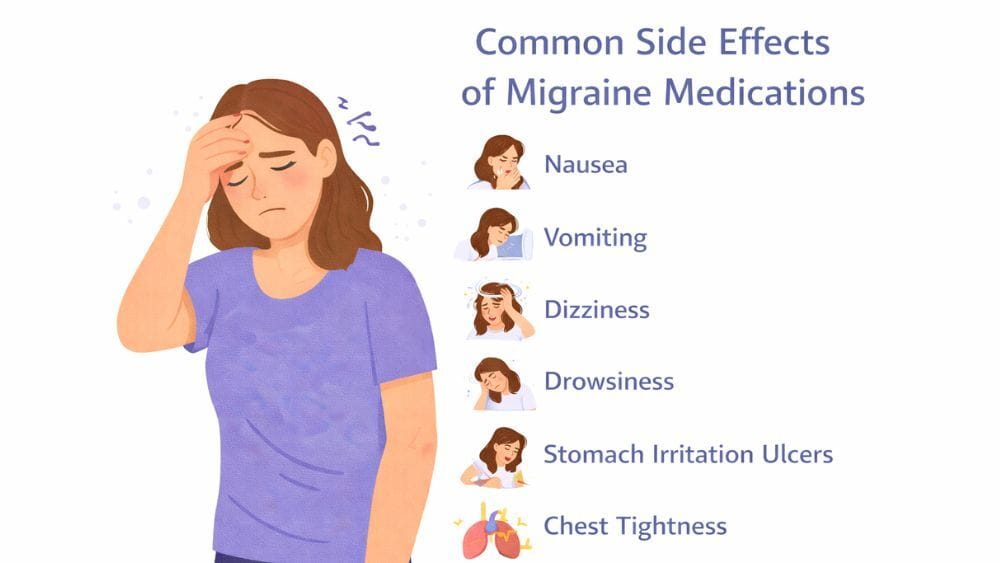
Side effects vary based on drug class, dose frequency, and your health history. Many side effects are mild and short-term, but some signal misuse or poor drug fit. Knowing early warning signs helps you adjust migraine medication use before problems grow.
Nausea and Vomiting
Nausea happens because migraine disrupts gut-brain signaling. Some drugs worsen this by slowing stomach emptying. Taking medicine early, using dissolvable tablets, or adding anti-nausea drugs improves absorption and relief.
Dizziness or Drowsiness
Many migraine drugs calm overactive brain nerves. This can cause dizziness, slowed reaction time, or sleepiness. Ditans and some anti-nausea drugs cause stronger sedation. You should avoid driving or tasks needing focus after use.
Stomach Irritation or Ulcers
NSAIDs irritate the stomach lining by reducing protective mucus. Repeated use increases ulcer and bleeding risk. Taking them with food lowers irritation but does not remove risk. Long-term users often need stomach-protective strategies.
Chest Tightness (Triptans)
Chest pressure from triptans feels scary but is usually non-cardiac. It results from nerve signaling, not blocked arteries. Persistent pain, jaw pain, or shortness of breath needs urgent evaluation.
Fatigue and Weakness
Fatigue occurs when migraine drugs suppress pain pathways too strongly. This effect increases with frequent dosing. Ongoing weakness suggests medication mismatch or overuse and needs review.
Medication Overuse Headache
Using acute drugs too often retrains the brain to expect medication. Pain returns sooner and stronger. This cycle traps many people. Breaking it requires stopping overused migraine medication and starting prevention.
Best Medication for Migraine (Based on Symptoms)
No single best medication for migraine exists. Matching symptoms to drug action improves success and lowers side effects.
Migraine With Aura
Aura reflects nerve signal changes, not blood flow alone. Triptans work best when taken after aura ends and pain begins. Gepants suit people with long aura phases or triptan side effects.
Migraine Without Aura
Fast-onset pain responds best to early triptan or NSAID use. Nasal sprays or dissolvable forms help when nausea hits early. Delayed dosing lowers effectiveness.
Chronic Migraine
Chronic migraine means headaches on 15 or more days per month. Acute drugs alone worsen outcomes. Prevention plus limited acute use offers better control and fewer rebound headaches.
Migraine Medication Side Effects
Understanding migraine medication side effects helps you spot trouble early and avoid long-term harm.
Common Side Effects
Dry mouth, tingling, mild nausea, and sleepiness are common. These usually fade as the drug leaves your system. Consistent mild effects may still justify switching drugs.
Serious or Long-Term Risks
Frequent NSAID use raises kidney and gut risk. Triptans stress blood vessels in vulnerable people. Liver injury occurs with excess acetaminophen. Risk rises with poor dosing habits, not proper use.
Medication Overuse Headache (Rebound Headaches)
Medication overuse headache develops when acute drugs are used more than 10 to 15 days per month, depending on the drug. Pain becomes daily, dull, and resistant. Treatment involves stopping the overused drug and resetting pain pathways.
Recovery takes weeks, not days. During this phase, preventive plans and short-term bridge therapies help stabilize the brain and restore migraine medication response.
Preventive Migraine Medications
Preventive migraine medications reduce how often attacks happen and how severe they feel. They change brain excitability over time, not instantly.
Beta-Blockers
These drugs calm nerve firing and stress responses. They reduce attack frequency but may lower blood pressure or heart rate. Fatigue and cold hands are common early effects.
Antidepressants
Certain antidepressants strengthen pain-inhibiting brain circuits. They also improve sleep quality, which affects migraine risk. Weight change and dry mouth can occur with long-term use.
Anti-Seizure Medications
These stabilize overactive brain cells. They work well for chronic migraine but can affect memory or focus. Slow dose increases reduce side effects.
CGRP Monoclonal Antibodies
These block migraine-specific pain signals for weeks at a time. They do not affect blood pressure or mood. Constipation and injection site pain are the main issues.
Botox for Migraine Prevention
Botox blocks pain signal release from head and neck nerves. It works best for chronic migraine. Benefits build over several treatment cycles.
FAQs
What is the fastest-acting migraine medication?
Injected triptans act fastest, often within 10 minutes. Nasal sprays follow next. Pills act slower due to delayed stomach emptying during attacks, especially when nausea or vomiting is present.
What is the best medication for severe migraines?
Yes, triptans or gepants are usually the best medication for migraine when pain is severe. If attacks last longer than 24 hours or repeat, doctors may use dihydroergotamine under supervision.
Are migraine medications safe for long-term use?
Yes, preventive drugs and CGRP therapies are safe long-term when monitored. Acute migraine medication becomes unsafe only when used too frequently, which increases rebound headache and organ stress risk.
Can migraine medications be taken daily?
Yes, but only preventive migraine medications should be taken daily. Daily use of pain-stopping drugs increases headache frequency and reduces drug effectiveness over time.
Do migraine medications work for hormonal migraines?
Yes. Triptans, gepants, and short-term prevention around menstrual cycles reduce hormone-triggered attacks. Timing treatment before estrogen drops improves response and lowers attack severity.
What migraine medications are safe during pregnancy?
Acetaminophen is usually preferred. Most triptans, gepants, and preventives are avoided. Treatment focuses on non-drug strategies unless risks clearly outweigh benefits.
Can migraine medications cause dependency?
No, migraine drugs do not cause addiction. However, frequent use can cause medication overuse headache, which mimics dependency but resolves once drug use is corrected.
About The Author

Medically reviewed by Dr. Chandril Chugh, MD, DM (Neurology)
Dr. Chandril Chugh is a U.S.-trained, board-certified neurologist with expertise in diagnosing and managing neurological disorders, including migraines, epilepsy, Parkinson’s disease, and movement disorders. His clinical focus includes evidence-based neurological care and patient education.
All content is reviewed for medical accuracy and aligned with current neurological guidelines.