Hemiplegic migraine is a rare migraine type that causes temporary weakness or paralysis on one side of your body, along with migraine pain and brain-related symptoms. It often looks like a stroke, but it is not caused by blocked blood flow. The condition affects how brain cells send signals, leading to dramatic but usually reversible symptoms. Fast recognition matters because the wrong treatment can cause harm.
Hemiplegic Migraine Symptoms
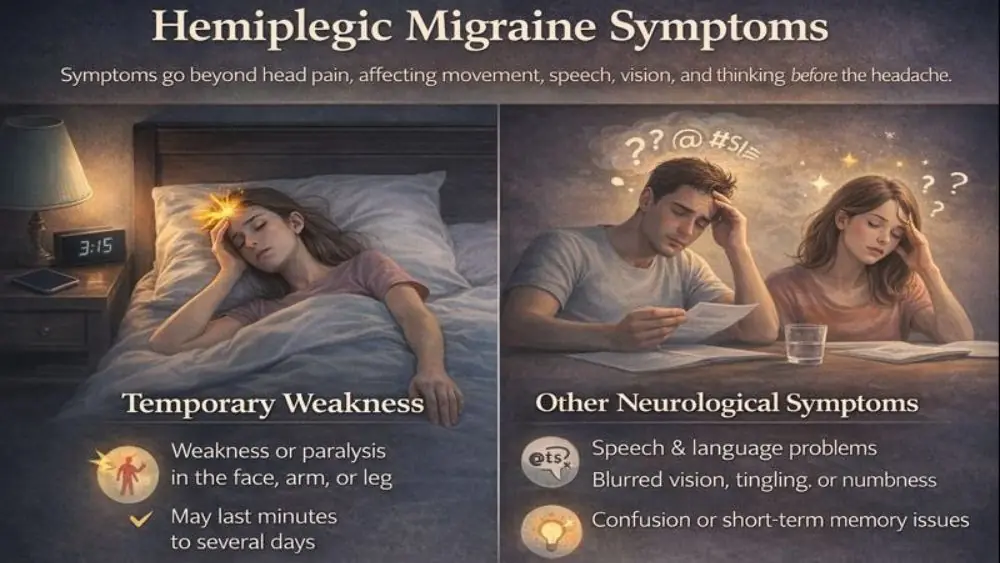
The symptoms of hemiplegic migraine go beyond head pain. You experience changes in movement, speech, vision, and thinking. These symptoms usually appear before the headache phase and may spread slowly over minutes.
Temporary Weakness or Paralysis on One Side
The most defining feature of hemiplegic migraine is weakness on one side of your body. This can involve your face, arm, or leg. In severe attacks, that side may feel fully paralyzed, meaning you cannot lift or control it. The weakness can last from a few minutes to several days.
This weakness happens because nerve cells in the brain temporarily stop sending normal signals. This is not caused by muscle damage. Once the brain activity resets, strength usually returns.
Speech and Language Difficulties
Speech problems are common symptoms of hemiplegic migraine . You may struggle to form words. Your speech may sound slurred. You may know what you want to say but cannot say it. Some people also have trouble understanding spoken language.
These problems happen when migraine-related electrical changes affect brain areas that control speech. These symptoms are fully reversible in most cases, but they can last longer than a typical migraine aura.
Visual, Sensory, and Cognitive Symptoms
Visual changes often appear early. You may see flashing lights, zigzag lines, blind spots, or blurred vision. Sensory symptoms include numbness, tingling, or a crawling feeling on one side of your body.
Cognitive symptoms can include confusion, slow thinking, and short-term memory problems. These effects can feel frightening. These symptoms come from temporary changes in brain signaling, not brain injury.
Duration of Neurological Symptoms
Most neurological symptoms last less than 24 hours. In some people, weakness or confusion can last several days. Rarely, symptoms may persist for weeks. Longer episodes are more likely in children and in people with genetic forms of hemiplegic migraine .
Causes of Hemiplegic Migraines
The core problem behind hemiplegic migraine is abnormal electrical activity in brain cells due to faulty ion movement. Genetic mutations increase nerve excitability, making the brain more vulnerable to triggers that would not affect people with typical migraines.
Genetic Causes and Ion Channel Dysfunction
Many cases of hemiplegic migraine are linked to gene mutations that affect ion channels. Ion channels are tiny gates in brain cells that control how electrical signals move. When these gates fail, brain cells become overly excitable.
Mutations in CACNA1A, ATP1A2, and SCN1A genes disrupt calcium or sodium flow in nerve cells. This disruption triggers a wave of altered brain activity called cortical spreading depression, which explains weakness and aura symptoms.
Sporadic vs Inherited Hemiplegic Migraine
Inherited hemiplegic migraine runs in families. If one parent carries the gene, you may inherit the condition. Sporadic hemiplegic migraine occurs without any family history. Both forms cause the same symptoms and risks.
Sporadic cases may still involve unknown genetic changes. This confirms that the causes of hemiplegic migraines are strongly rooted in biology, not lifestyle alone.
Common Triggers That Provoke Attacks
Triggers do not cause the disease, but they can start attacks. Common triggers include lack of sleep, emotional stress, bright or flashing lights, missed meals, and head injury. Hormonal changes can also play a role.
Studies comparing migraine diaries show trigger patterns vary widely. Avoiding known triggers can reduce attack frequency but does not eliminate hemiplegic migraine completely.
Hemiplegic Migraine Diagnosis
The diagnosis of hemiplegic migraine relies on repeated symptom patterns over time, not a single attack. Doctors prioritize ruling out stroke first because missing a stroke is dangerous, while migraine treatment can safely wait until imaging confirms the cause.
Clinical Diagnostic Criteria
Doctors diagnose hemiplegic migraine based on repeated attacks with migraine features plus reversible one-sided weakness. Other aura symptoms, like visual or speech changes, must also be present.
Imaging Tests to Rule Out Stroke
Brain imaging is critical, especially during your first attack. CT scans and MRI scans rule out bleeding, tumors, or stroke. This step is essential because symptoms of hemiplegic migraine closely mimic stroke symptoms. Skipping imaging can lead to misdiagnosis and dangerous treatment errors.
Genetic Testing Indications
Genetic testing may be recommended if attacks begin in childhood, if symptoms are severe, or if several family members are affected. Testing helps confirm inherited forms and guide long-term care. Genetic results do not change acute care but help explain the causes of hemiplegic migraines and future risks.
Differential Diagnosis (Stroke, TIA, Seizures)
Doctors must rule out stroke, transient ischemic attack (brief blood flow blockage), epilepsy, and brain infections. Blood tests, EEGs, and repeated imaging may be needed. This careful process protects you from receiving unsafe treatments and ensures accurate diagnosis of hemiplegic migraine .
Hemiplegic Migraine Treatment
There is no cure, but treatment for hemiplegic migraine focuses on safety, symptom relief, and attack prevention.
Acute Treatment During an Attack
During an attack, doctors focus on monitoring and comfort. Pain relievers, anti-nausea drugs, and fluids are commonly used. Oxygen may help some patients. Stroke-like drugs are avoided until stroke is ruled out. Careful observation reduces complications in hemiplegic migraine attacks.
Preventive Medications
Preventive treatment aims to reduce attack frequency and severity. Doctors usually prescribe calcium channel blockers, anti-seizure medications, or certain blood pressure drugs. Dosage varies by age and condition. Preventive therapy lowers hospital visits and improves daily function in people with frequent hemiplegic migraine attacks.
Medications to Avoid in Hemiplegic Migraine
Many doctors avoid triptans and ergot drugs. These medications narrow blood vessels and may increase the risk during attacks with weakness. This caution is supported by expert consensus, even though large trials are limited. Avoiding these drugs is a key safety rule in treatment for hemiplegic migraine .
Role of Lifestyle and Trigger Management
Regular sleep, steady meals, hydration, and stress control help stabilize brain activity. Keeping a migraine diary helps identify personal triggers. Lifestyle control does not replace medication, but it supports long-term control of hemiplegic migraine .
Hemiplegic Migraine Recovery Time
The recovery time of hemiplegic migraine depends on how intense the brain disturbance becomes during an attack. Recovery does not follow a fixed clock. It follows how fast brain signaling returns to normal.
Typical Recovery Timeline After an Attack
In many cases, weakness and speech problems improve within hours. Some people need one to three days before strength and clear speech return. Headache pain may fade sooner or later than the nerve symptoms. Fatigue often lingers after the main symptoms stop. This post-attack phase can last a few days and may include poor focus or low energy.
Full recovery is expected in most people. Brain scans usually return to normal after symptoms clear. This pattern confirms that hemiplegic migraine causes temporary brain dysfunction rather than permanent injury.
Factors That Prolong Neurological Recovery
Severe attacks tend to slow recovery. Delayed medical care can also extend symptoms. Repeated attacks within a short time stress the brain and lengthen healing. Dehydration, sleep loss, and infection can also delay improvement.
Children and people with genetic forms may experience longer recovery periods. These patterns appear consistently across migraine specialty clinics studying the recovery time of hemiplegic migraine .
When Symptoms May Last Weeks or Longer
Rarely, weakness or confusion can last weeks. This usually happens after very severe attacks with brain swelling. Hospital monitoring is required in such cases. Long-lasting symptoms do not always mean permanent damage, but they demand careful follow-up.
Hemiplegic Migraines in Children and Adults
Children with hemiplegic migraine often show more dramatic neurological symptoms than adults, even when imaging looks normal. Adults, however, face a higher misdiagnosis risk because stroke becomes more common with age, requiring stricter evaluation.
Pediatric Presentation and Warning Signs
Children often show weakness before headache pain. Vomiting, drowsiness, and confusion are common. Younger children may struggle to explain visual symptoms. Parents may notice slurred speech or clumsiness instead.
Early diagnosis reduces repeated emergency visits. Clear identification of symptoms of hemiplegic migraine helps families avoid panic during future attacks.
Adult-Onset Hemiplegic Migraine
Some adults experience their first attack later in life. These cases cause major concern because stroke risk rises with age. Doctors must rule out stroke during every first or unusual attack.
Adult-onset hemiplegic migraine often requires more imaging and closer monitoring. Long-term outlook remains favorable with correct management.
Long-Term Outlook Across Age Groups
Many people see attacks become less frequent with age. Some experience lifelong episodes. Preventive care improves stability. Most people maintain normal intelligence and physical function between attacks.
Risks, Complications, and Stroke Confusion
The biggest danger of hemiplegic migraine is not the migraine itself but confusion with stroke. Incorrect emergency treatment can cause harm, which is why a documented migraine history plays a critical safety role during hospital care.
Why Hemiplegic Migraine Mimics Stroke
Stroke and hemiplegic migraine both cause sudden weakness, speech problems, and vision loss. The difference lies in the cause. A stroke involves blocked or broken blood vessels. Hemiplegic migraine involves abnormal brain signaling. Because early symptoms look the same, emergency evaluation is always required.
Risk of Unnecessary Thrombolysis
Thrombolysis refers to clot-busting drugs used in stroke care. If given during a migraine attack by mistake, these drugs can cause bleeding. This risk highlights why accurate diagnosis of hemiplegic migraine matters in emergency settings.
Rare Long-Term Neurological Complications
Permanent brain injury is rare but reported in extreme cases. Severe brain swelling and prolonged coma have occurred, mostly in children with genetic forms. These cases are uncommon but well-documented in medical literature.
When to Seek Emergency Care
Even with known hemiplegic migraine , emergency care is needed when symptoms change pattern, last longer than usual, or include loss of consciousness. These red flags signal possible complications that require immediate medical evaluation.
Red-Flag Symptoms Requiring Urgent Evaluation
Seek emergency care during your first attack. New or worsening weakness requires evaluation. Loss of consciousness, high fever, or seizures also require urgent care. A sudden, severe headache, unlike past attacks, needs assessment. These steps protect people with hemiplegic migraine from missed diagnoses.
How to Communicate Migraine History in Emergencies
Carry written medical information. Use a medical alert bracelet if attacks are frequent. Clearly state your diagnosis and past imaging results. This helps emergency teams act safely.
Living With Hemiplegic Migraines
Daily life with hemiplegic migraine requires planning around unpredictability rather than avoidance of activity. Structured routines, clear communication with employers, and safety planning reduce both physical risk and long-term anxiety.
Daily Precautions and Activity Planning
Avoid driving during aura phases. Plan rest days after attacks. Keep hydration steady. Regular routines help stabilize brain function. These steps reduce attack frequency in hemiplegic migraine .
Managing Anxiety Related to Attacks
Fear is common due to stroke-like symptoms. Education reduces anxiety. Counseling helps some people cope with uncertainty. Support groups offer reassurance through shared experience.
Work, Driving, and Safety Considerations
Work accommodations may be needed. Flexible schedules reduce stress. Driving restrictions vary by region and symptom severity. Safety planning protects both you and others.
Prevention Strategies for Hemiplegic Migraines
Prevention works best when medication and lifestyle changes support each other. Long-term preventive therapy stabilizes brain excitability, while consistent sleep, hydration, and stress control reduce how often attacks break through.
Trigger Identification and Avoidance
Track sleep, stress, food intake, and symptoms. Patterns often emerge. Avoiding personal triggers lowers attack frequency. This approach supports medical treatment for hemiplegic migraine .
Sleep, Stress, and Diet Considerations
Consistent sleep schedules matter. Sudden sleep loss can trigger attacks. Stress management techniques reduce brain excitability. Balanced meals stabilize energy levels.
Role of Long-Term Preventive Therapy
Preventive medication plays a key role in people with frequent attacks. Doctors review benefits and side effects regularly. This long-term approach improves control over hemiplegic migraine .
FAQs
Can Hemiplegic Migraine Cause Permanent Damage?
Permanent damage is rare. Most people recover fully after attacks. Severe cases with brain swelling may cause lasting effects, but these cases are uncommon according to long-term neurology studies.
How Is Hemiplegic Migraine Different From Stroke?
A stroke causes permanent brain injury due to blocked blood flow. Hemiplegic migraine causes temporary brain signaling changes. Imaging tests help doctors separate these two conditions safely.
Is Hemiplegic Migraine Hereditary?
Some forms are inherited through gene mutations. Others occur without family history. Genetic testing helps explain the causes of hemiplegic migraines in families with repeated cases.
Can Hemiplegic Migraine Be Cured?
There is no cure. Proper treatment for hemiplegic migraine reduces attack frequency and severity. Many people live stable lives with preventive care and trigger control.
Is Hemiplegic Migraine a Disability?
It can be disabling for some people due to unpredictable attacks. Disability status depends on symptom frequency, severity, and local legal definitions.
How Is Hemiplegic Migraine Diagnosed?
Doctors use symptom patterns, imaging, and history review. The diagnosis of hemiplegic migraine requires ruling out stroke and seizures first.
What Clinical Criteria Are Used to Diagnose Hemiplegic Migraine?
Diagnosis requires migraine attacks with reversible one-sided weakness and other aura symptoms. These features must repeat over time to confirm hemiplegic migraine .
Why Are Imaging Tests Needed to Rule Out Stroke?
Stroke and migraine share early symptoms. Imaging confirms blood flow and brain structure. This protects patients from unsafe treatment decisions.
When Is Genetic Testing Recommended for Hemiplegic Migraine?
Testing is recommended when attacks start early, symptoms are severe, or a family history exists. Results help guide long-term planning.
What Conditions Must Be Ruled Out in Hemiplegic Migraine Diagnosis?
Doctors must rule out stroke, transient ischemic attack, epilepsy, brain infections, and metabolic disorders to ensure accurate diagnosis of hemiplegic migraine .
How Is Hemiplegic Migraine Treated During an Acute Attack?
Doctors focus on monitoring, pain relief, and safety. Medication choices avoid drugs that narrow blood vessels. This cautious approach defines safe treatment for hemiplegic migraine .
About The Author

Medically reviewed by Dr. Chandril Chugh, MD, DM (Neurology)
Dr. Chandril Chugh is a U.S.-trained, board-certified neurologist with expertise in diagnosing and managing neurological disorders, including migraines, epilepsy, Parkinson’s disease, and movement disorders. His clinical focus includes evidence-based neurological care and patient education.
All content is reviewed for medical accuracy and aligned with current neurological guidelines.