Anxiety tics are sudden, repeated movements or sounds that show up when your stress or worry rises. They are quick, hard to control, and feel like your body is trying to release built-up tension. Medical groups describe tics as brief, repeated, nonrhythmic movements or sounds and note that stress and anxiety can make them worse or more frequent.
Large health bodies such as WHO and NIMH explain that anxiety can strongly affect the body, not just the mind. Muscle tension, shaking, and restlessness are all common. When this tension becomes intense or long-lasting, it can show up as nervous tics and anxiety mixed together.
Doctors and researchers agree that anxiety can trigger or worsen tics, although research on tics caused only by anxiety is still limited. Current studies focus more on tic disorders and on how stress and emotions make existing tics flare.
What Are Anxiety Tics and Why They Happen
A tic is a sudden, brief movement or sound that you do over and over even though you do not plan to do it. Anxiety tics fit that same medical idea, but they show up or get stronger when your anxiety level climbs.
You might feel a strange pull, itch, or pressure inside your body. Then the tic happens, and you feel a short relief. This “urge then relief” pattern is very typical for tics in general. When you also feel worried, tense, or scared, the tic becomes part of nervous tics and anxiety at the same time.
What Anxiety Tics Look Like
On the outside, anxiety tics look like small, sharp moves or noises that repeat. On the inside, you feel an urge that builds until the tic comes out.
Common motor tics linked to anxiety include hard blinking, fast eye squeezing, nose twitching, lip pulling, face grimacing, head jerks, or shoulder shrugs. Some people feel their fingers flick or their arms twitch when they panic or worry.
Vocal tics can be throat clearing, sniffing, grunting, clicking, or small hums. Health articles on anxiety tics describe these as involuntary movements or sounds that show up when stress spikes.
Some anxiety tics are so small that only you or close family notice them. Others are large enough that classmates or co-workers comment, which can increase your anxiety and trigger even more tics.
Difference Between Tics And Habits
You may wonder if your blinking or shoulder movement is a tic or just a habit. The difference matters, because habits and anxiety tics work in different ways.
A habit is something you start by choice, often without thinking. Nail biting, tapping your foot, or playing with your hair are common examples. You can stop a habit if you focus, although it may feel hard.
A tic is different. With anxiety tics you usually feel:
- A strong urge or tension right before the movement.
- Relief only after the tic happens.
- A sense that the tic forces its way out.
You may hold back a tic for a short time, but the urge usually grows until it bursts out. That pattern matches medical descriptions of tics and the “premonitory urge” that often comes first.
How Stress Affects Nerve Pathways
When you feel anxious, your body activates the “fight or flight” system. Stress hormones rise. Your heart beats faster. Your muscles tighten. WHO and NIMH both list muscle tension, shaking, and restlessness as key anxiety symptoms.
If your brain stays in this alert state for a long time, the nerve signals to your muscles can misfire. Instead of smooth control, you get brief, extra bursts of activity. Those bursts show up as anxiety tics that seem to jump out when your stress level peaks.
Scientists have found that strong emotions like anxiety and frustration can push tics to become more frequent or more intense. At the same time, tics themselves can make you feel embarrassed, which then adds more anxiety. This loop explains why nervous tics and anxiety often travel together.
Anxiety Tics Symptoms
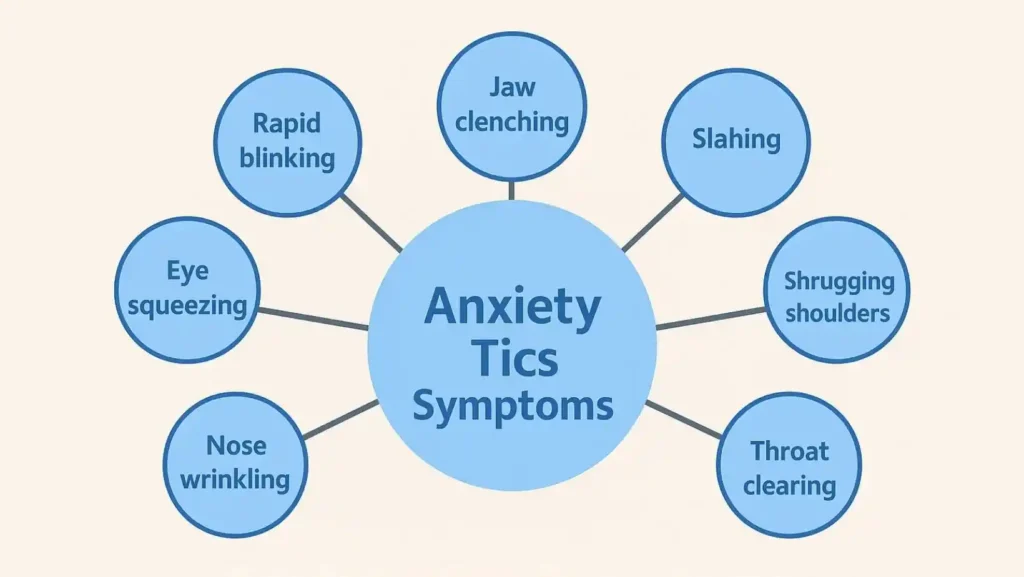
When people talk about anxiety tics symptoms , they usually mean the mix of movements, sounds, and body feelings that show up around times of worry.
You might notice that tics start or worsen during exams, work deadlines, social events, or medical visits. When the stress drops, the tics often ease. Health sources point out that tics tend to get worse when you are stressed, anxious, or tired, and better when you feel calm and focused.
The same tic can feel mild one day and very disruptive on another day, depending on how keyed up your nervous system feels.
Physical Tic Symptoms (Eyes, Face, Shoulders)
Many anxiety tics symptoms show up in the upper body. These are common physical tics from anxiety .
Eye area movements include rapid blinking, eye squeezing, or eye rolling. Facial tics can include nose wrinkling, lip biting, lip twitching, or jaw jerks. In your neck and shoulders, you may notice quick head turns, nods, or shoulder shrugs that repeat through the day.
These physical tics from anxiety often come with general tension. Your shoulders may stay raised, your jaw may feel tight, and you may feel restless in your chest and arms.
Stress Tics In Adults Vs Children
Tics are most common in childhood. Studies suggest that up to 10 percent of children may have short-term tics at some point, often around early school age. These tics often get worse under stress and better with rest.
In children, anxiety tics might appear during school tests, changes at home, or social problems. The child may not fully notice the tic. Parents or teachers may be the first ones to see it.
In adults, stress tics in adults often show up during busy work periods, financial stress, or relationship strain. You may learn to hide the tic in public and then release it more at home. Because tics that start in adult life are less common, doctors often check carefully to make sure there is not another nerve or brain condition.
Motor Vs Vocal Anxiety Tics
Doctors group tics into motor tics and vocal tics. Anxiety tics can fall into either group or both.
Motor tics are movements. Examples include blinking, head jerks, face twists, shoulder shrugs, and hand twitches. Vocal tics are sounds. These can be throat clearing, coughing, sniffing, grunts, or short words or noises.
When you feel anxious, either kind of tic can become more frequent. Sometimes a motor tic and a vocal tic rise together, which can make anxiety tics feel much more obvious in social settings.
Can Anxiety Cause Tics?
Anxiety can trigger tics in some people and can clearly make existing tics worse, but it is not the only cause.
Health sites and national health services explain that tics are often linked to stress, anxiety, tiredness, and strong emotions. These sources describe anxiety tics as involuntary movements or sounds that appear during anxiety episodes. At the same time, large research reviews still focus more on tic disorders than on pure anxiety-driven tics, so evidence about tics caused only by anxiety remains limited.
Fight-Or-Flight Activation
When you feel sudden fear, your body enters fight or flight. Your heart rate goes up, your breathing speeds, and your muscles prepare for action. WHO and other bodies list this pattern as a key feature of anxiety disorders.
In this state, your muscles get extra nerve signals. Small muscle groups in your face, neck, and hands can start twitching. Over time, these twitches can settle into repeated movements that match anxiety tics .
Nervous-System Overload
You can think of your nervous system as a busy network of signals. When you are calm, signals stay organized. When anxiety and stress pile up, the system becomes overloaded.
Studies on tics and emotions show that anxiety and stress are closely linked to stronger tics and more frequent tic episodes. This overload helps explain why anxiety tics often appear in crowded, noisy, or high-pressure settings and then ease when you reach a quiet, safe space.
When Anxiety Worsens Tic Disorders
For some people, tics do not start with anxiety. They begin with a neurodevelopmental tic disorder, such as Tourette syndrome, which involves both motor and vocal tics for at least one year with onset in childhood.
In these conditions, anxiety does not create the disorder itself. However, research shows that anxiety disorders are very common in people with Tourette syndrome and other tic disorders and that anxiety often makes tics worse.
How Anxiety Tics Differ From Other Tic Disorders
You might worry that your anxiety tics mean you have a lifelong tic disorder. That is not always true. Doctors look at when tics started, how long they last, and what other symptoms you have.
Anxiety Tics Vs Tourette Syndrome
Tourette syndrome is a medical condition where:
- You have at least two motor tics and one vocal tic.
- They last at least one year.
- They start before age 18.
In Tourette, tics often appear many times each day, even when you feel calm. Anxiety and stress make them worse, but they are not the only cause.
With anxiety tics , tics often:
- Start or rise in a clear stress period.
- Ease a lot when stress lowers.
- May not meet the one-year rule.
Research shows that stress and anxiety raise tic severity in both Tourette and other tic disorders, yet data on tics driven only by anxiety is still limited.
Anxiety Tics Vs Functional Neurological Tics
Functional tic-like movements belong to a group called functional neurological symptoms. The brain works, but the way it controls movement changes.
These tics:
- Can start suddenly, often after major stress.
- May look large, complex, or very fast.
- Often come with other symptoms like weakness or non epileptic seizures.
Anxiety tics are usually simpler, like blinking or shoulder shrugs. They often match strong anxiety tic symptoms but do not always carry the wide range of functional signs. Doctors still study these newer functional patterns, and current science is growing but limited.
Anxiety Tics Vs Autism Related Tics
People with autism often have repetitive moves and sounds. Some are tics. Others are called stims, which help them self-calm.
Autism related movements:
- May feel pleasant or soothing.
- Can happen when calm, focused, or happy.
- Are not always linked to fear.
With nervous tics and anxiety , you usually feel a strong inner urge and emotional tension. The tic gives short relief but not comfort. Research on tics in autism and on anxiety tics in autistic people is still developing, so doctors rely on careful history and observation rather than simple rules.
When Anxiety Tics Become A Problem
Not every tic needs treatment. Short, mild anxiety tics often fade when life calms. They become a problem when they cause pain, shame, or clear limits in your daily life.
Red Flags To Watch For
You should talk with a doctor or mental health professional if you notice:
- Tics most days for several months.
- Neck, back, or face pain from repeated movements.
- Trouble reading, writing, driving, or using a screen because of tics.
- Bullying, teasing, or fear of leaving home.
- Sleep problems linked to anxiety tic symptoms .
- Thoughts of self-harm or intense hopelessness.
Large health services warn that tics that last, change, or affect daily function should be checked, since they can link to tic disorders or other conditions.
How Long Anxiety Tics Typically Last
Single tic bursts usually last seconds or minutes. One review on anxiety tics notes that tic attacks triggered by anxiety tend to be brief yet may recur during each stress episode.
For some people, tics appear only in one stressful season, then slowly fade. For others, anxiety tics become part of their long-term stress response. Because research on duration is still limited, doctors focus on your pattern over months, not only on one bad day.
When Tics Are Linked To Trauma Or Panic
Strong events like accidents, abuse, or sudden loss can overload your nervous system. Some people develop tic-like movements after such trauma or during repeated panic attacks.
Studies show that emotional trauma and anxiety can change tic severity, yet the exact brain pathways are still under study. If you notice tics that spike around flashbacks, nightmares, or intense panic, tell your clinician. Trauma-focused therapy may help both the anxiety and the anxiety tics .
How To Stop Or Reduce Anxiety Tics
You may not erase every tic, yet many people learn to lower anxiety tics symptoms and feel more in control.
Calming The Body (Breathing, Grounding)
When your body leaves fight or flight, tics often ease. Health groups list slow breathing and grounding as proven tools to lower anxiety.
You can try:
- Breathing slowly in through your nose and out through your mouth.
- Naming things you see, hear, and feel to bring your mind back to the present.
- Gently relaxing tight muscles in your face, neck, and shoulders.
This calm state reduces the extra signals that drive physical tics from anxiety .
Behavioral Strategies (Competing Response)
Habit reversal training is a key part of a method called CBIT, which stands for Comprehensive Behavioral Intervention for Tics. Large studies show that CBIT can reduce tic severity in children and adults.
With habit reversal, you:
- Learn to notice the urge before your tic.
- Use a “competing response” that blocks the tic, like gently tensing opposite muscles.
- Hold that response until the urge fades.
These skills can help both tic disorders and anxiety tics , although most trials were done in people with diagnosed tic disorders, not anxiety alone.
Reducing Triggers And Overstimulation
Research shows that stress, lack of sleep, and sensory overload increase tic activity.
You can:
- Set limits on noisy or crowded settings when possible.
- Take short breaks from screens.
- Protect regular sleep.
- Use quiet hobbies to lower overall stress.
By cutting triggers, you reduce the chance that nervous tics and anxiety explode during the day.
Lifestyle Habits That Help
Healthy daily habits support your nervous system. WHO, CDC, and major clinics all stress sleep, regular movement, and social support for anxiety care.
Helpful steps:
- Aim for steady sleep and wake times.
- Move your body most days, even simple walks.
- Eat regular meals to avoid blood sugar dips.
- Avoid too much caffeine and nicotine.
These habits will not remove anxiety tics overnight, but they lower your baseline stress so tics occur less often and feel milder.
Diagnosis: When To See A Doctor
You should see a doctor or mental health professional if you feel unsure about your anxiety tics or if they limit your life.
How Clinicians Evaluate Anxiety Tics
During an assessment, a clinician may:
- Ask when the tics started and how they changed.
- Check which situations worsen anxiety tics symptoms .
- Review medical history, medicines, and family history.
- Watch your movements and sounds during the visit.
Guidelines for tic disorders focus on the type of tics, how long they last, and age at onset. Because research on anxiety tics alone is still limited, clinicians often use the same careful approach used for other tic disorders and for anxiety disorders.
What To Track Before Appointment
You can help your clinician by tracking:
- What the tic looks or sounds like.
- When it happens, and for how long.
- Stress levels, sleep, and screen time that day.
- Any physical tics from anxiety like eye or face twitches.
- Other symptoms such as panic, low mood, or obsessive thoughts.
Writing this in a simple log for 1 to 2 weeks gives a clearer view than memory alone.
Treatment Options
There is no single cure for all tics, yet several treatments can reduce anxiety tics and the distress that comes with them.
Therapy (CBT, Exposure, Habit Reversal)
Cognitive behavioral therapy, or CBT, helps you:
- Notice anxious thoughts.
- Test them against the facts.
- Replace them with more balanced thoughts.
Exposure-based methods help you face feared situations step by step, so the fear slowly drops. When anxiety reduces, anxiety tic symptoms often ease as well.
CBIT, which includes habit reversal and work on triggers, has strong support as a first-line treatment for tic disorders. It can also help when anxiety tics sit on top of a tic disorder.
Medications for Anxiety-Driven Tics
Doctors may suggest medicine when:
- Therapy and lifestyle steps are not enough.
- Anxiety is very strong.
- Tics cause pain or serious limits.
Guidelines name several medicine types for tic disorders and for anxiety, but the choice and dose depend on age, other health issues, and side effects. There is no single pill that cures anxiety tics . Instead, doctors usually combine medicine with therapy.
Self-Management Techniques
You still play a key role in managing anxiety tics :
- Learn and practice calming skills every day, not only in crisis.
- Plan breaks in stressful tasks so stress tics in adults or teens do not build.
- Tell trusted people what is happening so they respond with calm support.
Self-management does not replace medical care, especially when tics are severe, but it strengthens every other treatment.
Prevention & Long-Term Management
Stress Management Routines
Regular stress care makes nervous tics and anxiety less likely to spike. You might set:
- A short morning check-in to rate stress.
- Planned breaks for movement during work or study.
- A wind-down time each night before bed.
These routines match general anxiety care advice from major health bodies and help your nervous system feel safer day to day.
Healthy Nervous System Habits
Your brain and nerves need care over many years, not just during flare-ups. Good habits include:
- Regular exercise suited to your fitness level.
- Strong social ties with people who understand your anxiety tics .
- Limiting alcohol and recreational drugs that can worsen anxiety.
Research on the exact prevention of anxiety tics is still limited, yet studies on tic disorders and anxiety both show that stable routines and lower stress improve long-term outcomes.
FAQs
Can Anxiety Really Cause Tics?
Yes. Anxiety and stress can trigger or worsen anxiety tics , especially in people with sensitive brains or past tics, although research on tics caused only by anxiety is still limited.
Are Anxiety Tics Permanent?
Many anxiety tics improve with time, better stress control, therapy, and sometimes medicine. Some people keep mild tics during stress, yet they bother them much less in daily life.
How Long Do Anxiety Tics Last?
A single tic from anxiety tics symptoms usually lasts seconds. Clusters can last minutes. Whole tic phases may last weeks or months, depending on stress level and personal risk.
Do Anxiety Tics Mean I Have Tourette’s?
No. Anxiety tics alone do not prove Tourette syndrome. Tourette needs both motor and vocal tics for at least one year with childhood onset, which a specialist should confirm.
Can Panic Attacks Trigger Tics?
Yes. Panic attacks push your body into intense fight or flight. This stress surge can briefly increase physical tics from anxiety , especially in your face, neck, shoulders, or voice.
Are Stress Tics Common In Adults?
Short-term stress tics in adults are fairly common during high-pressure periods. Most are mild and brief. Adults should still seek medical advice if new tics persist or worsen.
When Are Anxiety Tics Dangerous?
Anxiety tics become dangerous when they cause injury, strong neck strain, falls, or self-hitting. They also need urgent care when linked to suicidal thoughts or severe depression.
Can Anxiety Cause Facial Twitching?
Yes. Facial twitching is one of the most common physical tics from anxiety . Muscles around your eyes and mouth react quickly to stress, though other medical causes must be ruled out.
Do Anxiety Tics Go Away With Treatment?
Many people see fewer anxiety tics and less distress with therapy, CBIT skills, lifestyle changes, and sometimes medicine. Results vary by person, and no treatment works the same for everyone.
About The Author

Medically reviewed by Dr. Chandril Chugh, MD, DM (Neurology)
Dr. Chandril Chugh is a U.S.-trained, board-certified neurologist with expertise in diagnosing and managing neurological disorders, including migraines, epilepsy, Parkinson’s disease, and movement disorders. His clinical focus includes evidence-based neurological care and patient education.
All content is reviewed for medical accuracy and aligned with current neurological guidelines.