Signs of repressed childhood trauma in adults appear when early emotional or physical stress overwhelms a child’s ability to cope, and the brain hides those experiences to survive. Even without clear memories, the nervous system keeps reacting as if danger is still present, shaping emotions, behavior, and stress responses in adulthood.
Adults with repressed trauma often experience chronic anxiety, emotional numbness, fear of abandonment, and intense reactions to small triggers without knowing why. These patterns are not habits or personality flaws. They are learned survival responses stored in the brain and body. When left unaddressed, the signs of repressed childhood trauma in adults quietly affect relationships, self-worth, and physical health over time.
15 Signs of Repressed Childhood Trauma in Adults
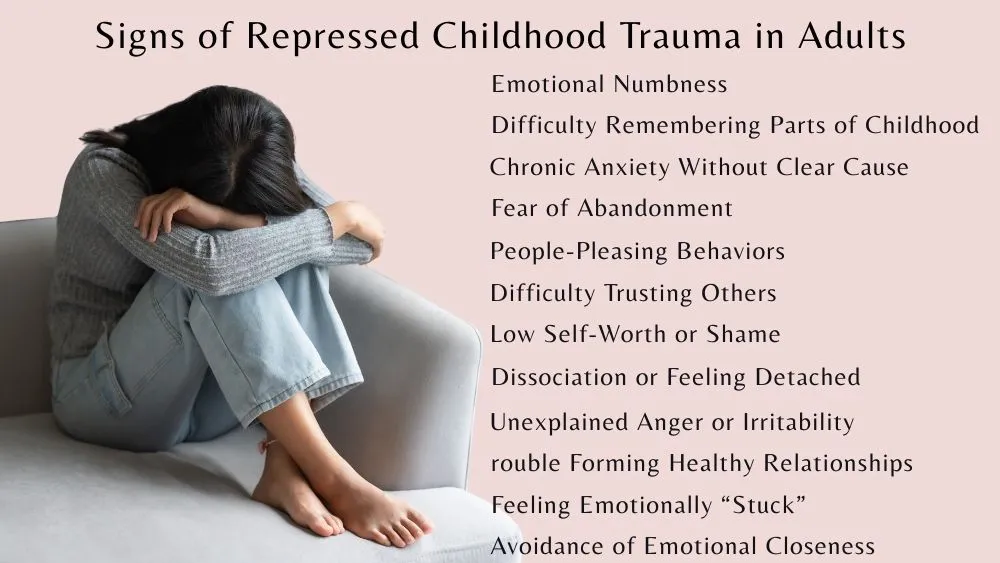
The brain blocks awareness of early harm, but emotional and behavioral responses still leak into adult life. These signs reflect nervous system conditioning, not weakness, and usually appear together rather than alone.
Adults experiencing these patterns often mislabel them as personality traits or stress reactions. In reality, they are adaptive responses formed during childhood when safety, support, or stability was missing.
Emotional Numbness
You feel emotionally flat. Joy, sadness, and excitement feel muted. Emotional numbness develops when feelings were unsafe during childhood. Over time, the brain learns to shut emotions down. This is one of the most common signs of repressed childhood trauma in adults .
Difficulty Remembering Parts of Childhood
You may remember facts but not feelings. Some adults have large memory gaps, especially around stressful periods. This happens because the brain blocks access to painful experiences. Memory gaps strongly connect to signs of repressed childhood trauma in adults .
Chronic Anxiety Without Clear Cause
Your body stays tense even when nothing feels wrong. Heart rate increases. Muscles stay tight. This happens when the stress system learned danger early and never turned off. This anxiety often shows up as one of the earliest signs of repressed childhood trauma in adults .
Strong Emotional Reactions to Small Triggers
Minor events cause intense reactions. A tone of voice or a short delay feels overwhelming. Your brain reacts as if the past is happening again. This is a learned survival response.
Fear of Abandonment
You worry people will leave, even when there is no sign. You may cling, test others, or pull away first. Early loss or neglect teaches the brain that connection is unsafe. Fear of abandonment is a core feature of signs of repressed childhood trauma in adults .
Difficulty Trusting Others
Trust feels risky. You expect disappointment or harm. Even kind people feel unsafe. This pattern often comes from broken trust during childhood.
Low Self-Worth or Shame
You feel flawed at your core. Shame feels constant, not linked to actions. Children often blame themselves for abuse or neglect. That belief can stay for decades and become one of the strongest signs of repressed childhood trauma in adults .
Dissociation or Feeling Detached
You feel disconnected from your body or surroundings. Time may feel unreal. Dissociation helped you escape pain as a child. As an adult, it disrupts focus and emotional awareness.
Unexplained Anger or Irritability
Anger appears quickly and feels hard to control. Small frustrations feel huge. Repressed emotional pain often turns into anger because anger feels safer than vulnerability.
People-Pleasing Behaviors
You put others first and ignore your own needs. You fear conflict. You say yes when you want to say no. This behavior once helped you stay safe, but now causes burnout. It is a frequent part of the signs of repressed childhood trauma in adults .
Trouble Forming Healthy Relationships
You repeat the same relationship patterns. You feel drawn to emotionally unavailable people. Trauma trains the brain to seek what feels familiar, not what feels healthy.
Hypervigilance or Feeling Unsafe
Your mind constantly scans for danger. Loud sounds startle you. You struggle to relax. This happens when the nervous system learned about a threat early in life.
Self-Sabotaging Patterns
You quit when things improve. You delay progress. Success feels uncomfortable. Early trauma can teach the brain that stability does not last.
Avoidance of Emotional Closeness
You pull away when relationships deepen. Emotional closeness feels risky. Avoidance protects you from pain but also keeps you lonely.
Feeling Emotionally “Stuck”
You feel frozen in certain emotions. Growth feels blocked. Trauma can pause emotional development at the age at which it occurred. This completes the 15 signs of repressed childhood trauma in adults list.
Symptoms of Childhood Trauma
Childhood trauma affects multiple systems at once, including emotional processing, behavior, thinking patterns, and physical stress regulation. Symptoms often shift over time, which makes them hard to trace back to early experiences.
Many adults seek help for anxiety, burnout, or relationship problems without realizing these issues stem from unresolved childhood stress responses that shaped brain development.
Emotional Symptoms
You may feel anxiety, sadness, shame, fear, or emotional numbness. Mood swings happen often. Emotional regulation feels hard because early stress shaped brain development. These emotional changes are core symptoms of childhood trauma .
Behavioral Symptoms
Avoidance, people-pleasing, anger outbursts, withdrawal, and perfectionism are common. These behaviors started as coping tools and now cause problems.
Cognitive Symptoms
Negative self-talk feels automatic. Concentration is difficult. You may struggle with memory or decision-making. These thinking patterns are well-known symptoms of childhood trauma .
Physical Stress-Related Symptoms
Headaches, stomach pain, muscle tension, fatigue, and sleep problems appear without clear medical causes. The body stores stress when emotional pain stays unresolved.
Causes of Childhood Trauma
Childhood trauma is not limited to extreme events. Ongoing emotional neglect, chronic stress, or unstable caregiving can disrupt brain and nervous system development just as deeply as physical harm.
The impact depends less on the event itself and more on how often it occurred, how long it lasted, and whether the child had consistent emotional support during that time.
Emotional Abuse and Neglect
Being ignored, criticized, or emotionally unsupported affects brain development. Emotional neglect often leaves deeper scars than visible harm.
Physical or Sexual Abuse
Direct harm overwhelms a child’s ability to cope. Repression often blocks these memories to protect the child’s mind.
Domestic Violence Exposure
Witnessing violence creates constant fear. Even without physical harm, the nervous system learns danger.
Parental Substance Abuse
Unpredictable caregivers create instability. Children live in constant alert mode, which reshapes stress responses.
Loss of a Caregiver
Death, abandonment, or long separations can overwhelm a child’s emotional capacity and create lasting fear.
Chronic Childhood Stress
Poverty, illness, bullying, or constant conflict can damage the stress system over time. These causes of childhood trauma often occur together and increase long-term risk.
How Repressed Trauma Affects Adults
Repressed trauma does not stay locked in the past. It shapes how your brain reacts to stress, how you see yourself, and how safe the world feels. The effects are often subtle but constant. Over time, these effects reinforce the signs of repressed childhood trauma in adults and make them feel like personality traits rather than trauma responses.
Impact on Emotional Regulation
Your emotions may feel intense, unpredictable, or shut down. Small stressors trigger big emotional waves because the brain learned danger early. The part of the brain that calms emotions struggles to work smoothly. This makes emotional control harder in daily life.
Effects on Memory and Identity
Repressed trauma fragments memory. You may remember events but feel disconnected from them. This can create confusion about who you are and why you react the way you do. Many adults with signs of repressed childhood trauma feel unsure of their identity.
Trauma Responses in Adulthood
Fight, flight, freeze, or fawn responses show up in normal situations. You may argue, avoid, shut down, or please others automatically. These responses once protected you. Now they create stress and conflict.
Stress Response System Dysregulation
The body’s stress system stays active longer than needed. Stress hormones rise quickly and fall slowly. Over time, this increases anxiety, fatigue, and health problems linked to symptoms of childhood trauma .
Psychological and Physical Effects
Long-term activation of the stress response affects sleep, immune function, digestion, and pain perception. Over time, this mind-body strain increases the risk of mood disorders, chronic fatigue, unexplained physical symptoms, and reduced stress tolerance.
Anxiety and Depression
Anxiety may feel constant and without cause. Depression may feel like emptiness rather than sadness. These conditions often resist simple fixes when trauma remains unaddressed. They commonly coexist with signs of repressed childhood trauma in adults .
PTSD and Complex Trauma
Repeated trauma during childhood can lead to complex trauma. Symptoms include emotional swings, unstable self-image, and relationship difficulties. These symptoms often appear without clear memories of the original events.
Chronic Fatigue and Sleep Issues
Sleep feels light or broken. You wake tired even after a long rest. The nervous system stays alert at night, which prevents deep rest. Fatigue becomes part of daily life.
Psychosomatic Symptoms
Physical symptoms appear without clear medical findings. Common examples include stomach pain, headaches, and muscle tension. The body expresses stress when emotions stay suppressed.
Benefits of Behavioral Therapy
The benefits of behavioral therapy are well established for trauma-related patterns. Therapy focuses on safety, awareness, and skill-building rather than forcing memory recall.
Identifying Unconscious Trauma Patterns
Therapy helps you notice patterns linked to signs of repressed childhood trauma in adults . You learn how past experiences shape current reactions. Awareness reduces self-blame.
Emotional Regulation Skills
You learn practical ways to calm the nervous system. Breathing, grounding, and emotion-labeling skills reduce overwhelm. Over time, emotional reactions become more manageable.
Trauma Processing in a Safe Environment
Therapy allows gradual processing without re-traumatization. The pace stays controlled. Safety comes first, which protects the nervous system.
Improved Relationships and Self-Awareness
As patterns shift, communication improves. Boundaries feel clearer. Self-understanding grows. These changes highlight real benefits of behavioral therapy beyond symptom relief.
Treatment for Healing Repressed Childhood Trauma
Effective treatment works on both mental and physical levels. Repressed trauma often bypasses verbal memory, so healing requires approaches that address bodily stress responses and emotional regulation.
Trauma-Focused Cognitive Behavioral Therapy
This approach links thoughts, emotions, and behaviors. You learn to challenge beliefs formed during trauma. Emotional reactions slowly lose intensity.
EMDR Therapy
EMDR uses guided eye movements to help the brain reprocess stuck memories. It does not require detailed verbal recall. Many people find that it reduces emotional charge over time.
Somatic and Body-Based Therapies
These therapies focus on body sensations. They help release stored tension and restore a sense of safety. This is useful when trauma memories stay nonverbal.
Mindfulness and Grounding Techniques
Mindfulness trains attention on the present moment. Grounding techniques reduce dissociation and panic. These tools support daily regulation.
Building Long-Term Coping Strategies
Healthy routines, emotional skills, and social support replace survival behaviors. This long-term focus defines effective treatment for healing repressed childhood trauma .
When to Seek Professional Help
Professional support becomes important when emotional patterns interfere with daily life, relationships, or physical health. Persistent symptoms often mean the nervous system cannot reset on its own.
Persistent Emotional Distress
If distress lasts for months and affects mood or sleep, professional care matters. Chronic stress can worsen physical health.
Relationship Dysfunction
Repeated conflict, avoidance, or instability in relationships often points to unresolved trauma patterns.
Flashbacks or Dissociation
Losing time, feeling unreal, or reliving sensations from the past requires trained support.
Impact on Daily Functioning
When work, self-care, or focus decline, trauma may be interfering more than you realize. Many with signs of repressed childhood trauma in adults reach for help at this stage.
FAQs
What Causes Repressed Childhood Trauma?
Repressed trauma forms when a child faces overwhelming stress without support. The brain blocks awareness to survive. Common causes of childhood trauma include neglect, abuse, and chronic stress.
Can Childhood Trauma Be Completely Repressed?
Yes. Some people have no clear memories but still show emotional and behavioral patterns. The body and nervous system remember even when the mind does not.
How Do You Know If You Have Repressed Trauma?
You notice repeating patterns like emotional numbness, anxiety, or relationship struggles. These patterns often match the signs of repressed childhood trauma in adults .
Can Repressed Trauma Surface Later in Life?
Yes. Major stress, loss, or therapy can lower mental defenses. Memories or strong emotions may surface years later.
Is Repressed Trauma Linked to Anxiety or Depression?
Strongly. Many anxiety and depression cases connect to early trauma. These conditions often reflect deeper symptoms of childhood trauma .
What Therapy Works Best for Repressed Trauma?
Trauma-focused approaches work best. These include cognitive, body-based, and processing methods. The benefits of behavioural therapy include safety and skill-building.
Can Behavioral Therapy Help Heal Childhood Trauma?
Yes. Behavioral therapy helps change trauma-driven reactions and beliefs. It supports long-term emotional regulation and awareness.
How Long Does Trauma Healing Take?
Healing time varies. Progress depends on safety, consistency, and support. There is no fixed timeline for recovery.
Can Repressed Trauma Affect Relationships?
Yes. Attachment patterns form early. Trauma can cause fear of closeness, mistrust, or dependency in adult relationships.
When Should You Seek Professional Support?
Seek help when patterns cause emotional pain or limit daily life. Early support improves outcomes and reduces long-term impact.
About The Author

Medically reviewed by Dr. Chandril Chugh, MD, DM (Neurology)
Dr. Chandril Chugh is a U.S.-trained, board-certified neurologist with expertise in diagnosing and managing neurological disorders, including migraines, epilepsy, Parkinson’s disease, and movement disorders. His clinical focus includes evidence-based neurological care and patient education.
All content is reviewed for medical accuracy and aligned with current neurological guidelines.