Music therapy for depression is a structured mental health treatment where trained therapists use sound, rhythm, and guided music activities to improve emotional regulation, stress response, and mood stability. It works by directly influencing brain areas linked to emotion, memory, and motivation, which often function poorly during depression.
Unlike casual music listening, therapy sessions follow clinical goals and adjust music elements such as tempo, volume, and structure based on your symptoms. This approach supports emotional expression when words feel hard to access and helps retrain the nervous system to respond more calmly to stress.
10 Practice of Music Therapy for Depression
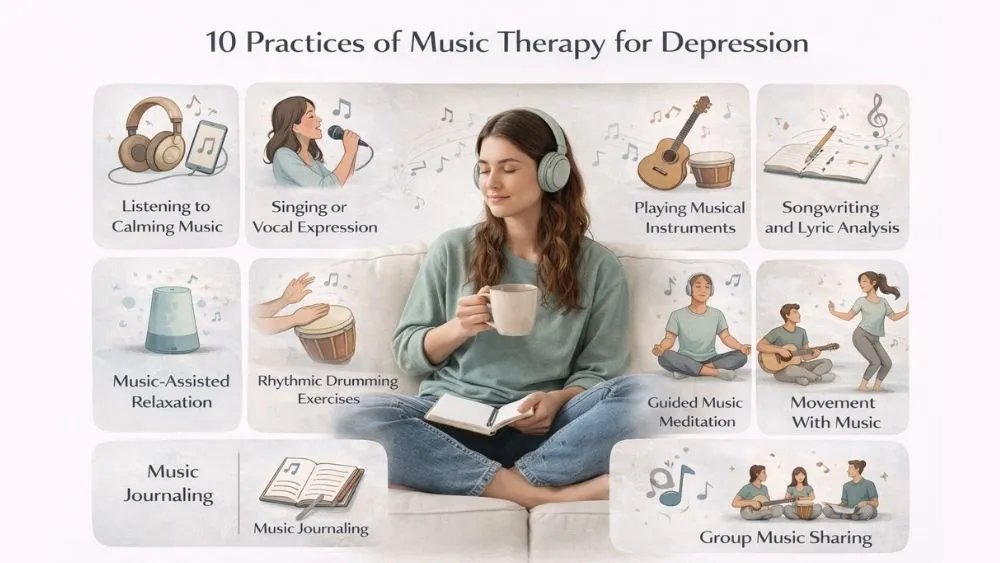
The 10 practice of music therapy for depression listed below are structured methods used by certified professionals. Each practice targets specific depression-related problems such as emotional numbness, low motivation, disrupted sleep, or social withdrawal. Selection depends on symptom pattern, not music preference alone.
Therapists often combine multiple practices within a single treatment plan. This layered approach helps regulate mood, improve emotional awareness, and restore daily functioning over time.
Listening to Calming Music
Therapists use slow, predictable music patterns. These patterns reduce stress signals in the brain. Heart rate and breathing often slow within minutes. Over time, this helps regulate mood swings. In music therapy for depression , music selection is clinical, not random.
Singing or Vocal Expression
Singing connects breathing, muscle control, and emotion. Controlled breathing supports the nervous system. Vocal sound also releases tension stored in the chest and throat. You do not need musical skill. Effort matters more than tone.
Playing Musical Instruments
Instruments like drums, keyboards, or guitars allow expression without language. Rhythm activates motor areas of the brain. This improves focus and emotional release. Many people feel relief after even short sessions.
Songwriting and Lyric Analysis
Writing lyrics helps you name emotions clearly. Therapists guide word choice to avoid harmful thinking patterns. Reviewing lyrics later helps track emotional changes. This method is common in music therapy for depression in teens and adults.
Music-Assisted Relaxation
Music pairs with breathing and muscle release. Sound helps the body relax faster than silence alone. This supports people with sleep problems linked to depression.
Rhythmic Drumming Exercises
Drumming uses repetition and timing. Rhythm helps stabilize emotional response. Group drumming also improves social connection, which depression often damages.
Guided Music Meditation
Music plays while the therapist guides mental images. The mind stays calm but alert. This reduces negative thought loops. It differs from passive music listening.
Movement With Music
Simple movement improves blood flow and energy. Music gives structure to movement. This helps fight fatigue, a core depression symptom.
Music Journaling
You record mood changes before and after sessions. Patterns become visible over time. This builds self-awareness and supports long-term planning.
Group Music Sharing
You share meaningful music with others. This supports emotional bonding. Social support improves outcomes in music therapy for depression programs.
Types of Music Therapy for Depression
Different therapeutic models exist because depression does not present the same way in everyone. Some people need different types of music for emotional release, while others need nervous system calming or cognitive support. Matching therapy type to symptom profile improves outcomes.
Active Music Therapy
You create music through singing or instruments. This works well when emotions feel stuck. Action often reduces inner pressure.
Receptive Music Therapy
You listen while the therapist guides attention. This suits low-energy states. It helps regulate mood without physical effort.
Improvisational Music Therapy
You create sounds freely. There are no rules. Emotion guides the process. Therapists watch for emotional overload and adjust pacing.
Songwriting Therapy
You build songs step by step. Structure helps organize thoughts. This method improves emotional clarity.
Guided Imagery With Music
Music supports mental imagery. This helps process emotional memories safely. Therapists control timing and intensity.
Group Music Therapy
Small groups engage together. Shared rhythm improves trust and reduces isolation. Group formats are common in clinics using music therapy for depression .
Individual Music Therapy
One-on-one sessions allow deeper focus. This suits people with severe symptoms or trauma history.
Music Therapy Techniques for Depression
Techniques are the clinical tools therapists use to guide emotional change. Each technique targets a brain process such as attention control, emotional processing, or stress regulation. Poor technique selection can worsen fatigue or emotional shutdown. Skilled therapists adjust pacing, sound complexity, and emotional intensity in real time.
Lyric Discussion Techniques
You analyze song lyrics with the therapist. Lyrics reflect thoughts and beliefs. Discussion helps challenge negative thinking patterns common in depression.
Call-and-Response Music Exercises
The therapist plays a sound pattern. You respond. This builds focus and emotional engagement. It also strengthens communication skills.
Tempo-Based Mood Regulation
Slow tempos calm anxiety. Faster tempos increase energy. Therapists adjust tempo carefully to avoid overstimulation.
Improvisation for Emotional Release
Free sound allows emotional discharge without judgment. This reduces emotional pressure stored in the body.
Mindfulness-Based Music Techniques
You focus on sound details like pitch or rhythm. Attention shifts away from negative thoughts. This improves emotional control in music therapy for depression .
Music Therapy Sessions for Depression
Music therapy sessions work best when structure meets flexibility. In music therapy for depression , therapists adjust each session based on your emotional state, energy level, and symptoms on that day. Sessions follow clinical goals, not entertainment.
What Happens During a Session
A session usually starts with a short emotional check-in. The therapist observes speech, posture, and mood. Music activities follow, such as listening, playing, or guided discussion. Each activity targets emotional regulation, focus, or expression. Sessions end with a reflection to lock in progress.
Duration and Frequency of Sessions
Most music therapy sessions for depression last 30 to 60 minutes. Weekly sessions show the strongest benefit. Some people attend twice weekly during severe phases. Progress depends on consistency, not intensity. Missing sessions often slows emotional improvement.
Individual vs Group Sessions
Individual sessions allow deep emotional work and privacy. Group sessions support social bonding and shared rhythm. Group formats help reduce isolation, which worsens depression. Many treatment plans combine both for balanced support in music therapy for depression care.
In-Person vs Online Music Therapy
In-person sessions allow better sound control and instrument use. Online sessions improve access and continuity. Research shows online formats still support mood regulation when guided by trained therapists. Online care works best for mild to moderate symptoms.
Benefits of Music Therapy for Depression
The benefits of music therapy for depression go beyond mood improvement. Music influences brain chemicals, stress response, and emotional awareness. These effects support daily functioning.
Non-Invasive and Drug-Free Approach
Music therapy does not involve medication. This helps people sensitive to side effects. It supports nervous system balance without altering body chemistry directly. This makes music therapy for depression a low-risk support option.
Supports Emotional Healing
Music reaches emotional processing areas tied to memory and feeling. This allows emotional release without forced conversation. People often express grief, anger, or numbness through sound before words feel possible.
Improves Coping Skills
Therapists teach music-based coping tools. You learn how tempo, rhythm, and sound affect mood. These tools help manage stress outside therapy. Over time, self-regulation improves.
Complements Traditional Depression Treatments
Music therapy supports medication and talk therapy. It improves engagement and emotional openness. Many clinicians integrate music therapy for depression into broader mental health plans.
Limitations of Music Therapy
Music therapy does not correct biochemical imbalances on its own and cannot address severe cognitive distortions without additional therapy. Effectiveness depends on therapist training, session consistency, and patient engagement. Passive participation limits results.
Not a Replacement for Medical Treatment
Music therapy does not replace medication or psychotherapy for moderate to severe depression. Medical care remains essential. Music works best as an added layer of support.
Results Vary by Individual
Brain response to music differs. Some people respond quickly. Others need longer exposure. Personal music history and trauma can affect outcomes in music therapy for depression .
Requires Consistency for Effectiveness
Irregular sessions reduce benefit. Emotional regulation builds over time. Consistent participation matters more than session length.
When Music Therapy May Not Be Enough
Severe depression with functional impairment or safety concerns demands medical oversight first. Music therapy becomes effective only after stabilization. In these cases, it supports recovery rather than acting as a primary intervention.
Severe or Treatment-Resistant Depression
Severe depression affects thinking, safety, and daily function. Music therapy alone cannot manage these cases. Combined medical and psychological care remains critical.
Presence of Suicidal Thoughts
Active suicidal thoughts require immediate medical attention. Music therapy supports recovery later but cannot replace crisis care.
Need for Combined Therapy Approaches
Many people benefit most from combined methods. Medication stabilizes mood. Talk therapy builds insight. Music therapy for depression strengthens emotional processing.
FAQs
What Is Music Therapy for Depression?
Music therapy for depression is a clinical treatment led by certified therapists who use structured music activities to improve mood, emotional control, and stress response. It targets brain and nervous system regulation, not entertainment.
Does Music Therapy Really Help Depression?
Yes. Music therapy for depression helps reduce sadness, emotional numbness, and stress. It improves mood regulation and engagement, especially when used weekly alongside standard treatment.
How Many Music Therapy Sessions Are Needed?
Most people notice changes after 6 to 12 music therapy sessions for depression . Deeper emotional stability often needs 12 to 24 sessions, depending on symptom severity and consistency.
Can Music Therapy Replace Antidepressants?
No. Music therapy for depression cannot replace antidepressants for clinical depression. It works as a supportive treatment that improves emotional response and treatment engagement.
What Types of Music Are Used in Therapy?
Therapists use slow instrumental music, rhythmic drumming, structured melodies, and client-selected songs. Music choice depends on mood goals, emotional triggers, and nervous system response.
Is Music Therapy Suitable for Severe Depression?
No. Severe depression requires medical treatment. Music therapy for depression supports recovery but does not manage severe symptoms alone.
Who Should Consider Music Therapy for Depression?
You should consider music therapy for depression if you struggle with emotional expression, stress, sleep issues, or low motivation despite standard care.
Are Music Therapy Sessions Covered by Insurance?
Some insurance plans cover music therapy sessions for depression when provided by certified therapists. Coverage depends on region, diagnosis, and provider credentials.
How Is Music Therapy Different From Meditation Music?
Meditation music is passive listening. Music therapy for depression involves clinical goals, therapist guidance, emotional tracking, and structured techniques.
How Do I Find a Certified Music Therapist for Depression?
You can find certified therapists through professional music therapy associations, mental health clinics, or hospital behavioral health departments that offer music therapy for depression services.
About The Author

Medically reviewed by Dr. Chandril Chugh, MD, DM (Neurology)
Dr. Chandril Chugh is a U.S.-trained, board-certified neurologist with expertise in diagnosing and managing neurological disorders, including migraines, epilepsy, Parkinson’s disease, and movement disorders. His clinical focus includes evidence-based neurological care and patient education.
All content is reviewed for medical accuracy and aligned with current neurological guidelines.