Exposure therapy for social anxiety is a structured mental health treatment that reduces fear by helping you face social situations instead of avoiding them. Fear drops because your brain learns that social threat is lower than expected. Over time, anxiety responses weaken. This approach focuses on action, not reassurance. It works best when exposure is planned, repeated, and done without escape behaviors.
Social anxiety stays strong when you avoid people, attention, or judgment. Exposure therapy for social anxiety breaks this cycle by teaching your nervous system to settle while you stay in feared situations. This learning process is called habituation, which means fear decreases after repeated contact.
Types of Exposure Therapy
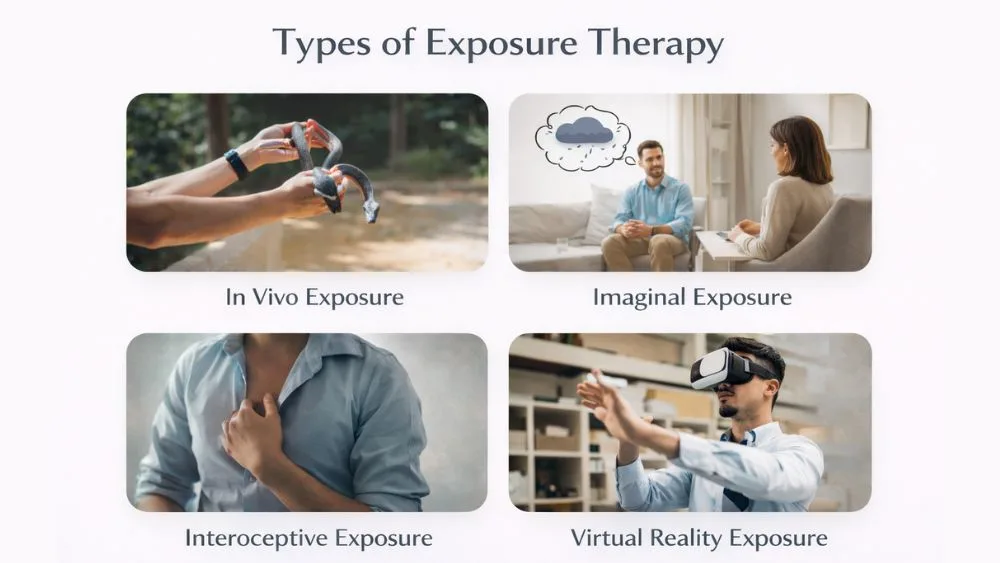
Different fears need different exposure methods. Clinicians use several types of exposure therapy depending on symptoms, severity, and access to real settings.
In Vivo Exposure
In vivo exposure means facing real social situations. This is the most effective form for social anxiety. You enter feared settings like conversations, meetings, or public places.
Your anxiety rises at first. It then falls when you stay without escaping. Repeated practice changes how your brain predicts danger. This process is central to exposure therapy for social anxiety .
Examples include speaking to strangers or attending small gatherings. Real exposure gives real learning, which is why clinicians prioritize it.
Imaginal Exposure
Imaginal exposure uses mental images instead of real actions. You picture feared social moments in detail, including thoughts and body feelings.
This method helps when real exposure feels impossible early on. It also helps with fears tied to past embarrassment or future events. Imaginal work often prepares you for in vivo steps in exposure therapy techniques for social anxiety .
Interoceptive Exposure
Interoceptive exposure targets fear of body sensations. Many people fear blushing, sweating, shaking, or a fast heart rate.
You bring on these sensations on purpose. For example, you may hold your breath briefly to feel chest tightness. The goal is learning that body symptoms are uncomfortable but safe.
This method supports exposure therapy for social anxiety when fear centers on physical reactions.
Virtual Reality Exposure
Virtual reality exposure uses digital social scenes. These may include meetings, classrooms, or presentations.
This option helps when real settings are not available. It also helps you practice before real exposure. Virtual tools are now part of modern types of exposure therapy , though access varies by clinic.
Exposure Therapy Techniques for Social Anxiety
Exposure works best with structure. Random fear often fails. Below are core exposure therapy techniques for social anxiety used in evidence-based care.
Gradual Exposure Hierarchy
A hierarchy lists feared situations from easiest to hardest. You start with mild fear and move up step by step.
For example, you may start with brief eye contact. Later steps may include group conversations. This pacing prevents overwhelm and improves learning in exposure therapy for social anxiety .
Flooding vs Graded Exposure
Flooding means facing the most feared situation first. Graded exposure means slow steps.
Flooding can work but causes intense distress. Graded exposure reduces dropout and improves long-term results. Most clinicians prefer graded methods in exposure therapy techniques for social anxiety .
Behavioral Experiments
Behavioral experiments test fear predictions. You write what you expect to happen, then test it.
For example, you may predict rejection if you speak. You speak and observe real reactions. This method turns fear into evidence and supports exposure therapy for social anxiety learning.
Response Prevention
Response prevention means dropping safety behaviors. These include avoiding eye contact, rehearsing sentences, or hiding hands. Safety behaviors block learning. When you stop them, anxiety rises briefly, then falls. This step strengthens results from exposure therapy for social anxiety .
Exposure Exercises for Social Anxiety
Below are common exposure exercises for social anxiety used in treatment plans. Each exercise trains calm through repetition and staying present.
Making Eye Contact With Strangers
You hold eye contact for two to three seconds. You do not look away fast. This exercise reduces fear of being seen. It is a basic step in exposure therapy for social anxiety .
Starting Small Talk
You use simple topics like location or time. You do not aim for perfect speech. The goal is staying in the interaction until anxiety drops. This builds tolerance through exposure exercises for social anxiety .
Asking Questions in Group Settings
You ask one short question during a group discussion. You speak even if your voice shakes. This exposure targets fear of attention and judgment. It supports core exposure therapy techniques for social anxiety .
Eating in Public Places
You eat alone in a café or food court. You stay until finished. This exercise reduces fear of being watched. It is often used in exposure therapy for social anxiety plans.
Attending Social Gatherings
You attend events for a short time first. You increase time across sessions. You avoid hiding or leaving early. This helps reduce avoidance patterns through exposure exercises for social anxiety .
Exposure Therapy for Performance Anxiety
Performance anxiety is fear that appears when you must perform while others watch or judge. This includes speaking, presenting, testing, or being evaluated. Exposure therapy for performance anxiety works by training your brain to tolerate attention and evaluation instead of avoiding them. Fear drops when your nervous system learns that being observed is not dangerous.
Public Speaking Exposure
Public speaking exposure starts small and grows step by step. You may begin by speaking aloud alone, then to one person, then to a small group. Each step trains your body to stay steady while being heard.
You repeat speeches until anxiety drops during the task, not after leaving. This learning process weakens fear memory. This method forms a core part of exposure therapy for performance anxiety used in clinical settings.
Presentation Rehearsal Exposure
Presentation rehearsal exposure copies real performance conditions. You stand, speak out loud, and use slides or notes as you would in real life. You rehearse without stopping when anxiety rises.
This method trains focus under stress. It reduces shock during actual presentations. It also strengthens confidence gained through exposure therapy for social anxiety by adding realism.
Performance Simulations
Performance simulations recreate exams, interviews, or auditions. You may add time limits, observers, or recording devices to increase pressure.
The goal is learning that anxiety does not block performance. Repeated simulations reduce fear of failure. This makes exposure therapy for performance anxiety more effective for real-world demands.
Managing Fear of Evaluation
Fear of evaluation often matters more than the task itself. Exposure targets this fear by seeking feedback on purpose. You listen without explaining or defending.
This teaches that judgment does not equal rejection. Over time, your threat response weakens. This step strengthens long-term results from exposure therapy for social anxiety .
Benefits of Exposure Therapy
The benefits of exposure come from learning, not reassurance. Your brain updates fear predictions through repeated experience. Below are key outcomes seen with consistent exposure therapy for social anxiety .
Reduced Avoidance Behaviors
Avoidance keeps anxiety alive. Exposure reverses this pattern. You stop skipping events, calls, or conversations. Reduced avoidance leads to more daily function. This change shows that exposure therapy for social anxiety works at a behavioral level, not just emotional.
Increased Confidence
Confidence grows from evidence, not positive thinking. Each completed exposure proves that you can handle discomfort. This confidence feels grounded because it comes from action. It builds steadily through exposure therapy for social anxiety practice.
Long-Term Anxiety Reduction
Exposure changes how fear is stored in memory. Anxiety drops faster with each exposure session. This learning lasts beyond treatment when practice continues. This makes exposure therapy for social anxiety one of the most durable treatments available.
Risks of Exposure Therapy for Social Anxiety
Exposure is effective but not risk-free. Understanding the risks of exposure therapy for social anxiety helps you use it safely and correctly.
Temporary Anxiety Increase
Anxiety rises early during exposure. This response is expected and necessary for learning. Fear must activate before it can decrease. This short-term increase does not mean harm, but it requires preparation in exposure therapy for social anxiety .
Emotional Overwhelm
If exposure steps are too intense, overwhelm can occur. This may increase avoidance instead of reducing it. Careful pacing prevents this risk. Overwhelm is one of the key risks of exposure therapy for social anxiety when plans lack structure.
Poorly Planned Exposure Risks
Unplanned exposure without hierarchy often fails. Jumping to extreme fears too fast can reinforce anxiety. Structured planning reduces this risk. This is why professional models of exposure therapy for social anxiety stress stepwise design.
Importance of Professional Guidance
Professional guidance improves safety and outcomes. Clinicians adjust pace based on response. This support reduces the risks of exposure therapy for social anxiety , especially for severe cases or panic symptoms.
When to Seek Professional Help
Self-guided exposure works for mild anxiety. Some situations require trained support to prevent setbacks in exposure therapy for social anxiety .
Severe Avoidance
If anxiety blocks school, work, or basic tasks, professional care is recommended. Severe avoidance often needs structured treatment and monitoring to ensure exposure works safely.
Panic Attacks During Exposure
Frequent panic during exposure may signal pacing issues. A therapist can adjust steps and include body-based exposure to stabilize progress in exposure therapy for social anxiety .
Trauma-Related Anxiety
Trauma-linked fear needs careful handling. Standard exposure may worsen symptoms if trauma is active. Professional guidance helps separate trauma responses from social fear safely.
FAQs
Is Exposure Therapy Effective For Social Anxiety?
Yes. Exposure therapy for social anxiety is one of the most effective treatments available. It directly retrains fear learning by reducing avoidance, weakening threat prediction, and lowering anxiety responses through repeated real-life practice.
How Long Does Exposure Therapy Take To Work?
Most people notice reduced fear within four to six weeks if exposures are done several times weekly. Strong, lasting change usually appears after eight to sixteen weeks of consistent exposure therapy for social anxiety .
Can Exposure Therapy Be Done Without A Therapist?
Yes, for mild cases with good planning. For severe anxiety, panic attacks, or trauma history, self-guided exposure therapy for social anxiety increases risk of overwhelm and stalled progress without professional structure.
Does Exposure Therapy Make Anxiety Worse At First?
Yes. Anxiety rises early during exposure therapy for social anxiety because fear circuits activate. This increase is temporary and necessary. Anxiety decreases within the session when you stay without escaping.
What Is The Success Rate Of Exposure Therapy?
Two out of three people experience major improvement when exposure therapy for social anxiety is done correctly, practiced regularly, and paired with response prevention.
How Often Should Exposure Exercises Be Done?
Exposure exercises work best when done three to five times per week. Short, repeated sessions lead to faster learning than rare long sessions in exposure therapy for social anxiety .
Is Exposure Therapy Safe For Everyone?
No. People with active trauma symptoms, unstable panic disorder, or severe depression need modified plans. These factors increase the risks of exposure therapy for social anxiety without professional oversight.
Can Exposure Therapy Help Performance Anxiety?
Yes. Exposure therapy for performance anxiety reduces fear by repeated practice under evaluation. It trains focus, reduces fear of mistakes, and lowers anxiety during speaking, testing, and performing.
What Happens If An Exposure Feels Overwhelming?
You stop, lower the difficulty, and repeat easier steps. Overwhelm signals pacing issues, not failure. Adjusting steps protects progress in exposure therapy for social anxiety .
How Do I Know Exposure Therapy Is Working?
You notice faster fear drop, less avoidance, and more willingness to engage despite discomfort. These changes show that exposure therapy for social anxiety is retraining your fear response successfully.
About The Author

Medically reviewed by Dr. Chandril Chugh, MD, DM (Neurology)
Dr. Chandril Chugh is a U.S.-trained, board-certified neurologist with expertise in diagnosing and managing neurological disorders, including migraines, epilepsy, Parkinson’s disease, and movement disorders. His clinical focus includes evidence-based neurological care and patient education.
All content is reviewed for medical accuracy and aligned with current neurological guidelines.