Effects of childhood trauma shape how your brain, emotions, and body grow. Early exposure to abuse, neglect, or chronic stress changes how your brain, nervous system, and immune system develop. These changes affect how you handle fear, regulate emotions, and respond to everyday stress.
Over time, the effects of childhood trauma increase the risk of anxiety, depression, heart disease, digestive disorders, and chronic pain. The body stays in survival mode, releasing stress hormones even when no threat exists.
10 Types of Adverse Childhood Experiences
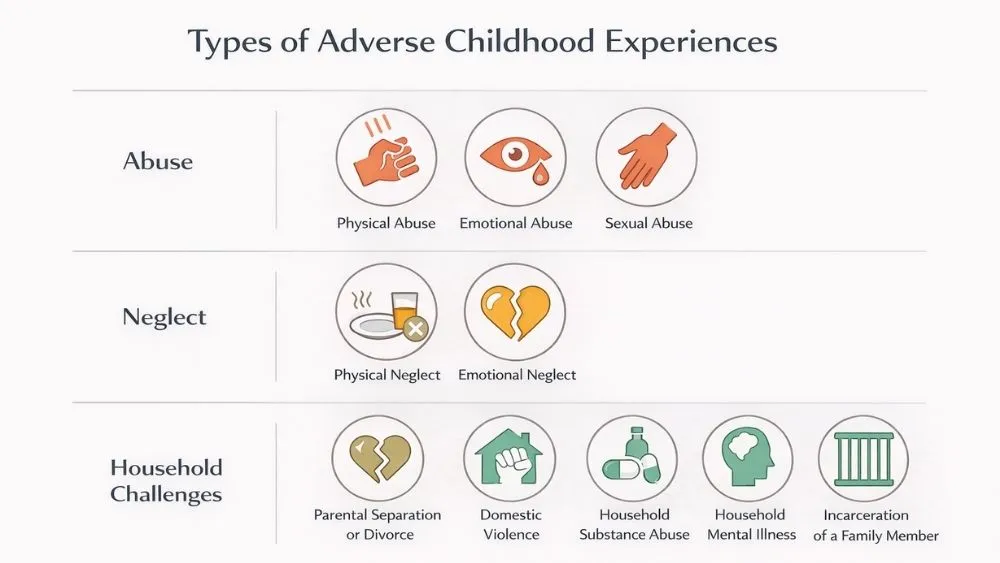
Adverse childhood experiences are early-life stressors that disrupt physical safety, emotional security, or caregiving stability. These events activate stress systems during critical brain growth periods, shaping how your body responds to danger, trust, and uncertainty. The number, duration, and severity of these experiences directly influence long-term health outcomes.
Below are 10 types of adverse childhood experiences that can alter stress biology in a child.
Physical Abuse
You experience physical abuse when a caregiver causes bodily harm. Hitting, shaking, or burning are common examples. Your body learns to expect pain. Stress hormones stay high even in safe moments.
Emotional Abuse
Emotional abuse includes insults, threats, or constant control. Your brain links voices with danger. This type of harm strongly affects self-worth and fear responses.
Sexual Abuse
Sexual abuse involves forced sexual contact or exposure. It breaks body safety and trust. Many survivors carry shame without cause. The effects of childhood trauma here often include long-term fear and dissociation (mental disconnection).
Physical Neglect
Physical neglect happens when food, shelter, or medical care are missing. Your body learns scarcity. Growth and immune function may suffer.
Emotional Neglect
Emotional neglect means your feelings are ignored. Comfort and protection are absent. You may stop expressing needs to avoid rejection.
Parental Separation or Divorce
A sudden family breakup removes stability. Children often blame themselves. Stress systems activate during key growth stages.
Domestic Violence
Seeing violence at home affects you even without direct harm. Your nervous system reacts as if danger is constant.
Household Substance Abuse
Living with addiction brings chaos and unpredictability. Your brain stays alert for sudden changes.
Household Mental Illness
Untreated mental illness in a caregiver shifts roles. You may act as the adult too early. This burden affects emotional growth.
Incarceration of a Family Member
A close family member going to jail creates loss and fear. Social shame adds stress. These types of childhood trauma often overlap.
The Impact of Childhood Trauma and PTSD
Childhood trauma alters how the brain interprets safety and threat. Instead of learning flexible stress responses, the nervous system becomes rigid. This rigidity explains why reactions feel automatic and hard to control years later.
Post-traumatic stress develops when fear memories fail to integrate into normal memory networks. The brain keeps treating past danger as present. This leads to intrusive thoughts, body-based reactions, and avoidance behaviors that interfere with daily life.
How Trauma Alters Brain Development
Your brain grows based on experience. Chronic fear strengthens survival areas. Learning and memory areas receive less energy. This affects focus and decision-making.
Nervous System Dysregulation
Your nervous system controls heart rate and breathing. Trauma keeps it stuck in fight or flight. You may feel tense without danger present.
Trauma and Emotional Regulation
Emotional regulation means managing feelings. Trauma reduces this skill. Small problems can feel overwhelming. Calm may feel unsafe.
Development of PTSD
Post-traumatic stress disorder forms when fear memories stay active. Triggers bring strong reactions. Not all trauma leads to PTSD, but risk increases with repetition.
Trauma Memory and Triggers
Trauma memories are stored as sensations. Smells, tones, or touch can trigger reactions. Logic does not shut this response off. This explains the impact of childhood trauma and PTSD on daily life.
6 Symptoms of Childhood Trauma in Adults
Symptoms vary in intensity and can shift over time. Stress, illness, or relationship conflict often amplify them, revealing unresolved trauma responses beneath surface functioning. Below are the 6 symptoms of childhood trauma in adults seen in clinics.
Chronic Anxiety and Hypervigilance
You may scan for danger all the time. Relaxation feels unfamiliar. Your body expects threat.
Difficulty Trusting Others
Trust feels risky. You may expect harm even from safe people. Distance feels protective.
Emotional Numbness or Dissociation
You may feel detached from emotions or surroundings. Dissociation means your mind steps away to avoid pain.
Low Self-Worth and Shame
You may blame yourself for problems. Shame appears without reason. This belief often started in childhood.
Relationship Instability
Close relationships trigger fear. You may push others away or cling tightly.
Flashbacks and Intrusive Memories
Past scenes appear suddenly. Your body reacts first. These 6 symptoms of childhood trauma in adults vary in intensity.
Psychological Effects of Childhood Trauma
Early trauma disrupts how the brain processes emotion, reward, and threat. This increases vulnerability to mood and anxiety disorders, especially under later-life stress. These conditions follow predictable neurobiological pathways shaped in childhood.
Trauma also affects identity formation. Children exposed to chronic stress often internalize blame, leading to shame-based thinking patterns that persist into adulthood. These beliefs strongly influence behavior and mental health.
Depression and Mood Disorders
Long-term sadness and low energy may appear. Motivation drops. Joy feels distant.
Anxiety Disorders
Persistent fear or panic can develop. Worry may feel constant. Physical symptoms often accompany anxiety.
Post-Traumatic Stress Disorder
PTSD includes avoidance, nightmares, and hyperarousal (constant alertness). Sleep problems are common.
Substance Misuse
Some people use alcohol or drugs to dull distress. This increases health risks over time.
Self-Destructive Coping Patterns
Risky behavior may bring short relief. Long-term harm follows. These patterns reflect learned survival.
Physical Health Effects of Childhood Trauma
The body records trauma through prolonged activation of stress hormones. Over time, this damages blood vessels, alters glucose control, and increases systemic inflammation. These changes raise the risk of heart disease, diabetes, and autoimmune conditions.
Chronic Stress Response
Stress hormones remain elevated. Blood pressure rises. Inflammation increases across organs.
Increased Risk of Heart Disease
Long-term stress damages blood vessels. Irregular heart rhythms may appear earlier than expected.
Immune System Dysregulation
Your immune system may weaken or overreact. Frequent infections or autoimmune issues can develop.
Gastrointestinal Disorders
The gut responds to stress signals. Pain, bloating, and bowel changes occur due to a nerve imbalance.
Chronic Pain and Fatigue
Muscle tension becomes constant. Energy stays low. Pain lacks a clear injury source. These physical outcomes show how deeply the effects of childhood trauma shape lifelong health.
Healing Childhood Trauma
The effects of childhood trauma do not disappear on their own. Your brain and body learned survival patterns early, and healing means teaching them safety again. Healing childhood trauma works best when it addresses both the mind and the body, not thoughts alone.
Long-term stress changes hormone balance, sleep cycles, and immune function, so recovery must calm these systems over time. Progress often comes in layers rather than one breakthrough moment.
Trauma-Informed Therapy
Trauma-informed therapy focuses on safety, control, and trust. You are not pushed to relive memories before your nervous system is stable. This approach reduces overwhelm and lowers the stress response that fuels the effects of childhood trauma . Therapists watch for signs of shutdown or panic and adjust pacing. This matters because repeated emotional overload can reinforce trauma patterns instead of healing them.
Cognitive Behavioral Therapy
Cognitive behavioral therapy helps you notice how trauma shaped beliefs about danger, blame, and self-worth. You learn to question thoughts that formed during unsafe childhood periods. This does not erase memories, but it reduces their power. For many people, CBT lowers anxiety and depression linked to the effects of childhood trauma , especially when combined with body-based care.
EMDR and Somatic Therapies
EMDR and somatic therapies focus on how trauma lives in the body. EMDR helps the brain reprocess stuck fear memories so they feel distant instead of present. Somatic therapy targets muscle tension, breathing, and posture. These methods work well when words alone fail, which is common in healing childhood trauma because early trauma forms before language develops.
Building Emotional Regulation Skills
Emotional regulation means managing feelings without shutting down or exploding. Trauma weakens this skill by keeping the nervous system on high alert. Simple practices like paced breathing, grounding, and body awareness help reset stress circuits. Over time, these tools reduce reactivity caused by the effects of childhood trauma and improve focus, sleep, and decision-making.
Creating Safety and Support Systems
Healing does not happen in isolation. Safe relationships retrain the brain to expect consistency instead of threat. This includes friends, partners, support groups, or therapists. Predictable routines also matter. Regular sleep, meals, and movement lower stress hormones. These external supports protect progress made during healing of childhood trauma .
When to Seek Professional Help
Functional impairment is a key indicator. When trauma affects sleep, work performance, or relationships, structured care becomes necessary to prevent further decline.
Immediate help is critical when safety is at risk. Suicidal thoughts, self-harm behaviors, or severe dissociation require prompt professional intervention.
Persistent Emotional Distress
If sadness, fear, anger, or numbness last for months, professional support is appropriate. Persistent distress often reflects nervous system overload rather than personal weakness. Without help, the effects of childhood trauma can deepen and spread into physical symptoms like headaches or fatigue.
Impact on Daily Functioning
When trauma symptoms disrupt work, school, or relationships, self-help alone may not be enough. Difficulty concentrating, frequent absences, or social withdrawal are warning signs. Professional care helps stabilize daily life while addressing root causes linked to the effects of childhood trauma .
Co-Occurring Anxiety or Depression
Trauma often overlaps with anxiety and depression. When multiple conditions occur together, symptoms tend to reinforce each other. Professional treatment coordinates care instead of treating each issue separately. This integrated approach reduces relapse risk and supports long-term healing.
Suicidal Thoughts or Self-Harm
Thoughts of self-harm or suicide require immediate professional help. These signals show that coping resources are overwhelmed. Prompt care saves lives and does not mean failure. It means the effects of childhood trauma have exceeded safe limits.
FAQs
What Are The Long-Term Effects Of Childhood Trauma?
The long-term effects of childhood trauma include a higher risk of anxiety, depression, heart disease, immune disorders, and chronic pain. These outcomes result from prolonged stress altering brain development, hormone balance, and inflammatory responses over time.
Can Childhood Trauma Affect Adulthood?
Yes, childhood trauma often shapes adult behavior, health, and relationships. The effects of childhood trauma can appear as trust issues, emotional reactivity, chronic illness, or difficulty managing stress, even decades after the original events ended.
Does Childhood Trauma Always Lead To PTSD?
No, childhood trauma does not always cause PTSD. Many people develop resilience with support. However, repeated or severe trauma increases risk. The effects of childhood trauma depend on timing, duration, and access to safety afterward.
Can Childhood Trauma Be Healed Completely?
Healing varies by person. Symptoms can reduce significantly, and quality of life can improve. Healing childhood trauma focuses on regulation and integration rather than erasing memories. Many people reach stable, fulfilling lives with proper care.
How Does Childhood Trauma Affect The Brain?
Childhood trauma affects areas that control fear, memory, and emotion. Stress strengthens survival circuits while weakening learning centers. These changes explain attention problems and emotional reactivity seen in the effects of childhood trauma .
What Therapy Works Best For Childhood Trauma?
No single therapy fits everyone. Trauma-informed therapy, CBT, EMDR, and somatic approaches each help different aspects. Combining methods often works best for complex effects of childhood trauma that involve both mind and body.
Can Trauma Cause Physical Illness Later In Life?
Yes, trauma increases long-term disease risk. Chronic stress affects heart health, immunity, digestion, and pain systems. These physical conditions are well-documented effects of childhood trauma , not imagined symptoms.
Is Childhood Trauma Common?
Childhood trauma is more common than many realize. A large portion of adults report at least one adverse childhood experience. Awareness matters because early intervention can limit the effects of childhood trauma across the lifespan.
How Long Does It Take To Heal Childhood Trauma?
There is no fixed timeline. Healing depends on trauma type, support, and treatment access. Progress often occurs in stages. Healing childhood trauma focuses on stability and growth rather than speed.
When Should Someone Seek Professional Help?
Professional help is needed when symptoms persist, worsen, or affect safety and daily life. Early care prevents long-term harm and reduces the severe effects of childhood trauma before they become entrenched.
About The Author

Medically reviewed by Dr. Chandril Chugh, MD, DM (Neurology)
Dr. Chandril Chugh is a U.S.-trained, board-certified neurologist with expertise in diagnosing and managing neurological disorders, including migraines, epilepsy, Parkinson’s disease, and movement disorders. His clinical focus includes evidence-based neurological care and patient education.
All content is reviewed for medical accuracy and aligned with current neurological guidelines.