Divorce is a major emotional shock that affects your brain, body, and daily function. Stress hormones rise, sleep breaks, focus drops, and emotions swing fast. None of this means you are weak. It means your nervous system is under strain. When you handle this strain the right way, healing becomes steady and real.
Coping with divorce works best when you focus on safety, structure, and support instead of rushing relief. This approach lowers long-term mental health risks and protects physical health. Early choices matter more than people think.
15 Tips For Healing After Divorce
These steps are not theory. They are grounded in how stress, grief, and recovery work in the human body. Use them daily while coping with divorce .
1. Allow Yourself To Grieve
Divorce triggers grief responses similar to bereavement. Crying, anger, and emotional numbness can rotate. Blocking grief keeps stress hormones high. Let emotions move without judging them.
2. Avoid Rushing Major Life Decisions
Stress impairs decision-making areas of the brain. Large choices made early often bring regret. Delay moves, career changes, or big spending while coping with divorce .
3. Establish A Daily Routine
Routine stabilizes the nervous system. Fixed wake times, meals, and sleep restore predictability. Predictability lowers anxiety and emotional spikes.
4. Prioritize Physical Health
Stress weakens immunity and raises blood pressure. Walking, stretching, and regular meals reduce these risks. Physical care improves emotional recovery.
5. Seek Emotional Support
Isolation worsens depression risk. Talk to people who listen without judgment. Emotional sharing reduces cortisol levels in the body.
6. Set Clear Boundaries With Your Ex
Unclear boundaries keep stress active. Limit discussions to logistics when possible. Emotional boundaries protect healing.
7. Limit Contact If Emotionally Overwhelming
Frequent exposure can retrigger stress responses. Reduced contact allows emotional regulation to recover during coping with divorce .
8. Practice Self-Compassion
Harsh self-talk increases anxiety and sleep problems. Speak to yourself as you would to a close friend.
9. Avoid Unhealthy Coping Behaviors
Alcohol and impulsive behavior increase depression risk over time. These habits delay emotional healing.
10. Focus On Personal Growth
Learning new skills builds confidence. Growth restores a sense of control during loss.
11. Rebuild Your Identity
Marriage shapes roles and habits. After divorce, explore who you are outside that role.
12. Allow Time Before Dating Again
Early dating can mask pain instead of resolving it. Emotional clarity improves relationship choices later.
13. Journal Your Thoughts And Emotions
Writing organizes emotional overload. Short daily entries help you track patterns and triggers.
14. Explore Therapy Or Counseling
Therapy teaches emotional regulation skills. These skills improve long-term coping with divorce outcomes.
15. Redefine Future Goals
Goals give direction after loss. Start small. Stability comes before ambition.
Stages Of Divorce Grief
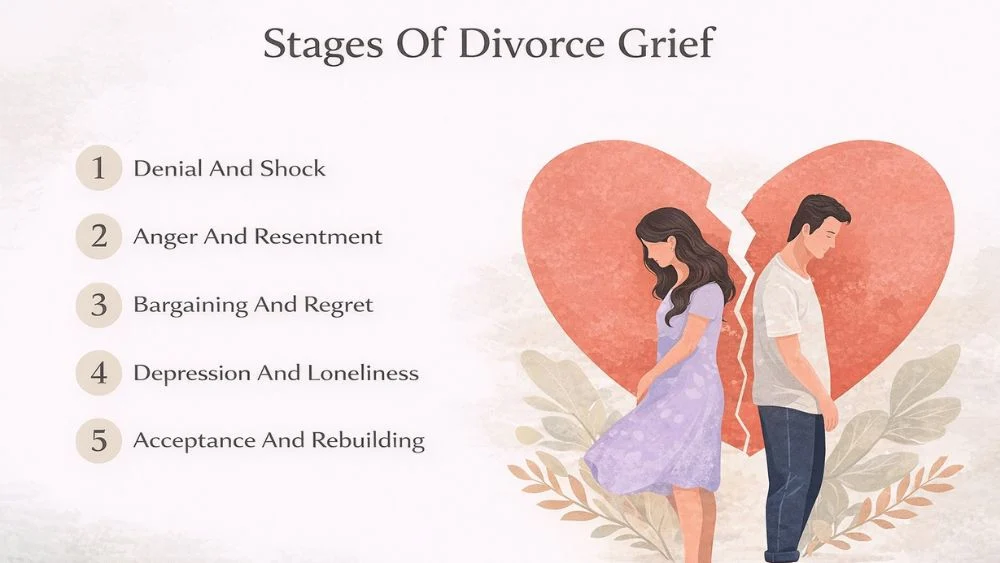
Grief after divorce follows patterns shaped by brain chemistry and emotional attachment. These stages are not linear. You may revisit them while coping with divorce .
Denial And Shock
Your brain may block reality to reduce overload. You might feel numb or detached. This phase protects you temporarily.
Anger And Resentment
Anger activates when boundaries feel violated. Physical movement helps release stored tension safely.
Bargaining And Regret
Thoughts focus on what could have changed the outcome. This reflects the brain seeking control.
Depression And Loneliness
Energy drops. Sleep and appetite shift. Social contact becomes harder but more important.
Acceptance And Rebuilding
You accept the loss without emotional overwhelm. Focus shifts toward stability and future plans.
Healthy Ways To Cope With Divorce
Healthy coping reduces long-term mental and physical harm. These methods work because they calm the stress system during coping with divorce .
Emotional Regulation Strategies
Pause before reacting. Name emotions clearly. This reduces impulsive behavior and emotional exhaustion.
Mindfulness And Stress Management
Slow breathing lowers heart rate and muscle tension. Even five minutes helps restore calm.
Building Healthy Coping Mechanisms
Replace harmful habits with safe routines. Walking, music, and writing support recovery.
Developing Resilience After Divorce
Resilience grows through repetition. Each managed challenge builds emotional strength.
Support Groups For Divorce Recovery
Human connection is a powerful regulator of stress. Shared experiences normalize emotions during coping with divorce .
Benefits Of Peer Support
Hearing similar stories reduces shame. Group support lowers isolation and improves hope.
In-Person Divorce Support Groups
Face-to-face groups provide structure and accountability. Regular meetings reinforce progress.
Online Divorce Recovery Communities
Online spaces offer privacy and flexibility. They help when in-person options feel overwhelming.
Group Therapy Vs Individual Therapy
Group therapy offers shared insight. Individual therapy targets personal patterns. Many people benefit from both.
What Are The Effects Of Divorce On Men
Divorce often affects men differently due to social conditioning, stress biology, and support gaps. Men are less likely to seek help early, which changes recovery outcomes during coping with divorce process . Emotional strain may show up as physical symptoms rather than sadness.
Emotional Suppression And Stigma
Many men are taught to hide emotions. After divorce, this leads to bottled stress instead of release. Suppressed emotions raise blood pressure, worsen sleep, and increase irritability. Emotional silence slows recovery.
Mental Health Risks In Men After Divorce
Depression risk rises sharply within the first year. Anxiety and substance use also increase. Men face higher suicide risk after divorce, especially when social ties weaken. Early support lowers these risks.
Impact On Identity And Self-Worth
Marriage often defines purpose and role. Divorce can trigger identity loss, especially for fathers. Rebuilding self-worth requires separating personal value from marital status.
Social Isolation And Coping Challenges
Men often lose shared social circles. Fewer emotional outlets mean slower healing. Intentional connection supports healthier coping with divorce .
Coping With Divorce When Children Are Involved
Children change the emotional and practical load of divorce. Parental stress affects child adjustment directly. Stable parenting behaviors protect both you and your child.
Managing Co-Parenting Stress
Clear schedules reduce conflict. Written plans limit emotional arguments. Predictability lowers stress for children and adults.
Supporting Children Emotionally
Children need honesty without adult details. Validate feelings like sadness or anger. Reassurance reduces anxiety-related behavior issues.
Reducing Conflict Exposure For Children
Witnessing conflict raises long-term stress risks in children. Keep disagreements private. Emotional safety helps children adapt faster.
Common Mistakes To Avoid After Divorce
Certain behaviors slow healing and increase health risks. Avoiding these mistakes supports stable recovery.
Using Substances To Cope
Alcohol and drugs disrupt sleep and mood regulation. Short-term relief leads to long-term anxiety and depression.
Emotional Isolation
Avoiding people increases loneliness and stress hormones. Regular human contact improves emotional balance.
Rebound Relationships
Quick relationships often repeat unresolved patterns. Emotional clarity reduces future relationship failure.
Ignoring Mental Health Needs
Untreated distress can become chronic. Early care prevents long-term impairment.
When To Seek Professional Help
Professional care is necessary when self-help stops working. Timely help prevents deeper mental health issues.
Persistent Depression Or Anxiety
Symptoms lasting over eight weeks signal clinical concern. Low mood, panic, or hopelessness need evaluation.
Inability To Function Daily
Difficulty working, sleeping, or caring for yourself indicates overload. Support restores daily function.
Trauma Or Unresolved Grief
Flashbacks, numbness, or intense fear suggest trauma responses. Specialized care helps regulate the nervous system.
FAQs
How Long Does It Take To Emotionally Recover From Divorce?
Recovery during coping with divorce usually takes 12 to 24 months. The first six months involve acute stress. Emotional stability improves after consistent routines, support, and reduced conflict exposure.
Is Grief After Divorce Similar To Grief After Death?
Yes. Divorce grief activates the same brain regions as bereavement. The difference is ongoing contact with the source of loss, which can prolong emotional stress during coping with divorce .
What Are Healthy Coping Strategies After Divorce?
Effective strategies include daily routines, physical activity, emotional expression, and therapy. These healthy ways to cope with divorce reduce cortisol and support long-term emotional regulation.
Do Men Cope With Divorce Differently Than Women?
Yes. Men show higher rates of emotional suppression, substance use, and isolation. These effects of divorce on men increase mental health risks without early support.
Can Divorce Cause Long-Term Mental Health Issues?
Yes. Untreated divorce stress can lead to chronic depression or anxiety. Early coping with divorce strategies lower long-term mental health damage.
Are Support Groups Helpful After Divorce?
Yes. Support groups for divorce recovery reduce isolation, normalize emotions, and improve coping skills through shared experience and accountability.
How Do I Stop Feeling Angry After Divorce?
Anger fades when boundaries stabilize and emotions are processed. Physical movement, clear limits, and counseling reduce anger intensity during coping with divorce .
When Should I Consider Therapy After Divorce?
Start therapy if distress affects sleep, work, or parenting for over four weeks. Early therapy improves emotional recovery speed during coping with divorce .
How Can I Rebuild My Life After Divorce?
Rebuilding means stabilizing routines, restoring health, and setting realistic goals. Structured growth supports long-term coping with divorce success.
Is It Normal To Feel Relief And Guilt At The Same Time?
Yes. Relief reflects reduced conflict. Guilt reflects loss. Both emotions often coexist during the acceptance phase of stages of divorce grief .
About The Author

Medically reviewed by Dr. Chandril Chugh, MD, DM (Neurology)
Dr. Chandril Chugh is a U.S.-trained, board-certified neurologist with expertise in diagnosing and managing neurological disorders, including migraines, epilepsy, Parkinson’s disease, and movement disorders. His clinical focus includes evidence-based neurological care and patient education.
All content is reviewed for medical accuracy and aligned with current neurological guidelines.