Communication in marriage is the system that decides how you and your partner handle love, stress, conflict, and change over time. It includes how you speak, listen, react, stay silent, and repair after disagreement. Strong communication helps your brain read your relationship as safe, predictable, and supportive. Poor communication trains the brain to expect threat, leading to distance, defensiveness, and emotional fatigue. This is why communication in marriage directly affects trust, mental health, conflict control, and long-term relationship stability, not just day-to-day conversations.
10 Types Of Communication In Marriage
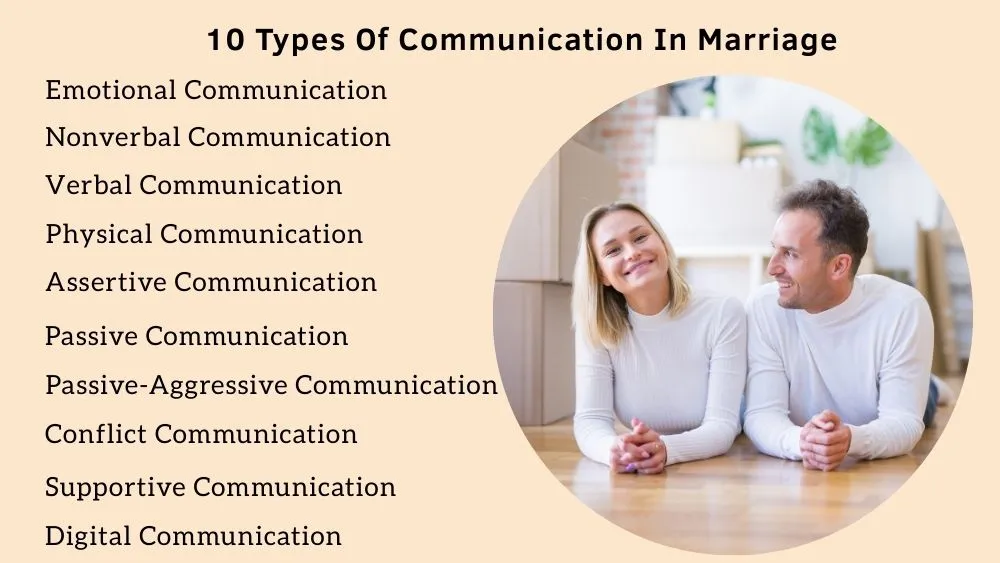
Communication in marriage is a system made of different channels that work together. Couples who struggle often rely on one or two types while ignoring others. An imbalance between emotional, verbal, and nonverbal exchange predicts long-term dissatisfaction more than conflict frequency.
These 10 types of communication in marriage help you spot what is working and what is missing. Most couples use some types well and ignore others without realizing it.
Verbal Communication
Verbal communication means the words you choose and how you say them. Short, clear sentences reduce confusion. Tone matters more than volume. When your voice stays calm, your partner’s nervous system stays calmer too. This protects communication in marriage during tense moments. Long explanations often confuse more than they help. Simple wording keeps talks focused.
Nonverbal Communication
Nonverbal communication includes posture, facial expression, eye contact, and silence. Your body often sends a message before your mouth does. Turning away or crossing arms can signal threat or shutdown. Soft eye contact signals safety. Couples who read nonverbal signs well report fewer misunderstandings. This form of communication in marriage often decides whether a talk feels safe or unsafe.
Emotional Communication
Emotional communication means sharing feelings like fear, sadness, or joy without hiding them. This builds closeness. Suppressing emotions raises internal stress and leads to sudden outbursts later. When you name emotions early, talks stay shorter and calmer. Emotional sharing supports secure attachment, which stabilizes communication in marriage over time.
Physical Communication
Physical communication includes touch that is not sexual. A hand squeeze or brief hug can lower heart rate and muscle tension. This response helps during stress or conflict. Physical reassurance often says “we are safe” when words fail. Healthy touch supports communication in marriage by reducing emotional overload.
Assertive Communication
Assertive communication means stating needs clearly without control or fear. You speak honestly and respect limits. This style prevents resentment. It also lowers conflict frequency. Assertiveness strengthens communication in marriage by balancing self-respect and partner respect.
Passive Communication
Passive communication avoids conflict by staying silent or agreeing outwardly. Needs stay unmet. Stress builds quietly. Over time, emotional withdrawal increases. This pattern weakens communication in marriage and often leads to sudden breakdowns.
Passive-Aggressive Communication
Passive-aggressive communication hides anger behind sarcasm or silence. The message stays unclear. Confusion grows. This style increases emotional stress and damages trust. Clear speech works better for communication in marriage than hidden signals.
Conflict Communication
Conflict communication happens during disagreement. Healthy conflict focuses on one issue at a time. It avoids name-calling and past scorekeeping. When handled well, conflict improves understanding. This strengthens communication in marriage instead of breaking it.
Supportive Communication
Supportive communication shows care without trying to fix everything. Listening matters more than advice. Feeling understood lowers emotional distress. This type protects mental health and improves communication in marriage during hard times.
Digital Communication
Digital communication includes texts and calls. Short messages lack tone and context. Misreading is common. Clear wording and timing prevent fights. Digital habits now affect communication in marriage daily, not occasionally.
Communication Problems In Marriage
Most communication problems in marriage begin with small, repeated breakdowns that stress the nervous system and reduce emotional safety. Over time, the brain learns to expect threat instead of connection during conversations. This shift affects memory, tone perception, and impulse control, making even neutral discussions feel hostile.
Poor Listening Habits
Poor listening means planning your reply instead of hearing the meaning. Your brain stays defensive. Important details get missed. Over time, partners feel ignored. Improving listening restores communication in marriage faster than any speech technique.
Frequent Misunderstandings
Misunderstandings come from assumptions, not facts. Stress narrows attention and increases misinterpretation. Asking simple questions reduces this pattern. Clear clarification protects communication in marriage from unnecessary fights.
Avoidance And Emotional Withdrawal
Avoidance happens when talks feel unsafe. One or both partners shut down. Emotional distance grows. This response links to higher anxiety and sleep problems. Reopening safe dialogue repairs communication in marriage gradually.
Criticism And Defensiveness
Criticism attacks character instead of behavior. Defensiveness blocks learning. Together, they form a cycle that escalates conflict. Breaking this cycle is key to healing communication in marriage .
Lack Of Empathy
Empathy means understanding feelings even when you disagree. Without it, talks feel cold and unsafe. Emotional validation reduces stress responses in the body. This makes empathy essential for communication in marriage .
Power Struggles
Power struggles turn talks into contests. One person tries to win. Mutual respect fades. Healthy relationships focus on solutions, not control. This shift restores balance in communication in marriage .
Unresolved Conflicts
Unresolved conflicts stay active in memory. They resurface during new disagreements. This overloads emotional processing. Closing old loops improves emotional safety and strengthens communication in marriage .
10 Tips For Improving Communication In Your Marriage
The 10 tips for improving communication in your marriage focus on changing how your brain and body respond during interaction. Effective communication is not about saying more; it is about reducing misinterpretation, emotional flooding, and defensive reactions. Couples who apply these tips consistently show improved emotional regulation, faster conflict recovery, and stronger trust signals within weeks.
Practice Active Listening
Active listening means you fully focus on your partner’s words without planning a reply. Your brain shifts from defense mode to understanding mode. This lowers emotional reactivity. Over time, communication in marriage improves because your partner feels heard, not judged.
Use “I” Statements
“I” statements reduce blame and keep talks grounded in facts. Saying “I feel ignored when plans change at the last minute” works better than accusing. This wording lowers stress hormones and keeps communication in marriage calmer during sensitive talks.
Avoid Blame And Criticism
Blame triggers threat responses in the brain. Criticism shuts down learning. When you describe behavior instead of character, your partner stays open. This protects communication in marriage from turning into repeated fights.
Pay Attention To Nonverbal Cues
Your posture, tone, and facial tension send signals faster than words. Leaning forward shows interest. Soft tone signals safety. Awareness of these cues keeps communication in marriage steady, even during disagreement.
Choose The Right Time To Talk
Emotional talks fail when stress is high. Fatigue and hunger reduce impulse control. Choosing calm moments improves memory and problem-solving. This timing strategy strengthens communication in marriage without extra effort.
Validate Your Partner’s Feelings
Validation means naming and accepting emotions without fixing them. This lowers emotional intensity. When people feel understood, they listen better. Validation keeps communication in marriage balanced and respectful.
Be Honest And Clear
Indirect hints confuse more than they help. Clear statements reduce guesswork. Honesty builds predictability, which the brain reads as safety. This clarity supports long-term communication in marriage .
Learn To Compromise
Compromise reduces power struggles. It trains flexibility and cooperation. Couples who compromise recover faster from conflict. This habit stabilizes communication in marriage over time.
Stay Calm During Conflicts
Calm speech prevents emotional flooding. Pausing before replying helps regulate reactions. When calm stays present, communication in marriage stays productive even during tough topics.
Seek Help When Needed
Outside support helps break stuck patterns. Structured guidance can reset habits. Seeking help early protects communication in marriage from long-term damage.
5 Communication Tools That Saved My Marriage
The 5 communication tools that saved my marriage work because they interrupt negative feedback loops before damage accumulates. These tools are behavior-based, not emotion-based, which makes them reliable under stress. They reduce cognitive overload, limit reactive speech, and create predictable moments for emotional exchange.
Daily Check-In Conversations
Short daily check-ins keep emotional awareness current. Sharing one feeling per day prevents emotional backlog. This habit strengthens communication in marriage by catching issues early.
The Pause-And-Reflect Method
Pausing before responding lowers impulsive reactions. Reflection helps separate facts from emotions. This tool improves communication in marriage by reducing regretful words.
Weekly Relationship Meetings
Weekly meetings organize logistics and feelings. They reduce surprise conflicts. Predictable check-ins improve trust and stabilize communication in marriage .
Conflict Repair Statements
Repair phrases like “I see your point” stop escalation. They signal safety. Repairs shorten conflicts and protect communication in marriage .
Expressing Appreciation Regularly
Regular appreciation shifts focus from flaws to effort. This builds goodwill. Positive reinforcement supports healthier communication in marriage patterns.
Communication Exercises For Couples
Structured communication exercises for couples retrain interaction patterns through repetition. Couples who practice these exercises regularly show better listening accuracy and fewer escalation patterns. Over time, this leads to more stable and efficient communication in marriage without constant effort.
Active Listening Exercise
One partner speaks for two minutes. The other listens without interrupting. Switching roles builds empathy. This exercise strengthens communication in marriage by improving focus.
Mirror And Validate Exercise
Repeating your partner’s words confirms understanding. Validation reduces defensiveness. This exercise improves emotional accuracy in communication in marriage .
Gratitude Sharing Exercise
Sharing one specific appreciation daily improves mood and trust. Gratitude increases emotional safety. This supports stable communication in marriage .
Emotion Labeling Exercise
Naming emotions before explaining events reduces blame. Clear labels prevent confusion. This exercise refines communication in marriage during stress.
Conflict Resolution Role-Play
Practicing calm responses builds confidence. Role-play prepares you for real conflicts. This strengthens communication in marriage under pressure.
When To Seek Professional Help
Professional help becomes necessary when communication in marriage triggers fear, shutdown, or chronic distress instead of resolution. At this stage, self-help strategies often fail because emotional reactions override logic. Trained guidance helps reset safety cues, rebuild trust, and restructure harmful patterns.
Persistent Communication Breakdown
Repeated failed talks signal pattern problems. Guidance helps reset habits. This protects communication in marriage from long-term shutdown.
Escalating Conflicts
Rising intensity shows emotional overload. Outside help restores regulation skills. This stabilizes communication in marriage .
Emotional Disconnection
Feeling distant despite proximity signals unmet needs. Support helps rebuild safety. This restores communication in marriage .
Trust Issues
Broken trust blocks openness. Structured repair helps rebuild predictability. This repairs communication in marriage gradually.
Long-Term Benefits Of Healthy Communication In Marriage
Couples with stable communication patterns show lower stress-related health issues, better sleep consistency, and improved emotional resilience. Respectful dialogue also protects relationships during major life stressors like illness, financial strain, or parenting transitions.
Stronger Emotional Bond
Consistent openness builds closeness. Emotional safety deepens attachment. This strengthens communication in a long-term marriage .
Better Conflict Management
Skills prevent escalation. Problems are resolved faster. This protects communication in marriage from exhaustion.
Improved Mutual Respect
Respect grows through fair listening. Validation reinforces worth. This improves communication in marriage .
Greater Relationship Satisfaction
Clear talks reduce stress. Daily life feels lighter. Satisfaction rises with stable communication in marriage .
FAQs
What Is Healthy Communication in Marriage?
Healthy communication in marriage means clear expression, active listening, emotional validation, and calm conflict handling. It includes honesty without blame, predictable responses, and repair after disagreements. These elements reduce stress and build trust consistently.
What Are Common Communication Problems In Marriage?
Common communication problems in marriage include poor listening, emotional withdrawal, criticism, defensiveness, and unresolved conflicts. These patterns raise stress, reduce emotional safety, and often repeat without awareness unless actively corrected.
How Can Couples Improve Communication Quickly?
Yes, couples can improve communication in marriage quickly by practicing daily check-ins, active listening, and using “I” statements. These actions reduce misunderstandings within weeks when applied consistently.
What Role Does Listening Play in Marriage Communication?
Listening shapes communication in marriage by preventing assumptions and emotional escalation. When you listen fully, your partner feels safe, which improves openness, trust, and problem-solving accuracy over time.
Can Communication Problems Lead to Divorce?
Yes. Long-term communication problems in marriage increase emotional distance, unresolved resentment, and chronic stress. These factors strongly raise divorce risk when patterns remain unchanged for years.
What Are Effective Communication Exercises for Couples?
Effective communication exercises for couples include active listening drills, mirroring and validating, emotion labeling, and gratitude sharing. These exercises retrain emotional responses and improve clarity during real conversations.
How Do Nonverbal Cues Affect Marital Communication?
Nonverbal cues strongly influence communication in marriage by signaling safety or threat. Facial tension, tone, posture, and silence often shape emotional reactions more than spoken words.
Is Poor Communication Normal in Long Marriages?
Yes. Poor communication in marriage can develop over time due to stress, routine, and unaddressed conflicts. Skills need renewal to prevent emotional drift and misunderstanding.
When Should Couples Seek Counseling for Communication Issues?
Couples should seek help when communication in marriage causes repeated distress, emotional shutdown, or escalating conflict for several months without improvement through self-effort.
Can Communication Skills Be Learned Over Time?
Yes. Communication skills in marriage improve through practice, feedback, and consistency. The brain adapts with repetition, making calm, clear interaction easier over time.
About The Author

Medically reviewed by Dr. Chandril Chugh, MD, DM (Neurology)
Dr. Chandril Chugh is a U.S.-trained, board-certified neurologist with expertise in diagnosing and managing neurological disorders, including migraines, epilepsy, Parkinson’s disease, and movement disorders. His clinical focus includes evidence-based neurological care and patient education.
All content is reviewed for medical accuracy and aligned with current neurological guidelines.