Childhood trauma test is a structured screening tool used to identify how adverse experiences during early life continue to affect your emotions, behavior, stress response, and physical health. It focuses on events such as abuse, neglect, loss, and household instability that occurred before adulthood and measures their long-term psychological impact.
Unlike casual self-reflection, a childhood trauma test uses specific, research-backed questions that assess frequency, severity, and emotional safety during development. These tests help explain patterns like emotional overreaction, numbness, chronic anxiety, trust issues, and unexplained physical symptoms that often appear later in life.
10 Examples Of Childhood Trauma
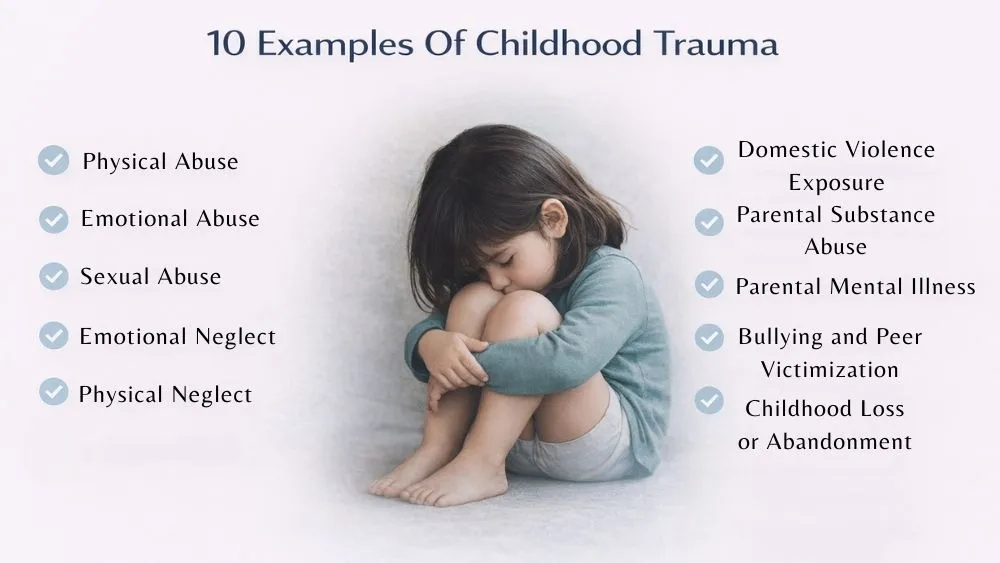
Childhood trauma refers to repeated or overwhelming experiences that disrupt a child’s sense of safety and emotional stability. These events activate long-term stress responses that shape brain development, especially areas controlling emotion, memory, and impulse control.
Below are 10 examples of childhood trauma that mental health professionals often assess during screening.
Physical Abuse
Physical abuse includes hitting, kicking, shaking, burning, or choking. Even when injuries heal, the brain remembers fear. Children exposed to repeated physical harm often grow up with strong stress responses and poor emotional control.
Emotional Abuse
Emotional abuse involves insults, threats, humiliation, or constant criticism. You may grow up believing you are never good enough. This form of trauma is strongly linked to anxiety and low self-worth in adulthood.
Sexual Abuse
Sexual abuse includes any sexual contact or exposure forced on a child. This type of trauma deeply affects trust, body safety, and emotional boundaries. Many survivors struggle with shame and confusion for years.
Emotional Neglect
Emotional neglect happens when caregivers ignore feelings, needs, or distress. You may have food and shelter but still feel invisible. This teaches the brain that emotions do not matter.
Physical Neglect
Physical neglect includes lack of food, clean clothes, medical care, or safe housing. Chronic neglect keeps the body in survival mode and limits healthy brain growth.
Domestic Violence Exposure
Witnessing violence between caregivers causes fear, even if you were never touched. Children often blame themselves and develop constant alertness to danger.
Parental Substance Abuse
Living with addiction creates chaos and unpredictability. You may grow up taking adult roles too early, which blocks normal emotional growth.
Parental Mental Illness
Severe untreated mental illness in a caregiver can disrupt safety and care. Children may feel responsible for their parents’ emotions.
Bullying And Peer Victimization
Ongoing bullying damages self-image and social trust. The stress response stays active long after school ends.
Childhood Loss Or Abandonment
Death, divorce, or sudden separation can break emotional security. Without support, grief turns into long-term fear of closeness.
These 10 examples of childhood trauma often overlap. A childhood trauma test looks at patterns rather than single events.
Causes Of Childhood Trauma
The causes of childhood trauma involve ongoing exposure to threat, instability, or emotional absence during key developmental years. Trauma forms when stress systems stay activated for long periods without relief or safety cues.
Chronic stress during childhood alters cortisol regulation (stress hormone control), which affects sleep cycles, immune response, and emotional regulation later in life. This explains why trauma often leads to both mental and physical symptoms.
Abuse (Physical, Emotional, Sexual)
Abuse by caregivers or trusted adults causes deep confusion. The brain struggles to understand danger coming from someone meant to protect.
Neglect And Emotional Deprivation
When basic emotional needs go unmet, the brain adapts by shutting down feelings. This adaptation helps survival but harms long-term mental health.
Household Dysfunction
Homes filled with constant conflict, instability, or extreme stress create unsafe emotional environments. Children learn to expect danger.
Exposure To Violence Or Substance Abuse
Frequent exposure to fights, weapons, or intoxication keeps stress hormones high. Over time, this affects memory, mood, and immune function.
Loss Of A Parent Or Caregiver
Sudden loss disrupts emotional attachment systems. Without guidance, grief becomes chronic stress.
These causes of childhood trauma affect brain areas that control emotion, memory, and decision-making. A childhood trauma test helps link early causes to current symptoms.
Symptoms Of Childhood Trauma
Symptoms of childhood trauma appear across emotional, behavioral, cognitive, and physical systems. The nervous system learns to prioritize survival over learning or connection. This leads to overreaction, emotional numbness, poor concentration, and difficulty calming down after stress.
Symptoms often change with age. What shows up as tantrums or withdrawal in children may appear as anxiety, burnout, or relationship struggles in adults.
Emotional Symptoms
You may feel fear, anger, sadness, or shame without knowing why. Mood shifts can feel sudden and intense. Emotional reactions may not match the situation.
Behavioral Symptoms
Common behaviors include withdrawal, aggression, people-pleasing, or risky actions. These behaviors once helped you survive stress.
Cognitive And Learning Difficulties
Trauma affects attention and memory. You may struggle with focus, planning, or problem-solving. Stress hormones interfere with learning.
Relationship And Attachment Issues
Trust feels unsafe. You may fear closeness or depend too much on others. These patterns come from early attachment disruptions.
Physical And Psychosomatic Symptoms
Chronic headaches, stomach pain, fatigue, or muscle tension are common. The body stores stress when the mind cannot process it.
The symptoms of childhood trauma often push people to seek a childhood trauma test later in life. Recognizing symptoms early reduces long-term health risks.
6 Signs Of Childhood Trauma
Each sign links to specific brain changes, especially in the amygdala (fear detection), hippocampus (memory), and prefrontal cortex (decision-making). When these systems stay out of balance, daily stress feels overwhelming.
These 6 signs of childhood trauma appear when the nervous system stays stuck in survival mode long after danger has passed.
Emotional Dysregulation
You may feel emotions rise fast and find it hard to calm down. Small problems trigger big reactions. This happens because early stress trained your brain to react first and think later. Emotional control skills may not fully develop during unsafe childhoods.
Hypervigilance And Anxiety
Your body may stay on alert even in safe places. Loud sounds, conflict, or criticism can feel threatening. This constant scanning for danger drains energy and affects sleep. Many people with this sign score high on a childhood trauma test .
Difficulty Trusting Others
Trust feels risky when safety once failed. You may expect rejection or harm even without proof. This pattern forms when caregivers are unpredictable or unsafe. Relationships then feel stressful instead of supportive.
Low Self-Esteem
You may believe you are not enough or feel constant guilt. These beliefs often come from early criticism, neglect, or blame. Over time, this affects confidence and decision-making.
Dissociation Or Emotional Numbness
Some people feel detached from emotions or memories. This response protects the mind during overwhelming stress. As an adult, numbness can block joy and connection.
Flashbacks Or Intrusive Memories
Past moments may replay suddenly through images, thoughts, or body sensations. These reactions occur without conscious control. The brain reacts as if the past is happening now.
These 6 signs of childhood trauma signal the need for deeper evaluation, often through a childhood trauma test .
How To Take A Childhood Trauma Test
A childhood trauma test does not diagnose mental illness or assign labels. It reveals how prolonged stress shaped your nervous system and coping style. The results help guide therapy choices, self-awareness, and recovery planning by linking present-day struggles to early-life stress exposure in a clear, measurable way.
Common Childhood Trauma Questionnaires
Most tests ask about safety, care, fear, and emotional support before age eighteen. Questions stay simple but specific. They focus on frequency, not isolated events, to capture long-term exposure.
Self-Report Vs Clinician-Administered Tests
Self-report tests allow privacy and honesty. Clinician-led tests add guidance and clarification. Both approaches work, but interpretation improves with professional input.
What Questions Typically Assess
Questions assess abuse, neglect, household stress, and emotional availability of caregivers. Some also measure how trauma affected sleep, focus, and relationships.
Time Required To Complete The Test
Most questionnaires take ten to thirty minutes. You can complete them without preparation. A childhood trauma test does not rush answers.
Tips For Healing Childhood Trauma
Healing childhood trauma focuses on restoring nervous system regulation, emotional safety, and self-trust. Healing does not require reliving every memory.
Effective recovery combines top-down skills (thinking and awareness) with bottom-up regulation (body-based calming). This dual approach addresses both emotional and physical stress storage.
Seeking Professional Mental Health Support
Therapists trained in trauma help you process memories safely. Therapy focuses on pacing, not forcing recall. Support reduces long-term emotional overload.
Trauma-Informed Therapy Approaches
These approaches prioritize safety, choice, and trust. Sessions avoid re-traumatization and respect your limits. Progress happens step by step.
Developing Coping And Grounding Skills
Grounding skills help calm the body during stress. Slow breathing, body awareness, and sensory focus reduce panic responses.
Building A Support System
Safe relationships help retrain the brain. Supportive people provide consistency and validation. Healing rarely happens alone.
Practicing Self-Compassion And Emotional Regulation
Replacing self-criticism with understanding reduces shame. Emotional regulation skills help manage reactions without suppression.
These tips for healing childhood trauma work best after understanding your history through a childhood trauma test .
When To Seek Professional Help
Professional help becomes necessary when trauma symptoms interfere with daily life, relationships, or physical health. Early intervention reduces the risk of long-term complications such as chronic anxiety, depression, substance misuse, and autoimmune issues linked to prolonged stress.
Persistent Emotional Distress
Ongoing fear, sadness, or anger that lasts months needs attention. Chronic distress affects brain chemistry and physical health.
Impact On Daily Functioning
If work, school, or basic tasks feel overwhelming, support is needed. Trauma drains mental energy and focus.
Co-Existing Anxiety, Depression, Or PTSD
Multiple conditions increase emotional strain. Combined symptoms often require structured treatment plans.
Relationship And Work Difficulties
Repeated conflict, avoidance, or burnout signals deeper issues. A childhood trauma test often explains these patterns clearly.
FAQs
What Is A Childhood Trauma Test Used For?
A childhood trauma test is used to identify patterns of early-life stress that still affect emotional regulation, stress response, relationships, and physical symptoms. It helps explain why anxiety, anger, numbness, or burnout persist even when current life seems stable.
Can A Childhood Trauma Test Diagnose PTSD?
No. A childhood trauma test cannot diagnose PTSD. It only measures exposure to traumatic experiences. PTSD diagnosis requires clinical evaluation of symptoms like re-experiencing, avoidance, hyperarousal, and duration longer than one month.
Are Childhood Trauma Tests Accurate?
Yes, when completed honestly. A childhood trauma test reliably identifies exposure patterns linked to long-term stress effects. Accuracy drops if answers are rushed or minimized. Interpretation becomes strongest when a trained clinician reviews results alongside current symptoms.
Can Adults Take A Childhood Trauma Test?
Yes. Many adults take a childhood trauma test to understand long-term emotional and physical effects. Trauma symptoms often appear years after the original events.
How Long Does A Childhood Trauma Test Take?
Most standardized childhood trauma test questionnaires take 10 to 25 minutes. Short screening versions take about 5 minutes. Longer clinical assessments may take up to 40 minutes when followed by clarification questions.
Is The Childhood Trauma Test Confidential?
Most reputable tests protect privacy. Clinicians follow strict confidentiality rules. Always review privacy policies before sharing personal information online.
What Should I Do After A High Trauma Score?
A high score suggests seeking professional support. A therapist can explain results, reduce fear, and help plan safe healing steps without pressure.
Can Childhood Trauma Be Healed Completely?
No, trauma memories do not erase. However, symptoms linked to childhood trauma can reduce significantly. With therapy and regulation skills, the nervous system learns safety, emotional reactions soften, and daily functioning improves without constant stress activation.
Are Online Childhood Trauma Tests Reliable?
Yes, if they use validated questionnaires and avoid diagnosis claims. Reliable childhood trauma test tools focus on exposure history, not labels. Avoid tests that promise instant answers, treatment plans, or mental health diagnoses.
When Should I Consult A Mental Health Professional?
You should seek help if symptoms disrupt daily life, relationships, or health. A childhood trauma test often signals when professional care may help most.
About The Author

Medically reviewed by Dr. Chandril Chugh, MD, DM (Neurology)
Dr. Chandril Chugh is a U.S.-trained, board-certified neurologist with expertise in diagnosing and managing neurological disorders, including migraines, epilepsy, Parkinson’s disease, and movement disorders. His clinical focus includes evidence-based neurological care and patient education.
All content is reviewed for medical accuracy and aligned with current neurological guidelines.