Childhood anxiety symptoms checklist gives you a fast, clear way to spot anxiety patterns in your child before they grow into bigger problems. Anxiety in children is not rare. It affects how your child feels, thinks, behaves, and learns. It can show up as fear, stomach pain, anger, or school refusal.
When these signs repeat for weeks and affect daily life, they matter. A structured childhood anxiety symptoms checklist helps you separate normal stress from anxiety that needs support.
Childhood Anxiety Symptoms Checklist
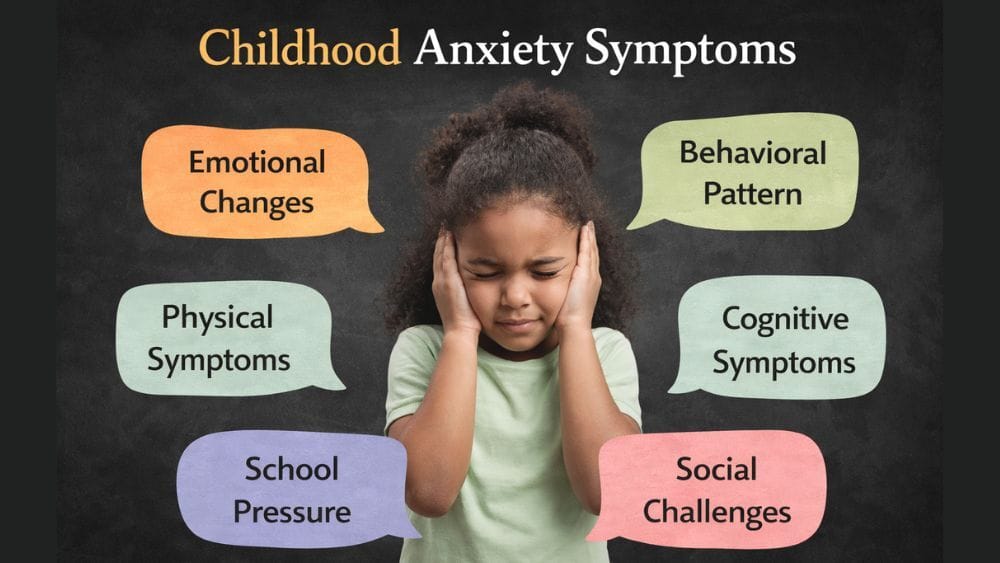
A childhood anxiety symptoms checklist works best when you look at patterns instead of single bad days. Anxiety shows up across settings. Home, school, and social spaces all give clues. Clinicians focus on how long symptoms last, how intense they feel, and how much they disrupt normal life.
Anxiety symptoms fall into five main groups. Emotional, behavioral, physical, thinking, and school-related signs often overlap. Your child does not need to show all of them. Even a few repeated signs can signal anxiety.
Using a childhood anxiety symptoms checklist helps you notice trends early and talk clearly with teachers or doctors.
Emotional Signs Of Anxiety In Children
The emotional signs of anxiety in children are often the first warning. These emotions feel stronger and last longer than normal worry.
Your child may feel constant fear even when things are safe. Worry may focus on health, safety, mistakes, or family. Many children describe feeling tense inside, like they can never relax. Mood shifts may seem sudden. Crying can happen without a clear reason.
These emotions do not fade with comfort alone. Reassurance helps for minutes, not days. When fear returns daily, it fits a childhood anxiety symptoms checklist pattern.
Emotional distress also affects sleep. Your child may resist bedtime, wake often, or report bad dreams. Sleep loss then worsens anxiety the next day, creating a cycle.
Behavioral Signs Of Anxiety In Children
The behavioral signs of anxiety in children often confuse parents. These behaviors protect your child from fear, not from rules.
Avoidance is the most important sign. Your child may refuse school, sports, parties, or new tasks. Some children cling to you and struggle with separation. Others act out with anger or tantrums when anxiety feels overwhelming.
Reassurance seeking is common. Your child may ask the same questions repeatedly, even after clear answers. This behavior reduces fear briefly, then strengthens anxiety long term.
Tracking behavior over time with a childhood anxiety symptoms checklist helps you see whether avoidance is growing or shrinking.
Physical Symptoms Of Anxiety In Children
Anxiety strongly affects the body. Many children feel physical pain before they can explain fear.
Common complaints include stomach pain, nausea, headaches, chest tightness, fast heartbeat, sweating, and muscle tension. These symptoms often appear before school or social events and ease when the stress passes.
Medical exams usually show no illness. This does not mean the pain is fake. The stress response changes how the gut, muscles, and nerves work. When physical complaints follow stress patterns, they belong on a childhood anxiety symptoms checklist .
Sleep problems also fit here. Trouble falling asleep, waking often, or early waking all increase anxiety sensitivity.
Cognitive (Thinking) Symptoms Of Anxiety
Anxiety changes how your child thinks. These thoughts often stay hidden unless you listen closely.
Your child may expect the worst outcome in everyday situations. Small mistakes feel like disasters. Focus becomes difficult, especially in school. Many children repeat “what if” thoughts that never settle.
Perfectionism often appears. Your child may avoid starting work unless success feels guaranteed. This thinking style blocks learning and confidence. These patterns strongly support a childhood anxiety symptoms checklist when they repeat daily.
Social Anxiety Symptoms In Children
Social anxiety centers on fear of judgment. It is not the same as being quiet.
Your child may avoid speaking in class, answering questions, or joining group play. Worry focuses on embarrassment or rejection. Some children speak freely at home but stay silent elsewhere.
Social fear limits friendships and skill growth. When social avoidance interferes with age-appropriate interaction, it becomes a clear part of a childhood anxiety symptoms checklist .
School Anxiety Symptoms Checklist
School is the most common place where anxiety becomes visible. Academic pressure, peer evaluation, and separation all raise stress.
A school anxiety symptoms checklist often includes repeated morning distress, school refusal, frequent nurse visits, panic during tests, or sudden drops in grades. Symptoms usually ease on weekends or holidays.
School anxiety can hide learning difficulties, bullying, or fear of failure. When school stress drives daily symptoms, it strongly reinforces a childhood anxiety symptoms checklist .
Anxiety Symptoms In Kids Checklist By Age
Age matters when reading anxiety signs. Development changes how anxiety looks. An anxiety symptoms in kids checklist should always match your child’s stage of growth.
Anxiety Symptoms In Preschool Children
Young children lack words for fear. Anxiety shows through behavior and body reactions.
Preschool anxiety often appears as separation fear, excessive crying, sleep refusal, nightmares, or regression in toilet training. Loud sounds or unfamiliar places may trigger strong reactions.
Short fears are common at this age. Anxiety becomes a concern when fear lasts for months and limits play or learning. A childhood anxiety symptoms checklist helps you judge persistence.
Anxiety Symptoms In School-Age Children
School-age children face performance pressure and rule-based settings. Anxiety often centers on mistakes and approval.
You may notice stomach pain before school, fear of tests, avoidance of homework, or constant need for reassurance. Many children worry about getting things “wrong” even when doing well.
This age responds well to early support. Patterns tracked with a childhood anxiety symptoms checklist often improve with guidance.
Anxiety Symptoms In Teenagers
Teen anxiety often hides behind mood changes. Irritability, withdrawal, and sleep problems are common.
Teens may avoid social events, struggle with concentration, or complain of ongoing physical symptoms. Risk-taking behavior can sometimes mask anxiety rather than confidence.
Anxiety in teens increases risk for depression and academic decline. A structured childhood anxiety symptoms checklist remains useful through adolescence.
Age-Based Anxiety Pattern Overview
| Age Group | Common Anxiety Focus | Key Warning Pattern |
| Preschool | Separation and safety | Regression and sleep fear |
| School-age | Performance and rules | School avoidance and worry |
| Teenagers | Social judgment and future | Withdrawal and mood shifts |
Why Early Identification Matters
Anxiety rarely disappears on its own once patterns settle. Avoidance teaches the brain that fear works. Early identification interrupts this loop.
Using a childhood anxiety symptoms checklist gives you language, structure, and clarity. It allows you to respond calmly instead of reacting emotionally. Children improve faster when anxiety is named early and handled consistently.
Common Causes Of Anxiety In Children
Childhood anxiety develops when a child’s stress system stays active for too long. Biology, environment, and daily pressure combine over time. Understanding causes helps you respond correctly instead of blaming behavior or personality.
Anxiety often builds quietly. Many children appear “fine” until symptoms interfere with sleep, school, or relationships. A childhood anxiety symptoms checklist becomes more meaningful when you understand what fuels the anxiety underneath.
Genetics And Family History
Anxiety risk increases when close family members have anxiety, panic attacks, or mood disorders. This link comes from inherited sensitivity in the brain’s fear system, not learned behavior alone. Children with this sensitivity react faster and stronger to stress.
Genetics do not guarantee anxiety. They lower the stress threshold. When combined with pressure or trauma, symptoms emerge faster. This is why a signs of anxiety in children checklist is especially important in families with mental health history.
Parenting Style And Family Environment
Children learn emotional safety at home. High criticism, unpredictable routines, or constant pressure increase anxiety risk. Overprotection also fuels anxiety by teaching children that the world is unsafe without adult control.
Supportive parenting reduces symptoms. Calm responses, consistent rules, and gradual independence help the nervous system settle. Parenting style does not cause anxiety alone, but it strongly shapes severity and recovery.
Trauma, Stress, And Life Changes
Events that overwhelm coping ability can trigger anxiety. Common triggers include bullying, loss of a loved one, serious illness, accidents, or sudden family changes. Anxiety may appear weeks or months later.
Children may relive fear through avoidance, sleep problems, or physical complaints. When symptoms follow a known stressor, a childhood anxiety symptoms checklist helps connect behavior to its root instead of mislabeling it as defiance.
School Pressure And Academic Stress
Academic stress is a major anxiety driver. Constant testing, fear of failure, and comparison with peers overload stress systems. Children may link self-worth to grades.
School-based anxiety often appears on a school anxiety symptoms checklist as test panic, stomach pain, or refusal. Reducing pressure and focusing on effort instead of results lowers anxiety over time.
How Childhood Anxiety Is Diagnosed
Diagnosis focuses on patterns, duration, and daily impact. One symptom does not equal anxiety. Clinicians look for repeated signs across settings and how much they interfere with normal life.
A childhood anxiety symptoms checklist helps parents present clear information during evaluations, improving accuracy and speed of care.
Clinical Evaluation And Screening Tools
Clinicians use interviews, behavior rating scales, and observation. These tools assess fear frequency, avoidance level, and functional impact. Medical causes for physical symptoms are ruled out first.
Diagnosis depends on impairment, not personality. Screening tools often align with a signs of anxiety in children checklist to identify severity and type.
Role Of Parents, Teachers, And Pediatricians
Parents report home behavior, sleep, and emotional changes. Teachers provide insight into focus, avoidance, and social behavior. Pediatricians rule out medical issues and guide referrals.
Shared input creates a complete picture. Bringing a completed childhood anxiety symptoms checklist helps professionals see patterns clearly.
Treatment Options For Childhood Anxiety
Treatment aims to reduce avoidance and build coping skills. Early treatment improves outcomes and prevents long-term problems. Most children respond well with proper support.
Cognitive Behavioral Therapy (CBT) For Children
CBT teaches children how anxiety works and how to face fear safely. Children practice small steps instead of avoiding triggers. They also learn to challenge anxious thoughts.
CBT reduces symptoms across ages and anxiety types. Progress depends on regular practice and parent involvement.
Behavioral And Parenting Interventions
Parent coaching is essential. Parents learn how to respond without reinforcing fear. This includes encouraging independence, limiting reassurance, and praising effort.
Behavior plans often pair with therapy. Consistent responses at home and school speed improvement.
Medication For Childhood Anxiety (When Needed)
Medication may help when anxiety is severe or therapy alone is not enough. Doctors usually prescribe low doses and adjust based on response. Dosage varies by age and condition.
Medication supports therapy. It does not replace skill-building or parenting changes.
How Parents Can Support An Anxious Child
Daily responses shape recovery more than one-time actions. Children improve when adults stay calm, predictable, and supportive during fear.
Using a childhood anxiety symptoms checklist helps you respond with strategy instead of emotion.
Daily Coping Strategies At Home
Consistent routines lower anxiety by increasing predictability. Adequate sleep, regular meals, and physical activity stabilize mood. Calm problem-solving teaches children that fear can be managed.
Label feelings clearly and encourage gradual exposure to feared situations.
Helping A Child Manage School Anxiety
Work with teachers early. Reduce pressure without removing expectations. Gradual exposure plans help children return to school safely. Tracking progress with a school anxiety symptoms checklist keeps goals realistic and measurable.
What Not To Do When A Child Has Anxiety
Avoid excessive reassurance, punishment, or avoidance. These responses teach the brain that fear controls behavior. Do not label your child as “anxious.” Respond with confidence and structure instead.
FAQ
What Are The Most Common Behavioral Signs Of Anxiety In Children?
The most common behavioral signs of anxiety in children are avoidance, repeated reassurance seeking, refusal to attend school, and emotional outbursts when facing feared situations. These behaviors reduce fear short term but worsen anxiety long term.
How Do I Know If My Child’s Anxiety Is Serious?
Yes, anxiety is serious when symptoms last over four weeks, disrupt sleep or school, and limit daily activities. A childhood anxiety symptoms checklist showing impairment across settings signals the need for professional evaluation.
Can Anxiety Cause Physical Symptoms In Kids?
Yes. Anxiety often causes stomach pain, headaches, nausea, muscle tension, and sleep problems. These symptoms appear repeatedly without medical cause and commonly follow stress, fitting an anxiety symptoms in kids checklist pattern.
What Is The Best Age To Start Anxiety Treatment?
Early childhood is ideal. Treatment started between ages four and eight shows faster improvement because avoidance habits are not fully formed. A childhood anxiety symptoms checklist helps identify children who benefit from early care.
Does School Anxiety Mean My Child Has An Anxiety Disorder?
No. School anxiety alone does not confirm a disorder. When distress persists, causes avoidance, and appears on a school anxiety symptoms checklist across weeks, further assessment is needed to rule out an anxiety disorder.
How Long Does Childhood Anxiety Last?
Untreated anxiety can last for years. With structured therapy and parenting support, many children show improvement within three to six months, depending on severity and consistency of treatment.
Can Anxiety Affect A Child’s Learning And Development?
Yes. Anxiety reduces attention, working memory, and classroom participation. Over time, this affects academic progress and peer relationships, which is why early identification using a childhood anxiety symptoms checklist matters.
Is Childhood Anxiety Linked To ADHD Or Depression?
Yes. Anxiety often co-occurs with ADHD and depression. Anxiety increases focus problems, while ADHD increases stress. Accurate diagnosis requires separating overlapping symptoms using a signs of anxiety in children checklist .
Can Lifestyle Changes Reduce Anxiety Symptoms In Children?
Yes. Regular sleep, physical activity, reduced screen time, and predictable routines lower baseline anxiety. Lifestyle changes help mild cases and strengthen therapy outcomes in moderate anxiety.
When Should Parents Consult A Child Psychologist?
Parents should consult a psychologist when anxiety limits daily life, causes avoidance, or appears on a childhood anxiety symptoms checklist for several weeks despite supportive parenting efforts.
About The Author

Medically reviewed by Dr. Chandril Chugh, MD, DM (Neurology)
Dr. Chandril Chugh is a U.S.-trained, board-certified neurologist with expertise in diagnosing and managing neurological disorders, including migraines, epilepsy, Parkinson’s disease, and movement disorders. His clinical focus includes evidence-based neurological care and patient education.
All content is reviewed for medical accuracy and aligned with current neurological guidelines.