Anxiety and depression are two common mental health conditions, but they are not the same problem. Anxiety mainly affects how you respond to fear and stress. Depression mainly affects mood, energy, and motivation. You can experience one, the other, or both at the same time.
Both conditions affect the brain, body, thoughts, and behavior. They change how you sleep, eat, think, and react. They also raise long-term health risks when left untreated.
Anxiety vs Depression Symptoms
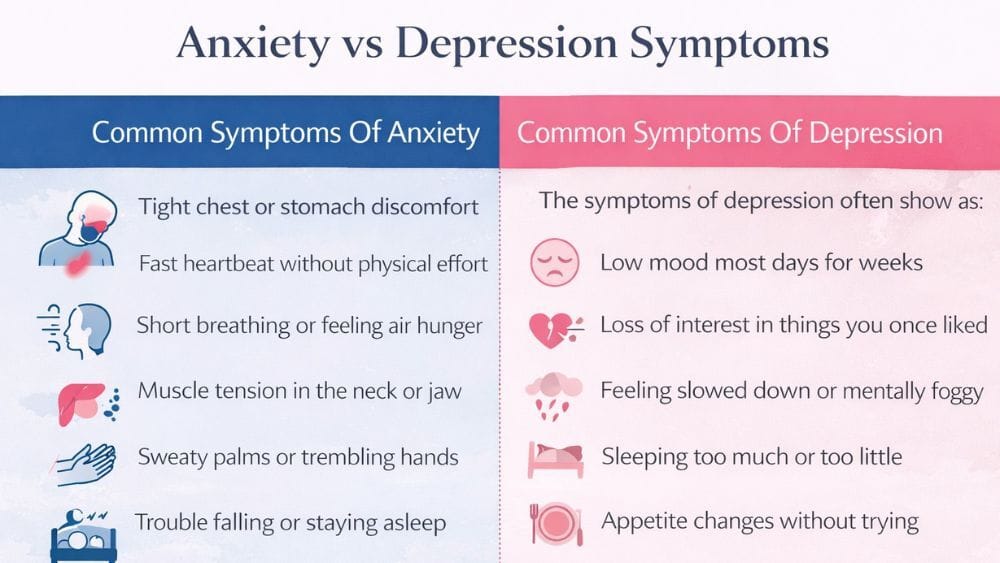
Common Symptoms Of Anxiety
Anxiety is your body staying in danger mode even when no real threat exists. Your nervous system remains overactive. This response made sense for survival, but it becomes harmful when it never turns off.
The symptoms of anxiety usually appear first in the body. You may notice:
- Tight chest or stomach discomfort
- Fast heartbeat without physical effort
- Short breathing or feeling air hunger
- Muscle tension in the neck or jaw
- Sweaty palms or trembling hands
- Trouble falling or staying asleep
Your thoughts also change. You expect problems before they happen. You replay conversations. You imagine worst outcomes. This mental pattern drains focus and decision-making. Over time, constant fear raises stress hormones, which affects memory, immunity, and digestion.
Common Symptoms Of Depression
Depression affects how your brain processes pleasure, reward, and effort. It is not just sadness. It is a loss of emotional fuel.
The symptoms of depression often show as:
- Low mood most days for weeks
- Loss of interest in things you once liked
- Feeling slowed down or mentally foggy
- Sleeping too much or too little
- Appetite changes without trying
- Feeling useless or guilty without reason
Your energy drops even after rest. Tasks feel heavy. Motivation fades. The brain areas tied to reward become less active, which explains why encouragement alone does not fix this condition.
Overlapping Symptoms Between Anxiety And Depression
Some symptoms overlap, which makes self-diagnosis hard. Both anxiety and depression can cause poor sleep, low focus, and irritability. Fatigue is common in both. Social withdrawal may also appear.
Anxiety pushes your mind forward into fear. Depression pulls your mood downward into emptiness. When both occur together, symptoms often feel stronger and harder to manage.
Anxiety vs Depression Signs You Should Not Ignore
Early Warning Signs Of Anxiety
The signs of anxiety often appear gradually. You may brush them off as stress. Early signs include:
- Feeling on edge most days
- Avoiding places or people without clear reason
- Needing constant reassurance
- Overthinking simple choices
- Physical tension that never fully relaxes
These signs matter because long-term fear changes brain wiring. The fear center becomes more sensitive, while the calming system weakens. Early support helps reverse this pattern.
Early Warning Signs Of Depression
The signs of depression often involve emotional withdrawal. You may notice:
- Loss of interest in daily routines
- Reduced emotional reactions
- Pulling away from friends
- Feeling like a burden
- Trouble starting simple tasks
These signs reflect changes in brain chemistry that affect motivation. Ignoring them allows the condition to deepen and last longer.
When Symptoms Become Severe
Severe symptoms interfere with basic functioning. You may struggle to work, study, or care for yourself. Panic attacks, persistent hopeless thoughts, or thoughts of self-harm signal a need for immediate help. At this stage, both anxiety and depression require professional care.
Anxiety vs Depression Causes
Biological And Brain Chemistry Factors
Your brain relies on chemical messengers to regulate mood and fear. When these systems fall out of balance, emotional control weakens.
- The causes of anxiety include overactivity in fear-related brain circuits. Stress hormones remain high, keeping the body alert even during rest.
- The causes of depression involve reduced activity in brain regions linked to pleasure and motivation. This explains why positive events may not improve mood right away.
Genetics also matter. If close family members experienced mood or anxiety disorders, your risk increases. This does not mean the outcome is fixed, but it raises vulnerability.
Psychological Causes
Thought patterns play a major role. Repeated negative thinking strengthens harmful brain pathways.
For anxiety , fear-based thinking and intolerance of uncertainty drive symptoms. For depression , self-blame and hopeless thinking dominate. Trauma, especially early in life, raises risk for both by altering stress response systems.
Life Events And Environmental Triggers
Life stress can activate underlying vulnerability. Chronic stress affects sleep, hormones, and immune response.
- The causes of anxiety often include unpredictable environments, long-term pressure, or lack of safety.
- The causes of depression often include prolonged loss, isolation, or repeated failure without recovery time.
Can You Have Anxiety And Depression At The Same Time?
Comorbid Anxiety And Depression Explained
Yes, many people experience both conditions together. This is common, not rare. Anxiety keeps the body tense and alert. Over time, this constant stress drains emotional energy and leads to depression .
When both exist, symptoms often overlap and intensify. Fear feeds sadness, and sadness weakens coping ability. This cycle explains why combined conditions often feel more severe.
How Overlapping Conditions Affect Diagnosis
Overlapping symptoms complicate diagnosis. A careful assessment looks at mood patterns, fear triggers, sleep changes, and behavior. Treating only one condition often leaves the other untreated, which slows recovery. Accurate identification improves long-term outcomes.
Anxiety vs Depression Treatment Options
Anxiety and depression respond best to a mix of medical care, therapy, and daily habit changes. No single option works for everyone. Treatment choice depends on symptom pattern, duration, physical health, and how much daily life is affected. Early treatment usually leads to faster improvement and fewer relapses.
Medication For Anxiety vs Depression
Medication targets brain chemicals that regulate fear, mood, and stress response. Doctors usually prescribe different medicines based on dominant symptoms. For anxiety , medications often aim to calm overactive fear circuits and reduce physical stress responses like racing heart or constant tension. These medicines do not remove normal fear but reduce exaggerated reactions.
For depression , medications focus on improving mood regulation, energy levels, and motivation. They help the brain respond again to positive input. Dosage varies by age, health, and symptom severity. Medication effects build gradually over weeks, not days. Sudden stopping can worsen symptoms, so medical guidance matters.
Lifestyle Changes That Help Both Conditions
Daily habits shape brain function more than many people realize. Regular sleep helps stabilize mood and stress hormones. Poor sleep worsens both anxiety and depression by increasing emotional reactivity and reducing focus.
Physical movement improves blood flow to brain areas tied to mood control. Balanced meals help prevent blood sugar swings that mimic anxiety symptoms. Reducing caffeine lowers physical jitteriness. These changes support long-term treatment for anxiety and treatment for depression without side effects.
Anxiety vs Depression Therapy Approaches
Therapy changes how the brain processes thoughts, emotions, and reactions. Unlike medication, therapy builds skills that last after sessions end. It helps you understand patterns and break cycles that keep symptoms active.
Cognitive Behavioral Therapy (CBT)
CBT focuses on the link between thoughts, feelings, and actions. For anxiety CBT helps you question fear-based thoughts and reduce avoidance behaviors. For depression , it targets negative self-talk and inactivity that reinforce low mood.
CBT also teaches coping tools like problem-solving and stress regulation. Brain imaging shows improved control in emotion-regulating regions after consistent CBT use. This makes CBT effective for both conditions.
Exposure Therapy For Anxiety
Exposure therapy for anxiety directly targets fear responses. You face feared situations gradually and safely. Over time, the brain learns that the threat is not dangerous.
This approach reduces avoidance, which is a core driver of anxiety . Exposure therapy changes how the fear center responds to triggers. It is one of the most effective non-drug options for panic and phobia-related symptoms.
Talk Therapy And Behavioral Activation For Depression
Talk therapy helps process loss, stress, and emotional pain. Behavioral activation focuses on action before motivation returns. This approach works because activity stimulates brain areas linked to reward. It is a core treatment for depression , especially when low motivation blocks progress.
When to See a Mental Health Professional
Seeking help early prevents symptoms from becoming chronic. Professional care does not mean symptoms are severe. It means they last longer than expected or interfere with daily life.
Red Flags That Require Professional Help
You should seek help if fear or sadness lasts most days for several weeks. Panic attacks, constant worry, or emotional numbness are serious signs of anxiety or signs of depression . Thoughts of self-harm or feeling unsafe require urgent care.
Ignoring these signs allows brain stress systems to stay overactive. Early care protects long-term mental and physical health.
What To Expect During Diagnosis
A mental health professional asks about mood, thoughts, sleep, energy, and behaviour changes. They also review medical history because physical illness can mimic emotional symptoms.
Diagnosis helps rule out other conditions and guides treatment. Clear diagnosis improves response to treatment for anxiety and treatment for depression and reduces trial-and-error care.
FAQs
How Do I Know If I Have Anxiety Or Depression?
You likely have anxiety if fear, worry, or physical tension dominate most days. You likely have depression if low mood, low energy, and loss of interest persist for weeks despite rest or support.
Which Is More Serious: Anxiety Or Depression?
No. Severity depends on symptom intensity and duration. Untreated anxiety raises heart and sleep risks, while untreated depression increases suicide risk. Both require care when they disrupt daily functioning.
Can Anxiety Turn Into Depression?
Yes. Long-term anxiety exhausts the stress system, leading to emotional burnout. This burnout can progress into depression , especially when fear prevents rest, sleep, or enjoyable activity.
Are Anxiety And Depression Treated The Same Way?
Partly. Therapy like CBT helps Depression . Medication choice differs. Treatment for anxiety focuses on calming fear circuits, while treatment for depression targets mood and motivation pathways.
What Therapy Works Best For Anxiety Vs Depression?
For anxiety , exposure-based therapy works best for fear reduction. For depression , behavioral activation and CBT work best to restore routine and motivation. Combined therapy helps when both conditions exist.
Can Lifestyle Changes Reduce Both Anxiety And Depression?
Yes. Sleep consistency, daily movement, and stable meals directly affect brain chemistry. These changes reduce symptoms of anxiety and symptoms of depression by stabilizing stress hormones and energy levels.
How Long Does Treatment Usually Take?
Most people see improvement within 6 to 12 weeks of consistent care. Anxiety symptoms often ease faster than depression , which may require longer treatment to fully restore motivation and mood.
Can Anxiety Or Depression Go Away On Their Own?
Mild cases may improve, but many persist or worsen. Untreated causes of anxiety and causes of depression often reinforce symptoms, making professional care important for lasting recovery.
Is Medication Always Required?
No. Mild to moderate cases may improve with therapy alone. Medication becomes important when symptoms are severe, persistent, or prevent daily functioning despite therapy and lifestyle changes.
When Should I Seek Urgent Mental Health Care?
Yes, seek urgent care if you feel unsafe, have self-harm thoughts, or cannot function. Severe signs of anxiety or signs of depression require immediate professional attention to prevent harm.
About The Author

Medically reviewed by Dr. Chandril Chugh, MD, DM (Neurology)
Dr. Chandril Chugh is a U.S.-trained, board-certified neurologist with expertise in diagnosing and managing neurological disorders, including migraines, epilepsy, Parkinson’s disease, and movement disorders. His clinical focus includes evidence-based neurological care and patient education.
All content is reviewed for medical accuracy and aligned with current neurological guidelines.