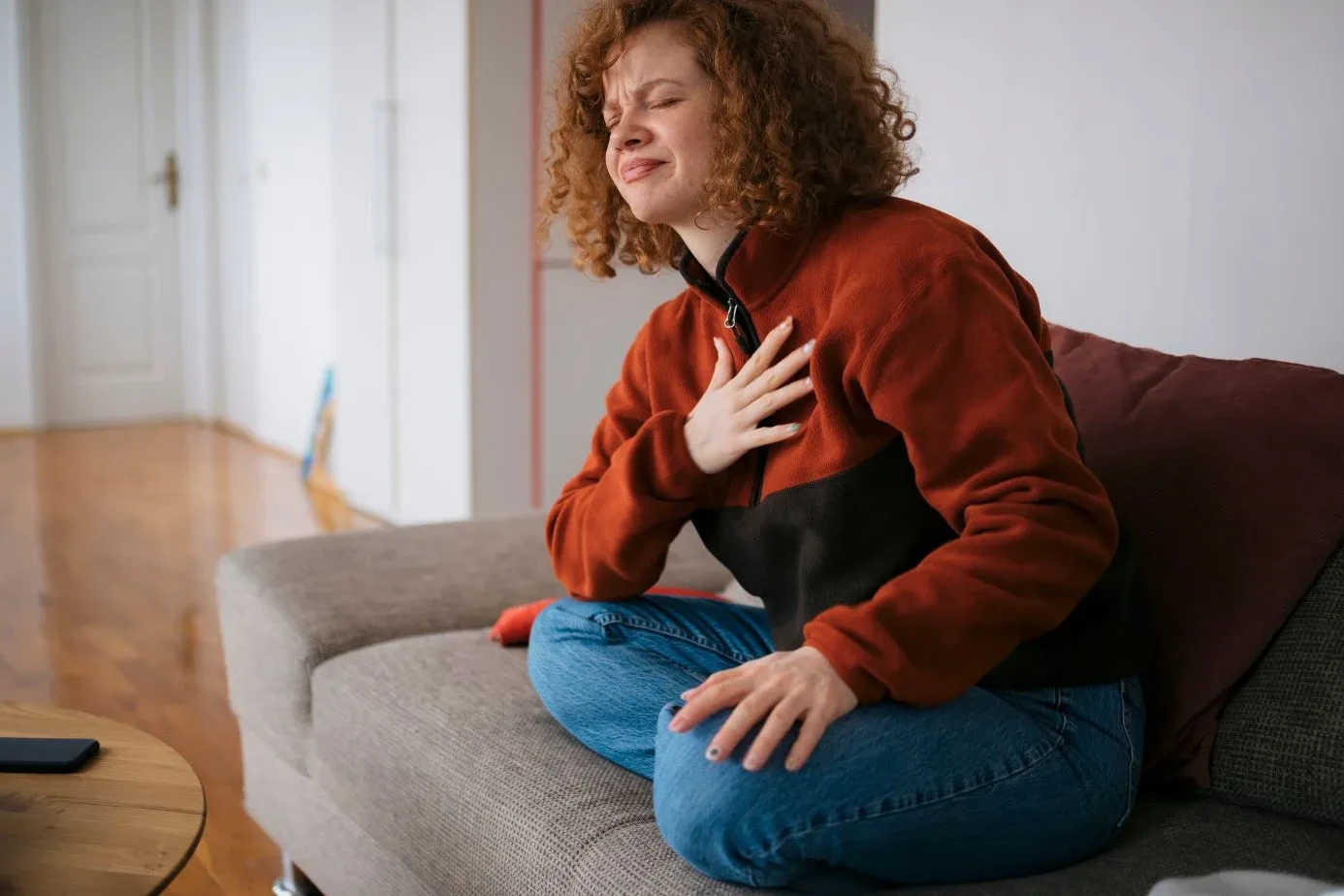
Separation anxiety in adults is a real, mental health activities for adults and also diagnosable mental health condition . It is the brain’s threat system misfiring when a loved one is absent or unavailable.
Separation anxiety is not only associated with children. A 2012 study published in Psychological Medicine found that adult-onset cases outnumber childhood cases. Millions of adults carry this diagnosis without ever receiving it.
Key Takeaways
- Separation anxiety in adults affects approximately 6.6% of adults in the US at some point in their lives.
- Adult cases are frequently misdiagnosed as generalized anxiety disorder or depression.
- The DSM-5 requires symptoms to last 6 or more months in adults for a formal diagnosis.
- CBT with exposure-based components produces the best treatment outcomes.
- Postpartum separation anxiety in adults is a distinct condition, separate from postpartum depression.
- Fear of being alone in adults anxiety is one of the most consistent behavioral signs.
- Untreated cases worsen over time and damage long-term relationships.
How Common Is Separation Anxiety in Adults?
Separation anxiety in adults was not taken seriously until the DSM-5 removed the age restriction in 2013. Before that, the diagnosis was only applied to children.
Prevalence Estimates
The National Comorbidity Survey Replication found that 6.6% of adults in the US meet criteria for separation anxiety in adults at some point in their lives. Around 75% of adult cases begin in adulthood, not childhood.
Gender Differences
Women receive this diagnosis more often than men. The ratio is at roughly 2:1. This is partly because men underreport attachment-based distress and are more likely to be labeled with avoidant personality disorder instead.
Underdiagnosis Issues
Most adults with this condition never get diagnosed. Clinicians default to generalized anxiety disorder or depression. The attachment-specific nature of the fear gets missed entirely. A person with separation anxiety in adults fears a specific person’s absence, not the world in general.
Overlap With Other Anxiety Disorders
Around 80% of adults with this condition meet criteria for at least one other anxiety disorder. Panic disorder and social anxiety disorder are the most common co-occurring diagnoses.
Physical Symptoms of Separation Anxiety in Adults
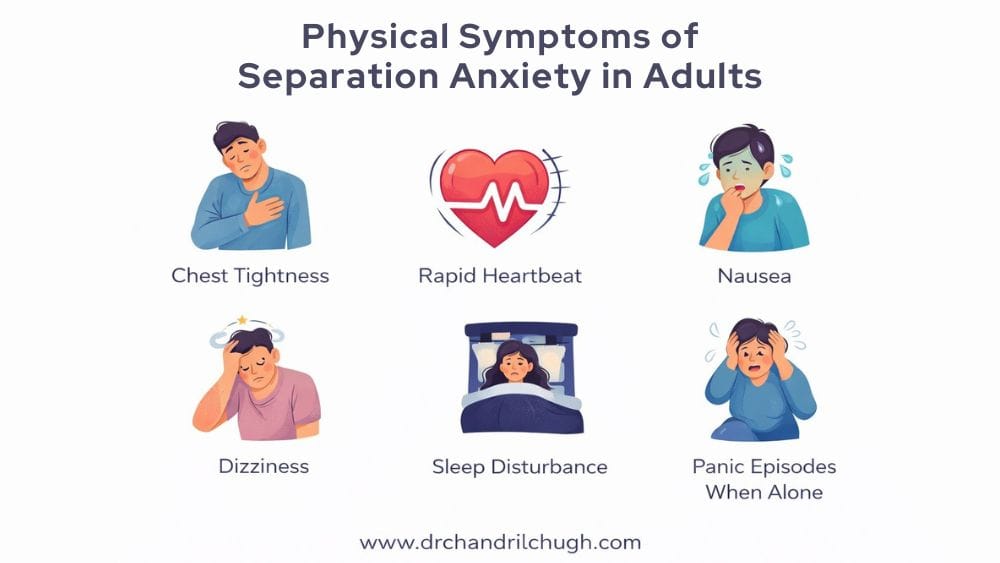
The physical symptoms of separation anxiety in adults mimic panic disorder so closely that you end up in a cardiologist’s office before a psychiatrist’s.
Chest Tightness
The chest muscles contract during acute anxiety. Adults report feeling like something is pressing on their chest when separated from an attachment figure. This symptom is almost always worse at night.
Rapid Heartbeat
The sympathetic nervous system activates during separation distress. Heart rate spikes to 100 or above in some cases, triggered by a text message going unanswered.
Nausea
Cortisol disrupts digestion. Adults with separation anxiety frequently skip meals when their attachment figure is away because eating feels impossible.
Dizziness
Hyperventilation during anxiety drops carbon dioxide levels. This causes lightheadedness. Some adults describe it as the room spinning briefly when they receive bad news about a loved one’s whereabouts.
Sleep Disturbance
Sleep is severely affected. Adults cannot fall asleep without confirmation that their attachment figure is safe. Business travel, night shifts, or any physical separation triggers insomnia.
Panic Episodes When Alone
Full panic attacks occur in severe cases. These are indistinguishable from panic disorder on the surface. The difference is context. The panic starts specifically during or before separation, not randomly.
Fear of Being Alone in Adults Anxiety
Fear of being alone in adults’ anxiety is the emotional core of this condition. It goes deeper than just wanting company.
Attachment Style Influence
Adults with anxious attachment styles, formed in childhood, are the most vulnerable. Research by Mary Ainsworth at the University of Virginia showed that early inconsistent caregiving creates adults who interpret separation as abandonment.
Abandonment Fear
Abandonment is a deep fear that the person will not come back. The brain interprets physical separation as permanent loss, even when logic says otherwise.
Codependent Patterns
Some adults with a fear of being alone in adulthood develop codependency. They structure their entire life around their attachment figure’s schedule and needs.
Relationship Reassurance Seeking
Constant texting, calling to confirm plans, and asking “are you mad at me?” repeatedly, these behaviors come from the same fear. The reassurance provides temporary relief, but the anxiety returns stronger.
Avoidance of Solo Activities
You may stop doing things alone entirely. Grocery shopping, exercising, and attending appointments all become activities that require the attachment figure’s presence.
Postpartum Separation Anxiety in Adults
Postpartum separation anxiety in adults affects new parents, most often mothers, and it is widely confused with postpartum depression.
Anxiety About Infant Safety
A new parent with postpartum separation anxiety in adults cannot leave the baby with anyone, including a partner or family member, without intense distress. The fear focuses on the baby’s safety when out of direct sight.
Hormonal Influence
Oxytocin and estrogen fluctuations after birth heighten the brain’s attachment circuitry. This makes separation from the infant feel physically painful. The hormonal shift amplifies the condition in those already predisposed.
Sleep Deprivation Impact
Sleep deprivation worsens anxiety significantly. A parent averaging 4 hours of sleep is neurologically less equipped to regulate fear responses, which accelerates the spiral.
When It Becomes Clinical
Postpartum separation anxiety in adults becomes clinical when it lasts beyond 6 weeks and interferes with the parent’s ability to function, sleep, eat, or work.
Differentiation From Postpartum Depression
Postpartum depression is characterized by low mood, emotional numbness, and disengagement from the baby. Postpartum separation anxiety in adults is the opposite. The parent is hyperengaged, vigilant, and unable to disengage even briefly.
Causes of Adult Separation Anxiety
Childhood Attachment Trauma
Adults who experienced parental neglect, frequent moves, early hospitalization, or inconsistent caregiving before age 7 carry a higher biological readiness for separation fear.
Relationship Loss
A sudden breakup, the death of a partner, or unexpected abandonment in adulthood can trigger separation anxiety in adults, even in people with no prior history.
Genetic Predisposition
First-degree relatives of people with anxiety disorders have a 3 to 5 times higher risk. The amygdala, the brain’s fear center, runs hotter in genetically predisposed individuals.
Coexisting Anxiety Disorders
Panic disorder and generalized anxiety disorder amplify separation distress. The two conditions feed each other.
Stressful Life Events
Major transitions, job loss, relocation, illness, or parenthood lower stress tolerance and trigger latent anxiety patterns that were previously manageable.
How Adult Separation Anxiety Is Diagnosed
DSM-5 Criteria
The diagnosis requires at least 3 of 8 symptoms. These include fear of harm to attachment figures, reluctance to go out without them, nightmares about separation, and physical complaints.
Duration (6+ Months in Adults)
Symptoms must be present for 6 or more months to qualify. Short-term distress after a loss does not meet the criteria.
Functional Impairment
The symptoms must interfere with work, relationships, or daily life. Mild attachment preferences do not qualify.
Differential Diagnosis
Clinicians must rule out agoraphobia, PTSD, borderline personality disorder, and generalized anxiety disorder before confirming separation anxiety in adults.
Therapy for Adult Separation Anxiety
Cognitive Behavioral Therapy
CBT is the first-line treatment for therapy for adult separation anxiety. It targets the distorted beliefs that drive the fear. Sessions focus on evidence-testing the assumption that separation equals harm.
Exposure-Based Therapy
Controlled, gradual separation is practiced in session. The person tolerates increasing durations of separation until the anxiety response reduces. This is systematic desensitization applied to attachment.
Attachment-Focused Therapy
This is where therapy for adult separation anxiety differs from standard CBT. Attachment-focused therapy, including Emotionally Focused Therapy (EFT), directly addresses the early relational wounds behind the fear.
Medication (SSRIs When Indicated)
Sertraline and escitalopram are the most commonly prescribed medications. They reduce baseline anxiety, which makes CBT more effective. Medication alone, without therapy, produces limited long-term results.
Couples Therapy
When separation anxiety in adults significantly strains a relationship, couples therapy addresses both the anxious partner’s patterns and the non-anxious partner’s frustration and emotional exhaustion.
Daily Coping Strategies
- Gradual independence exposure : Spend 30 minutes alone daily, then extend by 15 minutes each week.
- Self-soothing techniques : Use grounding exercises like the 5-4-3-2-1 sensory method during distress.
- Structured communication : Set agreed check-in times with a partner instead of texting on impulse.
- Sleep stabilization : A consistent sleep schedule reduces cortisol and lowers baseline anxiety significantly.
- Reducing reassurance seeking : Every time you resist asking “are you okay?”, the anxiety pathway weakens slightly.
Long-Term Outlook
Recovery Timeline
With CBT, most adults see meaningful improvement within 16-20 sessions. Full remission takes 6-12 months of consistent work.
Risk of Chronic Anxiety
Adults who go untreated for more than 2 years are more likely to develop chronic anxiety patterns that are harder to shift.
Impact on Relationships
Partners of adults with separation anxiety report higher burnout and lower relationship satisfaction. Early treatment protects both people in the relationship.
Importance of Early Treatment
Starting treatment within the first year of noticeable symptoms produces faster and more complete recovery than waiting until the condition becomes severe.
When to Seek Professional Help
- Distress persists for more than 6 weeks and shows no sign of easing
- Work attendance or performance drops because of separation-related anxiety
- Panic episodes occur more than twice a week
- Low mood or hopelessness develops alongside the anxiety
- Thoughts of self-harm appear during separation distress
That last point requires immediate professional contact, not a scheduled appointment.
FAQs
How common is separation anxiety in adults?
Separation anxiety in adults depends on the dataset used. The NCS-R found a lifetime prevalence of 6.6% in US adults. Roughly 75% of adult cases develop after age 18, not in childhood. Most go undiagnosed for years.
What are the physical symptoms of separation anxiety in adults?
The physical symptoms of separation anxiety in adults include chest tightness, rapid heartbeat above 100 bpm, nausea, dizziness from hyperventilation, and full panic attacks. These appear specifically during or before separation from a primary attachment figure.
Is fear of being alone a sign of anxiety?
Yes. Fear of being alone in adults’ anxiety is a direct symptom of separation-anxiety disorder. It is distinguishable from loneliness because the distress is specifically tied to one person’s absence, not being around people in general.
What therapy works best for adult separation anxiety?
CBT combined with exposure-based techniques is the strongest evidence-backed therapy for adult separation anxiety. Emotionally Focused Therapy (EFT) is added when childhood attachment trauma is a primary cause. Medication alone is insufficient without therapy.
Can postpartum separation anxiety happen in adults?
Yes. Postpartum separation anxiety in adults is a documented condition where a new parent cannot tolerate brief separation from their infant. It differs from postpartum depression because the mood is not low. Instead, vigilance and fear of infant harm dominate.
How long does adult separation anxiety last?
Without treatment, it persists for years. With CBT, most adults reach significant symptom reduction within 4-5 months. Full remission typically takes 6-12 months. Adults who start treatment within the first year of onset recover faster.
Is adult separation anxiety a mental disorder?
Yes. Separation anxiety in adults is listed in the DSM-5 under anxiety disorders. It requires a clinical diagnosis based on 3 or more specific criteria lasting 6 or more months with measurable life impairment.
Can separation anxiety affect romantic relationships?
Yes. Separation anxiety in adults creates reassurance-seeking cycles that exhaust partners. Studies show that relationships where one partner has untreated separation anxiety report 40% lower satisfaction scores compared to couples without the condition.
Does adult separation anxiety cause insomnia?
Yes. Insomnia is one of the most consistent symptoms of separation anxiety in adults. The brain stays in high-alert mode when the attachment figure is absent, physically blocking the nervous system from entering deep sleep.
When should I see a therapist for separation anxiety?
See a therapist when the anxiety has lasted more than 6 weeks and is affecting your work, sleep, or relationship. Do not wait for a crisis. Separation anxiety in adults treated early responds significantly better than cases addressed after years of avoidance.
About The Author

Medically reviewed by Dr. Chandril Chugh, MD, DM (Neurology)
Dr. Chandril Chugh is a U.S.-trained, board-certified neurologist with expertise in diagnosing and managing neurological disorders, including migraines, epilepsy, Parkinson’s disease, and movement disorders. His clinical focus includes evidence-based neurological care and patient education.
All content is reviewed for medical accuracy and aligned with current neurological guidelines.