Migraines secondary to PTSD occur when trauma rewires the brain’s pain and stress systems, making the nervous system so sensitive that everyday triggers produce full migraine attacks. People with PTSD are 2 to 4 times more likely to develop chronic migraines than people without a trauma history.
When doctors treat migraine and PTSD separately, that approach fails consistently. The two conditions share the same brain pathways, the same neurochemicals, and the same sensitization mechanisms.
Key Takeaways
- Migraines secondary to PTSD result from trauma-driven changes in the brain’s pain and stress systems.
- PTSD hyperactivates the amygdala and disrupts cortisol regulation, both of which directly trigger migraines.
- Trauma-triggered migraine symptoms include head pain after flashbacks, light sensitivity during hyperarousal, and neck muscle tension.
- Sleep deprivation migraines in PTSD are driven by insomnia, nightmares, and early morning cortisol spikes.
- Treating migraines in patients with PTSD requires addressing both the neurological and psychiatric sides at the same time.
How PTSD Changes the Brain in Migraine Patients
PTSD physically restructures parts of the brain that control pain perception, stress hormones, and inflammation. Those changes create the exact conditions that generate chronic migraine.
Amygdala Hyperactivation
The amygdala is the brain’s alarm system. It detects threats and triggers fear responses. In PTSD, the amygdala becomes overactive and fires at things that are not real threats, loud sounds, certain smells, stressful memories. Each alarm response floods the body with stress hormones. Repeated alarm responses over weeks and months lower the migraine threshold measurably.
HPA Axis and Cortisol Dysregulation
The HPA axis (hypothalamic-pituitary-adrenal axis) controls cortisol release. PTSD breaks this system. Cortisol fires at the wrong times, too high during rest and too low during actual stress. This abnormal pattern inflames blood vessels in the brain and directly triggers migraine attacks. Morning cortisol spikes in PTSD patients are one of the most consistent headache triggers in this population.
Trigeminal Nerve Sensitization
The trigeminal nerve is the main pain nerve in the head and face. In people with migraines secondary to PTSD, chronic stress keeps this nerve in a sensitized state. Small inputs, bright light, neck tension, and even emotional distress produce disproportionately large pain responses from this nerve. That over-response is what generates the migraine attack.
Neuroinflammation and CGRP Release
PTSD increases brain inflammation markers. This inflammation triggers the release of CGRP (calcitonin gene-related peptide), the same chemical responsible for classic migraines. In PTSD patients, CGRP levels stay elevated even between attacks, keeping the migraine system primed for the next episode.
Can PTSD Cause Chronic Migraines?
Yes, and research confirms it. A 2018 study published in Headache found that veterans with PTSD were 4 times more likely to develop chronic daily headache than veterans without PTSD. The mechanism is central sensitization.
Chronic Stress and Pain Sensitization
Sustained stress from PTSD keeps cortisol and adrenaline elevated for months or years. This prolonged chemical exposure sensitizes pain receptors throughout the nervous system. The pain threshold drops. Things that would not cause a headache in a healthy nervous system trigger a full migraine in a sensitized one.
Central Sensitization Mechanism
Central sensitization is when the brain’s pain-processing system becomes so overloaded that it amplifies all signals. Normal sounds feel loud. Normal light feels blinding. Normal neck tension becomes a migraine trigger. This state is permanent without active treatment. It does not resolve on its own.
Trauma History and Migraine Frequency
The number of traumatic events in a person’s history directly correlates with migraine frequency. People with complex PTSD (multiple trauma events) average more migraine days per month than people with single-event PTSD. Each additional unprocessed trauma adds to the sensitization load.
Risk of Medication Overuse Headache
People with migraines secondary to PTSD use pain relief medications more often than standard migraine patients. Using ibuprofen, triptans, or acetaminophen more than 10 to 15 days per month causes medication-overuse headache. This creates a third pain layer on top of PTSD and migraine, making all three harder to treat.
Trauma-Triggered Migraine Symptoms
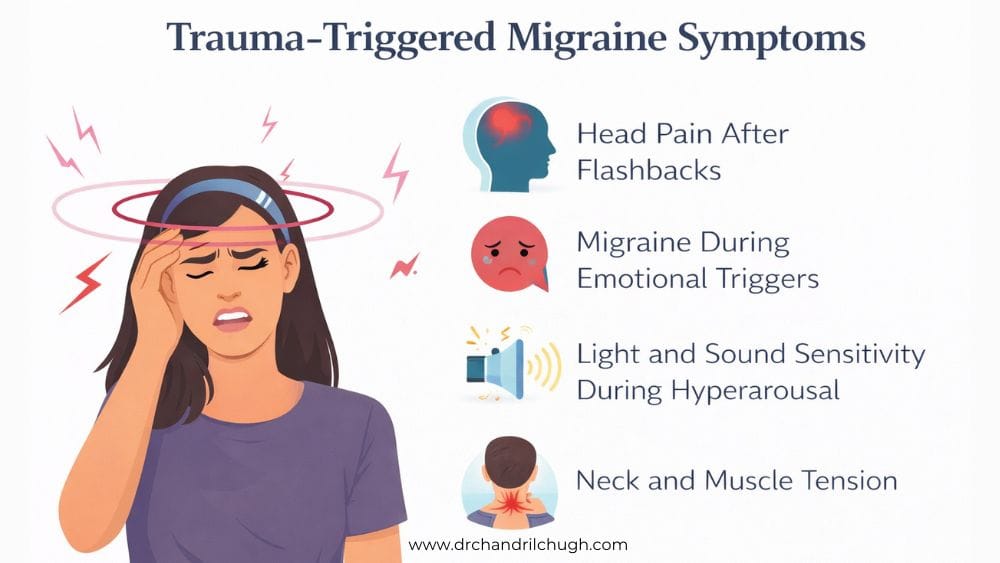
Trauma-triggered migraine symptoms follow emotional events rather than typical migraine patterns. The headache does not always come with a classic aura or food trigger. It comes with a memory, a sound, a smell, or an emotional state.
Head Pain After Flashbacks
Flashbacks flood the brain with the same stress hormones as the original trauma event. Cortisol and adrenaline spike sharply. CGRP releases. A migraine starts within 30 to 90 minutes of a significant flashback in sensitized patients.
Migraine During Emotional Triggers
Situations that remind the brain of the trauma, even mild ones, activate the same alarm pathway. A raised voice, a specific location, or a particular date can trigger a full migraine without any physical migraine trigger being present.
Light and Sound Sensitivity During Hyperarousal
Hyperarousal is the PTSD state where the person feels constantly on edge and alert. During this state, the trigeminal nerve stays activated. Light and sound sensitivity increases significantly. This symptom overlaps perfectly with the sensory symptoms of migraine, making both conditions reinforce each other.
Neck and Muscle Tension
PTSD causes chronic muscle guarding. The body stays physically tense as a protective response to perceived threat. This constant neck and shoulder tension feeds directly into tension-type headache and migraine. The trapezius and suboccipital muscles are the most common sites of pain that feeds into migraines secondary to PTSD.
Sleep Deprivation Migraines in PTSD
Sleep deprivation migraines in PTSD are among the most disabling features of this combined condition. Poor sleep from PTSD does not just cause tiredness. It physically raises the brain’s pain sensitivity every morning.
Insomnia in PTSD
Around 70% of PTSD patients report chronic insomnia. Falling asleep feels unsafe. The hypervigilant brain keeps scanning for threats. Less than 6 hours of sleep per night raises CGRP blood levels measurably and more than doubles migraine attack risk on the following day.
Nightmares and Fragmented Sleep
PTSD nightmares interrupt sleep 3 to 5 times per night in severe cases. Each interruption breaks the sleep cycle. Fragmented sleep prevents the brain from completing restorative slow-wave sleep stages. Without those stages, neuroinflammation stays elevated and migraine threshold stays low.
Early Morning Cortisol Spikes
Cortisol normally rises gradually in the morning to help the body wake up. In PTSD, cortisol spikes sharply within minutes of waking. This spike inflames cranial blood vessels and triggers sleep deprivation migraines in PTSD before the person even gets out of bed.
REM Disruption and Pain Sensitivity
REM sleep is when the brain processes emotional memories and regulates pain systems. PTSD severely disrupts REM sleep. Without adequate REM, pain sensitivity increases by measurable amounts. Studies show that REM-deprived individuals have a 30% lower pain threshold compared to fully rested individuals.
Stress-Related Migraines in PTSD Patients
Stress-related migraines in PTSD patients differ from standard stress headaches. The stress mechanism in PTSD is structural. The nervous system itself is stuck in stress mode.
Hypervigilance and Headache Onset
Hypervigilance keeps the sympathetic nervous system activated all day. This sustained activation is the equivalent of running a low-grade stress response continuously. The trigeminal nerve stays sensitized. Migraine onset happens faster and with less provocation than in people without PTSD.
Fight-or-Flight Activation
The fight-or-flight response was designed for short bursts of danger. In PTSD, it runs for hours or days at a stretch. During this state, adrenaline narrows blood vessels and then causes rebound widening. That widening of cranial blood vessels is one of the core mechanisms of migraine pain.
Adrenaline and Vascular Changes
Repeated adrenaline surges train blood vessels to be more reactive over time. In people with stress-related migraines in PTSD patients, the cranial arteries respond to even mild stress with significant vascular changes that trigger migraine within hours.
Emotional Dysregulation and Pain Amplification
PTSD impairs emotional regulation. The brain cannot return to a calm baseline after stress. This prolonged emotional arousal keeps pain amplification active. Minor pain signals, ones that a regulated nervous system would ignore, register as severe in a dysregulated PTSD brain.
Diagnosing Migraines Secondary to PTSD
Clinical History Evaluation
A neurologist and psychiatrist working together gives the most accurate diagnosis. The neurologist maps migraine patterns: frequency, duration, triggers. The psychiatrist maps PTSD severity and trauma history. The overlap between trauma events and migraine flares reveals the connection.
Identifying Trauma Triggers
A detailed trigger diary that includes emotional events alongside physical triggers identifies trauma-linked patterns. Most standard migraine diaries skip emotional state entirely, which misses the PTSD connection.
Differentiating From Tension Headache
Tension headaches produce a band-like pressure pain. Migraines secondary to PTSD produce throbbing, one-sided pain with nausea, light sensitivity, and sound sensitivity. Both can coexist. A neurologist distinguishes them based on symptom profile and response to medication.
When Imaging Is Needed
MRI is ordered when headaches appear suddenly after trauma, change character significantly, or come with new neurological symptoms like weakness or vision changes. Most migraines secondary to PTSD show normal imaging, which actually supports the functional neurological diagnosis.
Treating Migraines in Patients With PTSD
Treating migraines in patients with PTSD requires both conditions to receive active care at the same time. Treating only the migraine while leaving PTSD active is like fixing a leak while leaving the tap running.
Acute Migraine Medications
- Triptans (sumatriptan, rizatriptan) work for acute migraine episodes. They do not treat the underlying PTSD mechanism.
- NSAIDs at first sign of attack reduce severity. Use no more than 10 days per month to avoid overuse headache.
- Rest in a dark, quiet environment during an attack shortens episode duration consistently.
Preventive Therapies
Neurologists prescribe daily preventive medications for people with more than 4 migraine days per month:
- Amitriptyline treats both migraine and the anxiety component of PTSD simultaneously.
- Propranolol reduces both migraine frequency and physical hyperarousal symptoms in PTSD.
- CGRP monoclonal antibodies (fremanezumab, erenumab) target the exact neurochemical elevated by PTSD-related neuroinflammation.
Trauma-Focused Psychotherapy
EMDR (Eye Movement Desensitization and Reprocessing) is the gold standard treatment for PTSD. Studies show EMDR reduces PTSD severity and, as a secondary effect, reduces migraine frequency by 30 to 40% in people with migraines secondary to PTSD. Addressing trauma directly lowers amygdala reactivity and CGRP levels.
CBT for Migraine Management
CBT specifically adapted for chronic migraine teaches patients to break the pain catastrophizing cycle. In PTSD patients, catastrophizing about migraine pain activates the same stress pathways that worsen PTSD. CBT interrupts this loop and reduces attack frequency within 8 to 12 weeks.
Sleep Restoration Strategies
- Prazosin (a blood pressure medication) reduces PTSD nightmares and significantly improves sleep quality.
- Consistent sleep and wake times, even on bad nights, stabilize cortisol patterns over 3 to 4 weeks.
- Avoiding screens 90 minutes before bed reduces cortisol by 20% in trauma-affected patients.
Nervous System Regulation Techniques
Vagus nerve stimulation through slow diaphragmatic breathing (4 counts in, 6 counts out) activates the parasympathetic system within 4 minutes. This directly counteracts hypervigilance. Used daily for 10 minutes, it measurably reduces both stress-related migraines in PTSD patients and overall PTSD symptom severity.
When to Seek Medical or Mental Health Support
Increasing Headache Frequency
More than 8 migraine days per month signals chronic migraine. This needs a neurologist immediately, not just over-the-counter pain relief.
Severe Insomnia
Not sleeping more than 4 hours per night for 2 consecutive weeks is a medical situation. Sleep deprivation migraines in PTSD worsen significantly with this level of sleep disruption. A psychiatrist and sleep specialist should both be involved.
Suicidal Thoughts
Chronic pain from migraines secondary to PTSD combined with untreated PTSD significantly increases suicide risk. If suicidal thoughts appear, contact a crisis line immediately.
Medication Overuse
Using any headache medication more than 10 to 15 days per month creates a separate, treatment-resistant headache disorder. A neurologist must manage the withdrawal and reset process.
New Neurological Symptoms
Weakness, slurred speech, sudden vision loss, or loss of coordination alongside headache requires emergency evaluation to rule out stroke.
FAQs
Can PTSD cause chronic migraines?
Yes. Migraines secondary to PTSD develop because trauma permanently lowers the brain’s pain threshold through central sensitization. A 2018 Headache journal study found veterans with PTSD were 4 times more likely to develop chronic daily headache than those without PTSD. The longer PTSD goes untreated, the higher the migraine frequency climbs.
Why do trauma triggers cause migraines?
Trauma triggers activate the amygdala, which releases cortisol and adrenaline instantly. Cortisol inflames cranial blood vessels and triggers CGRP release. CGRP is the primary neurochemical behind migraine attacks. A flashback or emotional trigger can start this chain within 30 minutes and produce a full migraines secondary to PTSD episode.
Are stress-related migraines common in PTSD patients?
Yes. Stress-related migraines in PTSD patients affect an estimated 50 to 60% of people with chronic PTSD. The PTSD-driven hypervigilance keeps the trigeminal nerve sensitized continuously. This makes ordinary stressors, sounds, arguments, work pressure, enough to trigger a full migraine without any other trigger being present.
Does sleep deprivation worsen migraines in PTSD?
Yes, measurably. Sleep deprivation migraines in PTSD worsen because less than 6 hours of sleep raises CGRP blood levels and doubles next-day migraine risk. PTSD nightmares breaking sleep 3 to 5 times per night prevents restorative REM sleep, which normally regulates pain sensitivity. The result is a lower pain threshold every morning.
How are migraines secondary to PTSD diagnosed?
A neurologist and psychiatrist assess together. The neurologist documents migraine pattern: frequency, character, triggers. The psychiatrist assesses PTSD severity. The key diagnostic step is mapping emotional and trauma-related triggers in a daily diary alongside migraine episodes. Standard migraine diaries miss this connection entirely.
What is the best treatment for PTSD-related migraines?
Treating migraines in patients with PTSD works best with EMDR therapy for trauma combined with preventive migraine medication. Amitriptyline treats both conditions simultaneously. Prazosin improves PTSD nightmares and sleep quality, which reduces sleep deprivation migraines in PTSD. Using both psychiatry and neurology together cuts migraine frequency by 40 to 50%.
Can therapy reduce migraine frequency?
Yes. EMDR reduces PTSD severity and migraine frequency together by 30 to 40% within 12 sessions. CBT adapted for chronic pain interrupts the pain catastrophizing cycle that keeps migraines frequent. Neither therapy replaces medication for severe attacks, but both reduce how often migraines secondary to PTSD happen each month.
Are PTSD migraines different from regular migraines?
Yes, in two key ways. First, migraines secondary to PTSD trigger from emotional and trauma-related cues, not just food, light, or hormones. Second, they occur more frequently and respond poorly to standard migraine treatment alone because the PTSD driver keeps the nervous system sensitized between attacks. Treating only the migraine gives partial results.
Does cortisol imbalance cause migraines?
Yes. PTSD disrupts the HPA axis, causing cortisol to spike at wrong times. Morning cortisol surges in PTSD patients inflame cranial blood vessels directly and trigger CGRP release. This is why people with migraines secondary to PTSD frequently wake up already in the middle of a migraine, before any external trigger occurs.
Can untreated PTSD make migraines worse over time?
Yes. Untreated PTSD progressively deepens central sensitization. Each month of untreated PTSD lowers the migraine threshold further. What starts as 2 migraine days per month can become 15 or more over 2 to 3 years. Migraines secondary to PTSD do not stabilize without active PTSD treatment. They worsen predictably.
About The Author

Medically reviewed by Dr. Chandril Chugh, MD, DM (Neurology)
Dr. Chandril Chugh is a U.S.-trained, board-certified neurologist with expertise in diagnosing and managing neurological disorders, including migraines, epilepsy, Parkinson’s disease, and movement disorders. His clinical focus includes evidence-based neurological care and patient education.
All content is reviewed for medical accuracy and aligned with current neurological guidelines.