Yoga poses for better sleep help your body slow down at night. They relax tight muscles. They calm your breathing. They lower mental noise. When done gently, these poses prepare your brain for rest instead of alertness. You do not need strength or flexibility. You need slow movement, steady breathing, and a quiet space. Used often, yoga poses for better sleep support deeper sleep and fewer night awakenings without forcing the body.
What Are Yoga Poses for Better Sleep?
Yoga poses for better sleep are slow, low-effort postures done near bedtime. They focus on stretching areas that hold daily tension, like the hips, back, neck, and legs. These poses avoid fast movement and heat. They guide your nervous system toward rest mode, which doctors call parasympathetic activity (the body state that supports digestion, repair, and sleep).
Unlike exercise, bedtime yoga does not aim to burn calories. It aims to reduce stimulation. Many of these poses happen on the floor or lying down. You hold them longer. You breathe slowly. This style suits people with poor sleep, stress overload, or screen fatigue.
How Yoga Helps Improve Sleep Quality
Nervous System Relaxation
Your nervous system controls sleep timing. Stress keeps it alert. Gentle stretching combined with slow breathing sends safety signals to the brain. This lowers heart rate and blood pressure over time. With repeated practice, yoga poses for better sleep train your body to shift into rest faster at night.
Stress and Cortisol Reduction
Cortisol is a stress hormone. It should drop at night. Chronic stress keeps cortisol high, which delays sleep. Gentle yoga reduces muscle guarding and shallow breathing, two factors linked to higher cortisol. Lower physical tension often leads to quieter thoughts before bed.
Mind Body Awareness Before Bed
Screens pull your attention outward. Yoga pulls it inward. When you focus on breath and body sensation, the brain stops jumping between thoughts. This awareness improves sleep onset, which means how fast you fall asleep. Over time, yoga poses for better sleep help separate daytime worry from nighttime rest.
15 Best Yoga Poses for Sleep|
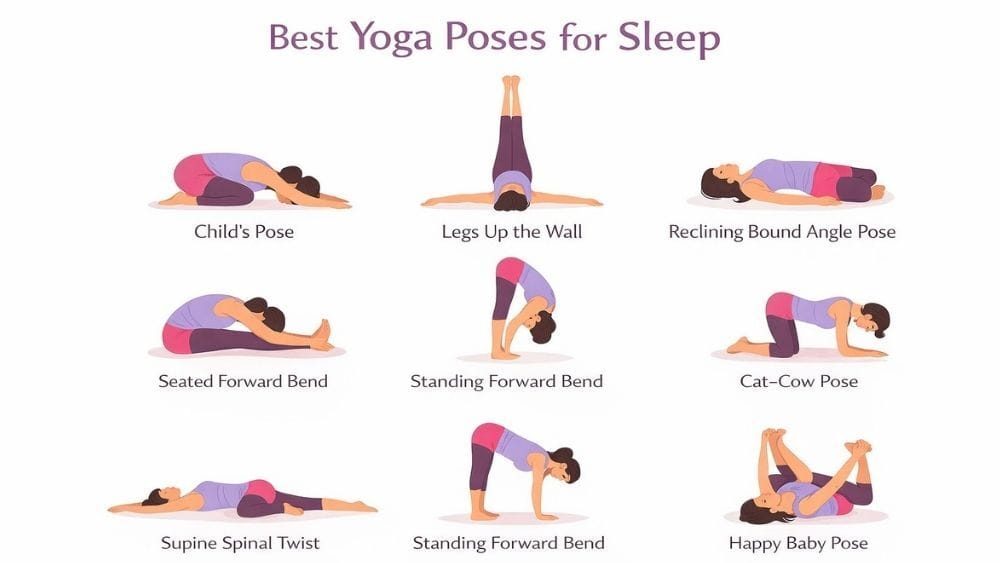
The list below starts with the 15 best yoga poses for sleep . These poses work best when done slowly, without strain. You should feel calm, not stretched hard.
Child’s Pose (Balasana)
You kneel and fold forward with your forehead resting on the ground. This position gently rounds the spine and relaxes the lower back. It also slows breathing by pressing the belly softly against the thighs. You feel instant calm here. This pose fits well into bedtime yoga poses because it feels safe and grounding.
Legs Up the Wall (Viparita Karani)
You lie on your back with legs resting against a wall. Blood moves away from tired feet and legs. This reduces swelling and leg heaviness that can delay sleep. The position also lowers heart rate when held for several minutes. Among yoga poses for better sleep , this one works well for people who stand all day.
Reclining Bound Angle Pose (Supta Baddha Konasana)
You lie on your back with the soles of your feet together and knees supported. This opens the hips without effort. The pose relaxes the belly and chest, which helps deepen breathing. If you have anxiety, you will find this position soothing when the lights are dim and your eyes are closed.
Seated Forward Bend (Paschimottanasana)
You sit with legs extended and fold forward slowly. This pose stretches the spine and hamstrings while calming the nervous system. Forward folds reduce mental activity. They work best when you stay relaxed and avoid pulling. This pose supports yoga poses to reduce insomnia when done gently.
Standing Forward Bend (Uttanasana)
You stand and fold forward with knees slightly bent. The head hangs freely, which releases neck tension. This position changes blood flow to the brain, which can quiet racing thoughts. Move into and out of the pose slowly to avoid dizziness.
Cat–Cow Pose (Marjaryasana–Bitilasana)
You move between arching and rounding the spine on hands and knees. This gentle motion improves spinal comfort and breathing rhythm. It helps release stiffness built from sitting all day. The slow pace matters more than depth. This pose prepares the body for stillness later.
Supine Spinal Twist (Supta Matsyendrasana)
You lie on your back and drop your knees to one side. Twists release lower back tension and calm digestion. Digestive discomfort often disrupts sleep. This pose supports internal relaxation without effort. It fits well into bedtime yoga poses because it requires no strength.
Happy Baby Pose (Ananda Balasana)
You lie on your back and hold your feet with knees bent. This pose gently opens the hips and massages the lower spine. You will feel emotional release here due to hip relaxation. Stay relaxed and avoid pulling hard.
Yoga Poses to Reduce Insomnia
Yoga poses to reduce insomnia work by calming brain activity that stays high at night. Insomnia often links to overactive nerves, shallow breathing, and muscle tension that does not release after sunset. Gentle yoga slows these systems together. When practiced daily, these poses improve sleep onset time and reduce night awakenings without forcing drowsiness.
Doing the same calm poses every night builds a sleep cue. Your brain starts to link these movements with rest. Over weeks, this conditioning effect becomes stronger, especially when lights stay dim and screens stay away.
Poses That Calm a Racing Mind
Forward-folding poses calm mental loops by reducing sensory input. When the head lowers and eyes close, brain stimulation drops. Child’s Pose, Seated Forward Bend, and Wide-Legged Forward Bend work best here. These poses reduce jaw tension, forehead tightness, and rapid thought cycling that delays sleep.
Staying still for several breaths matters more than pose depth. Each slow exhale lowers brain arousal. Over time, these yoga poses for better sleep help quiet mental chatter before bed.
Poses That Promote Parasympathetic Activation
Parasympathetic activity controls rest and repair. Poses done lying down trigger this system most strongly. Legs Up the Wall and Savasana increase vagal tone (nerve activity that supports calm states). This lowers heart rate and improves breathing depth.
These yoga poses to reduce insomnia work best when held for three to five minutes. Movement should stop before sleep so the body stays in rest mode.
Best Time to Do Yoga for Sleep
The best time to do yoga for sleep depends on your nervous system load. Most people benefit from evening practice when stress hormones start to fall naturally. Yoga at this time helps complete the shift into nighttime physiology, which includes lower body temperature and slower breathing.
Timing also affects sleep quality. Yoga done too late or too strongly can raise alertness. Gentle practice earlier in the evening avoids this problem while still supporting relaxation.
Evening vs Nighttime Yoga
Evening yoga, done two hours before bed, helps release stored stress from the day. Nighttime yoga, done right before sleep, should include only floor poses and breathing. Standing or strength poses late at night can delay sleep onset.
If you have delayed sleep cycles, earlier evening practice works better than late-night movement. Matching pose intensity to the clock supports yoga poses for better sleep .
How Long Before Bed Should You Practice Yoga?
Practicing yoga 30 to 90 minutes before bed works best for most adults. This window allows body temperature and heart rate to drop afterward. If practiced too close to bed, some people stay alert longer.
If insomnia is severe, shorter sessions closer to bedtime may help. Testing timing over one to two weeks helps find the best time to do yoga for sleep for your body.
Yoga Breathing Exercises for Sleep
Yoga breathing exercises for sleep directly affect brain rhythm. Slow breathing increases carbon dioxide tolerance, which signals safety to the brain. This reduces night-time alertness and physical restlessness.
Breathing should stay nasal and silent. Mouth breathing at night increases arousal. These techniques work best when paired with still poses or Savasana.
Deep Belly Breathing
Deep belly breathing shifts airflow into the diaphragm instead of the chest. This improves oxygen exchange and lowers muscle tension. Place one hand on your belly to feel it rise. This method slows breathing naturally.
Used daily, this technique improves sleep depth and reduces nighttime waking linked to stress.
4-7-8 Breathing Technique
This breathing pattern lengthens exhalation, which lowers heart rate. Holding the breath briefly increases carbon dioxide tolerance, improving calm signals to the brain. People with anxiety often benefit from this pattern before bed.
Limit this to four rounds to avoid lightheadedness. It supports yoga breathing exercises for sleep without overstimulation.
Extended Exhale Breathing
Extended exhale breathing focuses on longer out-breaths than in-breaths. This directly stimulates calming nerve pathways. Even a small shift, like inhaling for four counts and exhaling for six, changes nervous system tone.
This technique works well during Savasana and improves the effects of yoga poses for better sleep .
How Long Should a Bedtime Yoga Routine Be?
Routine length matters less than consistency. Short routines done daily outperform long routines done rarely. Bedtime yoga should leave you calm, not tired or sore. Matching routine length to energy level improves adherence and sleep outcomes.
5-Minute Routine
A five-minute routine works on busy nights. Choose Legs Up the Wall, Child’s Pose, and Savasana. Add slow breathing. This short practice still supports yoga poses for better sleep by reducing nervous system load.
10-Minute Routine
A ten-minute routine allows more poses. Add Supine Twist and Reclining Bound Angle Pose. This length balances effectiveness with ease and fits most schedules.
20-Minute Wind-Down Practice
A twenty-minute routine allows full relaxation. Include several of the 15 best yoga poses for sleep with longer holds. End with five minutes of stillness. This routine works well for chronic sleep issues.
Common Mistakes When Doing Yoga Before Sleep
Mistakes reduce the benefits of bedtime yoga. Avoiding these errors improves sleep outcomes quickly.
Practicing Too Vigorously
Fast flows, deep stretches, and strength poses activate stress hormones. This delays sleep and raises body temperature. Night practice should avoid sun salutations, balance poses, and long holds that cause strain.
Gentle bedtime yoga poses keep the body in rest mode.
Stimulating Breathwork
Rapid breathing or breath retention increases alertness. Techniques meant for energy should stay out of night routines. Stick to slow, quiet breathing patterns that support yoga breathing exercises for sleep .
Who Should Be Careful With Yoga for Sleep
Yoga stays safe for most people. Some conditions require caution and support.
Back Pain
People with back pain should avoid deep twists and unsupported forward folds. Use pillows under knees and back. Gentle floor poses work best. Pain should never increase during yoga poses for better sleep .
Pregnancy
Pregnant individuals should avoid lying flat on their backs late in pregnancy. Side-lying poses and supported seated poses work better. Breathing should stay relaxed, not forced.
Joint Issues
Joint stiffness or arthritis requires slow movement and extra support. Avoid long holds in deep bends. Comfort matters more than pose shape during bedtime yoga poses .
FAQ
Can yoga really help with insomnia?
Yes. Yoga poses for better sleep reduce nervous system arousal, lower nighttime cortisol, and improve breathing rhythm. Consistent nightly practice shortens sleep onset time and reduces wake-ups in stress-related insomnia.
Is it okay to do yoga right before bed?
Yes. Bedtime yoga poses done on the floor with slow breathing support sleep. Avoid standing or strength poses within 60 minutes of bed, as they can raise heart rate and delay drowsiness.
How many yoga poses should I do for sleep?
Five to eight poses work best. Using fewer poses allows longer holds, which improves parasympathetic activation. This approach enhances the effect of yoga poses to reduce insomnia without overstimulation.
Can beginners do bedtime yoga?
Yes. Beginners often benefit most because gentle poses create clear relaxation signals. Simple yoga poses for better sleep require no flexibility or prior experience when done slowly and supported.
How soon will yoga improve sleep quality?
You will notice changes within 7 to 14 nights. Faster results occur when yoga is done at the same time nightly, paired with low light and no screens, reinforcing the best time to do yoga for sleep .
About The Author

Medically reviewed by Dr. Chandril Chugh, MD, DM (Neurology)
Dr. Chandril Chugh is a U.S.-trained, board-certified neurologist with expertise in diagnosing and managing neurological disorders, including migraines, epilepsy, Parkinson’s disease, and movement disorders. His clinical focus includes evidence-based neurological care and patient education.
All content is reviewed for medical accuracy and aligned with current neurological guidelines.