can meditation replace sleep . The human body depends on sleep to repair cells, regulate hormones, and clear brain waste. Meditation supports calm, focus, and stress control. It improves how well you rest. It does not perform the physical recovery that only sleep can do. When used correctly, meditation protects sleep instead of competing with it.
Difference Between Meditation And Sleep
The difference between meditation and sleep is biological, even though both feel restful. Only one allows full body repair. Confusing them leads to poor health decisions.
What Happens In The Brain During Sleep
During sleep , the brain cycles through structured stages that repeat every night. These stages support a different function.
- Deep sleep restores physical energy. Growth hormone release increases. Muscles repair. Immune cells reset.
- REM sleep strengthens memory, emotional balance, and learning. Brain connections reorganize during this phase.
Another critical function happens during deep sleep . Brain fluid flow increases. This clears waste proteins that build up while awake. When sleep is short or broken, this waste removal slows.
Over time, focus, mood, and decision-making suffer. This level of repair only occurs when consciousness shuts down.
What Happens In The Brain During Meditation
During meditation , the brain remains awake but controlled. Attention narrows. External distractions lose importance. Brain activity shifts toward slower patterns linked with calm focus.
Stress-related brain signals reduce. The fear center becomes less reactive. Breathing slows. Muscle tension drops. You remain aware of your surroundings, even in deep meditation states.
However, the brain does not enter the deep cycles required for tissue repair or waste removal. Awareness stays present. Conscious control remains active. This is why meditation feels refreshing but does not restore full energy.
Key Physiological Differences
Sleep switches the body into repair mode. Meditation switches the body into regulation mode. These systems are not interchangeable.
During sleep , hormone balance resets. Blood sugar control improves. Immune defenses strengthen. During meditation , stress hormones drop and nervous system balance improves.
Heart rate slows in both states. Breathing deepens in both states. Only sleep allows full biological maintenance. This is the core difference between meditation and sleep .
Benefits Of Sleep
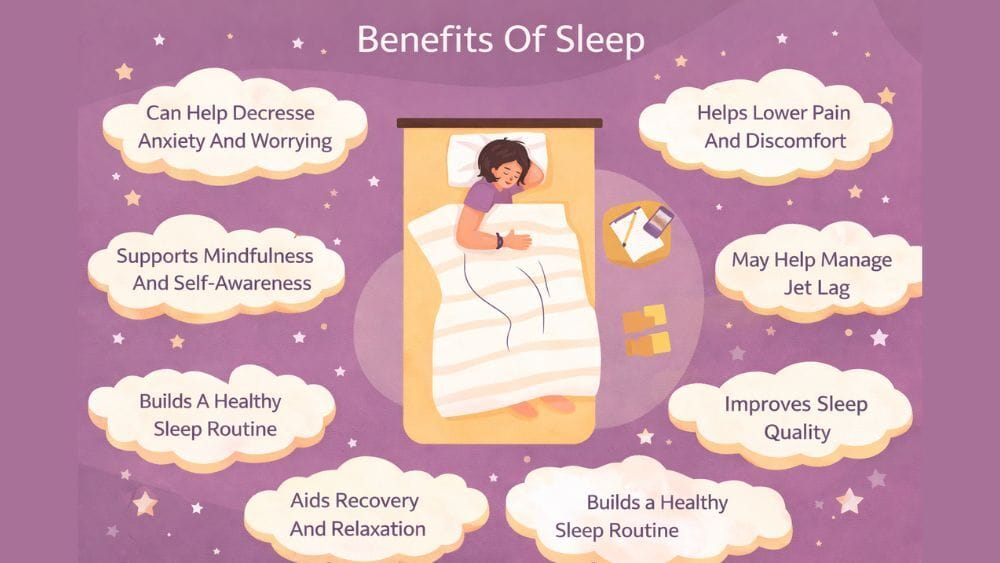
The benefits of sleep affect every system in your body. Missing rest harms health even if you feel mentally calm.
Can Help Decrease Anxiety And Worrying
Regular sleep keeps stress hormones stable. Poor sleep increases fear signals in the brain. This makes worries feel louder and harder to control. When sleep improves, the brain handles stress with less effort. Anxiety often decreases without therapy or medication.
Helps Lower Pain And Discomfort
Pain sensitivity increases after poor sleep . Inflammation rises. Nerve signals become overactive. Deep sleep reduces pain signals by calming the nervous system and supporting tissue repair. Chronic pain conditions often worsen when sleep remains poor.
May Help Manage Jet Lag
Travel disrupts the body clock. Strong sleep timing helps the brain reset faster. Light exposure and consistent sleep hours work together to restore rhythm.
Improves Sleep Quality
Consistent sleep habits deepen rest. Fewer awakenings occur. Time spent in restorative stages increases. Improved sleep quality matters more than total hours alone.
Promotes A Calmer, Clearer Mind
The brain processes emotional information during sleep . This reduces mental overload. Clear thinking improves the next day. Without proper sleep , even simple decisions feel harder.
Helps Enhance Emotional Regulation
Emotional control depends on sleep . When rest drops, reactions become sharper and less predictable. With stable sleep , emotional responses slow down and feel manageable.
Aids Recovery And Relaxation
Physical recovery depends on sleep . Muscles rebuild. Energy systems recharge. Fatigue fades only after adequate rest. Mental relaxation alone cannot replace this process.
Benefits Long-Term Health
Long-term sleep loss increases the risk of heart disease, weight gain, and memory decline. These risks rise even when stress feels controlled. The benefits of sleep protect health silently over years.
Builds A Healthy Sleep Routine
Regular sleep timing trains the brain to expect rest. This reduces insomnia and night waking. Routine matters more than perfection.
Supports Mindfulness And Self-Awareness
Good sleep improves attention and awareness. This makes meditation easier and more effective during the day.
Benefits Of Meditation
Meditation strengthens mental control and stress resilience. It supports health when paired with proper sleep .
Stress Reduction
Meditation lowers stress hormone output. This reduces constant tension and mental pressure. Lower stress improves appetite control, digestion, and focus.
Nervous System Regulation
Slow breathing during meditation activates the calming branch of the nervous system. Heart rate slows. Blood pressure eases. This helps the body exit fight-or-flight mode.
Improved Focus
Meditation trains attention. Distractions lose strength with regular practice. This improves productivity and mental clarity.
Emotional Control
With meditation , you notice emotions earlier. This creates space before reacting. Over time, emotional stability improves.
Reduced Anxiety
Meditation reduces repetitive worry loops. This supports better sleep at night. Stress-related insomnia often improves with consistent practice.
Mental Fatigue
Short meditation sessions reduce mental overload. This relief feels refreshing. Mental rest is helpful. It still does not replace sleep .
How Sleep Meditation Works
Sleep-focused meditation changes how your nervous system behaves before bed. It does not knock you out. It prepares the brain and body so sleep can start naturally and stay stable.
Activates The Parasympathetic Nervous System
Slow breathing and steady focus during meditation activate the parasympathetic nervous system (the body’s calm mode). Heart rate slows, blood pressure drops, and stress hormones reduce. This state makes it easier for sleep signals to take over without force.
Quiets The Mind
Racing thoughts block sleep by keeping the brain alert. Sleep-based meditation narrows attention to one anchor, such as breath or sound. This reduces mental noise. The brain stops scanning for threats and allows rest to begin.
Guides The Body Into A Relaxed State
Muscle tension delays sleep . Guided meditation moves attention through the body and releases tight areas. When muscles relax, the brain receives a safety signal. This physical calm supports faster sleep onset.
Lowers Brainwave Frequency
During meditation , brainwaves shift from fast patterns toward slower ones linked with drowsiness. They do not reach deep sleep levels. This shift acts as a bridge, helping the brain move smoothly into natural sleep stages.
Improves Sleep Quality Over Time
Consistent use of meditation before bed trains the brain to associate calm with bedtime. Over weeks, sleep becomes deeper, more predictable, and less fragmented.
Can Meditation Reduce The Need For Sleep?
No, meditation does not reduce the need for sleep. Meditation may change how tired you feel. It does not reduce how much sleep your body needs to stay healthy.
What Research Says
Brain imaging shows meditation improves alertness and stress control. It does not replace deep sleep stages linked to repair and immune function. People may feel sharper after meditation , but biological recovery still depends on sleep.
Short-Term Sleep Debt Vs Long-Term Sleep Loss
One short night causes temporary fatigue. Meditation may help you function that day. Chronic sleep loss causes hormone imbalance, memory decline, and health risks that meditation cannot block.
Who May Feel “Less Tired” With Meditation
People with stress-driven fatigue often feel better after meditation . The relief comes from reduced mental load, not from restored sleep . Physical energy still depends on rest.
What To Do When You Can’t Fall Asleep
Problems when you can’t fall asleep often come from mental overstimulation. The goal is to remove pressure, not force sleep.
Guided Sleep Meditation Techniques
Audio-guided meditation uses slow pacing and neutral language. This reduces performance pressure. The brain stops trying to sleep and starts relaxing, which often leads to natural sleep.
Breathing And Body Scan Practices
Breathing at a slow, steady rhythm lowers nervous system arousal. Body scans release tension you may not notice. Together, these practices shorten the time it takes to fall asleep.
Cognitive Techniques To Quiet A Racing Mind
Labeling thoughts as “planning” or “remembering” during meditation creates distance. This stops mental spirals that block sleep .
What To Do If You Wake Up In The Middle Of The Night
Waking up is normal. Panic makes it worse if you wake up in the middle of the night .
Using Meditation Without Forcing Sleep
Use gentle meditation to calm the body. Do not try to fall asleep. Removing effort reduces alertness and allows sleep to return naturally.
When To Stay In Bed Vs Get Out Of Bed
If calm but awake, stay in bed and rest. If alert and restless for over twenty minutes, leave the bed and use light meditation until drowsy.
Mistakes That Make Middle-Of-The-Night Wakeups Worse
Clock checking raises stress. Forcing sleep raises alertness. Both delay rest and fragment sleep .
Risks Of Replacing Sleep With Meditation
Replacing sleep with meditation creates silent damage that builds over time.
Effects Of Chronic Sleep Deprivation
Chronic sleep loss disrupts blood sugar control, immune defense, and memory. Reaction time slows. Emotional control weakens. These effects persist even if meditation feels helpful.
Why Meditation Cannot Replace Deep Sleep Stages
Deep sleep triggers physical repair and brain waste clearance. Meditation does not activate these processes. Awareness blocks entry into these stages.
Who Should Be Cautious About Using Meditation Instead Of Sleep
Teenagers, athletes, shift workers, pregnant individuals, and people with chronic illness need full sleep cycles. Using meditation to cut rest increases health risk in these groups.
FAQ
Can Meditation Replace Sleep For Short Periods?
No. Meditation can improve alertness for a few hours by reducing stress, but sleep loss still affects hormones, reaction time, and immune function even after one short night.
Is Yoga Nidra The Same As Sleep?
No. Yoga nidra is a guided meditation that keeps awareness present. It may feel deeply restful, but brain activity does not enter the deep sleep stages needed for physical repair.
How Much Meditation Equals One Hour Of Sleep?
None. There is no amount of meditation that equals one hour of sleep . Physical recovery, hormone regulation, and brain waste removal only occur during sleep.
Is Sleep Meditation Safe To Use Every Night?
Yes. Nightly meditation is safe and often improves sleep quality by reducing stress and bedtime anxiety. It should support sleep, not replace needed rest.
Can Meditation Help Chronic Insomnia?
Yes, when insomnia is stress-related. Meditation reduces mental hyperarousal and nighttime anxiety. It does not treat insomnia caused by medical, hormonal, or neurological conditions.
About The Author

Medically reviewed by Dr. Chandril Chugh, MD, DM (Neurology)
Dr. Chandril Chugh is a U.S.-trained, board-certified neurologist with expertise in diagnosing and managing neurological disorders, including migraines, epilepsy, Parkinson’s disease, and movement disorders. His clinical focus includes evidence-based neurological care and patient education.
All content is reviewed for medical accuracy and aligned with current neurological guidelines.