Family therapy techniques are structured clinical methods that improve how families communicate, respond to stress, and resolve conflict without causing emotional harm. These techniques focus on real interaction patterns such as interrupting, shutting down, blaming, or emotional overload, which silently damage relationships over time.
In therapy, you learn how roles, emotions, and communication habits influence each other during everyday situations. Family therapy techniques work by retraining how your family listens, speaks, and reacts, especially during disagreements. When applied consistently, they reduce repeated conflict, improve emotional safety, and support long-term mental health for both adults and children.
5 Family Therapy Techniques to Strengthen Communication
Therapists focus on everyday behaviors that shape how family members talk and listen. These skills form the foundation of 5 family therapy techniques to strengthen communication used in clinical practice.
Active Listening
Active listening means you focus fully on the speaker. You do not interrupt. You do not plan your reply while the other person talks. You repeat key points to confirm understanding. This skill lowers emotional reactions and prevents misunderstandings. Brain imaging research shows that feeling heard reduces stress signals in the nervous system. This explains why active listening plays a key role in family therapy techniques .
Positive Reinforcement
Positive reinforcement means you notice and acknowledge healthy communication. You praise effort, not outcomes. For example, you thank a child for expressing feelings calmly, even if you disagree. This approach increases repeat behavior. Behavioral psychology confirms that positive feedback strengthens learning more than criticism. Therapists rely on this method in family therapy techniques to support long-term change.
Non-Defensive Responses
Defensive responses shut down conversation. Therapy trains you to pause before reacting. You replace blame with neutral statements. For example, you say “I feel overwhelmed” instead of “You never help.” This reduces emotional escalation. Studies on family stress patterns show that non-defensive replies lower cortisol, a stress hormone linked to anger.
Role-Playing Exercises
Role-playing allows you to practice difficult conversations in a safe setting. You may switch roles with another family member. This builds empathy and insight. Seeing yourself from another person’s position often changes tone and word choice. Therapists use this method often in family therapy techniques to correct repeated conflict patterns.
Clear Boundary Setting
Boundaries define what behavior is acceptable. Families agree on rules like no yelling, no insults, and taking breaks during heated talks. Clear boundaries reduce chaos and emotional harm. Research on family systems shows that consistent boundaries improve emotional safety for children and adults alike.
Types of Family Therapy Techniques
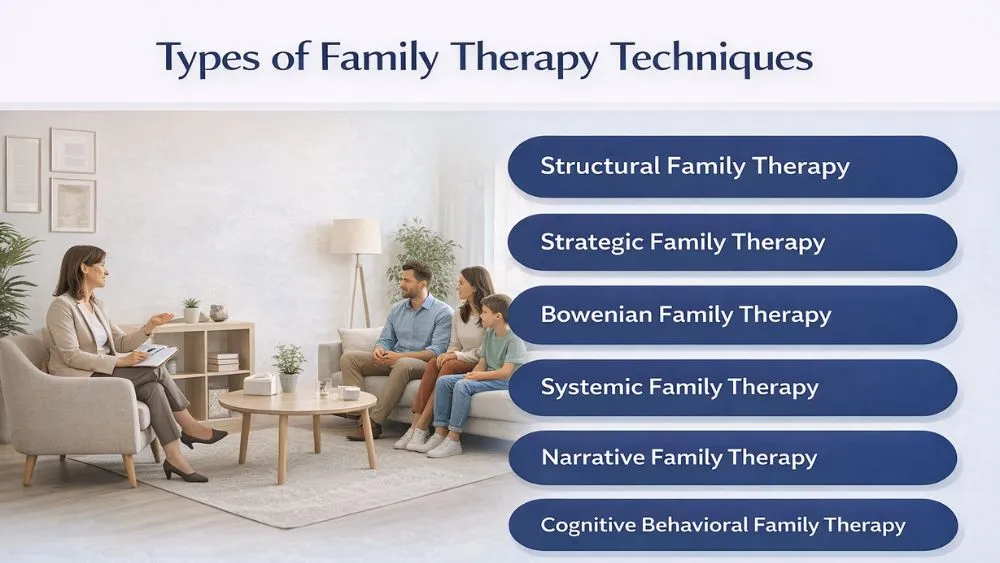
Different families struggle for different reasons, so therapy models are selected based on structure, emotional patterns, and symptom severity. Each type addresses communication and conflict from a distinct angle, such as power imbalance, learned behavior, or emotional fusion.
Structural Family Therapy
Structural family therapy focuses on family roles and authority. Parents learn to lead clearly. Children learn expectations and limits. This method works well when boundaries feel weak or confused. Evidence shows that restoring healthy structure reduces behavior problems in children and lowers parental stress.
Strategic Family Therapy
Strategic therapy targets specific behaviors. The therapist assigns tasks to change interaction patterns. These tasks often feel simple but create a strong impact. This approach suits families facing repeated arguments or power struggles. It is commonly used within family therapy techniques for short-term intervention.
Bowenian Family Therapy
Bowenian therapy examines emotional patterns passed through generations. You learn to separate emotions from reactions. This skill is called emotional differentiation, which means thinking clearly during stress. Long-term studies link higher differentiation with lower anxiety and better relationship stability.
Systemic Family Therapy
Systemic therapy views the family as a connected system. One person’s behavior affects everyone. The therapist identifies cycles like blame, withdrawal, or control. Changing one part of the cycle changes the whole system. This approach supports complex cases where conflict feels constant.
Narrative Family Therapy
Narrative therapy helps you change the story you tell about your family. Problems become separate from people. Instead of labeling someone as “the problem,” the focus shifts to behaviors and situations. This reduces shame and improves cooperation.
Cognitive Behavioral Family Therapy
This method connects thoughts, feelings, and actions. Families learn how negative thinking patterns drive conflict. You practice replacing harmful thoughts with realistic ones. This approach is effective when anxiety or depression affects family communication. It forms a core part of modern family therapy techniques .
5 Family Therapy Techniques for Better Communication
Clear communication depends on emotional awareness and structure. Therapists teach these skills to improve daily conversations. These methods define 5 family therapy techniques for better communication used in both clinical and home settings.
Open-Ended Questioning
Open-ended questions encourage detailed responses. You ask, “What upset you today?” instead of “Are you okay?” This invites honesty and reduces shutdown behavior. Communication research shows that open questions increase emotional expression.
Emotion Labeling
Emotion labeling means naming feelings clearly. You say, “I feel frustrated” instead of acting out. This helps regulate emotional responses. Brain studies show that naming emotions reduces activity in fear centers. This explains why therapists emphasize this skill in family therapy techniques .
Reflective Listening
Reflective listening involves repeating what you hear in your own words. This confirms understanding and shows respect. Miscommunication drops when this skill is used consistently. Families using reflective listening report fewer repeated arguments.
Conflict De-Escalation Techniques
De-escalation skills include taking breaks, slowing speech, and lowering voice volume. These steps prevent emotional overload. Therapists teach families to pause conversations before emotions spiral out of control.
Structured Family Meetings
Structured meetings provide a safe space for discussion. Everyone speaks without interruption. Notes help track decisions. Regular meetings prevent unresolved issues from piling up and turning into conflict.
6 Mindful Body Language Techniques
Nonverbal signals often shape family conflict more than words. Your posture, tone, and facial cues can calm a tense moment or make it worse. Therapists include body awareness because family therapy techniques work best when verbal and nonverbal messages match. When your body shows safety, the other person’s nervous system settles faster.
Maintaining Eye Contact
Maintaining eye contact shows attention and respect. You do not stare, but you also do not avoid looking. Balanced eye contact helps children and adults feel heard. Research on emotional regulation shows that steady eye contact reduces defensive reactions during difficult talks.
Open Posture And Stance
An open posture means uncrossed arms, relaxed shoulders, and facing the speaker. Closed posture signals resistance, even if your words sound calm. Therapists teach this because posture affects emotional tone. An open stance supports trust and cooperation during conflict resolution.
Facial Expression Awareness
Your face often shows emotion before words appear. Tight jaws or frowns raise tension fast. Learning to soften facial expressions helps prevent misreading. Families trained in facial awareness report fewer escalated arguments, especially during sensitive topics.
Tone Of Voice Control
Tone carries emotional meaning. A raised or sharp tone triggers stress responses. Slower speech and even lower volume and emotional intensity. This skill supports family therapy techniques by helping conversations stay productive instead of reactive.
Physical Distance Awareness
Standing too close can feel threatening. Standing too far can feel dismissive. Therapists guide families to respect personal space, especially during conflict. Proper distance supports comfort and prevents emotional overload.
Mirroring Body Language
Mirroring means gently matching the other person’s posture or pace. This builds connection without copying. It signals understanding and safety. Therapists often use this skill to help families rebuild trust during strained interactions.
5 Family Therapy Interventions For Depression
Depression changes how families communicate, often increasing criticism, withdrawal, or overprotection. These interventions help families respond in ways that support recovery rather than reinforce symptoms. They focus on daily behavior, emotional safety, and shared responsibility instead of motivation or pressure.
Psychoeducation For Families
Families learn how depression affects mood, sleep, energy, and thinking. Understanding removes blame and frustration. Clear knowledge helps you respond with support instead of pressure. This step improves treatment adherence and reduces conflict at home.
Behavioral Activation
Behavioral activation encourages small, planned activities like walks, meals, or routines. Depression often reduces motivation. Family support increases follow-through. Evidence shows that steady activity improves mood regulation over time.
Communication Skill Training
Depression changes how people speak and listen. Families learn to avoid criticism and use clear, calm language. This training lowers emotional withdrawal and improves connection. Communication skills remain central in family therapy techniques for mood disorders.
Emotional Validation Techniques
Validation means acknowledging feelings without trying to fix them. Saying “I see you are struggling” reduces isolation. Emotional validation lowers stress hormones linked to depressive symptoms and improves family trust.
Problem-Solving Interventions
Families break challenges into small steps. They focus on what can be controlled. This reduces helplessness and supports shared responsibility. Structured problem-solving improves daily functioning during depressive episodes.
How Family Therapy Techniques Work
Family therapy follows a structured clinical process rather than open discussion. Therapists observe interaction patterns, identify repeating breakdowns, and introduce targeted changes. Progress is measured by communication quality, emotional regulation, and conflict frequency, not by feelings alone.
Assessment Of Family Dynamics
The therapist studies communication patterns, roles, and stress points. They note who speaks, who withdraws, and how conflict unfolds. This assessment guides targeted intervention rather than general advice.
Identifying Dysfunctional Patterns
Repeated cycles like blame, silence, or control get identified. Families often repeat these patterns without awareness. Naming them reduces shame and increases accountability. Awareness marks the start of change.
Implementing Therapeutic Interventions
Therapists introduce family therapy techniques step by step. Families practice skills during sessions and at home. Feedback helps refine the approach. Consistent practice drives lasting results.
Monitoring Progress Over Time
Progress gets reviewed regularly. Therapists track communication quality, emotional safety, and conflict frequency. Adjustments happen based on outcomes. This prevents stagnation and supports steady improvement.
Benefits Of Family Therapy Techniques
The impact of family therapy techniques extends beyond reduced conflict. These benefits affect emotional health, relationships, and daily functioning. Long-term use strengthens resilience during future stress.
Improved Communication
You learn to express needs clearly and listen without interruption. Misunderstandings reduce. Conversations become shorter and more effective.
Reduced Family Conflict
Arguments lose intensity and frequency. Families resolve issues before escalation. Calm responses replace reactive behavior.
Better Emotional Understanding
Family members recognize emotions earlier. Empathy increases. Emotional awareness prevents harmful reactions during stress.
Stronger Family Bonds
Trust rebuilds through consistent respectful interaction. Safety improves. Families report feeling more connected and supported.
When To Consider Family Therapy
Family therapy becomes necessary when communication failures start affecting mental health, behavior, or daily functioning. Warning signs include repeated unresolved conflict, emotional withdrawal, or symptoms like anxiety and depression worsening due to family stress. Early intervention prevents deeper damage.
Ongoing Communication Breakdown
Frequent arguments, silence, or avoidance signal trouble. Therapy restores healthy dialogue and structure.
Family Conflict Affecting Mental Health
When stress impacts sleep, mood, or school performance, support becomes necessary. Therapy reduces emotional strain.
Depression Impacting Family Functioning
Depression affects routines, parenting, and connection. Family-based support improves recovery and stability.
FAQs
What Are Family Therapy Techniques?
Family therapy techniques are structured methods that change how your family communicates, reacts, and solves problems. They focus on interaction patterns rather than blaming individuals and are guided by trained mental health professionals.
How Effective Are Family Therapy Techniques?
Yes, family therapy techniques are effective when practiced consistently. Families typically see measurable improvement in communication and conflict reduction within eight to twelve sessions, depending on severity and participation.
Are Family Therapy Techniques Evidence-Based?
Yes. Family therapy techniques are supported by decades of clinical research showing reduced conflict, improved emotional regulation, and better outcomes for depression, anxiety, and behavioral issues across age groups.
How Long Does Family Therapy Usually Take?
Most families use family therapy techniques for ten to twenty sessions. Short-term models address specific issues. Long-term therapy supports complex or long-standing conflict patterns.
Can Family Therapy Help With Depression?
Yes. Family therapy techniques improve support, reduce criticism, and increase treatment follow-through. Families play a direct role in stabilizing mood and daily functioning during depressive episodes.
What Types Of Family Therapy Techniques Exist?
Common types of family therapy techniques include structural, strategic, Bowenian, systemic, narrative, and cognitive behavioral approaches. Therapists choose based on family needs and mental health factors.
Do All Family Members Need to Attend Therapy?
No, but family therapy techniques work best when key members attend. In some cases, partial participation still improves communication and reduces conflict patterns.
Can Family Therapy Improve Communication?
Yes. Family therapy techniques directly train listening, emotional expression, and conflict control skills. These changes lead to clearer conversations and fewer misunderstandings at home.
Is Family Therapy Suitable For Children And Teens?
Yes. Family therapy techniques adapt to age and development. Therapists use simple language, activities, and structured guidance to help children and teens communicate safely.
When Should a Family Seek Professional Therapy?
You should seek help when conflict repeats, communication breaks down, or mental health symptoms affect daily life. Early use of family therapy techniques prevents long-term emotional damage.
About The Author

Medically reviewed by Dr. Chandril Chugh, MD, DM (Neurology)
Dr. Chandril Chugh is a U.S.-trained, board-certified neurologist with expertise in diagnosing and managing neurological disorders, including migraines, epilepsy, Parkinson’s disease, and movement disorders. His clinical focus includes evidence-based neurological care and patient education.
All content is reviewed for medical accuracy and aligned with current neurological guidelines.