8 hours of sleep is the average amount most adult bodies need to function well. It supports brain repair, hormone balance, immune strength, and emotional control. Regular 8-hour sleep lowers long-term disease risk, improves focus, and keeps reaction time stable. Adults who miss this target often feel tired even after rest, because sleep loss builds quietly over time.
The importance of 8 hours of sleep for health lies in consistency. One short night rarely causes harm. Repeated short sleep changes how your brain and organs work. While sleep needs differ slightly, the ideal sleep duration for adults usually falls between seven and nine hours, with 8 hours of sleep sitting at the center for most people.
Benefits Of 8 Hours of Sleep
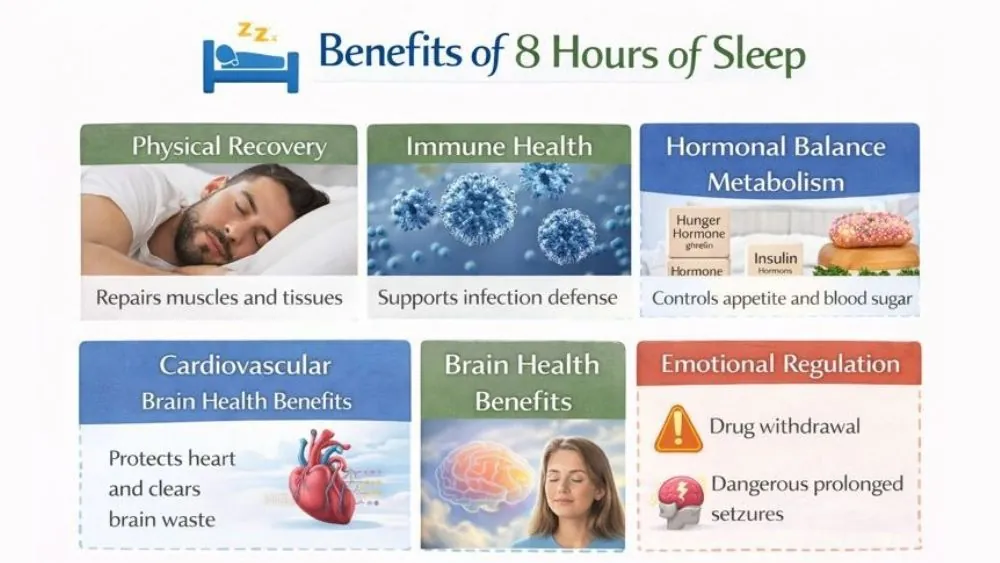
Consistent 8-hour sleep allows the body to complete full sleep cycles, which include deep sleep and REM sleep. These stages control tissue repair, immune strength, hormone balance, and brain cleanup that cannot fully happen with shorter sleep.
Physical Recovery And Immune Health
Your body repairs itself during sleep. Muscles rebuild, cells clear waste, and the immune system becomes more active. When you get 8 hours of sleep , your body completes these repair cycles without rushing.
Short sleep reduces the activity of infection-fighting cells. People who sleep less than six hours get sick more often after virus exposure. This makes immune support one of the strongest benefits of 8 hours of sleep .
Deep sleep also reduces body-wide inflammation, which is long-term swelling inside tissues. High inflammation is linked to joint pain, heart disease, and insulin problems. 8 hours of sleep allows enough deep sleep to keep inflammation in check.
Hormonal Balance And Metabolism
Sleep controls hunger hormones. One hormone increases hunger. Another tells you when you are full. Short sleep raises hunger signals and lowers fullness signals. This causes overeating without hunger.
With 8 hours of sleep , these hormones stay balanced. Your body processes sugar better. Insulin works more efficiently. This lowers the risk of type 2 diabetes over time.
Growth hormone is released mainly during deep sleep. This hormone repairs muscles and bones. Missing sleep reduces this release. That is why poor sleep slows recovery after exercise or injury. Hormonal balance is a key part of the benefits of 8 hours of sleep that often gets ignored.
Cardiovascular And Brain Health Benefits
Your heart rests during sleep, your blood pressure drops, and your heart rate slows. This daily rest protects blood vessels. Long-term studies show that adults who sleep less than six hours face a higher risk of heart disease.
The brain also cleans itself during sleep. Waste proteins linked to memory loss get flushed out. 8 hours of sleep gives the brain enough time to finish this cleaning process. This supports learning, memory, and long-term brain health.
Importance Of 8 Hours of Sleep For Health
The importance of 8 hours of sleep for health lies in how it protects multiple systems at once. Adequate sleep lowers chronic inflammation, stabilizes blood sugar, supports heart rhythm, and reduces long-term disease risk across decades.
Long-Term Disease Prevention
Chronic sleep loss raises the risk of serious diseases. These include heart disease, obesity, diabetes, and some mood disorders. The damage builds slowly. Many people do not notice until symptoms appear.
The importance of 8 hours of sleep for health shows strongest in long-term data. Adults who consistently sleep well have lower death rates from heart and metabolic diseases. Sleep works like preventive care that costs nothing but time.
Mental Health And Emotional Regulation
Sleep controls how the brain handles emotions. Short sleep increases stress reactions. Small problems feel overwhelming. Emotional control weakens.
With 8 hours of sleep , the brain processes emotional memories properly. This reduces anxiety and lowers depression risk. Poor sleep does not cause mental illness alone, but it can worsen symptoms and slow recovery.
Stable mood is a major part of the importance of 8 hours of sleep for health , especially in high-stress lifestyles.
Sleep Deprivation Health Risks
Short sleep affects judgment and safety; reaction time slows, and focus drops. This raises accident risk at work and on the road.
Long-term sleep loss also weakens memory and learning. Decision-making becomes impulsive. These risks increase when 8 hours of sleep becomes rare rather than occasional.
8 Hours of Sleep And Productivity
Productivity improves with 8 hours of sleep because the brain maintains faster reaction time, better memory recall, and stronger attention control. Short sleep reduces efficiency even if motivation feels high.
Focus, Memory, And Decision-Making
Attention depends on sleep. When you get 8 hours of sleep , your brain filters distractions better. You process information faster. Memory becomes more reliable.
Sleep loss reduces activity in the brain areas responsible for logic and control. This leads to poor decisions and careless mistakes. Consistent 8 hours of sleep protects mental performance across long workdays.
Work Performance And Reaction Time
Reaction time drops after short sleep. Errors increase. Productivity suffers even if you work longer hours. Employees with enough sleep finish tasks faster and with fewer mistakes. Over weeks, 8 hours of sleep produces better output than long hours with poor rest.
Sleep And Creativity
Creativity relies on brain connections, and sleep strengthens these links. Dream sleep helps ideas combine in new ways. People who maintain 8 hours of sleep often solve problems faster because their brains process information overnight. This effect matters in both creative and technical work.
Ideal Sleep Duration For Adults
The ideal sleep duration adults need usually falls between seven and nine hours, with eight hours sitting near the safest average. This range supports full neurological recovery and stable daytime energy in most adults.
Sleep Needs By Age Group
Most adults need seven to nine hours of sleep. Younger adults often need closer to nine. Older adults may sleep slightly less but still need quality rest. This range defines the ideal sleep duration adults should aim for. 8 hours of sleep fits most adults across age groups.
Why Some Adults Need More Or Less Than 8 Hours
Genetics affects sleep efficiency. Some people reach deep sleep faster, while others need more time.
Illness, stress, pregnancy, and physical labor increase sleep needs. Athletes often need more than 8 hours of sleep for muscle recovery and injury prevention. This does not contradict the ideal sleep duration guideline. It explains variation.
Genetic And Lifestyle Factors
Genes influence how the brain cycles through sleep stages. Lifestyle affects sleep quality. Late screens, caffeine, and irregular schedules reduce deep sleep. When sleep quality drops, even 8 hours of sleep may not feel enough. Improving habits often restores the full benefits of 8 hours of sleep without extending time in bed.
8 Hours of Sleep: Myth or Fact?
Scientific Evidence Behind the 8-Hour Rule
The idea of 8 hours of sleep did not come from tradition or guesswork. It came from decades of population studies. When researchers tracked millions of adults across many years, they noticed a pattern. People who slept around seven to eight hours had the lowest risk of early death, heart disease, and metabolic illness.
Sleep researchers from large academic centers found that brain activity, hormone balance, and immune markers stabilize best near this range. This does not mean eight is a magic number. It means 8 hours of sleep sits close to the center of human biological need for most adults.
Sleep studies using EEG (a test that measures brain waves) show that people who sleep about eight hours get enough deep sleep and REM sleep. Both stages are essential. Deep sleep repairs the body. REM sleep supports memory and emotional control. Shorter sleep cuts into one or both stages.
Individual Sleep Variability
Not every adult responds the same way to 8 hours of sleep . Genetics matter. Some people have gene variants that allow efficient sleep cycles. These people may feel fine with seven hours, and they are rare.
Lifestyle also changes sleep needs. High stress increases sleep demand because stress hormones delay recovery. Illness raises sleep need because immune cells work harder during rest. Aging changes sleep structure but not the basic need.
This variability explains why sleep doctors focus on how you feel during the day, not just the number of hours. Still, for most adults, 8 hours of sleep remains the safest baseline.
When 8 Hours May Not Be Enough
Certain groups often need more than eight hours. Athletes place heavy stress on muscles and nervous systems. Improved reaction time and injury prevention with nine or more hours of sleep.
People recovering from illness or surgery also need more rest. During recovery, the body prioritizes healing over alertness. Pregnant individuals often need extra sleep due to hormonal changes and increased metabolic demand. In these cases, 8 hours of sleep may be the minimum.
What Happens If You Sleep Less Than 8 Hours?
Sleeping less than 8 hours interrupts hormone release, immune repair, and brain waste removal. Over time, this raises risks for mood disorders, heart disease, and metabolic problems.
Short-Term Effects of Sleep Restriction
Even one night of short sleep affects the brain. Attention drops. Reaction time slows. You may feel wired but tired. This state reflects increased stress hormones trying to keep you alert.
After several nights of reduced sleep, the brain adapts poorly. You may feel “used to it,” but performance tests show continued decline. This is why people often underestimate the damage of short sleep. Missing 8 hours of sleep also increases appetite the next day. This effect happens even if the calories burned stay the same.
Cognitive and Mood Changes
Chronic short sleep alters emotional control. The brain’s fear center becomes more reactive. At the same time, the reasoning center becomes less active. This imbalance leads to irritability, anxiety, and low frustration tolerance. Memory also suffers. New information becomes harder to store and recall.
Over time, these changes raise the risk of mood disorders. This is why sleep treatment often improves mental health outcomes.
Long-Term Health Consequences
Long-term sleep restriction raises disease risk even in young adults. Studies link chronic short sleep to higher blood pressure, insulin resistance, and weight gain.
Inflammation remains elevated. Blood vessels stiffen faster, and these changes explain why people who regularly miss 8 hours of sleep face higher rates of heart disease and stroke later in life.
How to Know If You’re Getting Enough Sleep?
Adequate sleep shows through steady daytime energy, emotional balance, and mental clarity. If these are missing despite a long time in bed, sleep quality or timing may be impaired.
Signs of Adequate Sleep
You wake up without feeling heavy or foggy. Energy lasts most of the day. Mood stays stable even under stress.
You can focus without constant caffeine. You do not rely on long naps to function. These signs suggest your sleep duration and quality are adequate. For many adults, these signs appear when 8 hours of sleep becomes consistent.
Signs of Chronic Sleep Debt
You feel tired even after long weekends of sleep. You crave sugar or caffeine daily. Small tasks feel harder than they should. You may also feel emotionally flat or easily annoyed. These signs point to accumulated sleep debt, even if you occasionally reach eight hours.
Using Sleep Tracking Tools
Sleep trackers estimate sleep time and patterns using movement and heart rate. They help spot trends, not diagnose disorders. If a tracker shows long sleep but you still feel exhausted, sleep quality may be poor. This can happen with insomnia or sleep apnea.
How to Improve Sleep to Reach 8 Hours?
Reaching 8 hours sleep depends more on consistency than effort. Stable wake times, controlled light exposure, and reduced evening stimulation help the brain initiate sleep naturally.
Sleep Hygiene Habits
Consistency matters more than perfection. Go to bed and wake up at the same time daily. This trains your internal clock. Avoid caffeine late in the day. Keep meals light at night. Reserve the bed for sleep, not work or scrolling. These habits make 8 hours of sleep easier to achieve without forcing it.
Bedtime Routines and Circadian Rhythm
Your circadian rhythm is your internal timekeeper. Light controls it. Morning light signals wake time, and evening darkness signals sleep. Bright screens at night delay melatonin, the sleep hormone. Dimming lights and reducing screen use before bed helps sleep start naturally.
Environmental Sleep Optimization
A cool, dark, quiet room supports deeper sleep. Noise fragments sleep even if you do not fully wake. Comfortable bedding also matters. Physical discomfort reduces deep sleep time, making 8 hours of sleep feel unrefreshing.
Common Barriers to 8 Hours of Sleep
Modern barriers to 8 hours sleep include stress-driven alertness, late-night screen light, irregular work hours, and untreated sleep disorders that fragment rest even during long bed time.
Stress and Screen Exposure
Stress keeps the nervous system alert. This delays sleep onset. Screens add light exposure that suppresses melatonin. Together, they shorten sleep duration and reduce sleep depth.
Work Schedules and Social Habits
Shift work disrupts circadian rhythm. Late social nights cut into sleep time. When schedules vary daily, the body never fully adapts. This makes 8 hours of sleep difficult, even with effort.
Sleep Disorders Like Insomnia and Sleep Apnea
Insomnia delays sleep and causes frequent awakenings. Sleep apnea blocks breathing during sleep, fragmenting rest. Both conditions reduce effective sleep even if the time in bed seems long.
When to See a Doctor About Sleep
Medical evaluation matters when daytime sleepiness persists despite adequate sleep opportunity. Conditions like sleep apnea, insomnia, or circadian rhythm disorders often block restorative sleep without obvious signs.
Persistent Daytime Sleepiness
If you feel sleepy despite adequate sleep time, medical review matters. This may signal a sleep disorder or underlying illness.
Snoring, Breathing Issues, or Frequent Awakenings
Loud snoring, gasping, or choking sounds during sleep suggest sleep apnea. Untreated apnea raises heart and brain risk.
Suspected Sleep Disorders
Restless legs, narcolepsy, or circadian rhythm disorders require professional care. Early treatment improves long-term outcomes.
FAQs
Is 8 Hours of Sleep Necessary for Everyone?
No. Most adults function best with between seven and nine hours. 8 hours of sleep is a reliable middle point that fits the majority without increasing health risk.
Can I Function Well on 6 Hours of Sleep?
Some people feel okay in the short term, but long-term studies show higher disease and accident risk. For most adults, six hours is below the healthy sleep need.
Does Napping Replace Nighttime Sleep?
No. Naps can restore alertness, but do not replace deep and REM sleep gained at night. Regular nighttime 8-hour sleep remains essential.
Is Sleeping 8 Hours Linked to Longevity?
Large studies show the lowest death risk near seven to eight hours. This supports 8 hours of sleep as a safe target for long-term health.
What Is the Best Time to Sleep for 8 Hours?
The best time matches your internal clock. For many adults, sleeping between late evening and early morning aligns best with hormone rhythms.
Does Sleep Quality Matter More Than Duration?
Both matter. Poor-quality sleep reduces the benefits even with enough hours. High-quality 8 hours of sleep delivers the strongest health effects.
How Long Does It Take to Recover Sleep Debt?
Short-term debt may recover in a few days. Long-term sleep loss can take weeks to normalize brain and hormone function.
Is 8 Hours of Sleep Enough for Athletes?
Often no. Athletes commonly need nine or more hours to support muscle repair, reaction speed, and injury prevention.
Can Oversleeping Be Unhealthy?
Very long sleep may signal illness or depression. Oversleeping usually reflects underlying issues, not a cause of poor health.
How Can I Reset My Sleep Schedule Naturally?
Wake at the same time daily, get morning sunlight, avoid late screens, and keep evenings dim. These steps help restore natural sleep timing.
About The Author

Medically reviewed by Dr. Chandril Chugh, MD, DM (Neurology)
Dr. Chandril Chugh is a U.S.-trained, board-certified neurologist with expertise in diagnosing and managing neurological disorders, including migraines, epilepsy, Parkinson’s disease, and movement disorders. His clinical focus includes evidence-based neurological care and patient education.
All content is reviewed for medical accuracy and aligned with current neurological guidelines.