When breathing stops during sleep, oxygen levels fall, and the brain enters a stress state that disrupts pain control systems. This nightly stress affects blood vessels, nerve sensitivity, and sleep depth, all of which influence migraine attacks. Poor sleep quality weakens the brain’s ability to recover, making headaches more frequent and harder to treat.
Morning pain, medication resistance, and extreme fatigue often point to a sleep-related trigger. Treating sleep apnea addresses more than snoring or tiredness. It targets a root cause that can reduce migraine frequency, lower pain intensity, and restore daily function when standard headache treatments fall short.
Can Sleep Apnea Cause Migraines?
Yes, sleep apnea can trigger migraine , and the link is backed by sleep and brain research. The cause is a mix of oxygen loss, broken sleep, and chemical changes in the brain.
Nocturnal Hypoxia and Vascular Changes
During sleep apnea , your airway collapses. Breathing pauses can last ten seconds or longer. Oxygen levels fall again and again. The brain reacts fast to protect itself. Blood vessels expand to increase blood flow. This change affects pressure inside the head.
In people prone to migraine , this vascular shift can start an attack. Repeated oxygen drops also weaken the brain’s ability to control pain signals. This explains why sleep apnea causes migraine episodes that feel stronger after poor sleep.
Sleep Fragmentation and REM Disruption
Your brain needs deep sleep and REM sleep. REM sleep supports pain control and nerve repair. Sleep apnea breaks sleep into short fragments. You wake up briefly to breathe, even if you do not remember it. REM sleep becomes shorter and unstable. Studies show that reduced REM sleep lowers the pain threshold. This means your brain reacts faster to pain triggers. For someone with migraine , this leads to more frequent attacks.
Inflammatory Pathways and Pain Sensitization
Low oxygen and broken sleep increase inflammation. Inflammation means your body releases chemicals that irritate tissues. These chemicals affect the trigeminal nerve, which carries pain signals from the face and head. When this nerve stays irritated, migraine attacks occur more easily. This process explains why untreated sleep apnea can turn occasional headaches into chronic pain.
Evidence From Sleep and Neurology Studies
Sleep clinics report high rates of migraine in people with moderate to severe sleep apnea . Neurology studies also show that treating breathing problems reduces headache days. Some research notes improvement within one to three months of therapy. Experts agree the link is strong, though response levels differ between patients.
Sleep Apnea Migraine Symptoms
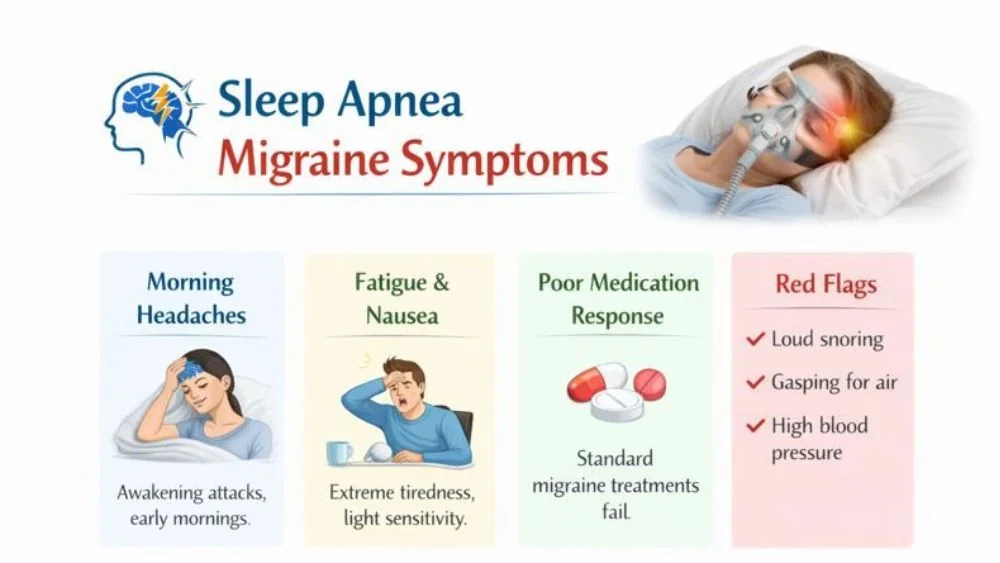
When sleep apnea contributes to migraine , symptoms often cluster around poor sleep quality. Morning headaches, extreme fatigue, nausea, light sensitivity, and weak response to medication suggest the brain is reacting to overnight oxygen loss and sleep disruption.
Morning Migraines and Awakening Headaches
Waking with head pain is a key sign. These attacks often start before you leave bed. Oxygen drops during the night are highest in the early morning hours. This timing explains why morning migraine attacks appear in people with untreated sleep apnea .
Fatigue, Nausea, and Light Sensitivity
Poor sleep causes deep fatigue. You may feel drained even after eight hours in bed. Nausea and light sensitivity often follow. When these symptoms appear together, they match classic migraine features worsened by sleep loss. These combined signs are common symptoms of sleep apnea migraine overlap.
Poor Response to Standard Migraine Meds
Pain medicines may stop working. Triptans or simple pain relievers fail because the trigger remains active at night. As long as sleep apnea continues, the brain keeps entering a pain-ready state. This poor drug response is a strong clue that sleep issues play a role.
Red Flags Suggesting Sleep-Related Triggers
Loud snoring, gasping during sleep, dry mouth, and high blood pressure matter. Weight gain and a large neck size also increase risk. When these signs appear with migraine , sleep testing becomes important.
Sleep Apnea Headaches vs Migraines
Sleep apnea headaches usually appear on waking and fade within hours, while migraine pain often lasts longer and worsens with light or movement. Distinguishing them matters because treating breathing issues targets the cause, not just the pain.
Timing and Duration Differences
Sleep apnea headaches usually appear right after waking. They often fade within a few hours. Migraine attacks can last many hours or even days. They may start later in the day.
Pain Quality and Location Patterns
Sleep apnea headaches feel dull and tight. They often affect both sides of the head. Migraine pain often throbs and affects one side. It may spread to the eye or temple and worsen with movement.
Associated Sleep Symptoms
People with sleep apnea snore loudly and feel sleepy during the day. People with migraine may see flashing lights or feel nausea. Many people have features of both, which makes diagnosis harder.
Clinical Clues for Differentiation
Doctors look at sleep patterns, headache timing, and response to rest. Imaging scans rarely help. Sleep studies often provide the clearest answer.
CPAP Therapy for Migraines Improvement
By preventing airway collapse, CPAP stabilizes oxygen and reduces nighttime stress on pain pathways. Patients experience fewer migraine days and less intense attacks once consistent therapy corrects sleep-related triggers.
Oxygen Normalization With CPAP
CPAP keeps the airway open. Oxygen stays steady through the night. The brain no longer faces repeated oxygen stress. This stability helps reduce migraine triggers.
Reduction in Migraine Frequency
Many patients report fewer attacks after starting therapy. Some see fewer headache days within weeks. Research shows clear improvement of CPAP therapy for migraines , especially in people with severe oxygen drops during sleep.
Expected Improvement Timeline
Some people feel better within days. Others need two to three months. Consistent nightly use matters more than speed. Skipping nights delays results.
Predictors of CPAP Success
People with morning migraines often improve the most. Severe sleep apnea predicts a better response. Proper mask fit and correct pressure settings also matter.
Treating Sleep Apnea to Reduce Migraines
Treating sleep apnea targets one of the root drivers of repeated migraine attacks. The goal is to stabilize oxygen, protect pain pathways, and restore normal brain recovery during the night. When breathing improves, the brain becomes less reactive to pain triggers.
CPAP/APAP Therapy
CPAP and APAP machines deliver steady air pressure to keep your airway open. This prevents repeated breathing pauses. Oxygen levels stay stable. Carbon dioxide levels remain normal. Brain blood flow becomes more balanced. These changes directly lower the chance of migraine attacks linked to poor sleep. Treating sleep apnea to reduce migraine works best when therapy is used every night for the full sleep period. Partial use limits benefits.
Oral Appliances for Mild OSA
For mild sleep apnea , oral appliances can help. These devices move the lower jaw forward to keep the airway open. They work best when apnea events happen mainly while lying on the back. Some patients report fewer migraine days after regular use. Results vary because oxygen drops may still occur during deeper sleep stages.
Weight Loss and Positional Therapy
Excess weight increases airway collapse. Weight loss reduces pressure on the throat muscles. Even a modest reduction can improve airflow. Positional therapy helps when apnea worsens on the back. Side sleeping lowers airway blockage. These methods support medical therapy but rarely replace it in moderate cases.
Surgical Options When Indicated
Surgery aims to widen the airway or remove the obstruction. Examples include nasal surgery or throat procedures. Surgery helps select patients after careful testing. Results differ, and long-term data is limited. Doctors avoid surgery unless other options fail.
Diagnosis of Sleep Apnea in Migraine Patients
Diagnosis focuses on sleep patterns, snoring history, oxygen levels, and headache timing. Sleep studies help confirm whether nighttime breathing problems contribute to persistent migraine despite standard treatment.
Sleep History and Headache Patterns
Doctors review snoring, choking, and daytime sleepiness. They also track migraine timing, frequency, and triggers. Morning headaches raise suspicion. Poor sleep quality despite enough hours matters.
Polysomnography and Home Testing
Polysomnography measures breathing, oxygen, heart rate, and sleep stages. Home tests focus on breathing and oxygen. Lab studies give deeper insight when symptoms are complex. Both tools help confirm sleep apnea .
When Neurology Refers to Sleep Medicine
Neurologists refer patients when migraine remains uncontrolled despite standard care. Sleep specialists then assess breathing patterns. This referral pathway has improved outcomes in chronic cases.
Risk Factors for Sleep Apnea–Related Migraines
Obesity, narrow airways, hormonal shifts, and family history raise risk for both conditions. These factors increase airway collapse during sleep, which can worsen oxygen instability and trigger migraine attacks.
Obesity and Airway Anatomy
Extra tissue narrows the airway. Jaw shape, neck size, and tongue position matter. These features raise sleep apnea and worsen oxygen loss during sleep.
Snoring and Witnessed Apneas
Loud snoring and breathing pauses are strong warning signs. Bed partner reports are often the first clue. These signs matter even in younger adults.
Hormonal and Genetic Factors
Hormones affect airway muscle tone. Family history plays a role in sleep apnea and migraine risk. Women may notice changes during pregnancy or menopause.
Migraine Treatment Adjustments With Sleep Apnea
Medications alone may fail if sleep apnea remains untreated. Adjusting therapy to protect breathing and sleep quality often improves drug response and lowers attack frequency.
Medication Considerations
Some sedatives relax airway muscles and worsen sleep apnea . Doctors avoid these drugs when possible. Preventive migraine medicines may work better once sleep improves.
Trigger Control Worsened by Poor Sleep
Poor sleep lowers pain tolerance. Triggers like light, stress, or missed meals cause stronger reactions. Treating sleep apnea restores resilience against triggers.
Coordinated Care Plans
Best results come from shared care. Sleep doctors and neurologists align treatment goals. This approach reduces attack frequency and medication reliance.
Lifestyle Changes Helping Both Conditions
Consistent sleep schedules, reduced alcohol intake, and controlled caffeine timing support airway stability. These habits strengthen treatment results and lower the brain’s sensitivity to migraine triggers.
Sleep Hygiene and Schedules
Consistent bedtimes stabilize circadian rhythm. Dark, quiet rooms improve sleep depth. These steps support sleep apnea therapy and reduce migraine risk.
Diet, Caffeine Timing, Alcohol Avoidance
Late caffeine disrupts sleep cycles. Alcohol increases airway collapse. Avoiding these near bedtime protects breathing and brain recovery.
Stress Management Strategies
Stress increases muscle tension and pain signaling. Calm routines before bed lower attack risk. Relaxation supports better sleep quality.
When to See a Doctor
Persistent morning headaches, loud snoring, or worsening pain despite treatment require evaluation. Early assessment prevents long-term nerve sensitization and repeated migraine cycles.
Red Flags Needing Urgent Evaluation
Severe morning headaches with confusion matter. Chest pain, breathing pauses, or fainting require urgent care.
Treatment Failure or Worsening Symptoms
If CPAP fails or migraine worsens, reassessment is needed. Pressure settings or diagnoses may be incorrect.
Long-Term Outlook After Treating Sleep Apnea
When sleep apnea is controlled, many patients see sustained reductions in migraine frequency and improved daily function. Long-term benefits depend on consistent therapy and follow-up adjustments.
Migraine Reduction Expectations
Many patients see fewer attacks over time. Some shift from chronic to occasional migraine patterns. Full relief varies by individual.
Quality-of-Life Improvements
Energy improves. Focus sharpens. Mood stabilizes. Better sleep often changes daily life more than expected.
FAQs
Can Sleep Apnea Cause Chronic Migraines?
Yes. Repeated oxygen loss and broken sleep from sleep apnea can maintain chronic migraine by keeping the brain in a constant pain-sensitive state over months or years.
How Do I Know If Migraines Are Sleep-Related?
Morning attacks, loud snoring, daytime sleepiness, and poor response to medication suggest a sleep link. Sleep testing helps confirm whether sleep apnea plays a role.
Do Migraines Improve After CPAP Therapy?
Many patients report fewer and less severe attacks. Research supports clear improvement of CPAP therapy for migraines , though results depend on regular use and apnea severity.
How Long Does CPAP Take to Help Migraines?
Some people notice changes within weeks. Others need several months. Consistent nightly use improves outcomes and supports treating sleep apnea to reduce migraine frequency.
Are Morning Headaches Apnea-Related or Migraine?
They can be either. Headaches that fade after waking often relate to sleep apnea , while longer-lasting attacks with nausea suggest migraine .
Can Untreated Sleep Apnea Worsen Migraines?
Yes. Ongoing oxygen drops and sleep disruption increase attack frequency and intensity over time.
Should Migraine Patients Be Screened for Apnea?
Screening helps when symptoms suggest poor sleep. It prevents years of ineffective treatment.
Can Weight Loss Help Both Conditions?
Yes. Weight loss reduces airway collapse and lowers sleep apnea severity, which can reduce migraine frequency.
Is CPAP Safe for Severe Migraines?
Yes. CPAP stabilizes oxygen and does not trigger attacks. It often lowers attack frequency.
Can Treating Sleep Apnea Stop Migraines Completely?
Some people experience near-total relief. Others still have migraines, but with fewer attacks and better control.
About The Author

Medically reviewed by Dr. Chandril Chugh, MD, DM (Neurology)
Dr. Chandril Chugh is a U.S.-trained, board-certified neurologist with expertise in diagnosing and managing neurological disorders, including migraines, epilepsy, Parkinson’s disease, and movement disorders. His clinical focus includes evidence-based neurological care and patient education.
All content is reviewed for medical accuracy and aligned with current neurological guidelines.