Menstrual migraine is a hormone-linked migraine that appears around your menstrual cycle, most often just before bleeding starts or during the first days of your period. It is not a mild headache. It is a neurologic condition driven by estrogen drops that can cause longer-lasting, more intense pain than other migraines. If you track your cycle and your head pain lines up month after month, you are likely dealing with a menstrual migraine , not random migraines.
Unlike stress migraines or food-triggered attacks, this type follows a predictable hormone pattern. That predictability matters because it changes how doctors treat and prevent it. Many women live with this condition for years before getting a clear explanation, even though research from neurology and hormone studies has clearly defined it.
Menstrual Migraine Symptoms
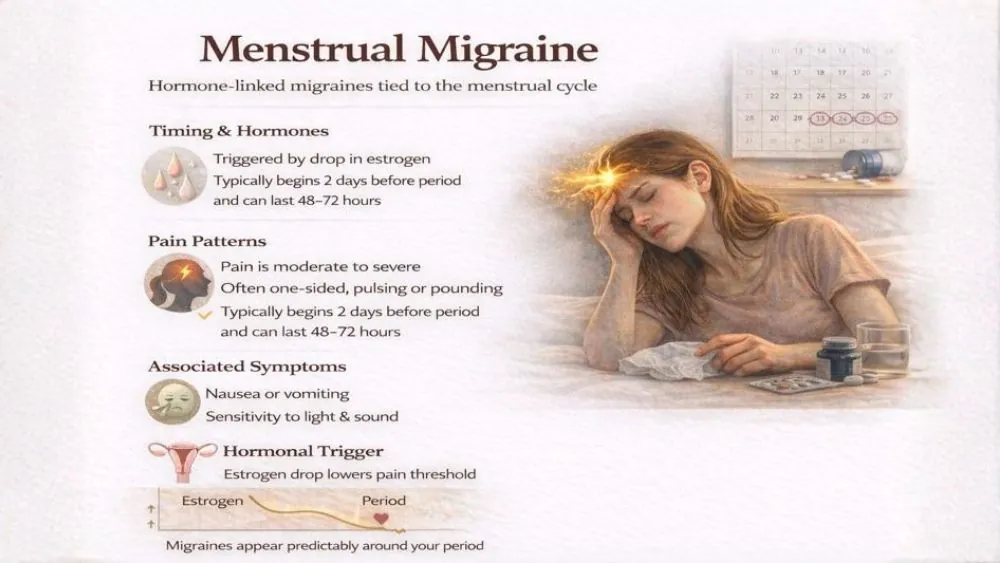
The symptoms of menstrual migraine follow a consistent and recognizable pattern. They tend to start two days before your period or within the first three days of bleeding. Attacks often feel stronger and last longer than other migraines.
Typical Pain Patterns and Severity
Pain usually affects one side of your head. It often feels pulsing or pounding. The pain builds fast and reaches moderate to severe levels. A menstrual migraine can last 48 to 72 hours if untreated. Many women report that common pain relievers barely help once the attack is established.
Estrogen withdrawal lowers the brain’s pain threshold. This means your brain reacts more strongly to pain signals during this time. That is why the pain feels harder to control compared to non-hormonal migraines.
Associated Symptoms
The symptoms of menstrual migraine often go beyond head pain. You may feel nauseous or vomit. Light may feel sharp or painful. Normal sounds can feel overwhelming. Smells may trigger worsening pain. Fatigue can feel extreme, not just like tiredness. Concentration often drops, making work or school difficult.
How Symptoms Differ From Non-Hormonal Migraines
A menstrual migraine usually lasts longer than other migraines. It responds less well to treatment. It appears at the same point in your cycle for several months in a row. Non-hormonal migraines vary in timing and often respond faster to medication. These differences help doctors make the diagnosis.
Migraines During Periods
Migraines during periods occur because hormone drops increase nerve sensitivity and inflammation at the same time. This dual effect explains why these migraines feel harder to control and often ignore standard pain relief methods.
Estrogen Withdrawal and Brain Sensitivity
Estrogen supports stable nerve signaling in the brain. Just before your period, estrogen levels drop sharply. This drop increases brain excitability, meaning nerve cells fire more easily, and is the main trigger for a menstrual migraine .
This sensitivity also affects serotonin, a brain chemical that helps control pain. Lower serotonin levels make migraine pathways easier to activate.
Prostaglandins and Inflammation
During menstruation, your body releases prostaglandins. These are chemicals that cause the uterus to contract. They also increase inflammation throughout the body. Inflammation can sensitize pain nerves in the head. This explains why migraines during periods often feel more intense and resistant to relief.
Role of Sleep, Stress, and Iron Deficiency
Hormones are the main driver, but other factors can worsen attacks. Poor sleep before your period increases nervous system stress. Emotional stress raises cortisol, which interacts with estrogen pathways.
Heavy bleeding can lower iron levels. Low iron reduces oxygen delivery to the brain, increasing headache risk. When these factors combine, migraines during periods become more frequent and more severe.
Period Migraines Causes
The causes of period migraines are rooted in rapid hormonal shifts that directly affect brain chemicals involved in pain signaling. Genetic sensitivity and stacked triggers like poor sleep or stress amplify this response.
Hormonal Fluctuations Across the Menstrual Cycle
Your estrogen levels rise after your period. They peak near ovulation. They then fall sharply before menstruation. That sharp fall is the primary cause of a menstrual migraine . Progesterone changes also affect brain chemistry, though estrogen plays the leading role. Women who do not experience estrogen drops, such as during pregnancy or stable hormone therapy, often see fewer attacks.
Genetic and Neurological Susceptibility
Not everyone with hormone changes gets migraines. Genetics matter. If migraine runs in your family, your brain may be more sensitive to hormone shifts. This genetic sensitivity explains why the causes of period migraines vary in severity between individuals.
Trigger Stacking During Menstruation
Triggers rarely act alone. Hormone drops combine with dehydration, missed meals, sleep disruption, and emotional stress. This stacking effect overwhelms the brain’s pain control systems.
Menstrual Migraine Treatment
Menstrual migraine treatment focuses on stopping pain early and reducing how long attacks last. Because hormone-related attacks last longer, treatment plans often differ from standard migraine care.
Acute Treatment Options (NSAIDs, Triptans)
Doctors usually recommend nonsteroidal anti-inflammatory drugs, also called NSAIDs, as a first step. These reduce inflammation caused by prostaglandins. Triptans target specific brain receptors involved in migraine pain. Hormone-linked attacks respond better when migraine medication is taken at the first warning sign, not after pain peaks.
For a menstrual migraine , doctors often adjust timing rather than strength. Medication works best when used before pain becomes severe. Studies from neurology clinics confirm that delayed treatment reduces success rates.
Hormonal Treatments and Contraceptive Considerations
Hormonal approaches aim to stabilize estrogen levels. Some women benefit from continuous birth control that avoids monthly hormone drops. Others may worsen due to estrogen sensitivity. Doctors carefully review migraine history before recommending hormonal options.
Non-Drug and Supportive Therapies
Supportive care matters. Dark rooms reduce sensory overload. Cold packs calm inflamed nerves. Regular hydration supports brain function. These steps do not replace medication but improve outcomes when combined with proper treatment for menstrual migraine .
Menstrual Migraine Prevention
Prevention of menstrual migraine focuses on stabilizing the brain during predictable high-risk days. Short-term preventive strategies combined with consistent lifestyle habits reduce both attack frequency and intensity.
Mini-Prevention Strategies Before Periods
Mini-prevention means using medication only during the high-risk window. Doctors may suggest starting treatment one to two days before bleeding begins and stopping after the danger period passes. This strategy works best when cycles are predictable. It is one of the most effective forms of prevention of menstrual migraine .
Lifestyle Changes That Reduce Frequency
Regular sleep stabilizes brain chemistry. Skipping meals increases migraine risk. Dehydration worsens nerve sensitivity. Daily physical movement improves hormone regulation. These habits reduce overall migraine burden over time.
Supplements With Evidence
Magnesium supports nerve signaling. Riboflavin helps energy production in brain cells. These supplements reduce attack frequency when used consistently. They support long-term prevention of menstrual migraine rather than immediate relief.
How Menstrual Migraines Are Diagnosed
Diagnosis relies on pattern recognition rather than tests. When migraines repeatedly occur around menstruation and meet migraine criteria, doctors can confidently identify a menstrual migraine.
Importance of a Migraine Diary
Tracking headaches alongside menstrual cycles is essential. Doctors look for attacks that occur around the same cycle days for at least three months. This diary provides strong diagnostic evidence.
Diagnostic Criteria for Menstrual Migraine
Medical guidelines define the condition as migraine attacks occurring during menstruation in most cycles. Pain must meet migraine criteria, not tension-type headache features. Timing confirms hormone involvement.
When Tests or Referrals Are Needed
Sudden new headaches require imaging. A neurologist referral helps when symptoms change or worsen. Tests rule out other conditions rather than confirm migraine itself.
Menstrual Migraine vs Other Headaches
Menstrual migraine differs from other headaches by its timing, severity, and resistance to simple pain relief. Recognizing these differences prevents misdiagnosis and ineffective treatment plans.
Menstrual Migraine vs Tension Headache
Tension headaches feel tight and dull. They affect both sides of the head. They lack nausea and light sensitivity. A menstrual migraine throbs, disables, and worsens with activity.
Menstrual Migraine vs PMS Headache
PMS headaches often feel mild and brief. They respond to rest. A menstrual migraine lasts longer and resists simple pain relief.
When Symptoms Suggest Another Condition
Fever, confusion, vision loss, or weakness require urgent care. These symptoms do not fit migraine patterns.
Managing Menstrual Migraines Long-Term
Long-term management centers on cycle awareness, flexible treatment plans, and hormone-stage adjustments. Consistent tracking allows early action and reduces the cumulative impact on daily functioning.
Tracking Cycles and Migraine Timing
Cycle tracking allows prediction. Predictable attacks allow early intervention. Early action reduces pain severity.
Adjusting Treatment During Perimenopause
Hormone swings increase during perimenopause. Some women see worsening migraines. Others improve after menopause. Treatment plans often need adjustment during this stage.
Impact on Work, Productivity, and Quality of Life
A menstrual migraine can disrupt work schedules and social life. Recognizing it as a medical condition helps reduce stigma and delays in care.
When to See a Doctor for Menstrual Migraines
Medical evaluation is essential when migraines worsen, change pattern, or interfere with work and life. Early specialist care helps prevent medication overuse and long-term disability.
Red-Flag Symptoms
Sudden severe headache, neurological weakness, or altered awareness require immediate evaluation.
Migraines That Stop Responding to Treatment
Loss of response suggests treatment resistance or added triggers. Reevaluation improves outcomes.
Concerns With Frequent Medication Use
Overuse can worsen headaches. Doctors help adjust plans to avoid rebound pain.
FAQs
What Is the Difference Between Menstrual Migraine and PMS Headache?
A menstrual migraine involves neurologic pain pathways linked to estrogen drops, while PMS headaches are milder and hormone-related but lack migraine features like nausea and light sensitivity.
Can Migraines Only Happen During Periods?
Yes. Some women experience migraines exclusively during hormonal drops, making their attacks true hormone-linked migraines rather than random headaches.
Are Menstrual Migraines More Severe Than Regular Migraines?
Research shows they often last longer, feel stronger, and respond less to treatment due to estrogen withdrawal effects on brain pain pathways.
Do Birth Control Pills Help or Worsen Menstrual Migraines?
They may help by stabilizing hormones or worsen symptoms depending on estrogen sensitivity. Medical supervision is essential for safe use.
How Many Days Before Periods Do Menstrual Migraines Start?
Most begin one to two days before bleeding or within the first three days of menstruation.
Can Menstrual Migraines Happen Without Bleeding?
Yes. Hormonal drops can occur even without visible bleeding, especially with irregular cycles or hormonal contraceptive use.
What Is Mini-Prevention for Menstrual Migraines?
Mini-prevention uses short-term medication around high-risk cycle days to reduce attack severity and duration.
Can Lifestyle Changes Alone Prevent Menstrual Migraines?
They help reduce risk but often need medical support for full control, especially in severe cases.
Are Menstrual Migraines Linked to Perimenopause?
Yes. Hormone fluctuations increase during perimenopause, often worsening migraine patterns.
When Should Menstrual Migraines Be Evaluated by a Specialist?
Evaluation is needed when attacks disable daily life, resist treatment, or change in pattern or severity.
About The Author

Medically reviewed by Dr. Chandril Chugh, MD, DM (Neurology)
Dr. Chandril Chugh is a U.S.-trained, board-certified neurologist with expertise in diagnosing and managing neurological disorders, including migraines, epilepsy, Parkinson’s disease, and movement disorders. His clinical focus includes evidence-based neurological care and patient education.
All content is reviewed for medical accuracy and aligned with current neurological guidelines.