Migraine with brainstem aura is a rare migraine type that starts in the lower part of your brain called the brainstem. It affects balance, vision, speech, and awareness. Unlike common migraine, this condition can cause dizziness, double vision, trouble speaking, and brief loss of consciousness before the headache begins. It often looks like a stroke, which is why correct understanding matters.
Migraine with brainstem aura does not damage your brain permanently in most cases, but the symptoms can feel intense and frightening. When you know why it happens and how it is identified, you can avoid panic, reduce attacks, and seek the right care at the right time.
Causes of Migraine With Brainstem Aura
The causes of migraine with brainstem aura are linked to abnormal nerve signaling in the brainstem and nearby areas of the brain. The brainstem controls balance, eye movement, hearing, and alertness. When nerve signals in this region fire incorrectly, aura symptoms appear.
This condition is not caused by blocked arteries or bleeding. Instead, it is related to temporary changes in how brain cells communicate and how blood flow is regulated in the back of the brain. A wave of altered electrical activity spreads across the brainstem, leading to symptoms that come and go.
Key points you should understand:
- It is a neurological disorder, not a mental condition
- Blood vessels may narrow briefly but do not remain blocked
- Symptoms are reversible in typical cases
Brainstem Involvement and Neural Pathways
In migraine with brainstem aura , the brainstem becomes overstimulated. This area connects your brain to your spinal cord and manages automatic body functions. When signaling becomes unstable, multiple systems get affected at once.
You may experience:
- Sudden vertigo (false spinning sensation)
- Double vision due to eye movement control issues
- Ringing in the ears caused by nerve irritation
Advanced imaging studies show no lasting brain injury after attacks, which supports the idea that the problem is functional rather than structural.
Genetic and Neurological Risk Factors
Your risk increases if migraines run in your family. People with close relatives who have migraine are more likely to develop migraine with brainstem aura . Hormonal shifts also play a strong role, which explains why the condition is more common in females and often starts during adolescence.
Common risk factors include:
- Family history of migraine disorders
- Female sex
- History of motion sickness
- Early-onset migraine symptoms
People with sensitive nervous systems respond more strongly to internal and external stressors.
Common Triggers Linked to Brainstem Aura Migraine
Triggers do not cause the disorder, but they can start an attack. Identifying personal triggers lowers attack frequency.
Common triggers include:
- Irregular sleep schedules
- Skipped meals, causing low blood sugar
- Bright or flashing lights
- Emotional stress or sudden relaxation after stress
- Hormonal changes during menstrual cycles
Avoiding triggers does not cure brainstem aura migraine , but it reduces how often attacks occur.
Brainstem Aura Migraine Symptoms
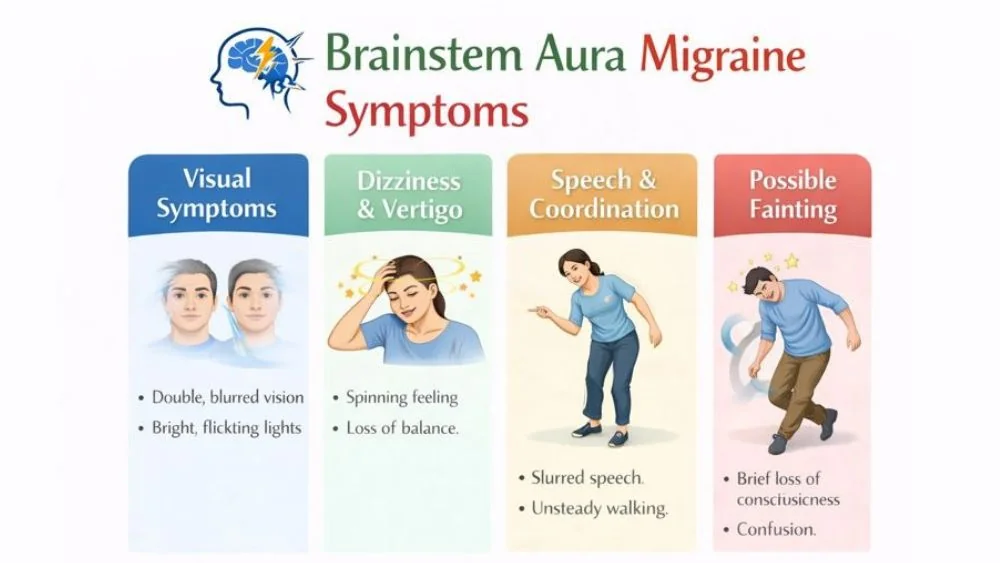
Migraine with brainstem aura produces symptoms that affect both sides of your body. These symptoms usually appear before the headache phase and last between five and sixty minutes.
The most common symptoms include:
- Vertigo or spinning sensation
- Difficulty speaking clearly
- Poor balance and coordination
- Double or blurred vision
- Ringing in the ears
These symptoms fade fully in most people.
Visual Symptoms of Brainstem Aura Migraine
The visual symptoms of brainstem aura migraine affect how your brain processes sight. This is different from eye disease. Both eyes are involved, even if it feels one-sided.
Visual changes may include:
- Double vision
- Blurred vision
- Flickering lights
- Temporary dark spots
These signs confirm that the source is neurological, not ocular.
Dizziness and Vertigo in Brainstem Migraine
Vertigo is one of the most disabling features of migraine with brainstem aura . You may feel as if the room is spinning or as if you are moving when you are not.
Important characteristics:
- Starts suddenly
- Worsens with head movement
- Often paired with nausea
This symptom alone often leads to emergency visits.
Speech, Balance, and Coordination Symptoms
Speech problems occur when brainstem pathways controlling muscles of speech are affected. Words may come out slowly or sound slurred.
You may notice:
- Trouble forming words
- Difficulty walking straight
- Feeling pulled to one side
These symptoms often improve once the aura phase ends.
Loss of Consciousness or Altered Awareness
Some people experience brief fainting or confusion. This does not mean brain injury. The loss of awareness is usually short and fully reversible. Doctors take this symptom seriously to rule out seizures or heart problems, especially during first-time attacks.
Migraine With Brainstem Aura vs Stroke or TIA
Migraine with brainstem aura often mimics stroke or transient ischemic attack (TIA). The symptoms overlap, which creates fear and delays correct diagnosis.
Shared symptoms include:
- Slurred speech
- Balance loss
- Visual disturbances
The key difference is reversibility. Stroke symptoms usually do not resolve fully within an hour.
Overlapping Symptoms That Cause Misdiagnosis
Emergency doctors often treat first-time attacks as a stroke until proven otherwise. This is the correct approach because stroke must be ruled out quickly.
Features that confuse diagnosis:
- Sudden onset
- Multiple neurological symptoms
- Altered awareness
A detailed history helps separate migraine with brainstem aura from vascular events.
Red Flags That Require Emergency Evaluation
You should seek urgent care if:
- Symptoms last longer than one hour
- Weakness does not improve
- This is your first attack after age fifty
- Symptoms feel different from past episodes
Prompt evaluation protects your safety.
How Migraine With Brainstem Aura Is Diagnosed
There is no single test for migraine with brainstem aura . Diagnosis is based on your symptoms, medical history, and exclusion of other conditions.
Doctors look for:
- Recurrent attacks with similar patterns
- Brainstem symptoms without limb paralysis
- Complete recovery after episodes
Clinical Diagnostic Criteria (ICHD-3)
The international diagnostic criteria require:
- At least two attacks
- Brainstem-related aura symptoms
- Headache during or after the aura phase
These criteria help prevent mislabeling.
Role of MRI, EEG, and Other Tests
Tests are used to rule out dangerous causes, not to confirm migraine. Common tests include:
- MRI to exclude stroke or tumors
- EEG if seizures are suspected
- Blood tests are used when infection or metabolic issues are possible
These tests are often normal in migraine with brainstem aura , which reassures patients.
Migraine With Brainstem Aura Treatment Options
Migraine with brainstem aura treatment focuses on safety, symptom control, and long-term attack reduction. There is no single drug that works for everyone. Doctors choose treatment based on how often attacks occur, how severe the symptoms are, and your overall health.
Treatment plans usually combine medicines with lifestyle changes. This approach works better than relying on pain relief alone. Since migraine with brainstem aura can mimic serious brain conditions, treatment always starts after proper evaluation.
Acute Treatment for Brainstem Aura Migraine
Acute treatment means medicines taken during an attack. The goal is to reduce pain, nausea, and neurological symptoms without increasing risk.
Doctors usually prescribe:
- Nonsteroidal anti-inflammatory drugs (NSAIDs) are used to reduce pain and inflammation
- Anti-nausea medicines to control vomiting and dizziness
- Magnesium supplementation in some patients, as low magnesium levels are linked to migraine activity
In emergency settings, fluids and anti-vertigo medicines may be used. You should avoid self-medicating without guidance because some migraine drugs are unsafe for brainstem aura migraine .
Preventive Medications for Frequent Attacks
Preventive treatment is recommended when migraine with brainstem aura attacks occur more than once a month or interfere with daily life. These medicines are taken daily, not during attacks.
Common preventive options include:
- Beta blockers that calm nerve activity and stabilize blood flow
- Calcium channel blockers that reduce abnormal nerve firing
- Anti-seizure medicines that quiet overstimulated brain cells
Doctors usually start with low doses and adjust slowly. Dosage varies by age, body weight, and medical history.
Why Triptans Are Often Avoided
Triptans are common migraine drugs, but many doctors avoid them in migraines with brainstem aura . These medicines narrow blood vessels, which may increase the theoretical risk of brainstem-related symptoms.
Current evidence is limited. Some specialists may use triptans cautiously in selected patients, but many prefer safer alternatives. This decision is always individualized and based on risk assessment.
Lifestyle and Trigger Management
Lifestyle control plays a major role in reducing migraine with brainstem aura attacks. Medication alone is not enough if triggers remain unmanaged. Small daily habits can lower attack frequency and severity.
Sleep, Stress, and Hormonal Factors
Sleep disruption is one of the strongest triggers. Irregular sleep confuses the brain’s internal clock and increases migraine activity.
You should:
- Sleep and wake at the same time daily
- Avoid late-night screen exposure
- Manage stress through structured routines
Hormonal changes also matter. Many females notice attacks around menstruation due to estrogen shifts. Doctors may adjust preventive plans during these periods.
Diet and Hydration Considerations
Skipping meals can trigger a brainstem aura migraine by lowering blood sugar. Dehydration thickens blood and stresses the nervous system.
Helpful habits include:
- Eating regular meals
- Drinking water throughout the day
- Limiting caffeine to consistent amounts
Food triggers vary. Keeping a symptom diary helps identify personal patterns.
Avoiding Known Brainstem Migraine Triggers
Trigger avoidance reduces attack frequency but does not eliminate the condition. Common triggers include:
- Bright or flickering lights
- Loud environments
- Strong smells
- Sudden weather changes
Avoidance strategies work best when paired with preventive medication.
Migraine With Brainstem Aura in Children and Adults
Migraine with brainstem aura presents differently across ages, with children showing more balance and stomach symptoms than headache. Adults usually describe clearer neurological warning signs due to better symptom awareness.
Pediatric Brainstem Aura Migraine
Children may struggle to describe symptoms clearly. Instead of a headache, they often present with vomiting, dizziness, or trouble walking.
Common signs in children include:
- Sudden vertigo
- Nausea without a clear headache
- Balance problems
Children usually recover fully between attacks. Long-term brain damage is not expected.
Differences in Adults vs Adolescents
Adults tend to report classic aura symptoms such as speech trouble and double vision. Adolescents may show behavioral changes, confusion, or fear during attacks. Hormonal changes during puberty increase attack frequency. Proper diagnosis prevents unnecessary anxiety and testing.
Prognosis and Long-Term Outlook
The long-term outlook for migraine with brainstem aura is generally positive. Most people do not develop permanent neurological problems. With proper management, many patients see fewer attacks over time.
Does Migraine With Brainstem Aura Go Away?
In many cases, attacks become less frequent with age. Some people transition to typical migraine without brainstem symptoms. Others experience long symptom-free periods.
There is no fixed timeline. Improvement depends on trigger control, treatment adherence, and individual nervous system sensitivity.
Risk of Recurrence and Chronic Migraine
Risk increases when:
- Attacks are untreated
- Preventive therapy is delayed
- Triggers remain uncontrolled
Early management lowers the chance of chronic migraine development.
FAQs
Is migraine with brainstem aura dangerous?
Migraine with brainstem aura is usually not life-threatening, but symptoms can look severe. Emergency evaluation is important during the first attacks to rule out stroke or seizures before confirming the diagnosis.
Can a brainstem aura migraine cause permanent damage?
Brainstem aura migraine does not cause permanent brain damage in typical cases. Symptoms are reversible, and brain imaging usually remains normal after attacks.
Can migraine with brainstem aura mimic a stroke?
Yes, migraine with brainstem aura can closely mimic stroke or TIA. Both cause speech problems, balance loss, and vision changes, which is why urgent evaluation is always recommended.
Is dizziness always part of brainstem migraine?
Dizziness is very common in brainstem aura migraine , but it is not required for diagnosis. Some people experience mainly visual or speech-related aura symptoms instead.
What role do MRI, EEG, or other tests play in diagnosis?
MRI and EEG do not confirm migraine with brainstem aura . They help rule out stroke, tumors, seizures, or infections when symptoms are new or unusual.
When should seizures or structural brain disease be ruled out?
Doctors investigate seizures or structural disease when loss of consciousness is prolonged, recovery is incomplete, or symptoms do not follow typical migraine patterns.
What treatment options are available for migraine with brainstem aura?
Treatment for migraine with brainstem aura includes acute medicines, preventive drugs, trigger management, and lifestyle changes. Treatment plans are individualized and adjusted over time.
What acute treatments are used for brainstem aura migraine attacks?
Doctors usually use pain relievers, anti-nausea medicines, and supportive care during migraine with brainstem aura attacks. Triptans are often avoided due to safety concerns.
What preventive medications help reduce frequent brainstem aura migraines?
Preventive treatment for migraine with brainstem aura may include beta blockers, calcium channel blockers, or anti-seizure medicines. Doctors choose options based on age, symptoms, and overall health.
About The Author

Medically reviewed by Dr. Chandril Chugh, MD, DM (Neurology)
Dr. Chandril Chugh is a U.S.-trained, board-certified neurologist with expertise in diagnosing and managing neurological disorders, including migraines, epilepsy, Parkinson’s disease, and movement disorders. His clinical focus includes evidence-based neurological care and patient education.
All content is reviewed for medical accuracy and aligned with current neurological guidelines.