Vertigo means a false sense that you or the room is spinning when nothing is moving. Dizziness can feel lighter, like faintness or unsteadiness. These symptoms can come from the balance system in your inner ear, from brain conditions, or from body changes like blood pressure and breathing shifts.
Stress and anxiety can trigger or worsen vertigo in some people, but they are not the only causes. Doctors still need to rule out inner ear, brain, heart, and medicine-related problems before they say stress is the main reason.
Studies show that stress and anxiety can change breathing, blood flow, and hormone levels in ways that disturb the inner ear and brain centers that control balance. Research also shows that dizziness and anxiety often feed each other. So when you ask stress can cause vertigo in many people, especially if you already have a sensitive inner ear or a history of migraine, but each case needs careful medical review.
Anxiety Vertigo Symptoms:
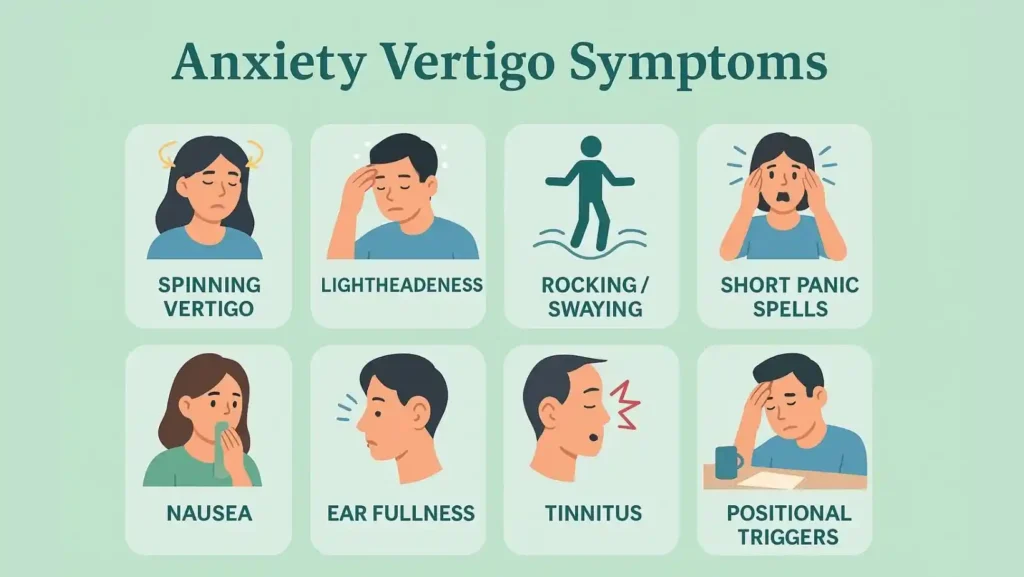
Many people first feel vertigo or dizziness during strong worry or panic. Doctors see repeated patterns, and these patterns help explain anxiety vertigo symptoms .
Typical Spinning Vs Lightheadedness Descriptions
In strict medical use, vertigo means spinning. You may feel that you move or that the room spins around you. This often points to a problem in the vestibular system, which is the balance organ of the inner ear and its nerve.
Under stress, you might feel a quick spin that lasts seconds or minutes, a pull to one side, or a rocking feeling. Other people mainly feel lightheaded or “floaty,” as if they might faint. This lighter dizziness often comes from changes in blood pressure or breathing during stress, not only from the inner ear.
Short Attacks Vs Prolonged Imbalance Patterns
Some people have brief spins during a panic attack. Heart rate jumps, breathing speeds up, and you may sweat or feel chest tightness. Vertigo can appear as one part of this full stress surge.
Others feel off balance most of the day without strong spins. Common signs include:
- Feeling like you walk on soft ground
- Extra dizziness in busy shops or while using screens
One pattern often linked with stress and previous vertigo is called Persistent Postural Perceptual Dizziness (PPPD). It can start after an ear problem or panic attack and then stay because the brain remains on high alert. In daily life, this works like chronic stress vertigo , where worry and dizziness keep each other going.
Associated Features: Nausea, Ear Fullness, Tinnitus
During stress-linked vertigo, your whole body can react. You may feel sick to your stomach, sweat, or notice a racing heart. Some people also hear ringing, buzzing, or hissing in the ears, called tinnitus, or feel pressure in one ear.
These signs can appear in inner ear disorders such as Ménière disease, but stress can make you notice them more or make mild ear signs feel stronger. Because of this mix, doctors do not stop at vertigo when you mention ear changes. They usually test hearing and check the ears.
Positional Triggers and Anxiety-Linked Onset
Many vertigo spells start when you roll in bed, lie back, look up, or bend. This pattern is classic for Benign Paroxysmal Positional Vertigo (BPPV), where tiny calcium crystals in the inner ear move into the wrong place.
Stress does not move the crystals, but it changes how you react to the spin. When you feel tense, a short spin can feel like a major crisis. You may freeze, grab the wall, and breathe fast. If attacks often start in crowds, during conflict, or when you worry about your health, stress is likely a major part of the trigger pattern.
Stress And Dizziness Connection
The stress and dizziness connection is more than simple worry. Stress turns on body systems that help you face danger. These systems change heart rate, blood vessel tone, breathing, and hormones. All of these also affect your inner ear and the brain areas that keep you balanced.
Autonomic Activation And Inner Ear Blood Flow Changes
When you feel stressed, your autonomic nervous system switches into “fight or flight” mode. Heart rate rises, blood vessels tighten, and blood flow shifts toward muscles. This fast reaction helps in short bursts but can disturb the delicate blood supply to the inner ear and balance centers.
Short drops or jumps in blood pressure can cause brief lightheadedness when you stand up quickly. If you already have an inner ear problem, these swings can make vertigo feel sharper. So stress can cause vertigo by changing blood flow in some people, especially when other risk factors are present.
Hyperventilation, Dehydration And Vestibular Irritation
Under stress, you start to breathe fast and shallow without noticing. This is called hyperventilation (fast over-breathing). It lowers carbon dioxide in your blood and can lead to tingling, chest tightness, and dizziness.
At the same time, you might drink more coffee, forget water, or skip meals. Mild dehydration and low blood sugar both add to lightheadedness.
Studies suggest that hyperventilation and fluid shifts can make the vestibular system, which handles balance, more reactive than usual. Even normal head moves can then set off spins or sways.
Stress Amplified Perception Of Normal Dizziness
Your brain filters body signals all the time. Small changes in balance, heart rate, or breathing happen in healthy people all day. Most of the time, you barely notice them.
When you feel stressed, that filter changes. The brain scans for danger and normal body signals suddenly feel loud. A tiny sway feels like a big wave. A quick head turn feels risky.
This does not mean your symptoms are fake. It means your brain gives them high priority. Over time, this can lead to a loop where you fear dizziness, focus on it, and then feel it more often. This loop is a core part of chronic stress vertigo , and it explains why symptoms can last long even after the first trigger passes.
Interaction With Migraine And Vestibular Migraine
Migraine is a brain condition where nerves and blood vessels are very sensitive to triggers like light, sound, hormones, and stress.
In vestibular migraine, vertigo or strong dizziness are the main signs. Episodes can last from minutes to hours, and you may or may not have headache pain. Many people report that stressful days or poor sleep come right before attacks.
So for people with migraine, vertigo caused by stress is even more likely to be true. Stress is not the only trigger, and it does not create migraine by itself, but it can help bring on attacks in a brain that is already sensitive.
Can Anxiety Cause Vertigo
You might feel dizzy and ask yourself if your worry is the main reason. Anxiety can cause vertigo , but it usually mixes with other body factors. Anxiety can trigger vertigo, make it worse, or keep it going after an ear problem has healed.
Clinical Studies Linking Panic And Anxiety To Vertigo
Studies show that people with panic disorder and strong anxiety report dizziness and vertigo more often than those without anxiety. Many describe spinning, rocking, or floating feelings during panic attacks.
Research on persistent postural perceptual dizziness, or PPPD, also finds that it often starts after an intense vertigo event or a panic episode. Symptoms then stay for months, even though tests may look normal.
So when you ask if anxiety can cause vertigo , evidence suggests that anxiety can push the balance system into a long, sensitive state. It does not mean your symptoms are “all in your head.” It means your brain and inner ear react strongly to stress.
Who Is At Higher Risk
Some people are more likely to feel anxiety and vertigo symptoms . You have a higher risk if you:
- Have a history of migraine or vestibular migraine
- Had BPPV, ear infections, or Ménière disease in the past
- Had a head injury or whiplash
- Live with long-term anxiety or trauma
Migraine and anxiety already share stress links. More than half of people with migraine also have some anxiety disorder. If you fall in this group, you may notice that stress raises both head and balance symptoms. For you, stress can cause vertigo, which is often true, because your system is already sensitive.
Distinguishing Psychogenic Vs Vestibular Vertigo
Doctors sometimes use the word “functional” for dizziness that mainly comes from how the brain handles signals, not from damage in the ear. PPPD is one example. You may feel off balance daily, but scans and ear tests look normal.
Vestibular vertigo, on the other hand, comes from clear inner ear problems such as BPPV, neuritis, or Ménière disease. These often have clear triggers, a typical attack length, and eye movement changes on exam.
In real life, both sides often mix. You might start with BPPV, then worry so much that the brain stays stuck in alarm. At that stage, chronic stress vertigo keeps going even after the crystals move back.
Red Flags Suggesting A Primary Neurological Cause
You must not blame all dizziness on stress. Some signs need urgent care. These include:
- Sudden vertigo with double vision or trouble speaking
- Weakness in face, arm, or leg
- Strong chest pain or feeling close to fainting
- New severe headache with neck stiffness
These signs can point to stroke, heart trouble, or bleeding, not only to stress. If you see these, do not stop, as stress can cause vertigo . You should seek emergency help at once.
Stress Hormones And Vertigo: Cortisol, Adrenaline, Balance
When you feel tense, your body releases stress hormones. This is one of the key links between stress hormones and vertigo . The main hormones here are cortisol and adrenaline. They help you face danger, but when they stay high for long, they can disturb balance.
Cortisol Effects On Inflammation And Inner Ear Tissues
Cortisol helps control inflammation and how your body uses salt and sugar. Short bursts can protect tissues. Long exposure can upset the normal balance of fluids and immune signals.
The vestibular system in your inner ear needs very stable fluid pressure and ions to send clear signals to the brain. Research shows that steroids can affect these tissues and are even used in some ear treatments.
It is not proven that stress alone will damage the inner ear in every person. But raised cortisol may make existing ear problems worse. In that way, stress hormones and vertigo can be closely linked for some people.
Adrenaline Spikes And Transient Blood Pressure Shifts
Adrenaline is the fast-action stress hormone. It speeds up your heart and raises blood pressure for short periods. You feel this as a rush, pounding heart, or trembling.
These quick changes in blood pressure can disturb blood flow to the inner ear and brain. This can cause brief spinning or lightheaded spells, especially when you stand quickly or turn your head.
So again, stress can cause vertigo through these sudden hormone spikes. In some people, yes. The effect is often short but very scary.
Hormonal Modulation Of Vestibular Nerve Sensitivity
Your vestibular nerve carries balance signals from the inner ear to your brain. Lab research suggests that stress hormones and other related chemicals can change how excitable these nerve cells are.
If the nerve becomes more sensitive, normal motion can feel too strong. Small head turns or busy visual scenes then set off dizziness. This is another way stress hormones and vertigo may connect, even without visible ear damage on scans.
Chronic Hormonal Dysregulation And Vestibular Vulnerability
When stress is part of your daily life for months, hormone systems can drift from their normal pattern. Sleep problems, blood sugar swings, and constant alertness then follow.
Studies on vestibular disorders and hormones suggest that long-term hormone imbalance can increase the risk of certain balance conditions. This does not mean everyone with stress will get vertigo. It does mean that long-standing stress can make you more vulnerable if another trigger appears.
This is one of the reasons chronic stress vertigo feels so stubborn. It is not only the mood. It is also the body’s chemical state.
Chronic Stress Vertigo
Chronic stress vertigo is not an official single diagnosis, yet it is a useful way to understand what you feel. It describes dizziness that lasts for weeks or months, where stress and balance problems keep feeding each other.
Cumulative Inflammation, Central Sensitization, And Balance
When your nervous system stays on high alert, the brain may start to “turn up” pain and dizziness signals. This is called central sensitization in scientific terms. You can think of it as your volume knob being stuck too high.
At that stage, normal daily motion feels like too much. Screens, traffic, or crowded stores can make you sway or feel sick. You may also notice more neck tension and headaches.
How Chronic Anxiety Alters Vestibular Compensation
After an inner ear injury, the brain usually learns to adapt. This process is called compensation. It works best when you move your head and body and let the brain correct for the new input.
When you feel scared of dizziness, you may avoid movement. You might keep your head still, walk less, or stay home. This reduces the signals that the brain needs to relearn balance. As a result, vertigo hangs around longer.
In this way, stress can cause vertigo to last more than it should. Yes, because fear blocks normal healing pathways.
Behavioral Sequelae That Perpetuate Dizziness Cycles
You may start to lean on walls, avoid shops, or stop driving. These habits feel safe, yet they tell your brain that movement is dangerous. Over time, you lose muscle strength and confidence.
The less you move, the more unsteady you feel with each step. The more unsteady you feel, the more you focus on every wobble. This is the core loop of chronic stress vertigo . Breaking this loop is a key treatment goal.
Prognosis And Timeline For Recovery With Treatment
Most people do improve when they follow a plan that targets both the vestibular system and stress. Studies on PPPD and related conditions show that vestibular rehab plus cognitive therapy and sometimes medicine can reduce symptoms over months.
Recovery is not instant, and not every person reaches zero symptoms. Yet many reach a level where vertigo no longer controls daily choices.
Differentiating Non-Stress Vertigo
While stress can cause vertigo, it is often true, many vertigo problems start in the ear or brain regardless of mood. You need to know key patterns so you can seek the right help.
Benign Paroxysmal Positional Vertigo (BPPV) Checklist
BPPV is one of the most common causes of vertigo. Tiny calcium crystals in the inner ear move into the wrong canal. This causes brief spells of spinning with head movements such as rolling in bed or looking up.
Tymon pical features include short attacks that last seconds, a clear link with head position, and normal hearing. Stress can make attacks feel worse, but it does not cause the crystals by itself.
Vestibular Neuritis, Meniere’s Disease, And Migraine Signs
Vestibular neuritis is an inflammation of the balance nerve. It causes sudden, strong vertigo that can last days, often with trouble walking. Hearing is usually normal.
Ménière disease brings repeated attacks of vertigo with ear fullness, tinnitus, and hearing loss in one ear.
Vestibular migraine causes vertigo, imbalance, and nausea with or without headache. Stress is a known trigger for vestibular migraine attacks.
These disorders may get worse under stress, but need their own targeted treatments.
Cardiac, Neurologic, And Medication-Related Dizziness
Heart rhythm problems, low blood pressure, anemia, low blood sugar, and some medicines can all cause dizziness. If you feel chest pain, severe breathlessness, or fainting, you need urgent heart checks.
Some blood pressure drugs and sedatives list dizziness as a known side effect. Always tell your doctor all medicines and supplements you take.
When To Order Imaging Or ENT/Audiology Referral
Doctors may order an MRI when they worry about stroke, multiple sclerosis, or tumors. They may send you to an ENT or audiologist for detailed hearing and balance tests. These steps help sort out stress and dizziness connection from organic disease.
If all tests are clear and your story fits anxiety, vertigo symptoms, or PPPD, your team may then focus on stress-focused care and rehab.
Diagnosis: Testing For Stress-Related Vs Organic Vertigo
A good diagnosis looks at both body and mind. Only then can your doctor answer if stress can cause vertigo in your specific case.
Bedside Vestibular Exams
Simple office tests check whether moving your head brings on typical eye movements. The Dix-Hallpike test is the main test for BPPV. The head impulse test looks at how your eyes correct when your head moves fast.
Abnormal results point to vestibular causes. Normal results push doctors to think about functional or stress-related dizziness.
Role Of Audiometry, VNG, And Vestibular Function Tests
Hearing tests can show loss in one ear, which may mean Ménière disease or other ear damage. VNG uses cameras to track involuntary eye movements triggered by balance tests.
These tests help separate the stress and dizziness connection from clear ear structure problems.
Assessing Anxiety: Screening Tools And History Items
Your doctor may use short forms to measure anxiety and low mood. They will ask what you fear most, how often you worry, and how dizziness changed your life. Honest answers help.
If your story fits the theory that anxiety can cause vertigo , then treating anxiety becomes part of your vertigo plan, not an extra.
Combining Vestibular And Psychiatric Evaluation
Best care often comes from teamwork. ENT or neurology can rule out serious disease. Psychology or psychiatry can treat anxiety and panic. Physiotherapy can guide balance training.
This combined view respects both your physical symptoms and your emotional stress.
Treatment: Acute Relief And Managing Stress-Induced Vertigo
You usually need two layers of care. One layer calms current symptoms. The other works on deeper causes such as chronic stress, vertigo, and fear of movement.
Immediate Symptom Control
During strong attacks, doctors may give vestibular suppressants to calm the inner ear, and anti-nausea tablets to control vomiting. These help you rest while tests are done.
Dosage always depends on your age, other medicines, and general health. Your doctor chooses the safest plan for you.
Short-Term Use Vs Effects On Compensation
These drugs can help a lot in the first days of an acute ear problem. But if you keep taking them for many weeks, they may slow the brain’s natural adaptation.
In the long term, stress can cause vertigo patterns. Doctors often prefer to limit such drugs and focus on rehab and stress work.
Vestibular Rehabilitation Therapy Protocols
Vestibular rehab is a set of eye, head, and body exercises planned to retrain your balance system. You might start with simple gaze tasks, then move to walking and turning, then to complex tasks such as walking in busy places.
You may feel slightly more dizzy when you begin. Over time, with steady practice, your brain learns that these motions are safe. This cuts the power of anxiety and vertigo symptoms and reduces their hold on your life.
Targeted Anxiety Treatments: CBT, SSRIs, Breathing Training
Cognitive behavioral therapy helps you spot unhelpful thoughts, such as “I will fall every time I walk,” and replace them with realistic ones. It also guides you to slowly face feared situations again.
Doctors sometimes use medicines such as SSRIs to treat anxiety and low mood when symptoms are strong. Dosage varies by age, health, and other drugs.
Breathing training, such as slow nasal breathing with long exhales, can quiet the stress system and ease the stress and dizziness connection in daily life.
Prevention & Self Care: Reduce Chronic Stress Vertigo Risk
You cannot control every trigger, but you can lower risk and help your body recover. Self care supports any medical treatment you receive.
Lifestyle: Sleep, Hydration, Caffeine, Alcohol Moderation
Regular sleep helps your brain and vestibular system reset. Poor sleep is a known trigger for migraine and vertigo attacks.
Drink water throughout the day, especially if you take diuretics or drink coffee. Keep caffeine and alcohol moderate, since both can affect the inner ear and blood pressure.
Daily Relaxation: Breathing, Mindfulness, Paced Activity
Simple daily relaxation breaks teach your body that it does not need to stay in constant alarm. Even five minutes of slow breathing or quiet sitting can help lower stress hormones over time.
Short walks or light stretching also help. They keep blood moving and support recovery from chronic stress vertigo while still respecting your limits.
Vestibular Exercises To Build Tolerance And Balance
Your therapist may give you home drills. These can include slow head turns, walking while moving your eyes, or standing on one leg near a wall. The key is regular practice, not speed.
These moves train your brain to handle motion again, so can stress-caused cause vertigo becomes less of a daily concern.
When To Start Medical Prevention For Migraine Or Anxiety
If you notice a strong pattern between stress, migraine, and vertigo, ask your doctor about migraine prevention options. If anxiety or panic stops you from working or leaving home, it is time to seek focused mental health care.
Early treatment often means faster and greater improvement.
FAQ
Can Stress Permanently Damage My Balance System?
Ongoing stress usually does not permanently destroy the inner ear, but it can keep your brain in an overactive alarm state. In that case, vertigo feels constant until you treat the stress loop.
How Do I Tell If My Vertigo Is Caused By Anxiety?
Vertigo linked to anxiety often appears with a racing heart, chest tightness, and fear. Tests may look normal. If anxiety vertigo symptoms match your pattern, your doctor may focus on both balance rehab and anxiety care.
Can Panic Attacks Cause A Full Spinning Vertigo Episode?
Yes, panic can change breathing, blood pressure, and stress hormones fast, which can trigger spinning or swaying. In that situation, anxiety can cause vertigo is clearly true, though other causes still need to be ruled out.
How Long Does Stress Induced Vertigo Usually Last?
Some episodes last minutes, while chronic stress vertigo can last months if the stress loop stays active. With a mix of vestibular rehab and anxiety treatment, many people see steady improvement over time.
Will Vestibular Rehab Help Dizziness Caused By Stress?
Vestibular rehab can help your brain relearn safe motion and reduce fear. When combined with care for stress hormones and vertigo , exercises often reduce symptoms and improve confidence in daily movement.
When Should I See An ENT Vs A Mental Health Specialist?
You should see an ENT when vertigo is strong, comes with ear changes, or appears suddenly. You should see a mental health specialist when the stress and dizziness connection dominates your symptoms or causes ongoing panic.
Can Treating Anxiety Stop Recurrent Vertigo Attacks?
Treating anxiety often reduces how often attacks occur and how intense they feel. When stress can cause vertigo , better anxiety control can break that loop, though some ear conditions may still need direct care.
Are There Medications That Prevent Stress-Related Vertigo?
There is no single pill just for stress vertigo. But medicines for migraine and anxiety can lower attack risk where anxiety can cause vertigo is part of the problem. Your doctor chooses based on your full health profile.
Can Lifestyle Changes Alone Resolve Chronic Stress Vertigo?
Mild cases may improve a lot with sleep, hydration, and stress control alone. More severe chronic stress vertigo usually responds best when lifestyle shifts are paired with rehab and sometimes therapy or medicine.
Is Vertigo Worse At Night When I Am Anxious?
You may feel more dizzy at night due to quiet surroundings and racing thoughts. This can make you focus on every wobble, which in turn raises anxiety and symptoms.
What Are The Red Flags That Require Immediate ER Care?
Go to an emergency room if vertigo appears with chest pain, severe headache, fainting, speech trouble, or weakness. In these situations, you must not assume stress and dizziness is the only cause, and urgent checks are vital.
About The Author

Medically reviewed by Dr. Chandril Chugh, MD, DM (Neurology)
Dr. Chandril Chugh is a U.S.-trained, board-certified neurologist with expertise in diagnosing and managing neurological disorders, including migraines, epilepsy, Parkinson’s disease, and movement disorders. His clinical focus includes evidence-based neurological care and patient education.
All content is reviewed for medical accuracy and aligned with current neurological guidelines.