Stress does not usually act as the only cause. Yet it can push your body in ways that make bleeding from your nose more likely. Stress changes your heart rate, blood pressure, hormones, breathing, and daily habits. All these can strain the tiny blood vessels in your nose and make them easier to bleed.
Doctors call a nosebleed “epistaxis” (nose bleeding that comes from fragile vessels inside the nose). Most nosebleeds start in the front of the nose, where many small vessels lie close to the surface. Dry air, nose picking, allergies, and infections are still the main causes. Stress often sits in the background and makes these triggers stronger.
So stress can cause nosebleeds , but usually along with other factors like dryness, high blood pressure, or frequent rubbing of the nose. When you understand the link, you can control both your stress and your nosebleeds in a smarter way.
Stress And Nosebleeds Connection
The stress and nosebleed connection starts with how your body reacts when you feel tense or scared. Your brain sends signals to the “fight or flight” system, called the sympathetic nervous system. This system prepares you to face danger, even if the danger is only an exam, a work deadline, or a family issue.
Sympathetic Nervous System Activation Raising Blood Pressure In Nasal Arteries
When you feel stressed, your sympathetic system releases stress hormones like adrenaline (a hormone that raises heart rate and blood pressure). Your heart beats faster. Your blood vessels tighten for a short time, then may relax again. Blood pressure can spike for a while.
Inside your nose, tiny arteries and veins lie very close to the surface of the lining. When blood pressure rises quickly, those tiny vessels feel more force. If they are already weak from dryness, allergy, or past injury, that extra pressure can make them break. This is one way stress can cause nosebleeds to appear suddenly during an argument or right after a tense phone call.
Research on nosebleeds and high blood pressure shows a link, especially in people with long-term hypertension (high blood pressure). People with hypertension have a higher risk of nosebleeds that need hospital care, even though high blood pressure is not always the direct cause of each nosebleed.
So if you have both stress and high blood pressure, stress can cause nosebleeds more often for you than for others, because each stress spike stacks on top of already raised blood pressure.
Stress-Induced Vasoconstriction Followed By Rebound Vessel Dilation
At first, stress makes your blood vessels tighten. This is called vasoconstriction (the vessel wall squeezes down, and the opening becomes smaller). When the stress signal fades, vessels can widen again. This rebound dilation (widening) suddenly increases blood flow.
In the nose, this cycle of squeeze and release can:
- Make already thin vessels more fragile over time
- Increase the chance of a small crack in the vessel wall
- Lead to a short burst of bleeding when you blow or rub your nose
If you notice right after a strong emotional event, this rebound effect is often caused by stress.
Cortisol And Adrenaline Effects Weakening Fragile Nasal Capillaries
Cortisol is another key stress hormone. It helps your body handle long-term pressure by changing how you use sugar, fat, and energy. Over long periods, high cortisol can thin tissues, slow healing, and affect immune function.
In your nose, long-lasting stress and high cortisol levels may:
- Slow repair of small injuries in the nasal lining
- Make capillaries (very small blood vessels) more fragile
- Increase dryness when combined with dry air or certain allergy sprays
Adrenaline also raises blood pressure and heart rate. Together, cortisol and adrenaline can make weak vessels easier to break. So when stress causes nosebleeds , the long-term effect of these hormones is a big part of the explanation.
Anxiety-Related Hyperventilation Drying Nasal Mucosa
During strong anxiety, you may breathe faster and more shallowly. This is called hyperventilation (breathing more air than your body needs at that moment). Fast mouth or nose breathing moves a lot of dry air across your nasal lining. That moist lining is called the mucosa (a soft layer that makes mucus and protects the inside of the nose).
When you breathe fast for a long time:
- Water leaves the mucosa into the air
- The lining dries and may crack
- Any small crust can pull on the vessel under it
Dry cracks can bleed even with a light touch. So anxiety and panic breathing can connect directly to bleeding.
Behavioral Factors Under Stress: Nose Touching, Rubbing, Frequent Blowing
Stress not only changes your body from the inside. It also changes what you do with your hands and face. Many people under stress show “nervous habits” like:
- Rubbing the nose again and again
- Picking at dry crusts inside the nostrils
- Blowing the nose hard, even when there is little mucus
- Pressing the nose bridge when thinking or worrying
Each of these actions can tear the delicate surface inside the nose. If the same area gets rubbed many times a day, one small vessel may eventually rupture and bleed. The stress and nosebleeds connection often combines both internal and external factors in this way.
Nosebleeds From Stress
You now know that stress can push blood pressure up, dry out the nose, and drive habits that injure the lining. That is why many people clearly notice nosebleeds from stress , even if stress is not the only medical cause.
Dehydration From Stress Reducing Nasal Moisture
When you are busy or anxious, you may forget to drink water. You may live on coffee or energy drinks. You may skip meals and plain fluids. All these choices can lead to mild dehydration (not enough water in the body).
Dehydration pulls water out of your mucosa. The nose lining becomes:
- Dry
- Less flexible
- Easier to crack with a small bump
Dry nasal mucosa is a well-known cause of epistaxis. Medical sources list dry air, poor hydration, and nasal dryness as key reasons for bleeding, especially in winter or in air-conditioned rooms.
So if you have nosebleeds , think about your drinking habits on stressful days. The answer is often in your water bottle.
Sinus Irritation Worsening During Stress-Related Immune Suppression
Long term stress can affect the immune system. It can make you catch colds more easily and feel more inflamed.
In the nose and sinuses, this can show up as:
- Swollen mucosa
- Thick mucus
- Sinus pressure and pain
Swollen and inflamed tissue is more likely to bleed when you blow or sneeze. If you already have sinus issues, stress may make them flare up, which leads to more nosebleeds from stress, even though germs and allergies are also part of the cause.
Dry Indoor Air Combined With Stress Increasing Mucosal Cracking
Offices, classrooms, and homes with heaters or strong air conditioning often have very dry air. Dry indoor air pulls moisture from your nasal mucosa and forms crusts.
Now add stress on top:
- You work long hours indoors
- You breathe fast while worried
- You forget to use a saline spray or a humidifier
This mix turns normal dryness into painful cracking. When a crack forms over a small vessel, only a minor rub or blow can start bleeding.
In this context, stress can cause nosebleeds at your desk or in bed at night, especially when indoor air is dry, and you are tense for many hours.
Increased Tension Headaches Causing Aggressive Nose Blowing
Stress often triggers tension headaches. You may feel tight bands of pain across your forehead, around your eyes, or at the back of your head. Many people mistake this feeling for sinus pressure and start blowing their nose hard to “clear” things.
Hard nose blowing:
- Sends a strong air rush against fragile vessels
- Can tear small clots that were sealing tiny breaks
- Raises pressure inside the nasal chambers for a moment
If you do this many times when stressed, nosebleeds from stress can start even when your sinuses are not truly infected.
Chronic Stress Worsening Allergic Rhinitis Symptoms
Allergic rhinitis is allergic inflammation in the nose. Common triggers are dust mites, pollen, pet dander, or mold. Symptoms include sneezing, itching, a runny nose, and congestion.
Chronic stress may not cause allergies, but it can worsen how strongly your body reacts. When you feel stressed:
- You may itch and rub your nose more
- You may skip allergy sprays or rinses
- Your sleep may suffer, so the inflammation seems worse
Reasons For Sudden Nosebleeds
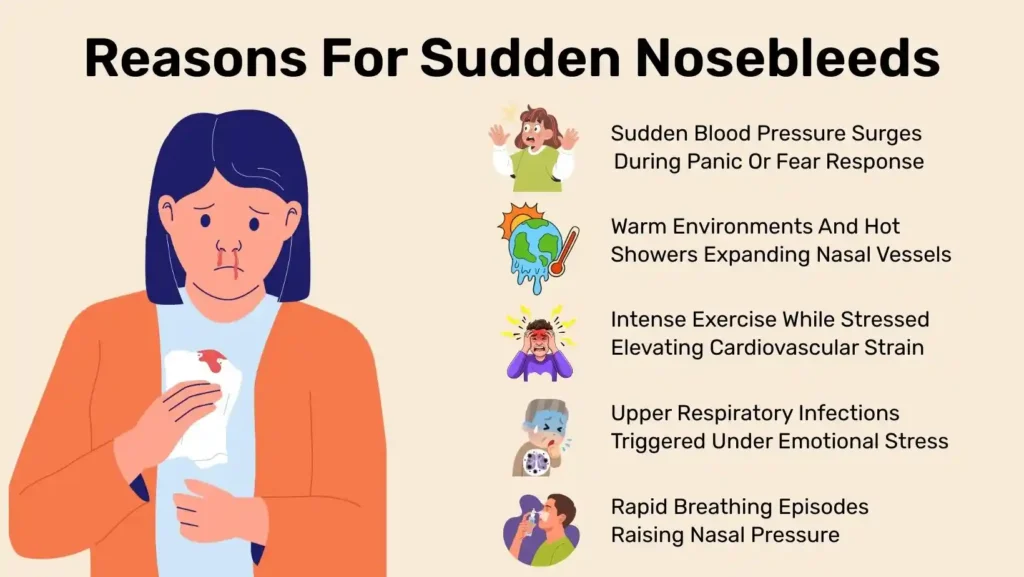
You may feel fine, then your nose starts to bleed out of nowhere during a tense moment. Stress does not change your nose in one second, but it can set up many reasons for sudden nosebleeds that show up fast.
Sudden Blood Pressure Surges During Panic Or Fear Response
When you panic, your heart rate jumps. Your blood pressure can spike in a short time. This is part of the body’s fear response.
Inside your nose, there are many tiny vessels near the surface. When pressure rises suddenly:
- More force pushes on thin vessel walls
- Any weak spot can split
- A small break can bleed more than you expect
If your nose lining is already dry or crusted, a blood pressure surge makes bleeding even more likely. So during a panic attack, stress causes nosebleeds that feel sudden, because stress and fear join with fragile vessels.
Warm Environments And Hot Showers Expanding Nasal Vessels
Heat makes blood vessels open wide. Hot showers, saunas, and very warm rooms increase blood flow to the skin and the nasal lining.
When vessels open wide:
- Blood volume in the nasal area rises
- Pressure in fragile spots can rise
- Small weak vessels may break
If you step into a hot shower right after a stressful day, both heat and stress act together. Heat widens the vessels. Stress keeps your heart rate high, which is one of the hidden reasons for sudden nosebleeds at night or early morning. In this case, cause on their own. It often needs help from heat and dryness.
Intense Exercise While Stressed Elevating Cardiovascular Strain
Exercise is healthy. But when you push very hard while you feel angry or anxious, your heart and vessels face extra strain.
During intense workouts while stressed:
- Heart rate and blood pressure rise higher than usual
- Breathing is faster and often through the mouth
- Dry air hits the nasal lining with each breath
If your nose is dry or inflamed, hard exercise can trigger bleeding. When you feel upset, try to warm up slowly and build your pace. This helps reduce the risk that the mix of stress, effort, and dry air will turn into reasons for sudden nosebleeds during your run or gym session.
Upper Respiratory Infections Triggered Under Emotional Stress
Stress alone does not cause colds. Yet long-term emotional stress can make you catch infections more easily. When you get a cold or the flu, the nasal lining swells and fills with mucus. You blow your nose more and rub it more.
Infections bring:
- Swelling of nasal blood vessels
- More fragile tissue
- Frequent coughing and sneezing
Each of these steps can cause epistaxis. During that time, stress can cause nosebleeds . It can, because stress sets the stage for infection and poor healing, and the infection then pushes you into frequent nose blowing.
Rapid Breathing Episodes Raising Nasal Pressure
Rapid breathing not only dries the nose. It also changes pressure inside the nasal passages. When you breathe fast and forcefully:
- Air pressure swings up and down quickly
- Vessels in the front of the nose feel this pressure
- Small clots that were sealing tiny breaks can pop off
If you just had a mild bleed earlier in the week, these swings can reopen the same spot. This is another way stress can cause nosebleeds that seem random yet follow a pattern of panic or fast-breathing spells.
Stress Hormones And Nosebleeds
Stress hormones and nosebleeds decide how chemicals in your body respond under pressure. The main hormones here are adrenaline and cortisol.
Adrenaline-Driven Vessel Pressure Increases
Adrenaline is a “fight or flight” hormone. It raises the heart rate and squeezes many blood vessels. This keeps blood flowing to muscles and the brain when you feel in danger.
Short spikes of adrenaline:
- Make blood pressure jump
- Increase the force inside fragile nasal vessels
- Can turn a tiny crack into a visible bleed
When you have repeated stress during the day, these spikes keep coming. That is one reason stress can cause nosebleeds more often during tense weeks than calm ones.
Cortisol Effects That Thin Nasal Mucosal Lining
Cortisol helps your body cope with long lasting stress. High levels over time can thin skin and mucosa. The nasal mucosa is the soft, moist lining that covers the inside of your nose.
If cortisol stays high for weeks or months, the lining may:
- Heal more slowly after small injuries
- Lose some of its normal strength
- Tear more easily with rubbing or blowing
When this happens, the link between stress hormones and nosebleeds becomes clearer. You may not bleed every day, but a small trigger will cause more trouble than before.
Inflammatory Hormone Imbalance Worsening Sinus Congestion
Stress changes the balance of many other signals in the body. Some control swelling and inflammation. If this balance shifts, you can feel more congested and stuffy, even without a major infection.
Extra swelling inside the nose:
- Puts pressure on blood vessels
- Makes the lining more fragile
- Increases irritation and itching
You then blow and rub more often. That leads to more minor trauma. Over time, stress hormones and nosebleeds can become a repeating pattern that follows your stressful seasons at work or school.
Hormonal Fluctuations Weakening Nasal Capillary Stability
Capillaries are the smallest blood vessels. Hormones control how tight or loose they stay and how thick their walls remain. When stress is high, some of these control systems shift.
Weaker capillary walls:
- Break with less force
- May leak a little even before they fully open
- Take longer to heal after each bleed
This is why people with long-term stress and other health issues get nosebleeds almost from nowhere. The real cause is a slow weakening of the microvessels over time.
Immune Down-Regulation Heightening Nasal Inflammation
When stress stays high, the immune system can become less effective in some ways and more reactive in others. This “down-regulation” means your body may not clear minor irritation well.
In the nose, that can lead to:
- Ongoing low-grade inflammation
- More crusts and scabs that you pick at
- Repeated small bleeds from the same spot
The longer this cycle goes on, the more clearly you see that stress hormones and nosebleeds are linked, not just a one-time event.
Can Anxiety Cause Nosebleeds?
Anxiety and panic do not replace the main physical causes, like trauma or dryness. But they push several of those causes simultaneously.
Anxiety Attacks Causing Extreme BP Spikes
During a strong anxiety attack, your heart can pound so hard that you feel it in your chest and neck. Blood pressure may surge much higher than your usual resting level.
Those short bursts can:
- Stress fragile vessels
- Break old weak spots
- Turn tiny leaks into active bleeds
So yes, anxiety can cause nosebleeds during severe attacks, especially if your nose lining is already damaged.
Hyperventilation Drying Airway And Nasal Surfaces
Anxiety often makes you breathe fast and deep. Mouth breathing is very common in panic attacks. Air that bypasses the nose does not get warmed and humidified. The nose still feels the flow around it and loses moisture.
Dry surfaces:
- Crack more often
- Hurt and itch
- Bleed when touched or blown
So the breathing part of anxiety is one more way anxiety can cause nosebleeds in someone who already has sensitive nasal tissues.
Nervous Habits: Frequent Wiping, Nose Picking, Or Sniffing
During stress and anxiety, you may not notice your own habits. Many people:
- Wipe the nose with a rough tissue again and again
- Pick at dried mucus inside the nostrils
- Sniff back mucus instead of gently blowing
Each habit adds tiny injuries. Over days or weeks, one spot becomes the “bleeder.” Every new wave of stress makes you repeat the same actions. You then feel that stress can cause nosebleeds, and anxiety is always to blame, although your habits play a strong role, too.
Stress-Triggered Migraines Increasing Nasal Pressure
Headaches and migraines can come with stress. Some people feel pressure behind the eyes and around the nose during these episodes. You might blow your nose hard or press on the bridge to get relief.
Extra pressure from your fingers or from forceful blowing:
- Pushes blood into the small nasal vessels
- Can open fragile spots
- Can restart a recent bleed
So while migraines do not directly cause epistaxis, the way you react to pain under stress can make anxiety-caused nosebleeds feel real in your daily life.
Chronic Anxiety Altering Mucosal Hydration Balance
Long-term anxiety affects sleep, drinking habits, and even the way you breathe at rest. You may breathe more through your mouth at night. You may drink more coffee and less water. You may sleep in dry rooms because you feel warm and open windows less.
All of this shifts the hydration (water level) of your nasal mucosa. Drier tissue is easier to injure. That is why chronic anxiety can slowly increase your risk, even on days when you do not feel very stressed. In that wider sense, stress can cause nosebleeds and anxiety together. Yes, they can add up over time.
When To Seek Medical Care
Most simple nosebleeds stop at home. But some cases need a doctor. It is important to know when stress can cause nosebleeds and is not the only issue, and when a deeper cause may be present.
Nosebleeds Lasting More Than 15 Minutes
If you pinch your soft nose and lean forward, and the bleeding still goes on for more than 15 to 20 minutes, you should seek medical care. Long bleeding may mean:
- A larger vessel is open
- Your blood does not clot well
- Your blood pressure is very high
In such cases, do not just assume stress can cause nosebleeds . You need a doctor to check the true source.
Recurrent Bleeding Episodes Without Clear Triggers
If you have nosebleeds many times per week without clear triggers like dryness or picking, you should see a health professional. Recurrent bleeding can hint at:
- A fragile vessel that needs cautery (sealing)
- Blood clotting problems
- Other nasal or sinus disease
Stress might still play a part. But it is unsafe to blame everything on stress and ignore a pattern of frequent bleeding.
Bleeding With Dizziness, Weakness, Or Fainting
If a nosebleed comes with dizziness, chest pain, strong weakness, or fainting, this is urgent. You may be losing more blood than you think, or a heart or blood pressure problem may be present.
These signs mean stress can cause nosebleeds is not the key question. You need emergency care to make sure your heart, brain, and blood volume are safe.
Nosebleeds With Severe Sinus Symptoms Or Infection
If you also have a high fever, severe facial pain, swelling around the eyes, or thick foul foul-smelling mucus, then the infection may be serious. Bleeding in that context can point to severe sinus disease. You need a doctor to guide treatment, not just home care.
Signs Of Uncontrolled Hypertension During Bleeding
If you know you have high blood pressure and your readings stay very high during or after a bleed, contact a doctor. Uncontrolled hypertension plus stress can greatly increase the chance that stress can cause nosebleeds again and again. You may need changes in your blood pressure medicine.
Treatment Options For Stress-Related Nosebleeds
When you see that stress plays a role, you can treat both the bleeding and the triggers.
Correct First-Aid: Forward Lean & Nasal Pressure Technique
When a bleed starts:
- Sit up straight.
- Lean your body and head slightly forward, not back.
- Pinch the soft part of your nose, just below the bone, with your thumb and index finger.
- Keep steady pressure for at least 10 minutes without checking.
- Breathe through your mouth and try to stay calm.
This simple method works for most front nosebleeds. It also helps you feel more in control, which lowers stress. Over time, this can reduce how often stress can cause nosebleeds to spiral into panic.
Saline Sprays And Humidification To Restore Moisture
Regular use of saline spray (salt water spray) keeps the nasal lining moist. A room humidifier adds moisture to dry indoor air. Both actions:
- Reduce crusts
- Lower chances of cracks
- Help the mucosal heal faster
Better moisture control removes one of the main paths from stress to bleeding.
Topical Ointments For Mucosal Healing
A thin layer of a safe nasal ointment or gel, as advised by your doctor, can protect fragile areas. These products lock in moisture and shield small vessels. Healing then continues even when you face short stress spikes.
Managing Allergies And Sinus Congestion
If you have allergies or sinus problems, follow your treatment plan. This may include:
- Antihistamine pills or sprays
- Nasal steroid sprays
- Saline rinses
Good control of swelling and mucus lowers trauma from blowing and rubbing. It cuts one of the biggest links between stress and nosebleeds in your daily life.
Evidence-Based Stress Reduction Strategies
Simple stress tools can reduce physical strain:
- Regular sleep
- Light daily exercise like walking
- Deep slow breathing exercises
- Short breaks from screens
- Talking with a counselor when needed
These steps lower hormone spikes and blood pressure surges. They make it less likely that tension, panic, or worry will turn into bleeding.
Prevention Strategies
Prevention means caring for both your nose and your stress so that stress-causing nosebleeds become less and less true for you.
Maintaining Hydration And Ambient Humidity
Drink water throughout the day. Limit very salty foods and sugary drinks. Use a humidifier in dry seasons. These steps:
- Keep the mucosal moist
- Reduce crust formation
- Support normal healing
Nasal Care Routine To Reduce Mucosal Dryness
A daily routine can include:
- Gentle saline spray morning and night
- Soft tissues instead of rough ones
- Avoiding deep picking inside the nostril
Over time, this routine lowers your baseline risk so even during stress the nose holds up better.
Relaxation Techniques To Reduce BP Spikes
Simple techniques like slow breathing, body scanning, or quiet stretching can:
- Lower heart rate
- Reduce sudden blood pressure jumps
- Calm anxiety attacks
This means that even when you feel tense, the physical effect on your nose is smaller, and stress-caused nosebleeds become less likely.
Limiting Caffeine, Smoking, And Alcohol During Stress
These habits can dry the nasal lining and raise blood pressure. Cutting back during stressful periods supports vessel health. It also improves sleep quality, which helps your body repair small nasal injuries overnight.
Avoiding Nose Trauma And Forceful Blowing
Blow the nose gently, one side at a time. Avoid pushing fingers or objects deep into the nostrils. If you must sneeze, keep your mouth slightly open. Less trauma means fewer fresh weak spots for stress to exploit.
FAQ
Can Stress Cause Frequent Nosebleeds Over Time?
Yes, stress can cause nosebleeds more often over time, especially when you stay dehydrated, live in dry air, rub your nose a lot, and have allergies or high blood pressure that remain poorly controlled.
Can High Blood Pressure From Stress Make A Nosebleed Worse?
Yes, stress can raise blood pressure and make an active bleed heavier and longer. This stress and nosebleed connection is stronger in people with chronic hypertension who already have fragile nasal vessels.
Why Do I Get Nosebleeds Only During Stressful Periods?
During tense weeks, you may sleep less, drink less water, breathe faster, and rub your nose more. All these changes explain why stress can cause nosebleeds mainly when your mind and body feel under pressure.
Can Anxiety Attacks Directly Trigger A Nosebleed?
Severe anxiety attacks can cause blood pressure spikes, fast breathing, and mouth breathing. Together they dry and strain nasal vessels, so anxiety can cause nosebleeds in people whose nasal lining is already sensitive.
Does Stress Worsen Allergy-Related Nosebleeds?
Stress can worsen allergy symptoms and make you rub or blow your nose more. This makes bleeding more likely, so stress can cause nosebleeds on top of allergy swelling that already irritates your nasal lining.
How Can I Tell If My Nosebleed Is From Stress Or Another Cause?
You look at patterns. If bleeds come only with panic, long workdays, and dryness, stress is likely involved. Yet repeated or heavy bleeding needs a doctor, because reasons for sudden nosebleeds can include other medical problems.
Can Dehydration From Stress Increase The Likelihood Of Nosebleeds?
Yes. When you are stressed, you may skip water and drink more caffeine. This dries your mucosal, so minor bumps or sneezes can open vessels. In that way, stress can cause nosebleeds through simple dehydration
Are Children Prone To Stress-Related Nosebleeds?
Children often have dry noses and pick them when nervous. School stress or changes at home can add to this. So stress can cause nosebleeds in children, too, although dryness, infections, and picking remain the leading causes.
When Should I Worry That My Nosebleeds Are Not Stress-Related?
You should worry when bleeding lasts more than twenty minutes, happens many times a week, or comes with weakness or high blood pressure. Then, need medical review.
About The Author

Medically reviewed by Dr. Chandril Chugh, MD, DM (Neurology)
Dr. Chandril Chugh is a U.S.-trained, board-certified neurologist with expertise in diagnosing and managing neurological disorders, including migraines, epilepsy, Parkinson’s disease, and movement disorders. His clinical focus includes evidence-based neurological care and patient education.
All content is reviewed for medical accuracy and aligned with current neurological guidelines.