Tardive dyskinesia is a movement disorder caused most often by long-term use of certain medicines that block dopamine. If you have tardive dyskinesia , you will notice repeated, involuntary motions such as lip smacking, tongue thrusting, or arm jerks. Doctors diagnose it by history and exam and use scoring tools to track changes. Early recognition helps you get treatment that may reduce symptoms.
Difference between dystonia and tardive dyskinesia
Clinical Definitions: Dystonia vs Dyskinesia
Dystonia means muscles tighten and hold unusual postures. Dyskinesia means unwanted movements that are repetitive or jerky. Tardive dyskinesia is a type of dyskinesia that appears after exposure to dopamine-blocking drugs. You must know which disorder you have because treatment choices differ.
Typical Movement Patterns for Each Condition
In dystonia, a body part may stay twisted or bent for long seconds or minutes. In dyskinesia, movements are more writhing or quick and repeat often. Facial and mouth movements are common in tardive dyskinesia , but limbs and trunk can be involved too. Watch for chewing, tongue movements, and blinking that you cannot stop.
How Causes and Pathophysiology Differ
Dystonia has many causes, including genetics or brain injury. Tardive dyskinesia links primarily to long-term dopamine receptor blockade and receptor sensitivity changes. Scientists describe receptor supersensitivity as a brain response to chronic blocking. This difference guides which drugs or therapies doctors choose.
Why Distinguishing Matters for Treatment
Treating dystonia often uses injections or different oral drugs than treating tardive dyskinesia . If you have tardive dyskinesia , VMAT2 inhibitors are now a main option. Mislabeling the condition can delay effective care and may expose you to the wrong medications. Accurate diagnosis leads to safer, clearer choices.
Causes of tardive dyskinesia
Antipsychotic Medications (Typical vs Atypical)
Older antipsychotics (typical) cause tardive dyskinesia more often than newer ones (atypical). Risk rises with higher doses and longer use. If you take these drugs, your chance of tardive dyskinesia grows over months to years. Doctors balance mental health needs with risk and monitor you closely.
Other Drugs Linked to TD (Antiemetics, Certain Antidepressants, Etc.)
Some non-antipsychotic drugs can cause tardive dyskinesia . Metoclopramide, used for nausea, is a known cause. Rarely, certain antidepressants and other agents trigger similar movements. Always review all medicines if you notice new movements.
Risk Factors: Age, Duration of Exposure, Dose, Genetics
Older age raises the risk of tardive dyskinesia . Longer exposure and higher doses increase risk. Genetics may make you more likely to develop tardive dyskinesia, though tests are not routine. Women sometimes show higher rates. Talk with your clinician about your personal risk.
Proposed Biological Mechanisms (Dopamine Receptor Supersensitivity)
The leading idea is that neurons adapt when dopamine is blocked. Receptors become more responsive, and that change causes involuntary movement. This mechanism explains why tardive dyskinesia can appear after stopping a drug. Evidence comes from clinical studies and neuroscience reviews, but some questions remain, and research is limited in certain areas and ongoing.
Tardive Dyskinesia Symptoms
Typical Involuntary Movements (Oral-Facial, Limb, Trunk)
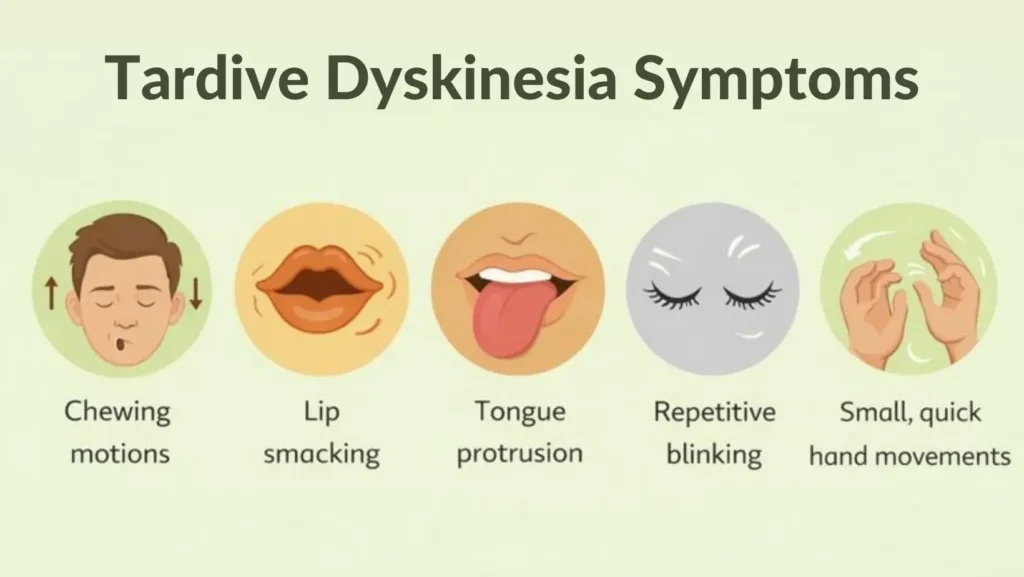
You may see chewing motions, lip smacking, tongue protrusion, or repetitive blinking. Hands can make small, quick movements. Your trunk might twist or rock. These signs define tardive dyskinesia and often appear without warning during daily tasks.
Onset Patterns: Delayed vs Acute Presentations
Most people develop tardive dyskinesia after months or years of exposure to causative drugs. Sometimes symptoms begin after the drug is reduced or stopped. Acute drug reactions are possible but are a different pattern.
Severity Spectrum and Functional Impact (Speech, Eating, Social)
Symptoms range from mild moves that you can hide to severe problems that make eating and talking hard. Severe tardive dyskinesia can lead to drooling, choking risk, or weight loss. Social embarrassment is common and may cause withdrawal. Early care reduces long-term harm and improves daily life.
How to Track and Document Symptoms Clinically
Use a symptom log and short video clips. Clinicians use the Abnormal Involuntary Movement Scale (AIMS) to score your movements. Regular AIMS checks let your team see if tardive dyskinesia is stable, worse, or better with treatment.
Treatment for Tardive Dyskinesia
First-Line Pharmacologic Options (VMAT2 Inhibitors: Valbenazine, Deutetrabenazine)
You can get meaningful symptom reduction with VMAT2 inhibitors. These drugs lower the amount of dopamine released inside selected nerve endings. Doctors often choose valbenazine or deutetrabenazine when movements harm your daily life.
Clinical trials show these medicines reduce abnormal movements in many people. You must discuss risks and benefits with your prescriber. Monitoring for mood change and sleepiness is routine while you take them.
Medication Adjustment Strategies (Minimize Offending Drugs)
If safe, your doctor may lower the dose of the drug linked to your symptoms. Your clinician may switch you to a lower-risk antipsychotic. In some cases, a specialist may recommend clozapine for psychosis when TD risk is high.
Do not stop or change medications on your own. Sudden changes can cause withdrawal or psychosis and may worsen movements. Always plan changes with your clinician.
Role of Benzodiazepines, Clonazepam and Other Adjuncts
Some people get short-term relief from benzodiazepines such as clonazepam. These drugs may reduce movement severity in some patients. However, they cause sedation and fall risk, especially in older adults. Doctors use them cautiously and only as part of a broader plan. They are not a long-term solution for most people.
Non-Pharmacologic Options: Behavioural Strategies, PT/OT, Dental Care
You can use physical therapy to keep strength and balance. Occupational therapy teaches ways to do daily tasks more safely. Speech and swallowing therapy can reduce choking risk.
Dental care protects teeth from biting or grinding injuries. Behavioral methods reduce stress, which can make movements worse. Combine these measures with medication for better results.
When to Involve Neurology/Psychiatry Specialists
Ask for a specialist referral if movements limit eating, breathing, or basic care. Neurologists and psychiatrists with TD experience can adjust complex medication plans. They can start VMAT2 therapy and manage side effects. Early specialist input helps you get precise treatment faster.
Tardive Dyskinesia Side Effects
Medication Side Effects Versus TD Movement Sequelae
Treatments can cause side effects that differ from TD symptoms. VMAT2 inhibitors may cause sleepiness, fatigue, or mood changes. Your doctor will monitor these effects. TD movements themselves can lead to injuries and other problems that need separate care. Know which signs come from drugs and which come from the disorder.
Functional Complications: Dysphagia, Speech Impairment, Dental Trauma
Severe movements can cause trouble swallowing. You may choke or lose weight. Speech becomes slurred or hard to understand. Teeth, lips, or gums can get damaged from repetitive biting. Speech therapy and dental care are often needed. Address these problems quickly to avoid long-term harm.
Psychological and Social Impact (Stigma, Isolation, Mood)
You may feel embarrassed. Social withdrawal is common. Anxiety and depression can follow. This emotional burden affects recovery and quality of life. Counselling and support groups help you and your family cope. Ask your clinician about mental health support.
Long-Term Risks and Monitoring for Treatment Adverse Events
Long-term follow-up is important when you take VMAT2 drugs. Clinicians check mood, movement scores, and daily function regularly. They balance symptom benefit against side effects. Regular AIMS scoring helps track progress. If adverse effects appear, your clinician may change your plan.
Diagnosis: How Doctors Identify Tardive Dyskinesia
Clinical Exam and Movement Scales (AIMS)
Diagnosis is clinical and depends on history and exam. Providers use the Abnormal Involuntary Movement Scale, AIMS, to rate severity. AIMS is quick and repeatable. You or a caregiver should bring short videos of the movements. These records help your clinician score and follow progress. Baseline AIMS before starting antipsychotics is best practice.
Differential Diagnosis (Essential Tremor, Parkinsonism, Dystonia)
Other conditions can look like TD. Parkinsonism, dystonia, and essential tremor must be ruled out. Timing of symptoms and medication history is key. If movements began after long drug exposure, TD is more likely. Your clinician may ask about family history or other medical issues.
When Labs or Imaging Are Indicated
Most cases need no labs or scans. Doctors order tests when another cause seems possible. Imaging may check for structural brain disease if symptoms do not fit TD. Labs may screen for metabolic causes if indicated. Rely on your clinician to decide tests.
Prevention and Risk Reduction
Minimizing Antipsychotic Exposure Where Possible
Use antipsychotics only when needed. Choose the lowest effective dose. Review long-term need regularly. These steps lower your risk for TD. If you must take antipsychotics, schedule routine movement screening.
Dose Optimization and Earliest Effective Therapy
Start with the smallest effective dose. Increase only if needed. Regular follow-up in the first months is critical. Early identification of abnormal movements lets clinicians act fast.
Monitoring Plans for High-Risk Patients
If you are older or have long exposure, expect more frequent checks. Use AIMS at baseline and every few months. Keep a symptom log and show it at visits. Close monitoring finds problems early when treatments work best.
When to Seek Urgent Care
Red Flags (Sudden Worsening, Airway Compromise, Severe Dysphagia)
Seek urgent care for sudden severe breathing problems. Go to the emergency room for sudden inability to swallow. Rapid worsening of movements over hours requires immediate assessment. These signs can threaten life and need fast action.
How to Prepare for a Clinician Visit (Symptom Log, Med History)
Bring a list of all medicines and past doses. Record when symptoms started and how they change. Show short videos. Note any falls, weight loss, or mood changes. This information speeds diagnosis and improves care.
FAQs
Is Tardive Dyskinesia Reversible?
Some people improve when the causing drug is changed or with VMAT2 treatment. Others keep symptoms long-term. Outcomes vary by duration and severity. Early detection gives the best chance for improvement.
How Soon After Starting a Drug Can TD Appear?
TD usually appears after months or years of exposure. It can also start after stopping the drug. Rare early reactions exist but are uncommon. Timing helps your clinician decide cause.
Can Changing Antipsychotics Make TD Better or Worse?
Switching drugs can improve symptoms for some people. It can also fail or cause other issues. Your clinician balances mental health needs with TD risk before changing medications.
How Effective Are VMAT2 Inhibitors?
Trials show VMAT2 drugs reduce abnormal movements for many people. These medicines improve function and quality of life for a significant proportion. Individual response varies, and monitoring is required.
Are There Tests That Confirm TD?
No blood test confirms TD. Diagnosis relies on exam, history, and AIMS scoring. Video recordings help confirm and track progression. Imaging or labs are only for atypical cases.
About The Author

Medically reviewed by Dr. Chandril Chugh, MD, DM (Neurology)
Dr. Chandril Chugh is a U.S.-trained, board-certified neurologist with expertise in diagnosing and managing neurological disorders, including migraines, epilepsy, Parkinson’s disease, and movement disorders. His clinical focus includes evidence-based neurological care and patient education.
All content is reviewed for medical accuracy and aligned with current neurological guidelines.