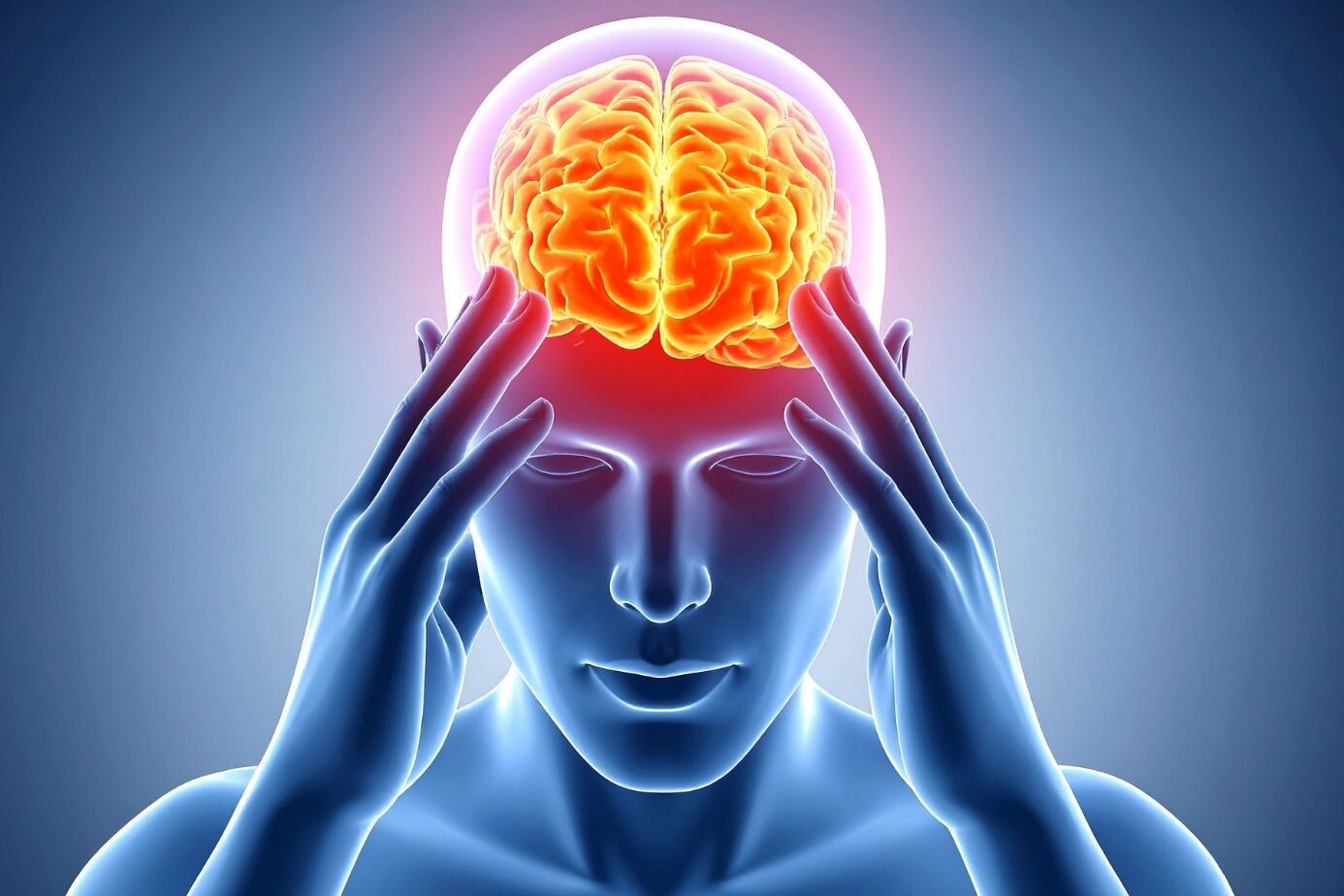
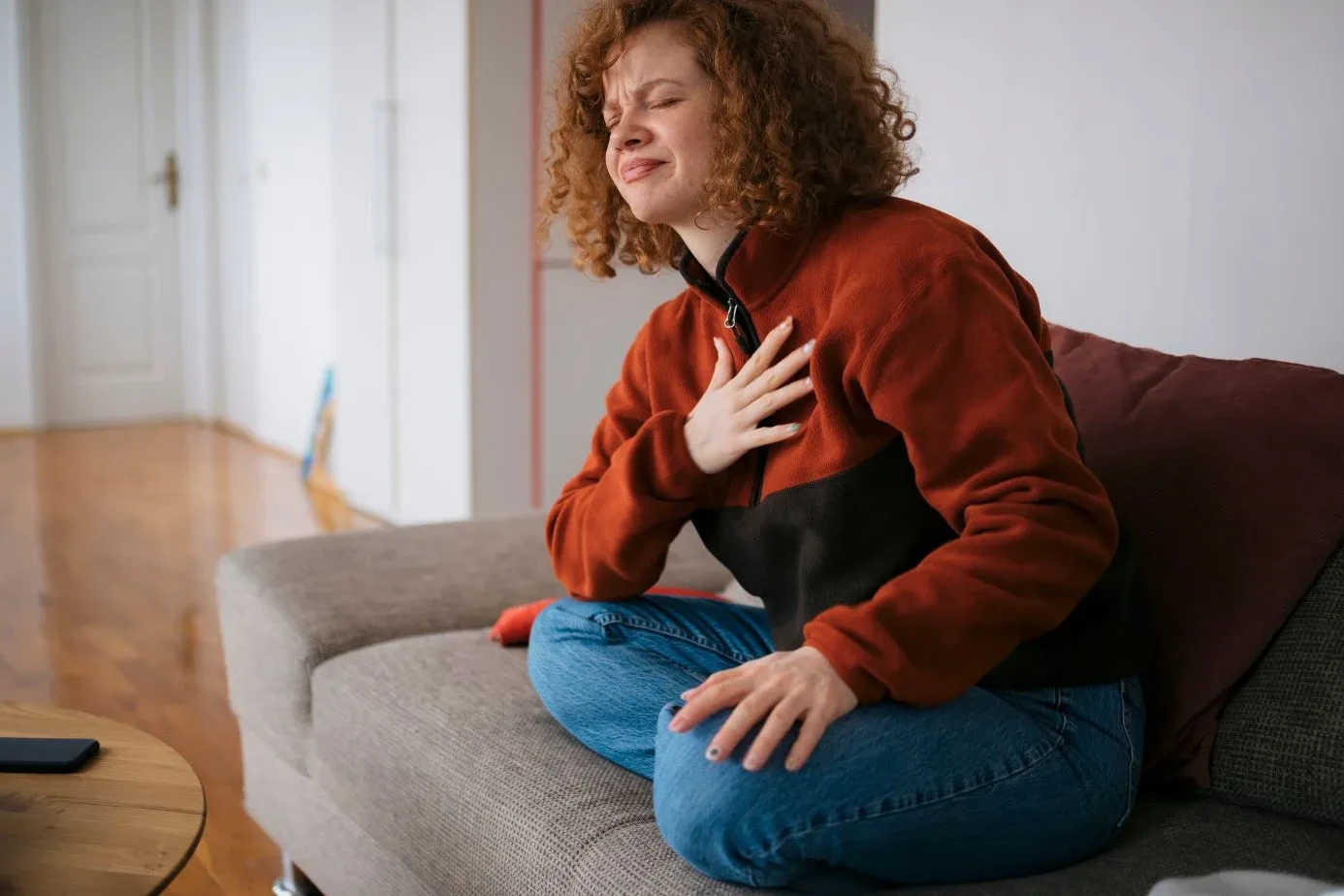
Anxiety raises adrenaline,speeds your heart, and tightens your muscles. These changes make your hands, legs, or voice tremble even when you are not in danger. The shaking feels intense because your nervous system moves into a fast-response mode.
You can calm this by slowing your breath, grounding your senses, and relaxing tight muscles. These steps signal safety to your brain and reduce the tremors within minutes. With the right skills, you can stop shaking from anxiety in the moment and lower how often it happens.
Why Anxiety Causes Shaking
How The Fight-Or-Flight Response Triggers Trembling
When you feel threatened, your body shifts into fight-or-flight. This response raises heart rate and sends more blood to large muscles so you can move fast. Those same changes increase nerve activity and make small muscle fibers twitch. Because the body prepares for action, you feel hands or legs tremble until the reaction settles.
Adrenaline Surges And Nervous System Activation
Adrenaline (a stress hormone) floods your bloodstream during anxiety. It speeds breathing and heart rate and tightens muscles. Those effects make you feel shaky or jittery until the hormone level drops. Learning to lower adrenaline quickly is how you begin to stop shaking from anxiety when it starts.
Difference Between Anxiety Tremors And Medical Tremors
Anxiety tremors come and go with stress. Medical tremors, such as essential tremor or Parkinsonian tremor, often persist and follow a pattern. Essential tremor usually shows during movement and can run in families, while anxiety tremors link strongly to fear.
If shaking lasts beyond stress episodes or affects tasks, get a medical check to rule out neurological causes.
Anxiety Shaking Symptoms
Visible Shaking: Hands, Legs, Voice, Whole-Body Tremors
You may see your hands tremble, legs quiver, or your voice wobble. These signs are visible and often alarm you more, which can feed the anxiety. Visible tremors usually start during stressful moments and ease as your body calms. If tremors appear without stress or grow worse, talk to a clinician.
Internal Shaking (Feeling Shaky Inside)
Sometimes the shaking feels internal. You may feel like your chest, belly, or limbs vibrate even if others do not see it. Internal shaking often comes with a racing heart, lightheadedness, and a tight throat. These internal sensations can be as distressing as visible tremors and respond to the same calming tools.
Other Physical Symptoms That Accompany Anxiety Shaking
Shaking rarely occurs alone. You may also get sweating, fast breathing, dizziness, nausea, or muscle tension. These physical symptoms of anxiety shaking, form a cluster caused by the stress response. When you treat one symptom, such as breathing rate, the others often ease too.
How To Stop Shaking From Anxiety Immediately
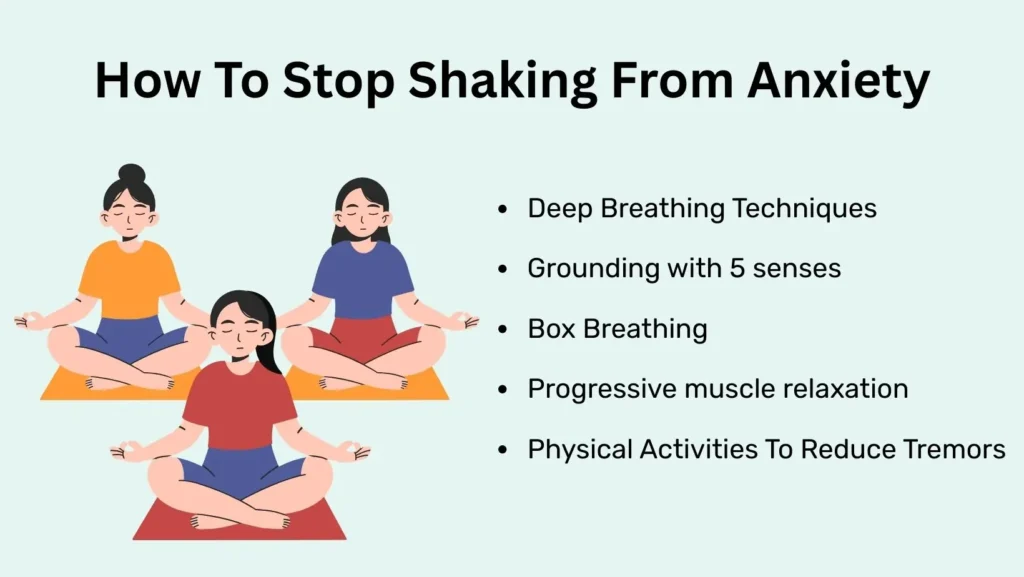
Deep Breathing Techniques (Physiological Sigh, Box Breathing)
Use slow breaths to slow your heart and calm nerves. The physiological sigh means inhale deeply, take a quick second inhale, then exhale slowly. Box breathing uses equal counts for inhale, hold, exhale, and hold again.
Both methods lower adrenaline and help you stop shaking from anxiety within minutes when you practice them calmly. Evidence supports breath work for reducing anxiety symptoms, though results vary by person.
Grounding Techniques (5-4-3-2-1, Sensory Resetting)
Grounding pulls your mind into the present and away from fear. Use the 5-4-3-2-1 method: name five things you see, four things you feel, three sounds, two smells, and one taste.
Keep your descriptions short and concrete to interrupt the panic loop. Grounding reduces the cycle that makes shaking worse and helps you regain control of muscles and breath.
Muscle Relaxation (Progressive Muscle Relaxation)
Progressive muscle relaxation reduces tension that fuels tremors. Tense a muscle group for five seconds, then release and notice the change. Move from your feet up to your face in short steps. Regular practice lowers baseline tension so you have fewer and milder shaking episodes over time.
Quick Physical Activities To Reduce Tremors (Walking, Shaking Out Muscles)
Short, controlled movement uses up excess adrenaline and resets your nervous system. Try a brisk one-minute walk or gently shake your arms and legs. Moving signals your brain that action is complete and it is safe to relax. Small physical tasks often stop tremors faster than sitting still and worrying.
How to Control Anxiety Tremors
Cold Exposure Or Temperature Change To Calm The Nervous System
Brief cold exposure can slow your heart rate and cut the spike of adrenaline that fuels tremors. You can splash cool water on your face, hold a cold pack to your neck, or place a cold cloth on your forehead.
The sudden temperature change triggers reflexes that shift blood flow and signal safety to your brain, helping the shaking ease. Use this as a short-term tool; it is safe for most people, but stop if you feel faint or have heart problems.
Using Controlled Breathing To Lower Heart Rate Variability
Controlled breathing trains your body to return to baseline faster after stress. Practice cyclic sighing or box breathing for three to five minutes: slow inhales, a short top-up inhale, and long exhales that double the inhale time.
Do this twice daily and for a few minutes during acute shaking episodes; over weeks, it will improve how your heart and lungs respond to stress. Research shows structured breathing reduces anxiety and physiological arousal, which helps you stop shaking from anxiety more reliably.
Cognitive Reappraisal To Stop Fear-Driven Shaking
You can change the meaning you give to shaking so the fear loop breaks. When you notice tremors, tell yourself the shaking is a harmless stress response and will pass. Practice labeling the physical sensation, hands trembling, voice softening, without judgment. Over time, this reframing reduces your panic about shaking and lowers the chance that fear will prolong tremors.
Ways To Calm Anxiety Shaking
Regular Exercise And Movement Therapy
Regular movement reduces baseline anxiety and the severity of tremors. Aim for moderate activity most days, walking, cycling, or simple strength moves, and include balance or coordination work that improves motor control.
Exercise uses up excess adrenaline and raises mood chemicals that counteract stress. Consistent movement makes it easier to stop shaking from anxiety because your nervous system becomes less reactive.
Long-Term Anxiety Management Techniques
Therapies such as cognitive behavioral therapy help you change thinking and behavior patterns that trigger shaking. Exposure work reduces avoidance and the panic response that often causes tremors, while acceptance approaches teach you to sit with sensations without fighting them.
These therapies reduce both the frequency and intensity of shaking when you apply the skills daily. If self-help does not control tremors, therapy is a key next step.
Mindfulness, Meditation, And Body Scanning
Mindfulness trains attention away from threat-driven loops that feed shaking. Short daily body scans help you notice tight areas before they become tremors and allow you to relax them intentionally.
Even five minutes of mindful breathing or a body scan most days lowers muscle tension and anxiety over time. These practices do not erase anxiety instantly, but they reduce how often and how strongly you shake.
Reducing Stimulants (Caffeine, Sugar, Nicotine)
Stimulants increase heart rate and jitteriness, which amplify tremors. Cut back on coffee, energy drinks, and nicotine to lower baseline arousal. Replace high-sugar snacks with protein and fiber to avoid blood sugar spikes that mimic anxiety symptoms. Small dietary changes reduce episodes and make it easier for you to control anxiety tremors in stressful moments.
When Anxiety Shaking Signals A Bigger Issue
When To Suspect Essential Tremor Instead Of Anxiety
Essential tremor often shows as persistent shaking while you use your hands, and it may run in families. If shaking occurs during purposeful movement, gets worse over time, or does not respond to anxiety-reduction strategies, you should seek a specialist evaluation. A neurologist can test the pattern of tremor and look for other signs that point away from anxiety. Early assessment helps you get targeted options if the cause is neurological.
Neurological Conditions That Mimic Anxiety Tremors
Conditions such as Parkinson’s disease, medication-induced tremor, or thyroid problems can look like anxiety shaking. These disorders have other clues—slowness of movement, stiffness, weight changes, or medication history—that a clinician will check.
If you notice progressive symptoms, loss of function, or tremor at rest rather than with action, seek medical review promptly. Accurate diagnosis prevents unnecessary worry and guides correct treatment.
When Shaking Requires Medical Evaluation
Get medical care if shaking starts suddenly and severely, if it lasts for days, or if it comes with weakness, numbness, speech trouble, fainting, or chest pain. Also see a clinician when tremors interfere with daily life despite self-help steps. Health professionals will rule out medical causes, review medications, and discuss therapies or medicines that can help control symptoms safely.
Treatment For Persistent Anxiety Tremors
Therapy Options (CBT, ACT, Exposure-Based Therapies)
Psychological treatments target the root thoughts and avoidance that sustain tremors. CBT teaches practical tools to shift your thinking and change behaviors that escalate shaking. Exposure therapy helps you face distressing situations in small steps so the panic response weakens.
ACT (acceptance and commitment therapy) helps you act toward values despite symptoms, which reduces the power anxiety holds over your body. These therapies work best with regular practice and clinician guidance.
Medications Used For Anxiety Tremors
Providers may use beta-blockers to reduce tremor amplitude in performance or situational anxiety because they block adrenaline’s effects on muscles. Benzodiazepines can calm acute, severe shaking but carry dependence risks and are not ideal long-term.
Antidepressants treat underlying anxiety disorders; they may reduce shaking indirectly. Medication choices vary by medical history and should be discussed with a prescriber; dosage and selection always depend on your age, health, and needs.
Lifestyle Modifications To Prevent Tremors
Regular sleep, balanced meals, steady caffeine limits, and daily relaxation practice lower your baseline reactivity. Keep simple routines: sleep and wake at the same time, schedule brief daily breathing, and plan short movement breaks.
Track triggers in a brief journal so you can spot patterns and adjust habits. Consistency over weeks produces measurable drops in shaking episodes and improves your ability to stop shaking from anxiety when it occurs.
FAQS
Why does anxiety make my hands shake?
Your body floods with adrenaline and tightens muscles when you feel threatened, which makes small muscles twitch. This response is normal and usually stops when you calm your breathing and mind.
How long does anxiety shaking usually last?
Shaking often lasts minutes to an hour as adrenaline falls. With practice you can shorten episodes, but persistent shaking that lasts days needs a medical check.
When is shaking from anxiety a medical emergency?
Seek urgent care if shaking occurs with chest pain, fainting, sudden weakness, or trouble speaking. These signs can indicate a serious medical event rather than anxiety.
How can I tell anxiety tremors apart from a neurological disorder?
Anxiety tremors fluctuate with stress and improve with calming techniques. Neurological tremors often persist, worsen with movement, or come with other neurological signs; a clinician can test this.
About The Author

Medically reviewed by Dr. Chandril Chugh, MD, DM (Neurology)
Dr. Chandril Chugh is a U.S.-trained, board-certified neurologist with expertise in diagnosing and managing neurological disorders, including migraines, epilepsy, Parkinson’s disease, and movement disorders. His clinical focus includes evidence-based neurological care and patient education.
All content is reviewed for medical accuracy and aligned with current neurological guidelines.