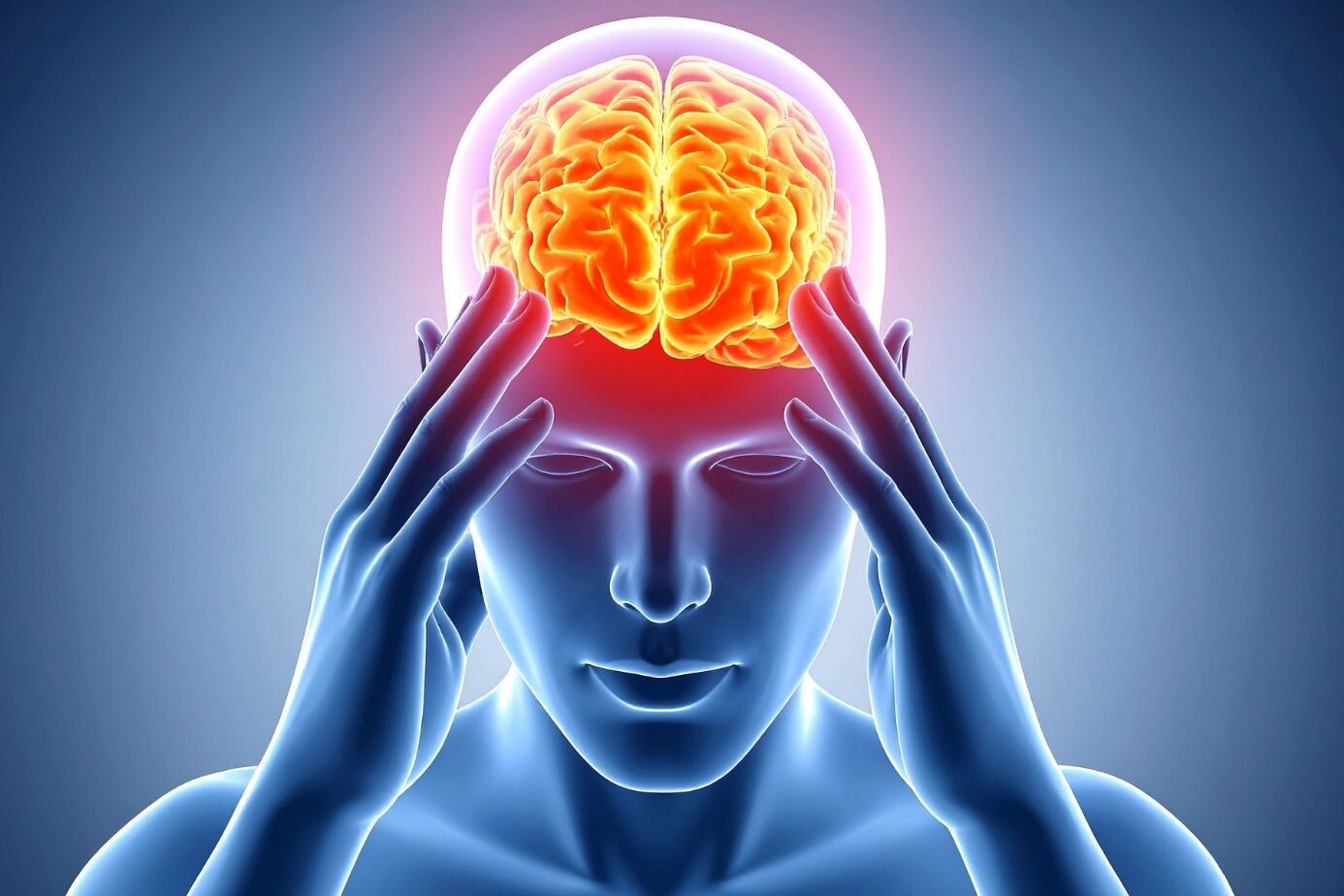
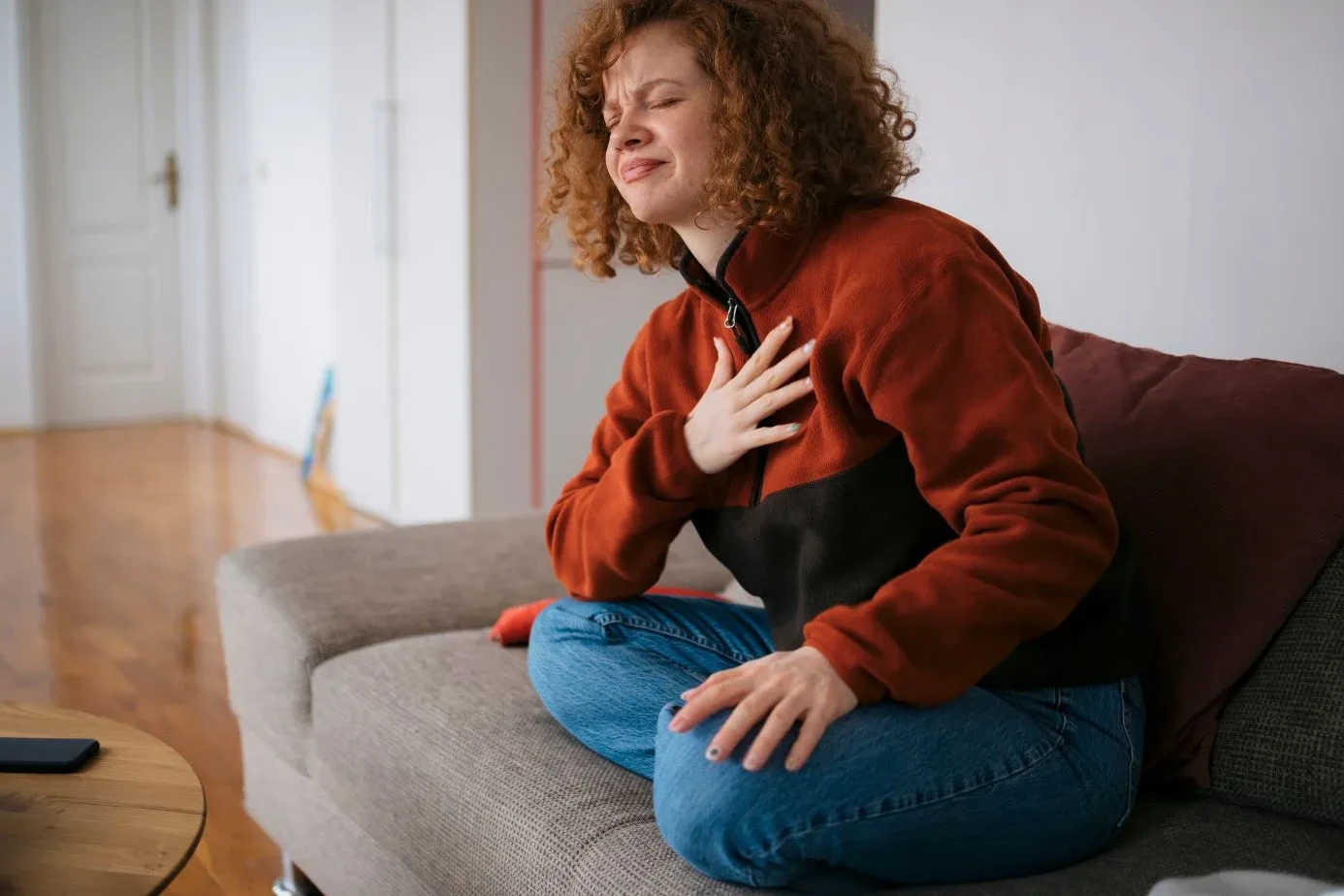
Breathing exercises for anxiety give you a fast, practical way to tell your nervous system that the danger alarm can turn down. When you slow and deepen your breath, your heart rate often drops, muscles loosen, and racing thoughts feel less loud. Controlled breathing inside stress and relaxation advice, but they also note that anxiety still needs full care when symptoms are strong or long-lasting.
Research on breathing exercises for anxiety shows small to moderate benefits for stress and anxiety scores in many groups, from students to patients in hospitals. A recent meta-analysis found that slow and deep breathing may reduce anxiety and improve mood, but results vary between studies and breathing is not a cure for mental health disorders.
Best Breathing Techniques For Anxiety
The best breathing techniques for anxiety share three things. They slow your breathing rate, they use your main breathing muscle, the diaphragm, and they give your mind a clear, simple focus.
Diaphragmatic breathing means you breathe deep into your belly instead of just the upper chest. This type of breath can increase the “rest and digest” side of your nervous system, sometimes called the parasympathetic system.
Scientists suggest that when you use breathing exercises for anxiety , you may lower stress hormones, improve heart rate patterns, and support brain areas linked to emotional control. But these effects are not the same for everyone, and some studies show small or unclear changes, so experts still call for more high-quality trials.
Why Breathing Reduces Anxiety
When you feel anxious, your body shifts into a “fight or flight” state. Your heart pounds, your breathing becomes fast and shallow, and your muscles tighten. This state is driven by the sympathetic nervous system. Slow, steady breathing exercises for anxiety can increase vagal tone, which is the activity of the vagus nerve that helps switch your body toward calm.
Studies on diaphragmatic breathing show drops in self-reported anxiety and in markers like heart rate and stress hormones in some groups, though not in all. This means breathing can support anxiety care, but it should not replace therapy, medicine, or medical advice when needed. You always need to work with your health team for strong symptoms.
Quick Calming Breath Routine
A short routine helps you feel what breathing exercises for anxiety can do without a long session. Sit upright in a chair, feet flat, shoulders loose.
Breathe in through your nose for a count of four. Aim the air toward your belly so it rises gently. Then pause for one count. Breathe out through your mouth for a count of six, like you slowly blow on hot soup.
Repeat this for about one minute. Many people notice that the first two breaths feel stiff and the third breath feels easier. If you feel dizzy, reduce the counts and let your breath return to a natural pace.
How To Do Mindful Breathing
Mindful breathing means you stay with the breath on purpose. You pay attention to each inhale and exhale instead of feeding worry stories in your head.
- Sit or lie down in a comfortable position. Close your eyes if that feels safe.
- Breathe in through your nose and silently say “in” in your mind. Notice the coolness of the air, the stretch in your ribs, and the movement of your belly.
- Breathe out through your nose or mouth and silently say “out”. Notice the warm air and the soft drop of your chest.
Thoughts will pull you away. When that happens, do not judge yourself. Simply bring your focus back to the next breath. Used daily, this kind of mindful breathing exercises for anxiety can train your brain to return to the present moment more easily.
Breathing Mistakes To Avoid
Some habits can make breathing exercises for anxiety less helpful or even uncomfortable. Very big, forced breaths taken quickly can drop your carbon dioxide level too far and cause tingling, tightness, or a floating feeling, which may increase fear.
Try to avoid shrugging your shoulders with every breath, because this keeps the breath shallow in your upper chest. Instead, focus on belly movement. If you have lung or heart disease, talk to your doctor before changing your breathing practice.
Deep Breathing For Anxiety Relief
Among all breathing exercises for anxiety , deep breathing into the diaphragm is one of the most studied. The National Cancer Institute defines diaphragmatic breathing as slow, deep breaths that use the diaphragm muscle, with the goal of easing stress, lowering heart rate, and reducing muscle tension.
Clinical trials suggest that deep breathing for anxiety relief can reduce anxiety scores in some medical patients and healthy adults, although effect sizes are usually modest and not every person feels a large change.
Basics Of Deep Breathing
Deep breathing, also called belly breathing, shifts air into the lower parts of your lungs. When you inhale, your belly gently moves outward. Your upper chest and shoulders stay mostly still. This style of deep breathing for anxiety relief helps your body use air more efficiently and gives your brain a clear “calm” signal.
To feel the pattern, place one hand on your chest and one on your belly. Breathe in through your nose. Aim to move the belly hand more than the chest hand. Breathe out slowly through your mouth. With practice, this movement starts to feel natural.
Simple Deep-Breathing Steps
You can turn this into a clear routine that fits inside breathing exercises for anxiety you use every day.
- Sit in a supportive chair. Loosen tight clothing around your waist.
- Breathe in through your nose for about four seconds. Feel your belly rise as if you inflate a small balloon.
- Hold for one or two seconds if it feels comfortable.
- Then breathe out for about six seconds through gently parted lips. Let your shoulders and jaw relax as the air leaves.
Repeat this for three to five minutes. Studies from groups such as the American Heart Association and large clinics describe similar count-based patterns in their stress advice, while also noting that exact timing can be adapted to comfort.
When Deep Breathing Works Best
Deep breathing for anxiety relief tends to help most when you use it early, before panic peaks. It can be useful right before an exam, a difficult talk, or a medical visit.
Evidence suggests that daily practice over weeks gives more stable benefits than a single random session. Short sessions of about five minutes may already change mood in some people, yet long-term gains still depend on regular use and, when needed, support from therapy or other treatments.
At-Home Anxiety Breathing Methods
You do not need a clinic or device to use anxiety breathing techniques at home . Your living room, bedroom, or even a quiet corner can become a small training space. Health services such as the NHS and many hospital systems teach simple home-based breathing drills as part of self-help guides for stress and anxiety.
The advantage of home practice is that you can match breathing exercises for anxiety to your own schedule. You can pair them with coffee in the morning, a lunch break, or your night routine. The more familiar they feel in calm moments, the easier it is to use them when anxiety rises.
Beginner Breath Flow
If you are new to breathing exercises for anxiety , start with a gentle three-four rhythm. Sit upright with your feet flat on the floor. Rest your hands on your thighs.
Breathe in through your nose for a count of three. Aim the breath toward your belly. Then breathe out through your mouth for a count of four, letting your shoulders soften.
Try this for two to three minutes. This simple pattern is one of the anxiety breathing techniques at home that most people can do without strain. If you feel lightheaded, shorten the counts or pause and return to your normal breath.
Daily Breath Routine
To get steady benefit from breathing exercises for anxiety , turn them into a habit. Choose one method, such as the three-four or four-six pattern, and link it to a daily cue you already have, such as brushing your teeth or turning off your alarm.
Spend three to five minutes on your chosen practice in the morning. Repeat once in the evening. CDC and other public health groups often advise mixing deep breathing with other coping skills such as movement, sleep care, and talking with others, rather than relying on breath alone.
Improving Consistency
Many people stop breathing exercises for anxiety because they only use them when they feel terrible. It is easier to stick with anxiety breathing techniques at home if you keep them short and regular.
You can mark each practice on a calendar or in a simple note app. This visual record shows you that you are building a skill, not just reacting to bad days. If you work with a therapist, you can share this record so you both see how your practice fits with other parts of your care plan.
Slow Breathing Exercises
When you already know the basics, slow breathing exercises for anxiety help you move from “a bit calmer” to “steady and grounded”. Slow breathing means you take fewer breaths in one minute, usually around six to ten instead of the usual twelve to twenty. Research shows that this slower pattern can improve heart rate variability, which is a sign that your nervous system can shift between stress and rest in a healthy way.
Many experts place slow breathing inside the group of breathing exercises for anxiety because it works on both body and mind at the same time. You do not only slow your breath. You also give your brain a clear rhythm to follow, which leaves less space for racing thoughts.
Why Slow Breathing Helps
When you feel anxious, you usually breathe fast and shallow. That kind of breath tells your brain that danger is close. Slow breathing exercises for anxiety turn that signal around. A slow inhale and a longer exhale send the message that you are safe enough to relax.
Slow breathing also helps balance oxygen and carbon dioxide. If you over breathe, carbon dioxide drops and you may feel dizzy, numb, or tight in the chest. A calm slow pattern keeps this balance in a safer range, so your body feels more stable and your mind can think more clearly. Over time, regular slow breathing exercises for anxiety make it easier for you to step away from panic before it rises too high.
Easy Slow-Breath Method
You can use this simple drill at any time of day. Sit upright with your back supported. Rest your hands on your thighs or your belly.
Breathe in through your nose for a count of four. Let your belly move out as the air comes in. Then breathe out through your nose for a count of six. Keep the exhale smooth and quiet.
Count in your head as you breathe, so you do not need to watch a clock. This is one of the slow breathing exercises for anxiety that you can use in public without anyone noticing. If the four and six pattern feels hard, try a three and five pattern instead and slowly increase the counts as your body adapts.
Best Duration And Frequency
Most studies on slow breathing exercises for anxiety use about five to fifteen minutes per session and one or two sessions per day. You do not need long sessions to get a benefit. For many people, five to ten minutes of slow breathing fits better into a busy day and still gives a useful effect.
Start with five minutes once a day for one week. If you feel fine, increase to ten minutes, and then later add a second short session. Remember that breathing exercises for anxiety work best when they are a habit, not only a tool for crisis. If you feel worse during practice, shorten the time or speak with a health professional for advice that fits your medical history.
Breathing Methods To Calm Anxiety
Short, clear breathing methods to calm anxiety are helpful when you are in class, at work, or in a crowded space. You may not have ten minutes, but you often have one minute. These methods build on the same ideas as other breathing exercises for anxiety . They slow the breath, stretch the exhale, and give your mind a simple task.
One-Minute Grounding Breath
The one-minute grounding breath links your breathing with a strong body sense. Stand or sit with both feet flat on the floor. Gently press your feet into the ground.
Breathe in through your nose for four counts. As you breathe in, notice your feet and the contact with the floor. Then breathe out through your mouth for six counts and notice your shoulders drop.
Repeat this for about one minute. This is one of the breathing methods to calm anxiety that works well when you feel spacey or disconnected, because it brings your attention back into your body.
Breath Counting Method
The breath counting method gives your mind a simple number task that pulls focus away from worry.
Breathe in through your nose at a natural depth. As you breathe out, silently count “one”.
Inhale again, then count “two” on the next exhale. Continue until you reach “ten”, then return to “one”.
If you lose count, you calmly begin again at “one.” This method sits inside the best breathing techniques for anxiety for people who tend to get lost in thought, because it gives you a clear anchor to return to.
“5-Breath Reset” Technique
The “5-breath reset” is one of the fastest breathing methods to calm anxiety when you feel a surge of fear. It uses only five focused breaths, so you can use it before a speech, a test, or a phone call.
Sit or stand tall. For each of the five breaths, follow this pattern. Inhale through your nose for four counts. Hold gently for two counts. Exhale through your mouth for six counts.
After five rounds, pause and notice if your heart rate feels a little slower, or your thoughts feel slightly less sharp. Even a small shift matters, because it gives you more control in the moment. You can repeat another five breaths if needed and fold this drill into your regular breathing exercises for anxiety .
Additional Techniques
Along with the core patterns, there are several extra breathing exercises for anxiety that you can mix into your week. Each one has a slightly different feel, so you can pick what suits your body and your day.
Box Breathing Steps
Box breathing uses four equal parts like the sides of a square. Many therapists and coaches teach it as a focus tool.
Inhale through your nose for four counts. Hold your breath for four counts. Exhale through your mouth for four counts. Hold again with empty lungs for four counts.
Repeat this pattern for two to five minutes. If holding the breath feels tight, shorten the holds or skip them and keep the equal in and out counts. Forming this “box” with your breath gives structure to your breathing exercises for anxiety and can feel especially steady before stressful tasks.
4-7-8 Breathing Explained
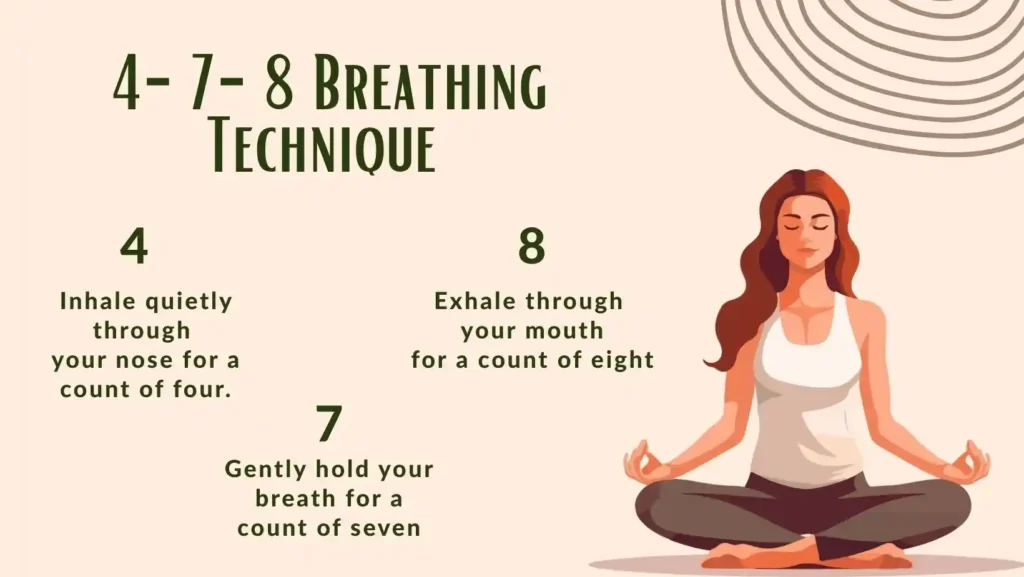
4-7-8 breathing is often used at night because it promotes a long, slow exhale. Inhale quietly through your nose for a count of four. Gently hold your breath for a count of seven. Exhale through your mouth for a count of eight, making the exhale soft and slow.
Start with no more than four cycles, as some people feel slightly lightheaded at first. Over time, you may build up to eight cycles if it feels comfortable. Many people place this method on their personal list of breathing exercises for anxiety before sleep or after a stressful day.
Pursed-Lip Breathing Guide
Pursed lip breathing is used in lung clinics and also helps with anxiety that shows up as shortness of breath. Breathe in through your nose for about two counts. Purse your lips as if you will gently blow on a candle. Breathe out through these lips for about four counts.
This method slows your exhale and helps keep airways open longer. It fits well for deep breathing for anxiety relief in people who also have breathing problems, although anyone with lung disease should still follow medical advice from their own doctor.
Alternate-Nostril Breathing
Alternate nostril breathing comes from yoga traditions and can feel very calming. Sit upright and relax your shoulders. With one hand, use your thumb to close your right nostril. Breathe in through your left nostril.
Close the left nostril with another finger, open the right nostril, and breathe out through the right side. Then breathe in through the right nostril, switch your fingers again, and breathe out through the left.
This full cycle needs focus, so it pulls your mind into the pattern. Use it for one to five minutes as part of your breathing exercises for anxiety when you have a quiet space.
Belly-Breathing Basics
Belly breathing supports all anxiety breathing techniques at home because it trains the main breathing muscle. Lie on your back with one hand on your chest and one on your belly. Breathe in through your nose and try to lift the belly hand while keeping the chest hand fairly still.
Breathe out slowly through your mouth and feel the belly fall. Practice for a few minutes each day, then bring the same movement into sitting and standing. This makes every method in your set of breathing exercises for anxiety more effective and more natural.
FAQ
How Long Should I Practice Breathing Exercises?
For most people, five to ten minutes of breathing exercises for anxiety once or twice a day is a good start, and you can slowly adjust the time based on how your body responds.
What’s The Fastest Technique For Panic?
The 5-breath reset and one-minute grounding method are quick breathing methods to calm anxiety because they use short, clear steps you can remember even when panic feels very strong.
Can Breathing Exercises Stop A Panic Attack?
Sometimes breathing exercises for anxiety can reduce the peak or help a panic attack pass faster, but they are not a guarantee and you still need medical or therapy support for repeated attacks.
Does Overbreathing Worsen Anxiety?
Yes, breathing too fast or too deeply can drop carbon dioxide levels and trigger tingling, dizziness, and chest tightness, which can make breathing exercises for anxiety feel scary instead of calming.
How Many Times A Day Should I Practice?
Most people do well with two short daily sessions of breathing exercises for anxiety , plus a few quick one-minute drills during stressful moments, while still adjusting the plan with their healthcare professional.
Are Breathing Exercises Enough For Severe Anxiety?
For mild symptoms, breathing exercises for anxiety may be a strong support, but for severe or long-lasting anxiety you usually need therapy, lifestyle changes, and sometimes medicine as part of full care.
Should I Breathe Through My Nose Or Mouth?
Nose breathing is usually better for regular breathing exercises for anxiety , while some specific methods use a mouth exhale, so you should follow the pattern that feels safe and matches your chosen technique.
Best Breathing Method Before Sleep?
Gentle breathing exercises for anxiety such as 4-7-8 breathing or slow belly breathing with a long exhale often help you settle before sleep, especially when you dim lights and reduce screen time.
About The Author
Medically reviewed by Dr. Chandril Chugh, MD, DM (Neurology)
Dr. Chandril Chugh is a U.S.-trained, board-certified neurologist with expertise in diagnosing and managing neurological disorders, including migraines, epilepsy, Parkinson’s disease, and movement disorders. His clinical focus includes evidence-based neurological care and patient education.
All content is reviewed for medical accuracy and aligned with current neurological guidelines.