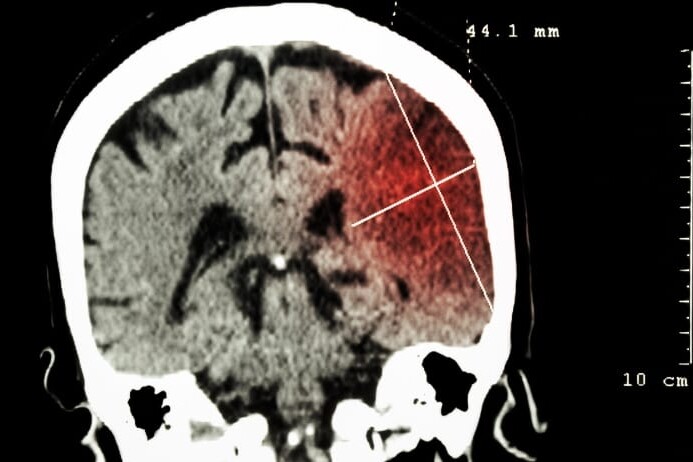
A stroke happens when blood flow to part of the brain stops or when a vessel bursts and bleeds. An aneurysm is a weak, balloon-like bulge in a vessel that may sit quietly for years and then suddenly rupture and bleed.
Both are serious and can cause brain damage. Yet the way they start, the warning signs, and the long-term effects are not the same. If you understand the difference between stroke and aneurysm , you can react faster when seconds matter.
Difference Between Stroke And Aneurysm
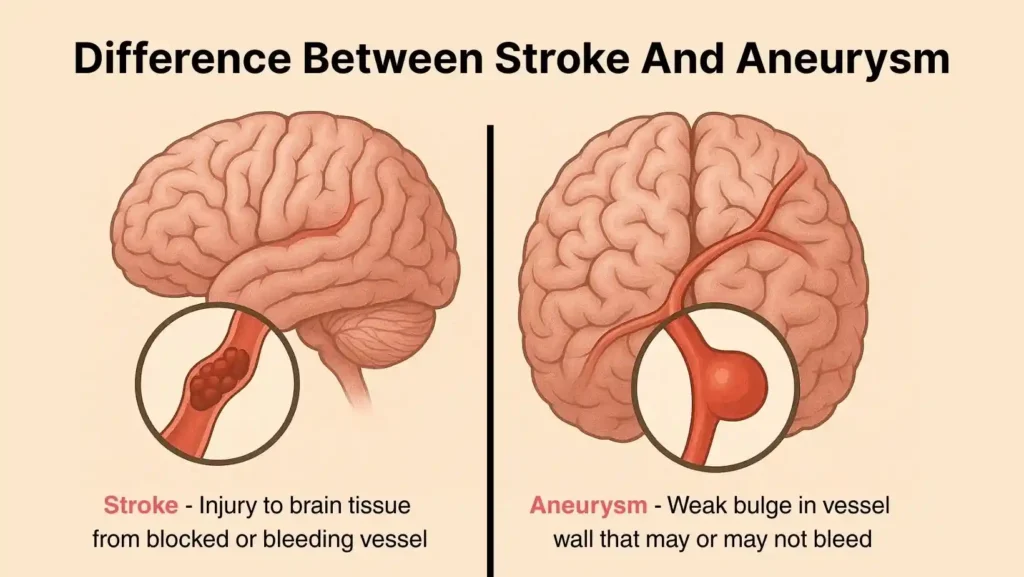
To help you see stroke vs aneurysm clearly, look at this simple overview.
| Feature | Stroke | Aneurysm |
| What it is | Injury to brain tissue from blocked or bleeding vessel | Weak bulge in vessel wall that may or may not bleed |
| When it shows | Symptoms usually start suddenly | Often silent until it leaks or bursts |
| Main danger | Brain cells die from lack of oxygen or pressure from blood | Sudden rupture can cause life threatening bleed and a hemorrhagic stroke |
How A Stroke (Blocked/Burst Artery) Differs From An Aneurysm
A stroke is an event. Something has already gone wrong. A vessel in your brain is either blocked by a clot or it has torn and started to bleed. Brain cells in that area do not get the oxygen and sugar they need. They begin to die within minutes.
An aneurysm is a structural problem. The wall of a vessel is thin and weak at one spot. That spot balloons out. Many people live for years with a brain aneurysm and never notice anything.
So the main difference between stroke and aneurysm :
- Stroke means damage to brain tissue has started.
- Aneurysm means a weak bulge that might rupture and then trigger a hemorrhagic stroke .
Ischemic Vs Hemorrhagic Stroke Vs Aneurysm Rupture
You can split stroke into two big types:
- Ischemic stroke happens when a clot blocks a brain artery.
- Hemorrhagic stroke happens when a vessel breaks and bleeds into or around the brain.
Ischemic stroke is more common. Most global data from WHO and large studies shows this type makes up about 80 percent of all stroke cases.
A hemorrhagic stroke may come from long term high blood pressure or from a ruptured brain aneurysm . When a brain aneurysm ruptures, blood bursts into the space around the brain, called the subarachnoid space. This type of bleed is the classic “aneurysmal subarachnoid hemorrhage” in medical terms.
Which Condition Occurs Suddenly And Which May Develop Silently
Most stroke events begin suddenly. You feel fine, then in a few minutes you cannot move an arm, speak clearly, or see on one side. Doctors define stroke as a sudden change in brain function that fits a blood vessel area.
A brain aneurysm often develops silently. You may carry it from birth or gain it over time. It may show only on a scan done for headaches or sinus problems. Many aneurysms never rupture. Current research still studies why some remain stable and others burst, and experts say evidence is limited for predicting exactly which one will rupture.
Differences In Long-Term Risks And Complications
After a stroke , you face long-term risks. You may have weakness, problems with speech, trouble with memory, or mood changes. You also face a higher chance of another stroke in the future, especially if you leave blood pressure, smoking, diabetes, or cholesterol untreated.
With an unruptured aneurysm , your day-to-day function may stay normal. Your main risk is future rupture. That risk depends on size, location, and smoking or blood pressure status. Studies from NIH and other groups show larger aneurysms and smoking link to higher rupture risk, but scientists still call some of this evidence limited.
Once a brain aneurysm ruptures and causes a hemorrhagic stroke , your long-term outlook looks more like that of someone who survived a very severe stroke : higher chance of disability, seizures, or thinking problems.
Aneurysm Vs Stroke Symptoms
You may worry most about aneurysm vs stroke symptoms , because symptoms are what you can see and act on in real time.
Stroke Symptoms: FAST Signs, Weakness, Slurred Speech
Doctors use FAST to help you spot stroke :
- Face: one side of the face droops or feels numb.
- Arm: one arm feels weak or drifts when you lift both.
- Speech: speech sounds slurred or you cannot find simple words.
- Time: call emergency services right away.
Other common stroke signs include:
- Sudden vision loss in one or both eyes.
- Sudden trouble walking or strong dizziness.
- Sudden severe headache, more often in hemorrhagic stroke .
If you ever see FAST signs while you compare stroke vs aneurysm , treat it as stroke first. Blood clot treatments work only in the first few hours and only a doctor can decide if you qualify.
Aneurysm Symptoms: Sudden Severe Headache, Nausea, Stiff Neck
Most small brain aneurysm bulges cause no symptoms at all. When a brain aneurysm leaks or ruptures, you usually feel a sudden, extreme headache. People often call it the worst headache of their life.
You may also notice:
- Nausea and vomiting.
- Stiff neck, because blood irritates the lining around the brain
- Pain behind or above one eye.
- Trouble looking at bright light.
- Confusion or even loss of consciousness.
Overlapping Symptoms And When They Appear Together
Some signs look the same in stroke and aneurysm . Weakness on one side, trouble speaking, or confusion can appear in both. A ruptured aneurysm that triggers a hemorrhagic stroke can give both a thunderclap headache and FAST signs at the same time.
You cannot safely sort all aneurysm and stroke symptoms at home. You might guess wrong and lose precious time. Emergency doctors rely on scans, not guesswork.
Neurological Red Flags Requiring Emergency Evaluation
You should seek urgent care if you notice:
- Any FAST sign of stroke .
- A sudden, very severe headache that peaks in seconds.
- Sudden double vision or loss of part of your visual field.
- Sudden seizures.
- Sudden confusion, collapse, or trouble waking up.
Brain Aneurysm Vs Stroke Causes
How Blood Clots Cause Ischemic Stroke
An ischemic stroke happens when a blood clot blocks an artery in your brain. Doctors call this a clot, or “thrombus” if it forms in the brain artery, and “embolus” if it travels from somewhere else, such as the heart.
When the clot stops blood flow, brain cells in that area do not get oxygen or sugar. They start to die within minutes. This type of stroke is the most common around the world.
You face a higher risk of this clot-type stroke when you have:
- High blood pressure
- Diabetes
- High cholesterol
- Heart rhythm problems such as atrial fibrillation
- Smoking or vaping
- Obesity and lack of exercise.
These factors damage the inside lining of arteries. Fatty plaques can form. A clot can then build on a plaque or break free and travel to the brain.
Doctors also talk about transient ischemic attacks, often called “mini strokes”. They come from brief blocks and cause short-term symptoms. Even though they clear, they warn that a full stroke may follow.
How High Blood Pressure Causes Hemorrhagic Stroke
In a hemorrhagic stroke , a blood vessel in your brain breaks and leaks. Long-term high blood pressure is the main reason. Pressure inside the arteries stays high every day. Over time, small vessels weaken and tiny bulges form. These weak spots can tear and bleed.
You also have more risk of this bleed type stroke if you:
- Take blood-thinning medicines without close monitoring
- Use drugs such as cocaine
- Have vessel diseases that damage artery walls.
When a vessel tears, blood pushes into brain tissue or into the fluid space around the brain. That blood takes up space and raises pressure inside the skull. Both the lost blood flow and the rising pressure harm brain cells.
Why Aneurysms Form: Vessel Wall Weakness, Genetics, Lifestyle Risks
A brain aneurysm starts with a weak spot in a vessel wall. Most of these weak spots sit at branch points where vessels split. Blood hits those spots with more force, which can slowly balloon the wall outward.
Experts agree on several risk factors, although research still studies why some people form bulges and others do not, and evidence remains limited for some details:
- Age between about 30 and 60
- Female sex
- Long term high blood pressure
- Cigarette smoking
- Heavy alcohol use
- Some inherited tissue conditions, such as polycystic kidney disease.
Not every aneurysm will rupture. Studies show that size, location, growth over time, and smoking all change rupture risk, but doctors still cannot predict rupture with perfect accuracy.
Risk Factors Shared Between Stroke And Aneurysm
When you compare stroke vs aneurysm , many triggers overlap. This is why doctors talk about brain aneurysm and stroke causes together.
Shared risks include:
- High blood pressure
- Smoking
- Family history of stroke or brain aneurysm
- High cholesterol and hardening of the arteries
- Heavy alcohol use
- Cocaine and some other drugs.
These factors harm vessel walls in two ways. They make arteries narrow and stiff, which supports clots and ischemic stroke . They also weaken walls so that a brain aneurysm can form or rupture. Lowering these risks helps both conditions, which becomes key later when you think about stroke and aneurysm treatment and prevention.
Stroke Vs Aneurysm Treatment
Emergency Stroke Treatments: tPA, Thrombectomy, Antihypertensives
When doctors suspect a stroke , they first do a brain scan to see if it is ischemic or hemorrhagic. Treatment depends on this split. For some ischemic stroke cases, doctors give a clot-breaking drug called tPA (tissue plasminogen activator). They usually give this within a few hours after symptoms begin, and only when scans and labs show it is safe. Dosage varies by age and condition, so specialists decide this in hospital.
For large clots in big brain arteries, you may qualify for mechanical thrombectomy. A specialist threads a thin tube through an artery in your groin or wrist up into the blocked brain vessel, then pulls the clot out. Current AHA and European guidelines support thrombectomy in selected patients many hours after stroke onset, but exact timing rules keep changing as research grows.
Blood pressure control also plays a major role in stroke and aneurysm treatment . In ischemic stroke , doctors often allow higher pressure for a short time to keep blood moving around the blockage, as guidelines suggest. Before and after tPA, though, they bring pressure down into a safer range.
In a hemorrhagic stroke , doctors usually lower high blood pressure more quickly to limit further bleeding, while avoiding a drop that would starve the brain.
Aneurysm Treatments: Surgical Clipping, Endovascular Coiling
For a brain aneurysm , treatment depends on size, shape, location, and whether it has ruptured. If the aneurysm has burst, doctors usually move fast to secure it. Two main options exist.
Surgical clipping means a brain surgeon opens the skull, finds the aneurysm , and places a tiny metal clip across its neck. This stops blood from entering the bulge and lowers the chance of another bleed.
Endovascular coiling uses the inside of the blood vessels. A specialist threads a catheter from an artery in the groin or wrist into the brain vessel that feeds the aneurysm . They then place soft metal coils inside the bulge so blood clots inside it and seals it off.
Large studies suggest coiling often leads to shorter hospital stays and lower short term disability for many unruptured aneurysms, while clipping may have lower long-term risk of aneurysm recurrence. But results vary by patient, and experts note that data does not fit every case.
When Treatments Overlap (e.g., Managing Bleeding)
When a brain aneurysm ruptures, you face both a vessel problem and a hemorrhagic stroke . Here, stroke and aneurysm treatment blends.
Doctors may:
- Lower blood pressure to reduce ongoing bleeding
- Reverse blood thinners when safe
- Manage pressure inside the skull, sometimes with a drain
- Secure the aneurysm with clipping or coiling as early as possible.
After a subarachnoid bleed, they also watch for vessel spasm, which can cut off blood flow days later and cause new ischemic stroke . They often give medicines such as nimodipine and use close monitoring to limit these secondary problems.
Long-Term Rehabilitation For Both Conditions
After either a major stroke or a ruptured brain aneurysm , you may need long-term rehab. This often includes:
- Physical therapy to improve strength and balance
- Occupational therapy to help with daily tasks such as dressing and cooking
- Speech and language therapy for speaking, understanding, or swallowing
- Cognitive rehab for attention, memory, and planning
Mood and thinking changes are common after brain injury. You may feel low, anxious, or easily frustrated. Counseling, support groups, and sometimes medicine can help. Large studies show that good rehab and risk factor control cut the chance of another stroke and improve quality of life, although progress rates differ from person to person.
Signs Of Aneurysm Vs Stroke
Thunderclap Headache Vs Sudden Paralysis: Key Distinguishing Signs
When you think about signs of aneurysm vs stroke , two classic patterns help you. A sudden, extreme “thunderclap” headache that reaches peak pain in seconds points more toward a ruptured brain aneurysm or another subarachnoid bleed.
Sudden weakness or paralysis on one side of your body without a severe headache fits more with ischemic stroke . But a burst aneurysm can also cause focal weakness because blood irritates and compresses brain tissue. That is why you should treat both patterns as emergencies.
Vision Changes, Confusion, And Loss Of Consciousness Differences
Both stroke and brain aneurysm problems can blur your vision or cause double vision. With stroke , you may lose sight on one side or feel like half your world is missing. With aneurysm , pressure on nerves around the eye can cause drooping eyelid or double vision even before rupture.
A ruptured aneurysm more often leads to sudden collapse or loss of consciousness because the bleed can be massive and fast. Severe confusion can show up in both, so doctors always treat this as a warning sign.
How Doctors Identify Signs Through Imaging
Imaging turns stroke vs aneurysm from guesswork into clear evidence. A non-contrast CT scan is usually the first test. It quickly shows bleeding in or around the brain and sometimes shows early stroke changes. MRI can show smaller or earlier ischemic stroke areas.
To see the vessels themselves, doctors use CT angiography or MR angiography. These tests highlight arteries and can reveal a brain aneurysm , a clot, or narrowed segments. In complex cases, catheter angiography gives very detailed pictures and guides decisions about clipping or coiling.
When Both Conditions Present With Similar Neurological Deficits
Sometimes aneurysm and stroke symptoms look almost the same. You might see weakness, numbness, speech problems, and a bad headache all at once. Without imaging, even expert doctors cannot tell exactly where the problem started.
That is why you should never try to self-sort signs of aneurysm or stroke at home. The safe step is to call emergency services right away and let the hospital team run the right tests.
Diagnosis And Emergency Evaluation
CT/MRI For Stroke Vs CTA/MRA For Aneurysm
During emergency care, the team usually orders a CT scan within minutes. It checks if there is bleeding. If there is no bleed and signs point to ischemic stroke , doctors may order MRI to see the damaged brain area more clearly.
CTA and MRA focus on arteries. They help doctors confirm stroke or aneurysm , find clots, and map the exact shape of any aneurysm . That map guides stroke vs aneurysm treatment , especially when they plan clipping or coiling.
Lumbar Puncture For Suspected Aneurysm Rupture
Sometimes your CT scan looks normal, yet your story strongly suggests a ruptured aneurysm , especially with a thunderclap headache. In that case, doctors may do a lumbar puncture. They take a small sample of fluid from your lower back and check for blood breakdown products.
If they find these, it strongly supports a recent bleed around the brain, even when the first scan missed it.
Blood Tests And Neurological Exams
Blood tests help the team check your blood sugar, kidney function, clotting status, and infection markers. Certain levels may change, which stroke and aneurysm treatment options are safe.
A detailed neurological exam checks your strength, reflexes, speech, vision, balance, and alertness. Doctors use scoring tools such as the NIH Stroke Scale to track stroke severity and progress.
Evaluating Risk Of Rebleeding Or Future Stroke
After a ruptured brain aneurysm , your risk of another bleed is highest in the first days if the aneurysm remains open. This is why guidelines advise early clipping or coiling whenever possible.
After any stroke , doctors also look at what caused it. They check your heart rhythm, neck arteries, blood pressure, and lifestyle risks. This review sets a plan to prevent future stroke and to lower the strain on vessel walls so another aneurysm is less likely.
Prevention And Risk Reduction
Blood Pressure Control To Prevent Stroke + Aneurysm Rupture
High blood pressure is the top shared driver in brain aneurysms and stroke causes . Keeping your numbers in a healthy range can cut your risk of both stroke and aneurysm rupture.
Doctors usually suggest:
- Regular home or clinic checks
- Medicine when lifestyle steps are not enough
- Limiting salt and processed foods
- Healthy weight goals
Exact targets and medicine plans differ by age and other illness, so you should follow your own doctor’s advice.
Lifestyle Habits That Reduce Vascular Damage
You can lower your stroke vs aneurysm risk with daily choices:
- Eat more fruits, vegetables, whole grains, and lean protein
- Cut back on fried foods and sugary drinks
- Move your body most days for at least moderate activity
- Limit alcohol and avoid cocaine and similar drugs.
These habits keep arteries more flexible and less clogged. They also ease strain on vessel walls, so bulges that could become a brain aneurysm are less likely to grow.
Genetic Screening And Monitoring Of Unruptured Aneurysms
If two or more close relatives had a brain aneurysm or subarachnoid hemorrhage, your own risk may be higher. Some centers offer screening with MR angiography in these high-risk families.
If doctors find a small unruptured aneurysm , they may suggest follow-up scans every few years, strict blood pressure control, and smoking cessation. Screening everyone in the general public is not standard, and research on the best screening approach remains limited.
Smoking Cessation And Cholesterol Management
Smoking almost doubles your risk of ischemic stroke and also increases the chance that a brain aneurysm will form or rupture.
Quitting smoking improves vessel health within months and keeps helping for years. Cholesterol control through diet and medicines such as statins lowers plaque buildup and reduces ischemic stroke risk. Your doctor will choose targets and treatments based on your full risk profile.
FAQ
Which Is More Dangerous: A Stroke Or An Aneurysm Rupture?
Both events are serious. A large stroke can cause major disability or death. A ruptured aneurysm often has a higher early death rate because bleeding is sudden and heavy.
Are Aneurysm Symptoms Always Sudden?
No. Many brain aneurysm bulges cause no symptoms at all. You might feel fine until rupture. Some people report warning headaches or eye pain before a bleed, but research on these warnings is limited.
Can You Have An Aneurysm Without Knowing It?
Yes. You can carry a small unruptured brain aneurysm for years without signs. Doctors often find these by chance on scans done for headaches, sinus issues, or injuries.
What Tests Diagnose A Stroke Vs An Aneurysm?
Doctors diagnose stroke vs aneurysm using CT, MRI, and vessel imaging such as CTA or MRA. Sometimes they add catheter angiography or lumbar puncture when scan results and symptoms do not match well.
Can Lifestyle Changes Reduce Both Aneurysm And Stroke Risk?
Yes. Controlling blood pressure, stopping smoking, eating a heart-healthy diet, staying active, and treating diabetes and cholesterol all lower risk of both stroke and brain aneurysm problems.
Does A Family History Increase Risk Of Aneurysm Or Stroke?
Yes. A strong family history of stroke or brain aneurysm raises your risk, especially when two or more close relatives are affected. Your doctor may suggest earlier screening and stricter risk control.
How Can I Tell If A Headache Is From An Aneurysm?
You cannot know for sure by feel. A sudden, worst-ever headache, especially with neck stiffness, vomiting, confusion, or collapse, can signal a ruptured aneurysm and needs emergency care.
What Should I Do If I Suspect Stroke Or Aneurysm Symptoms?
Act fast. If you notice FAST stroke signs, a thunderclap headache, seizures, or sudden confusion, call emergency services right away. Quick care gives the best chance to limit brain damage.
About The Author

Medically reviewed by Dr. Chandril Chugh, MD, DM (Neurology)
Dr. Chandril Chugh is a U.S.-trained, board-certified neurologist with expertise in diagnosing and managing neurological disorders, including migraines, epilepsy, Parkinson’s disease, and movement disorders. His clinical focus includes evidence-based neurological care and patient education.
All content is reviewed for medical accuracy and aligned with current neurological guidelines.