Cluster headache treatment focuses on speed, precision, and long-term control because this condition causes some of the most intense pain known in medicine. These headaches strike suddenly, often around one eye, and can repeat several times a day in predictable cycles.
Ordinary painkillers fail because cluster headaches involve deep brain pathways tied to nerve activity, blood flow, and body rhythm control. Effective care relies on fast abortive treatments like high-flow oxygen and injectable medicines to stop attacks once they begin.
At the same time, preventive treatments reduce how often attacks return during an active period. Treatment plans differ for episodic and chronic cases, making accurate diagnosis critical. When managed correctly, modern cluster headache treatment can shorten attacks, lower daily pain burden, and help you function despite the condition.
Best Treatment For Cluster Headaches
The best treatment for cluster headaches uses two paths at the same time. One path stops pain during an attack. The other lowers future attacks. Doctors design plans based on how often your attacks occur and how severe they feel.
Goals Of Treatment: Abortive vs Preventive Care
Cluster headache treatment has two clear goals.
Abortive care stops pain during an active attack. These treatments must work within minutes because cluster pain rises fast. Oxygen therapy and injectable medicines fall into this group.
Preventive care lowers how often attacks occur during a cluster period. These treatments do not stop pain right away. They reduce the number of attacks over days or weeks. Most people need both types of care for proper control.
Why Cluster Headaches Need Aggressive Treatment
Cluster headaches involve deep brain structures, including the hypothalamus (the part of the brain that controls sleep and body rhythms), that cause abnormal nerve signals during attacks. Because of this, mild treatments fail. Delayed care allows pain pathways to stay active longer. Strong and early cluster headache treatment shortens attacks and limits damage to daily function.
Difference Between Episodic And Chronic Cluster Headaches
Episodic cluster headaches come in cycles. You may have weeks of attacks followed by months or years without pain. Chronic cluster headaches last more than one year with little or no break. Treatment for chronic cluster headache usually needs long-term prevention and closer monitoring. Episodic cases focus more on fast relief during active cycles.
How To Stop Cluster Headache Attacks Quickly
Fast action is the core of effective care. Waiting almost always worsens pain.
What To Do At The First Sign Of An Attack
At the first hint of eye pressure, nasal stuffiness, or sharp pain, start your abortive treatment. Keep oxygen or prescribed medicine within reach. Early use helps stop cluster headache attacks before they peak. Many patients report shorter and less intense pain when treatment begins immediately.
Why Timing Matters In Cluster Headache Treatment
Cluster pain often peaks within 10 to 15 minutes. After that point, many treatments lose strength. However, early abortive use improves response rates. This is why cluster headache treatment plans stress speed and preparation.
Common Mistakes That Delay Relief
Common errors include waiting to see if pain fades, using oral pain pills, or not having supplies ready. Pills act too slowly for cluster headaches. Poor planning allows pain to reach full intensity. A clear plan avoids these delays and improves outcomes.
Oxygen Therapy For Cluster Headaches
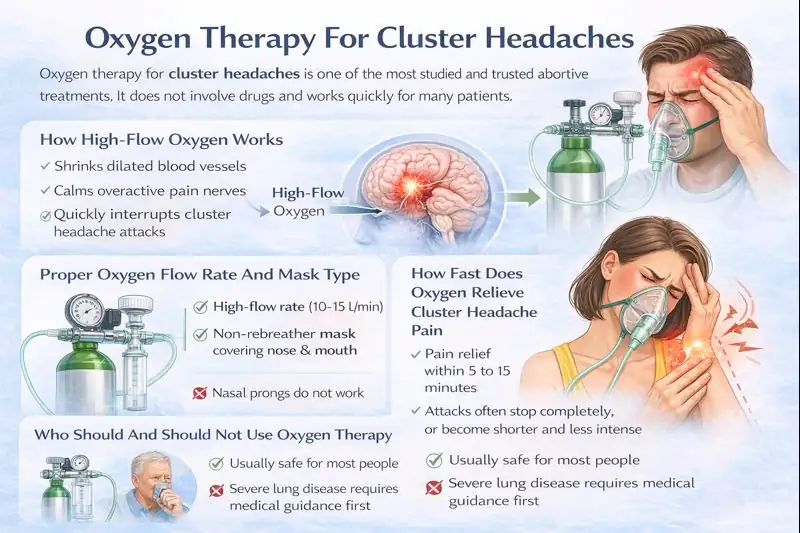
Oxygen therapy for cluster headaches is one of the most studied and trusted abortive treatments. It does not involve drugs and works quickly for many patients.
How High-Flow Oxygen Works
High-flow oxygen reduces abnormal blood vessel widening and calms overactive pain nerves. Oxygen can interrupt the headache process when used correctly. This makes it a key part of cluster headache treatment .
Proper Oxygen Flow Rate And Mask Type
For oxygen therapy for cluster headaches , doctors usually recommend high flow rates. The oxygen must pass through a non-rebreather mask that covers the nose and mouth. Nasal prongs do not deliver enough oxygen. Correct equipment matters as much as oxygen itself.
How Fast Does Oxygen Relieve Cluster Headache Pain
You will feel relief within 5 to 15 minutes. Some attacks stop completely, while others become shorter and less intense. This speed explains why oxygen is often listed as the best treatment for cluster headaches during acute attacks.
Who Should And Should Not Use Oxygen Therapy
Most people can use oxygen safely. However, those with severe lung disease need medical guidance first. Oxygen should always be prescribed and monitored by a doctor as part of a full cluster headache treatment plan.
Treatment Options For Cluster Headaches
No single method works for everyone. Effective care combines tools based on your attack pattern.
Acute (Abortive) Treatments Overview
Abortive care aims to stop cluster headache attacks once they begin. Oxygen and injectable triptans are common choices. Medical reviews note that speed of action is the main factor in success.
Preventive Treatments Overview
Preventive medicines reduce how often attacks occur during a cluster period. These drugs support long-term cluster headache treatment but do not replace abortive care. Doctors adjust them based on response and side effects.
Bridge Therapies During Cluster Periods
Bridge therapies fill the gap while preventive drugs start working. Short courses of corticosteroids are often used. They lower the attack frequency for a limited time. Doctors avoid long-term use due to side effects.
Non-Drug Supportive Treatments
Supportive steps include regular sleep times and avoiding alcohol during active cycles. These steps do not replace medical care but support the best treatment for cluster headaches by reducing triggers.
Chronic Cluster Headache Treatment
Treatment for chronic cluster headache is harder because attacks do not fully stop for long periods. You may get pain almost daily for months or years. This changes how doctors plan cluster headache treatment . The goal is not just quick relief but long-term control without harming your body.
Why Chronic Cluster Headaches Are Harder To Treat
Chronic cluster headaches keep pain pathways active most of the time. Brain imaging shows ongoing activity in pain-related nerve circuits even between attacks. Because of this, single-drug plans often fail. You usually need layered care that targets different pathways at once.
Long-Term Preventive Medications
Preventive drugs form the base of treatment for chronic cluster headache . Doctors often start with verapamil. It calms overactive nerve signals and lowers attack frequency. Heart rhythm monitoring is required because high doses may affect heart conduction.
Lithium is another option, especially when verapamil fails. It affects brain chemical signaling linked to circadian rhythm (your internal clock). Research evidence exists, but the treatment window is narrow. Blood tests are required to avoid side effects.
Topiramate may also help some people. It reduces nerve firing but can affect focus or appetite. Doctors adjust slowly and watch your response closely. These drugs do not cure cluster headaches, but they support long-term cluster headache treatment control.
Combination Therapy Strategies
Many chronic cases need more than one preventive tool. Doctors may combine verapamil with lithium or add short-term bridge therapy during flare-ups. Combination plans work because cluster headaches involve more than one brain pathway. Careful monitoring keeps risks low while improving results.
When To Consider Advanced Treatments
If medications fail, doctors may suggest nerve blocks or neuromodulation. These options are not first-line but can help resistant cases. They are part of advanced treatment options for cluster headaches managed by specialists.
Medications Used For Cluster Headaches
Medicines remain central to cluster headache treatment , especially when used correctly and early.
Triptans (Injectable vs Nasal)
Injectable triptans work fastest. They bypass digestion and enter the bloodstream quickly. Nasal sprays work more slowly but still help some people. Oral tablets act too slowly for most cluster attacks and are not ideal for stopping cluster headache attacks .
Doctors limit how often triptans are used each day to avoid side effects. Dosage varies by age, health status, and attack pattern.
Verapamil As First-Line Prevention
Verapamil is often considered the backbone for cluster headache prevention. It reduces attack frequency rather than stopping pain instantly. Doctors increase the dose slowly and use heart tests to ensure safety.
Lithium And Topiramate
Lithium works best in chronic cases with daily attacks. It requires regular blood monitoring. Topiramate is an option when other drugs fail. Both drugs support long-term treatment for chronic cluster headache but need close supervision.
Corticosteroids As Short-Term Bridge Therapy
Steroids like prednisone lower inflammation and calm nerve activity fast. They are often used at the start of a cluster period while preventive drugs take effect. Long-term use is avoided due to risks like bone loss or blood sugar changes.
Non-Medication Treatment Options For Cluster Headaches
Not all care relies on daily drugs. Some options target nerves directly.
Nerve Blocks
A nerve block involves injecting medication near the occipital nerve at the back of the head. Studies cited by neurology journals show reduced attack frequency for weeks in some patients. Nerve blocks support cluster headache treatment during severe cycles.
Neuromodulation Devices
Neuromodulation uses electrical or magnetic signals to change nerve activity. Some devices stimulate the vagus nerve in the neck. Evidence shows mixed results. These tools help some people when standard treatment options for cluster headaches fail.
Lifestyle Adjustments That Reduce Attack Frequency
Lifestyle steps alone cannot treat cluster headaches. Still, they support medical care. Avoid alcohol during cycles. Maintain fixed sleep times. These steps help stabilize brain rhythms involved in cluster headache treatment .
Preventing Cluster Headache Attacks
Avoiding Known Triggers (Alcohol, Sleep Disruption)
Alcohol triggers attacks in many people during active cycles. Even small amounts can cause pain within minutes. Sleep disruption also raises risk. Avoiding these triggers helps stop cluster headache attacks before they start.
Importance Of a Consistent Sleep Schedule
Cluster headaches follow circadian patterns. Going to bed and waking at the same time daily helps stabilize these rhythms. Sleep consistency supports the best treatment outcomes for cluster headache .
Role Of Stress Management
Stress does not cause cluster headaches, but it can worsen cycles. Simple routines like quiet breaks or breathing exercises may reduce attack severity when combined with proper cluster headache treatment .
Cluster Headache Triggers And Treatment Planning
Common Triggers And How They Influence Treatment
Triggers include alcohol, strong smells, heat, and sudden schedule changes. Knowing your triggers helps doctors adjust cluster headache treatment timing and prevention strategies.
Trigger Tracking To Personalize Treatment
Keeping a headache diary helps identify patterns. Record time, duration, and possible triggers. This data improves personalized treatment options for cluster headaches .
Seasonal Patterns And Treatment Timing
Many people notice attacks return in the same months each year. Starting preventive care early can reduce cycle severity and help stop cluster headache attacks sooner.
When To See A Doctor For Cluster Headache Treatment
Red-Flag Symptoms
Sudden changes in headache pattern, weakness, fever, or vision loss require urgent evaluation. These signs may point to conditions other than cluster headaches.
When Home Treatment Is Not Enough
If attacks remain severe despite oxygen or triptans, treatment needs adjustment. Persistent pain means the current cluster headache treatment is not adequate.
When To See A Neurologist
Neurologists specialize in complex headache disorders. Chronic cases and treatment-resistant pain benefit from specialist-guided treatment for chronic cluster headache .
Diagnosis Before Starting Cluster Headache Treatment
How Cluster Headaches Are Diagnosed
Doctors diagnose cluster headaches based on symptom pattern, timing, and physical signs like eye redness or tearing. No single test confirms it.
Tests Used To Rule Out Other Conditions
MRI or CT scans rule out tumors, infections, or bleeding. This step ensures cluster headache treatment targets the correct condition.
Importance Of Accurate Diagnosis
Misdiagnosis leads to ineffective care. Accurate diagnosis improves the success of the best treatment for cluster headaches and avoids unnecessary risk.
Living With Cluster Headaches
Life adjustments matter alongside treatment.
Coping Strategies During Active Cycles
Plan your day around attack timing. Keep abortive tools nearby. Inform family or coworkers. Preparation reduces panic during attacks.
Mental Health Impact And Support
Chronic pain affects mood and sleep. Studies show a higher anxiety risk in cluster headache patients. Counseling or support groups help many people manage emotional strain.
Long-Term Outlook With Proper Treatment
There is no cure, but control is possible. With structured cluster headache treatment , many people reduce attack frequency and regain daily function.
FAQs
What Is The Fastest Treatment For Cluster Headaches?
The fastest cluster headache treatment options are high-flow oxygen and injectable triptans. They act within minutes when used early, making them effective for sudden, severe attacks.
Does Oxygen Therapy Work For Everyone?
Oxygen therapy for cluster headaches helps many people, but not all. Response varies by individual and attack pattern. Doctors may combine it with other treatments.
Can Cluster Headaches Be Cured Permanently?
There is no permanent cure supported by evidence. Cluster headache treatment focuses on control, not cure, using abortive and preventive strategies.
What Is The Best Treatment For Chronic Cluster Headaches?
The best treatment for cluster headaches in chronic cases often combines preventive drugs like verapamil with abortive tools and specialist-guided care.
How Long Does Cluster Headache Treatment Take To Work?
Abortive treatments work in minutes. Preventive treatments may take days or weeks. Timing depends on the type of cluster headache treatment used.
How Quickly Does Oxygen Relieve Cluster Headache Pain?
When used correctly, oxygen therapy for cluster headaches often reduces pain within 5 to 15 minutes, especially if started early.
Who Should Not Use Oxygen Therapy For Cluster Headaches?
People with certain lung conditions need medical clearance. Oxygen use should always be guided by a doctor within a full cluster headache treatment plan.
What Are The Main Treatment Options For Cluster Headaches?
Key treatment options for cluster headaches include oxygen therapy, triptans, preventive medications, nerve blocks, and lifestyle support.
What Are Acute (Abortive) Treatments For Cluster Headaches?
Abortive treatments aim to stop cluster headache attacks during pain. These include high-flow oxygen and fast-acting injectable medications.
What Preventive Treatments Help Reduce Cluster Headache Attacks?
Preventive treatments like verapamil, lithium, and topiramate reduce attack frequency and support long-term cluster headache treatment control.
About The Author

Medically reviewed by Dr. Chandril Chugh, MD, DM (Neurology)
Dr. Chandril Chugh is a U.S.-trained, board-certified neurologist with expertise in diagnosing and managing neurological disorders, including migraines, epilepsy, Parkinson’s disease, and movement disorders. His clinical focus includes evidence-based neurological care and patient education.
All content is reviewed for medical accuracy and aligned with current neurological guidelines.